Tag Archives: discipling

Pastoral Ministry, Seel Sorgers Soul Doctors

As I’ve said before I spent 20 years working in corporate finance for some of the largest companies in the world. I also spent 29 years in the United States Coast Guard Reserve, even reserve members of the Coast Guard are operational and are expected to be as currently qualified in their position as those in the regular Coast Guard. I’ve had many and various vocations/callings and I am convinced that God has used each of those different vocations as a way to prepare me for ministry. I often find it bizarre that I’m often treated as though having a collar on means that my brain is somehow disengaged. I find it equally bizarre that those with little or no training presume to be ministers and usually have no clue what that means. Luther said that pastors are “seel sorgers”/”soul healers, to help us grow in Jesus and to confront the world as a Christian. Those who presume to be pastors don’t understand the trials of life and they often treat worship as a sort of time to have a little party instead of dealing with the realities of life in Jesus. Sure being a Christian should be celebration, but too often we treat it very lightly and then with the trials of life arise we reject God and isolate ourselves. Pastors, like me, are professionally trained to help those going through the trials to grow in their trust of God instead of being discouraged and rejecting Him, thus being a “soul healer”. So one of the books that I keep right on my desk to remind me that as a minister of the Gospel of Jesus Christ is to serve those in my parish in all aspects of life, the good and the bad. So take a little time to read St Gregory’s “The Book of Pastoral Rule”. The title might seem a little authoritarian for our post – modern ears, but seems to me that we want our pastor to be a strong leader in Christ. The church of the last, at least, hundred years has been far too concerned with “people-pleasing” and too little concerned with helping people deal with the trials of life in faith in Christ. So this is a paper I did in seminary on Gregory and I hope it gives you more insight into the importance of the pastor and helps you to realize the serious and meaningful role he fills:

““St Gregory the Great (often known in the East as St Gregory the Dialogist was born in the year AD 540 to an aristocratic Roman family.” Gregory’s family was a religious one; his great-great grandfather was Pope Felix III (483 – 492), and another pope, Agapetus (533 – 536), was a distant uncle. His father was also minor church official.

Gregory’s family was well do and as such Gregory was well provided for and received the best education available, which was expected being from such a family.

Gregory had a rather auspicious career he started out as the Prefect of Rome.

He resigned from that position, sold all his family’s property and transformed the family estate into a monastery named St Andrew’s, which he entered as an ordinary monk.

Needless to say this state did not last long.

Pope Pelagius ordained Gregory to the deaconate and then appointed him apocrisiarius (i.e. papal representative to the emperor in Constantinople). He was there as a representative of the Pope and as a political representative of Rome. He also served as the abbot of the community he was a part of in Greece. He spent seven years in Constantinople he was also the abbot of his community and started a commentary on Job.

Six years later he returned to Rome where he assumed the office of abbot of St Andrews.

Five years after that Pelagius died and Gregory was elected Pope and he served until his death in 604 serving as Pope fourteen years. As Pope he daily fed the indigents of Rome, refurbished the city’s dilapidated churches and fortifications, the initiation of monastics to the Papal curia and reintroduced Christianity into Britain. [1]

The Liber regulae pastoralis was written before 590. It is also referred to as the Book of Pastoral Care.  ” … after reading the Book of Pastoral Rule, the Byzantine emperor Maurice ordered the book to be translated and disseminated to every bishop in his empire.”[2] The Bishop of Cartagena expressed reserve “that it might be beyond ordinary capacities….It was recommended to Charlemagne’s bishops…Alfred the Great in the late ninth century, translated it into English.”[3]

Most historians agree that Gregory was Augustinian in his theological perspective [during this period there were various heresies that were beaten back by the Roman church which included the Pelagians, Donatists, Manicheans]. While this is about a hundred years after these controversies, there were still elements of various heresies in the church and was a constant concern. Gregory seems less concerned about doctrine and more about practicalities of ascetic living and pastoring, as someone who had been on track for senior positions in the church from the start, he surely had to be aware of these heresies and assuring that his pastors were faithful to the doctrine of the Catholic church.

When Constantine made Christianity the official religion of the empire a large number of converts came into the church. Needless to say they were perceived as “lacking the depth of faith that had been possessed by the pre-Constantinian community.”[4] While this had been about two hundred years, apparently the church was still adjusting and two separate types of pastoring had emerged. One was to the people who wanted to lead an ascetic life that is, monks, nuns and other clericals. The other was for the lay person. Clearly Gregory was writing to the ascetics, but mostly as they related to lay people. While Gregory wrote it in the context of his position as an abbot of a monastery it seems that his perspective was more about being a pastor to pastors. His text “defined who should and should not receive ordination, identified the priest’s practical responsibilities, and anticipated many of the priest’s pastoral challenges…to resolve the tension between ascetic idealism and the realities of pastoral ministry.”[5] Gregory “went on to describe the priest’s responsibilities as a combination of the active life of pastoral administration and the prayerful life of the remote ascetic. It was Gregory who first proposed a combination between action and contemplation…”[6]

In Gregory’s book Apology for his flight to Pontus “he concluded that the ideal candidate for the priesthood was a man who had the benefits of wealth and education (in antiquity, only the wealthy received an education) but who had abandoned the pleasures of the aristocratic life and adopted the life of abstemiousness and contemplation (i.e. that life of the monk).”[7] I wonder if this was because Gregory expected priests to be educated and only the aristocracy was educated, or if this was some form of Noblesse oblige or a combination of both. I further imagine that this must have seriously limited the pool of potential candidates.

This book is written as Gregory would guide and teach the monks under his charge at a monastery, “…it develops many of the pastoral techniques employed by the abba.” The book is designed as a way for an abbot to pastor the monks in his monastery. As pastors we are not going to have a senior clergy person watching over us, so we might be well advised to keep this book handy. Read through it once, highlight the pertinent passages and then put it in your daytimer or blackberry to review the highlights once every six months or so. For those things that are pertinent for the post-modern pastor we should give ourselves a regular review to see how we are doing as compared to the ideal that Gregory presents. I know that this will maintain a prominent place on my desk.

I often feel that there are many who tend to trivialize the pastoral office, that feel they could do it just as well as the pastor. The following should be pointed out when you want to emphasize the importance of pastoring to those who might not fully appreciate the pastor’s responsibilities: “No one presumes to teach an art that he has not mastered through study. How foolish it is therefore for the inexperienced to assume pastoral authority when the care of souls is the art of arts.” [8]

“The spiritual director ought to know that there are many vices that appear as virtues. For example, greed disguises itself as frugality and wastefulness is thought to be generosity. Often, laziness is accounted kindness and wrath appears to be spiritual zeal.”[9] This is an important consideration, I know a lot of times I am guilty of the last, justifying my “wrath” by telling myself that I am being zealous as a citizen and a Christian, I’m not I’m just letting something get under my skin. It also bothers me to seen laziness accounted as kindness. So often I see a pastor confronted over a meaningful issue and instead of answering the question directly or offering to set a time to sit and discuss the question meaningfully, he just gives a glib answer and sends the person on their way none the wiser, and that person thinking “gee what a neat guy our pastor is”, when he really isn’t he just doesn’t want to take the time to truly instruct someone with a genuine concern.

In another section Gregory gives us some more guidance in terms of how pastors should conduct ourselves: “Indeed, pastors ‘drink the clearest water’ when, with an accurate understanding, they imbibe the streams of truth. But the same ‘disturb the water with their feet’ when they corrupt the study of holy meditation with an evil life. Obviously, the sheep drink that which was muddied by feet when, as subjects, they do not attend to the words that they hear but imitate only the depraved examples that they observe. While the laity thirst for what is said, they are perverted by the pastor’s works as if they were to drink mud from a polluted fountain.”[10] In my time here I have twice, two different seminarians, on two separate occasions, been in the weight room and just absolutely pornographic music was on, one time two women seminary employees were in the room. What kind of witness is that? I know I’ve been in plenty of workout areas that were R rated. What lay people see us do is a testament to them of what we are truly devoted to. This is not prudishness on my part I can’t in good conscience write down what was playing, I was a sailor for twenty nine years and I could have taught both of the seminarians in question plenty that they haven’t an education for. The first time this happened my youngest son was seventeen years old. I can well imagine what he might have been thinking associating that music with the seminarian who was there and I cringe to think what the two women who were there were thinking. I went to the first one and pointed out that it wasn’t appropriate. His response took me aback when he said “oh, sorry I didn’t notice.” We have to be diligent in noticing the things that we do that may offend our weaker brother or sister and clearly this is a theme that is important to Gregory also.

Gregory had a great concern with men not squandering their gifts to serve others. In the following quote he emphasizes the need for us, as pastors, to set outside our desires and be ready to serve: “…when one is subject to the dispositions of the divine Will and averse to the obstinacy that comes from vice, if he is already endowed with gifts whereby he might help others, then at the time when he is commanded to accept a position of spiritual authority, although he might flee from it in his heart, he should be obedient, if reluctantly by his actions.”[11] There are certainly times when I’d rather sit at home and watch the Red Sox instead of having to go and visit someone who could use pastoral care.

On the flip side, Gregory describes the man “who feels the burden of worldly cares to such an extent that he never looks up to what is lofty but instead focuses entirely upon what is tread upon at the most base level.”[12] The quote is rather extensive from here, but suffice to say Gregory is talking to pastors in terms of watching out for themselves that they can become so burdened and forget about God. But to also watch out for those who we are to care for. It is easy to recognize the need for care for the person in the hospital, for the person who is going through loss, but we often don’t see the person who is burdened down and has lost sight of God and His care. He has become buried under worry and stress. We need to be proactive with that person and also to make sure that we don’t get caught up in constant burdens and cares. Gregory seems to like to create a lot of contrasts, particularly at the end of the book. This is one contrast that is important in the pastorate, that there are many who should be serving, that have gifts for the kingdom and are using them to pursue their own desires. However there are many pastors who are just driving themselves into the ground under the weight of concerns for their congregation, for his family, for himself. Both the one who avoids serving and the one who serves to a high degree need to focus back on the fact that it is not about them, but about God. I am guilty of both ends of this spectrum and I’m not saying that everyone has to be in the ministry, but Gregory’s point is well taken and another aspect that we never seem to truly focus on in our relationship with God.

Gregory sets a very high bar for those who will be a pastor. “The active life of the leader ought to transcend that of the people in proportion to how the life of a shepherd outshines that of his flock…he should be pure in thought, exemplary in conduct, discerning in silence, profitable in speech, a compassionate neighbor to everyone, superior to all in contemplation, a humble companion to the good, and firm in the zeal of righteousness against the vices of sinners..”[13] He goes on to say that the pastor should always be the first in service. “…so that the flock (which follows the voice and behavior of its shepherd) may advance all the better by his example than by is words alone.”[14] If you expect people to be out on a summer Saturday afternoon to knock on doors for the church, you should be out there longer and farther then anyone else. Too often the pastor sees a division of labor, as it were, between the clergy and the laity, that is pastors are in their office writing and contemplating great thoughts and the laity are out doing the work of discipling and evangelizing. I have even heard some seminary students that they expect to work forty hours a week because of their family. No pastors can’t run everything, and do everything, but on the priorities of the church which are pastoral, writing, preaching, counseling, hospital visits there is also the evangelizing, discipling, welcoming, being visible to and sometimes participating in the different groups. In this day and age no one works a forty hour week, at least not those who are trained/educated professionals. The idea that the pastor should be exempt while those in the parish work fifty plus hours a week seems to me to be a modern day example of what Gregory is talking about.

Our society today does not want people to take a stand, to speak out on principle. Gregory chastises those “who fear to lose human favor, [who] are afraid to speak freely about what is right… to ‘go up against the enemy’ is to oppose worldly powers with a free voice in the defense of the flock. And to ‘stand in battle on the day of the Lord’ is to resist, out of love of justice, evil persons who oppose us. For if a shepherd fears to say what is right, what else is it but to turn his back in silence? But certainly, if he puts himself before the flock [so as to protect them]…”[15] How can we expect those in our flock to stand up for the truth at their office, their school, their team, their club when they don’t see their pastor doing it. Most importantly we have been given the responsibility. People aren’t going to like it when we defend the unborn, the aged, the poor, when the world tries to deprive Christians of their rights to witness, to pray and to worship. But we are here to serve our Lord Christ, not to be concerned about public opinion and we have to live that for ourselves and for our congregation.

“Often, however, a spiritual director swells with pride by virtue of being placed in a position of authority over others…”[16] In the modern context I think that we are prone to believe what people say to us about us, we believe too much of what we hear, and we lose the ability to be critical in our thinking on the issues and how we conduct ourselves towards those in the congregation. We get too high an opinion of ourselves, but at the same time we can let people sort of lead us around by the nose when it comes to the issues. “For he controls this power well if he knows how to use it to gain a mastery over sin and also knows how to mingle with others as equals.”[17]

Gregory discusses failure to discipline a little more: “Self-love inclines the mind of the spiritual director to laxity when he observes the laity in sin but chooses not to correct them because he fears that their affection for him will grow dull. In fact, sometimes when he should rebuke the errors of the laity, he actually softens them with flattery.”[18]

Gregory never denies that we should not exert church discipline: “Supreme rule, then, is well administered when the one who presides has dominion over the vices rather than his brothers. But when superiors correct the delinquents among the laity, it is necessary for them to be careful that when they attack sin through due discipline, they should still acknowledge themselves, as an exercise of humility, to be the equals of those they correct… Because if a leader lowers himself more than is proper, he will not be able to affect the lives of the laity through the bond of discipline. Let spiritual directors, then, uphold externally what they undertake for the benefit of others and let them retain internally what scares them about their own condition. Nevertheless, the laity should perceive, through subtle signs that appear at the proper times, that their spiritual directors are humble. In this way, the laity will see what they ought to fear from authority and, at the same time, know how to imitate the virtue of humility.”[19] I find it interesting that now to “lower oneself” does not mean to humble themselves to be an example to the laity, but to somehow compromise your position. That is to make you less credible because you lowered yourself below your position. I think we should define the word as Gregory did and make it to mean that we live as an example to the lay person.

It seems to me that we ought to seriously consider, on a regular basis, if we are giving our flock enough lessons in humility through our example.

Gregory quotes Ezekiel who is chastening the shepherds: “’You did not mend what was broken, nor did you retrieve what was driven away.’ (Ezek 34:4) Indeed, that which is cast away is retrieved whenever one who has fallen into sin is called back to the state of righteousness by the vigorous work of pastoral care.”[20]

Too many times it is a case of pooh-poohing, oh well too bad for John Smith, nothing can be done, he has to deal with his sin. It is as much our responsibility to search for the lost sheep, as it is to exhort the faithful. God chastised Israel for failing to do that, why wouldn’t He chastise us as well?

. “…the spiritual director must be careful that he show himself to the laity as a mother with respect to kindness and as a father with respect to discipline. And in every case, care should be provided in such a way that discipline is never rigid, nor kindness lax.”[21]

“In short, gentleness is to be mixed with severity – a combination that will prevent the laity from becoming exasperated by excessive harshness or relaxed by undue kindness.”[22] I think that this shows some insight that might be ahead of its time. It is so easy to keep resorting to the Law, “this is what you have to do”, but to reflect God we have to be as He treats us, with more then our share of mercy and surely less then we deserve in terms of discipline. God surely knows that so often we mess up and we don’t want to, we feel like we are often floundering and we often lose and he knows that and He waits for us to come back to Him. We need to reflect that in our ministry, to comfort those who are struggling, but to hold accountable those who simply want to see what they can get away with. God is the entirety of humanity, He can be more compassionate then any number of mothers, and He can be as stern as any number of fathers.

When advising people we must differentiate in our approach to people: Men and women, young and old, poor and rich, joyful and sad, subordinates and leaders; he goes on to elaborate in each case, for example of men and women saying that men are compelled toward the heavier burden. Likewise in terms of subordinates and leaders.[23] As in the last comment, I found this one too to be ahead of its time. Frankly it has seemed to me, in our society since at least the 1970’s, that unless someone had remarkable talent, everyone was pretty much pigeonholed the same way. Gregory is telling us for over 1500 years ago that is just not a practical or for that matter useful way to handle people. Certainly this is not a foolproof approach, for example the sick often think they are healthy, the dull often think that they are wise, those who steal that think they are giving more then they steal. It is becoming more and more evident that as a pastor one has to build and develop relationships as much as possible with those in the congregation. The days of trying to deal with all people equally and having glib, quick answers have done tremendous damage to the church and are probably the main reasons why the church has become such a non-factor. For too many generations pastors thought that they could get by and didn’t make a genuine effort to get to know the people in their congregation as individuals. You can always tell the pastor who does, the loyalty of those in his congregation and the growth in his congregation are evident.

I like his illustration with the lazy and the hasty: We should always be striving for greater things so that we do bring on the possibility of falling for lesser things: “For when the soul does not incline itself to greater things, neglecting itself, its desire increases for inferior things. And when the soul does not restrain itself by studying vigorously for higher things, it is wounded by the hunger of desire for lower things. And as a result of its neglect for discipline, it is all the more distracted by the desire of pleasure. Hence, it was also written by Solomon: “The idle are given entirely to desires.”[24] This is an epidemic in today’s society, people think that they are striving for high things such as, the right to free speech, freedom of expression, freedom of privacy, not because these are necessarily noble, but mostly so that they can look at porn, get rid of unwanted pregnancies and adopt lifestyles without taking responsibility for the things that you’ve done. There is nothing noble or compelling in the things that some people crusade for, it is simply indulging their desires. It is embarrassing when people are campaigning for gay rights as if it is some kind of noble action on their part, when others have risked their lives to free people from concentration camps, to be free from aggression or from dictators. I had two great, great uncles who fought in the Civil War, one of who was disabled and subsequently died. He suffered in attempting to free people, not let people indulge in their unexamined obsessions.

In summary St Gregory gave us the compact handbook for pastoral care. It is ambitious for the pastor to try and meet the goals that Gregory sets. However, if we do what we can to aspire and try to attain the goals he sets, we will be far better then what we would have otherwise been. Again this will be on my desk and will be a reminder that I do aspire to the ideals that Christ has given me, I will not achieve these, some maybe and others I will at least get further then I would have otherwise, but it will be in order to follow Gregory’s counsel to strive for the highest so that I will not let lower things drag me down.”

[1] Demacopoulos. George editor and translator The Book of Pastoral Rule introduction p 9

[2] p 10

[3] Wikipedia

[4] p 10

[5] p 12

[6] p 13

[7] p 13

[8] p 14

[9] p 18

[10] p 31 Part I section 3

[11] p 38 Part I section 6

[12] pp 46-47 Part I Section 11

[13] p 49 Part II section 1

[14] p 51 Part II section 3

[15] p 55 Part II Section 4

[16] p 62 Part II section 6

[17] p 64 Part II section 6

[18] p 74 Part II Section 8

[19] p 65 Part II section 6

[20] p 67 Part III section 6

[21] p 67 Part III section 6

[22] p 67-68 Part III section 6

[23] pp 88-89 Part III section 1

[24] pp 125 – 126 Part III section 15
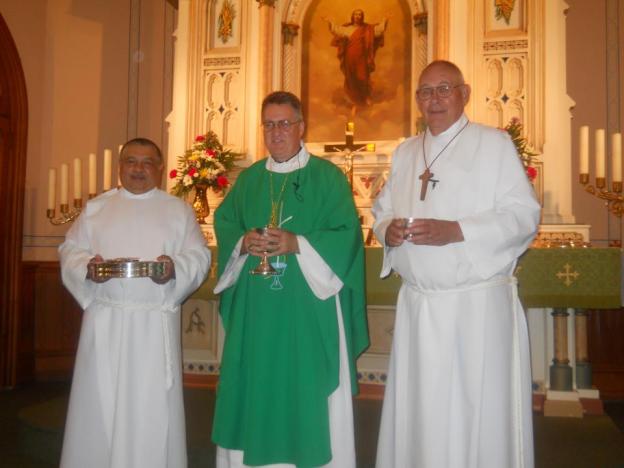
Holy communion, a time of great reverence and thankfulness, Jesus gives us His Body and Blood for our forgiveness and strengthening

I did a blog awhile ago on the Lord’s Supper and I have wanted to pick that discussion up in more detail because this is a real sore spot with people who try to make this out to be some sort of egalitarian issue. It’s not and I need you to put aside your prejudices, and your idea that it’s all about you, it’s not, it’s about God, Father, Son and Holy Spirit. I intend to do a series of blogs on this, the issue is not as simple as many would like to make it out to be, the reason why I’m doing it in a series of discussions.

The Lutheran view of the Lord’s supper is unique in Christianity. There are two sacraments in the Lutheran Church, baptism, where the Holy Spirit gives the recipient new life, they are born again in Christ. The Holy Spirit becomes part of that person and that person becomes a child of God. The second is the Lord’s Supper, where we receive the true Body and Blood of Jesus. As God’s child, we receive our Savior’s Body and Blood in order to be assured of our forgiveness by Jesus’ sacrifice and to receive the nourishment that we need as I say ” to strengthen body and soul to life everlasting”.

So here’s the rub, this is exclusive, you have to be baptized, a triune baptism, and you have to be a member of the Lutheran Church. This is not to impose some arbitrary exclusivism, this is to honor and treat with great reverence the Body and Blood of our Savior. We are in agreement with Roman Catholics that the Lord’s Supper is about the true Body and Blood. We however disagree on the means, but that will be part of a later discussion in this series and yes that difference is a fundamental issue.

I don’t make membership a long process or jumping through hoops. I take people through what we are about, why we do what we do and to impress upon people that it is about God, not about us. A lot of the discussion in the previous post was in the sense of “that’s not fair to me”, “I should have what anyone else has”, “Why can’t I”, etc, etc. Basically, it’s all about me and how I should be treated and very little in terms of treating the Lord’s Body and Blood with due and extreme reverence. I am a Lutheran pastor, I take the responsibility of administering the Lord’s Body and Blood with the utmost reverence and giving me arguments that it’s all about me is not going to be received with any respect and is just not valid. After I go through instructions, we take time during worship to ask them if they understand the teachings of the Lutheran Church and if they vow to abide by these teachings. This is the sense of a wedding, as I wrote about in an earlier blog, we treat weddings as worship, taking vows, making promises in the presence of God and brothers and sisters in Jesus. We do the same with membership, that you understand what we are doing and you promise before God and brothers and sisters that you will honor and uphold these teachings. It’s not your call, it’s what Scripture tells us it is. I am retired enlisted in the U.S. Coast Guard. Every four years I had to re-enlist and take an oath to uphold and defend the Constitution of the United States. I took those vows very seriously and I should, my country is important. But by far God is more important. If I take the U.S. Constitution seriously, I take God much more seriously. When people take a vow before God you need to take it seriously. At that point, knowing that they understand and accept the Church’s teaching, I with great joy welcome them into the Church and happily give them the Lord’s Body and Blood, there is no higher act, the Body and Blood that was sacrificed to pay for our sins and to give us the assurance of life everlasting in the Resurrection. Why someone thinks I should take that less than seriously is totally bizarre to me. In short, those of a Reformed, Arminian or other Protestant, non-denominational etc church do not have this understanding, why would they with any integrity still insist on taking the Lord’s Body and Blood?

It is a very deep issue and deserves much more discussion than the superficial treatment given by many other Christian churches. I welcome you to join in that discussion as I try to honor the Body and Blood in subsequent blogs.

Rev Dr Kurowski quotes the following in his book and it underscores the discussion about how our worldly attitude towards the Lord’s Supper is just not valid, God tells us what it is and that is what we honor and not our “opinion”: “In their case the god of this world has blinded the mind of unbelievers, to keep them from seeing the light of the gospel of the glory of Christ, who is the image of God. For what we proclaim is not ourselves, but Jesus Christ as Lord, with ourselves as servants for Jesus sake.” (2 Corinthians 4: 4-5)

I would highly recommend a book by Rev Dr Peter Kurowski on the discussion of close/closed communion “Close Communion Conversations”. I am sure your order will be happily received at  lawgospel@lawgospel.com  or 877-CMS-1962

We serve the ultimate Commander in Chief Veterans Day observance First St Johns Nov 9, 2014

Traducción española sigue el Inglés

We make our beginning in the Name of God the Father and in the Name of God the Son and in the Name of God the Holy Spirit and all those who know Jesus as the leader of their life said … AMEN
Before I begin the planned sermon, I would like to take a moment to remember our brother, the Rev. Donald Biggs. Pastor Biggs has been a member of our congregation since he retired from the ministry. I have very much appreciated his guidance and support as I started my ministry. We certainly offer our condolences to his wife Mary Lynn our beloved sister and their two sons, daughters-in-law and grandchildren. We continue to keep Mary Lynn in our prayers as she has been suffering from health problems and we trust in the promises of Jesus that Pastor Don is in the presence of Jesus, now in perfect health and in perfect bliss before the throne of our Lord. (Time for silent prayer)
Today we honor our veterans, men and women who made a commitment to serve, protect and defend. Many of whom were often put into, at least, uncomfortable situations far from home, if not outright dangerous situations. The military teaches leadership right from the very beginning, even the most junior people are put into leadership positions or responsibilities. Beginning in boot camp there is a recruit company commander and other recruits put into leadership positions. Even in day to day situations junior people are often given authority for different tasks. The U.S. Military is unique among any other organizations in the world, often you are expected to follow commands without question, but quite often responsibility is pushed down to the lowest level to make decisions, part of being in the military is to not just be a good follower, but also a good leader. It has been recognized throughout history that quoting Aristotle: “’He who cannot be a good follower cannot be a good leader.” Despite the stereotype of those who have served in the military, you usually find people who are much more balanced, much more aware of the need to be an effective leader, much less concerned about their own gratification. There’s a very good reason for that, in politics, in government, in business, science, academia, it’s all about me and how I get ahead. There’s no danger, there’s no sharing, there’s no need to watch out for someone else, unless it’s to your benefit, it’s all about how anything enhances your life, everyone else just has to take care of themselves. Yea, in the military the consideration can be to your benefit, that you don’t get killed. But because you have built that sense of camaraderie with brothers and sisters, you also want to watch their backs. It is also much more about the common good, the good of each individual, when one benefits usually everyone does.
Again, too many times our “leaders” are only about how they are enhanced by being a leader. That’s simply not leadership. Leadership is about that agape love, that selfless love, that love that wants what is truly best for each person God leads you to, that love that Jesus showed to us on the cross and gives to us everyday through His grace, His hope, His promise. Napoleon said “A leader is a dealer in hope.” No doubt Napoleon’s motivation/definition of hope was in a very worldly sense and he wasn’t thinking about Jesus when he said that. But it is certainly true in Jesus, not in a cynical way, but in that true agape love way. The hope that He gives us in His resurrection, in the hope that He gives us for life eternal. Pastor Don liked to tell me how on Easter everyone was kept out of the sanctuary at sunrise, he came out on the roof of a tomb that had been built and with the sun at his back announcing to all who gathered “he is not here, He has risen”. We have that hope of eternal life, “He is risen…[He is risen indeed, hallelujah!]
Imagine a world where you did not have that love/leadership, not knowing that Jesus did step up, as Jesus tells us: “I have overcome the world.” This is so empowering, so comforting, so reassuring. In a recent study it was show that when people were monitored at work their quality and productivity was worse, they were stressed over being constantly watched, versus being enabled to be productive. Business is not a very forgiving environment, there may be ‘love’ when you’re on top, but there sure isn’t any if things aren’t going well. That’s what the world is all about, an old saying: “The world doesn’t want to hear about the labor pains, they just want to see the baby.” The further implication that not just having the baby, but also that the baby better stack up in terms of the expectations of the world, otherwise both mother and child have failed.
We know that the Holy Spirit dwells within us, we are a temple of the Holy Spirit. We are loved, we are inhabited by love and leadership, we have ready access to the forgiveness that is Jesus. He knows when we try for Him, when we demonstrate that sacrificial leadership of discipleship. He encourages us, He strengthens us, He picks us up, He dusts us off, maybe gives us new direction with promise and hope and then puts us on our feet, makes sure we know that we are loved with an everlasting love, squares our shoulders in the direction He wants us to go and then leads us on the path He puts us on. The Law/the world, monitors and checks us and usually intimidates the toughest of us. The Law/the world, never loves, it keeps us in fear and bondage and because of that we suffer, we don’t live to the level that God intends us to live at and when we fail (not if), the world just casts us into the junk heap. True leadership picks us up, equips us, loves us, is always with us “And behold, I am with you always, to the end of the age.” (Matt 28:20 ESV) The Coast Guard motto is Semper Paratus always ready and we are always ready in Jesus.
Like the military you can be a new disciple and still be used mightily by the Lord, it is a lot like the military when you can be a junior person and still have responsibility over more senior person. I was in Puerto Rico for Tall Ships in 2001 to do security as coxswain of a 41 foot boat. Ended up doing a lot of taxiing, because it was the biggest most comfortable boat. Had to drive the zone commander from one end of the harbor to the other, going past where all the tall ships were moored. At one point a helicopter roars overhead and the commander tells me to hurry up because the vice commandant of the Coast Guard is on the helicopter. I had about a dozen passengers on board going past a bunch of historic ships and chose to ignore the commanders request. The safety and integrity of other people and boats took priority. He was just going to have to be a little late for the vice commandant. Often we have to ignore the world and rely on what the true CNC tells us, God is always our commander in chief, He wants what is best for us and for us to minister to those around us accordingly. When we are true leaders, true servants of Him, ready to serve and sacrifice as so many who do who are serving or have served in our military, then we are truly doing His will.
The peace of God which passes all understanding keep your hearts and minds in Christ Jesus. Shalom and Amin.

Servimos el último comandante en jefe Día de los Veteranos observancia First St Johns 09 de noviembre 2014

Hacemos nuestro comienzo en el Nombre de Dios el Padre y en el nombre de Dios el Hijo y en el Nombre de Dios el Espíritu Santo, y todos los que conocen a Jesús como el líder de su vida dijo … AMEN
Antes de comenzar el sermón planeado, me gustaría tomar un momento para recordar a nuestro hermano, el reverendo Donald Biggs. Pastor Biggs ha sido miembro de nuestra congregación desde que se retiró del ministerio. He apreciado mucho su orientación y apoyo cuando empecé mi ministerio. Ciertamente Ofrecemos nuestras condolencias a su esposa Mary Lynn nuestra querida hermana, y sus dos hijos, hijas-en-ley y nietos. Seguimos mantener Mary Lynn en nuestras oraciones como ella ha estado sufriendo de problemas de salud y confiamos en las promesas de Jesús de que el pastor Don está en la presencia de Jesús, ahora en perfecto estado de salud y en la felicidad perfecta delante del trono de nuestro Señor. (La hora de la oración en silencio)
Hoy honramos a nuestros veteranos, hombres y mujeres que hicieron un compromiso de servir, proteger y defender. Muchos de los cuales fueron a menudo ponen en, al menos, las situaciones incómodas lejos de casa, si no en situaciones francamente peligrosas. El ejército enseña liderazgo adecuado desde el principio, incluso las personas más jóvenes se ponen en posiciones o responsabilidades de liderazgo. Comenzando en el campo de entrenamiento hay un comandante de la compañía recluta y otros reclutas puestos en posiciones de liderazgo. Incluso en el día a día situaciones de las personas jóvenes a menudo se dan autoridad para diferentes tareas. Los EE.UU. Militar es única entre las otras organizaciones en el mundo, a menudo se espera que siga órdenes sin cuestionarlas, pero muy a menudo la responsabilidad es empujado hacia abajo al nivel más bajo para tomar decisiones, parte de estar en el ejército es no sólo ser un buen seguidor, sino también un buen líder. Se ha reconocido a lo largo de la historia que citando a Aristóteles: “.” El que no puede ser un buen seguidor no puede ser un buen líder “A pesar del estereotipo de los que han servido en las fuerzas armadas, que se suele encontrar personas que son mucho más equilibrada, mucho más conscientes de la necesidad de ser un líder eficaz, mucho menos preocupados por su propia gratificación. Hay una muy buena razón para ello, en la política, en el gobierno, en los negocios, la ciencia, la academia, es todo acerca de mí y cómo me pongo por delante. No hay peligro, no hay intercambio, no hay necesidad de mirar hacia fuera para otra persona, a menos que sea para su beneficio, es todo acerca de cómo nada mejora su vida, todos los demás sólo tiene que cuidar de sí mismos. Sí, en el ejército la consideración puede ser para su beneficio, que no te maten. Pero debido a que usted ha construido ese sentido de camaradería con los hermanos y hermanas, que también quiere ver a sus espaldas. También es mucho más sobre el bien común, el bien de cada individuo, cuando uno se beneficia por lo general todo el mundo hace.
Una vez más, muchas veces nuestros “líderes” son sólo sobre la forma en que se ven reforzadas por ser un líder. Eso simplemente no es liderazgo. El liderazgo es acerca de que el amor ágape, el amor desinteresado, ese amor que quiere lo que es realmente mejor para cada persona que Dios te conduce a, de que el amor que Jesús mostró a nosotros en la cruz y nos da todos los días a través de su gracia, su esperanza, su prometer. Napoleón dijo: “Un líder es un distribuidor en la esperanza.” No hay duda de la motivación / definición de Napoleón de esperanza fue en un sentido muy mundana y no estaba pensando acerca de Jesús cuando dijo eso. Pero lo cierto es en Jesús, no de una manera cínica, pero en la que el verdadero camino del amor ágape. La esperanza de que Él nos da en Su resurrección, en la esperanza de que Él nos da la vida eterna. Pastor Don gustaba decirme cómo en Pascua todo el mundo se mantuvo fuera del santuario al amanecer, salió en el techo de una tumba que había sido construido y con el sol a sus espaldas anunciando a todos los que se reunieron “él no está aquí, ha resucitado “. Tenemos la esperanza de la vida eterna, “Él ha resucitado … [Él ha resucitado, aleluya!]
Imagina un mundo donde no tiene que el amor / liderazgo, sin saber que Jesús intensifique, como Jesús nos dice: “. Yo he vencido al mundo” Esto es por lo que empodera, tan reconfortante, tan reconfortante. En un estudio reciente se muestra que cuando las personas se controlaron en el trabajo de su calidad y la productividad era peor, se destacaron por haber sido constantemente vigilado, frente está habilitado para ser productivos. Negocio no es un ambiente muy indulgente, puede haber ‘amor’ cuando estás en la cima, pero no seguro que no es ninguna si las cosas no van bien. Eso es lo que el mundo es todo alrededor, un viejo dicho: “El mundo no quiere oír hablar de los dolores de parto, lo que quieren es ver al bebé.” La implicación, además, que no sólo tenga el bebé, sino también de que el bebé mejor apilan en términos de las expectativas del mundo, de lo contrario la madre y el niño han fallado.
Sabemos que el Espíritu Santo mora en nosotros, somos un templo del Espíritu Santo. Somos amados, que están habitadas por el amor y el liderazgo, tenemos fácil acceso al perdón que es Jesús. Él sabe cuando tratamos de Él, cuando se demuestra que el liderazgo sacrificial de discipulado. Él nos anima, nos fortalece, nos levanta, nos desempolva, tal vez nos da una nueva dirección con la promesa y la esperanza y luego nos pone en pie, se asegura de que sabemos que somos amados con un amor eterno, plazas nuestros hombros en la dirección que quiere que vayamos y luego nos lleva por el camino que Él nos pone. La Ley / el mundo, los monitores y los controles de los Estados Unidos y por lo general intimida el más duro de nosotros. La Ley / el mundo, nunca se ama, que nos mantiene en el miedo y la esclavitud y por eso sufrimos, no viven al nivel que Dios nos tiene la intención de vivir en y cuando fallamos (no si), el mundo sólo nos hace caer en el montón de chatarra. El verdadero liderazgo nos recoge, nos equipa, nos ama, está siempre con nosotros “Y he aquí que yo estoy con vosotros todos los días hasta el fin del mundo.” (Mateo 28:20 NVI) El lema de la Guardia Costera es Semper Paratus siempre listo y estamos siempre listos en Jesús.
Al igual que los militares puede ser un nuevo discípulo y todavía ser usado poderosamente por el Señor, que se parece mucho a los militares cuando se puede ser una persona menor y aún así tener la responsabilidad sobre más persona mayor. Yo estaba en Puerto Rico para la Tall Ships en 2001 para hacer la seguridad como timonel de un barco de 41 pies. Acabé haciendo un montón de rodaje, porque era el mayor barco más cómodo. Tuvimos que conducir el comandante de zona desde un extremo del puerto al otro, más allá de ir a donde estaban amarrados los barcos de altura. En un momento un helicóptero ruge encima de la cabeza y el comandante me dice que se diera prisa porque el vice comandante de la Guardia Costera está en el helicóptero. Tuve una docena de pasajeros a bordo que van más allá de un puñado de barcos históricos y decidió ignorar solicitan los comandantes. La seguridad y la integridad de otras personas y embarcaciones tomaron prioridad. Él sólo iba a tener que ser un poco tarde para el vice comandante. Muchas veces tenemos que ignorar el mundo y confiamos en lo que el verdadero CNC nos dice, Dios es siempre nuestro comandante en jefe, Él quiere lo mejor para nosotros y para nosotros para ministrar a los que nos rodean en consecuencia. Cuando somos líderes verdaderos, verdaderos siervos de Él, dispuestos a servir y sacrificio como tantos que hacen que están sirviendo o han servido en nuestras fuerzas armadas, entonces estamos haciendo realmente su voluntad.
La paz de Dios que sobrepasa todo entendimiento, guardará vuestros corazones y vuestros pensamientos en Cristo Jesús. Shalom y Amin.

The saints of Jesus, those who live with authenticity First Saint Johns, November 2, 2014

Traducción española sigue el texto Inglés

Click on the above link or copy and paste into your browser to hear the audio version of this sermon.

We make our beginning in the name of God the Father and in the Name of God the Son and inthe Name of God the Holy Spirit. I’m going to say good morning saints of York and you’re going to say good morning Saint Jim, Good morning saints of York…

And all God’s people said AMEN! We celebrate All Saints Day today, which is also the same day as Reformation Day which we will observe in this afternoon’s worship, the day that Martin Luther posted his 95 Theses.
Halloween, which was observed on Friday, has its roots in a Gaelic pagan holiday called Samhain [pronounced sawin] which is when it was thought that spirits and fairies could more easily move into the physical world. The souls of the dead would visit the places where they lived. Halloween is the second most observed celebration after Christmas. For those in the secular world who love to think of how pragmatic and reality driven they are, one writer observed that “Halloween is he ultimate holiday of pretending… we dress up and ‘pretend’ to be someone or something other than ourselves…” In other words it simply emphasizes the phoniness of the world that we live in. A world that denies the reality of a loving, Creator God and tries to make itself into something much better that it’s not. The world loves to concern its self with the phoney aspect of “spirituality” which many people today readily buy into and deny the true spirituality that is Jesus Christ. I keep searching, but I can find no where that explains what people really think that kind of spirituality will do, except that it gives them the feeling of being in control, but never really how that control is realized. How it works in terms of eternity? No one seems to be the least bit interested. The world talks a good game about being “genuine”, of authenticity, but you rarely see it, it’s only in terms of their deluded perception of a world without God and then they wonder why they always feel lost, frightened and alone. There is only one source of authenticity and that is in Jesus. When we are a saint in Jesus are we truly authentic, part of which is being humble, that is when we trust the Lord to live the life that He has saved us for. To be sure being a Christian is much more than the Beatitudes, our reading today, but we certainly model authenticity when we do our best to live that life through the power of the Holy Spirit. The Beatitudes are not our works, they are the fruit of the Holy Spirit who is working through us. We still sin, the world thinks that we should live in perfection. No, the saints will always be fallible people, the old man lives in each of the saints, but the Holy Spirit moves us again and again to live up to the Beatitudes. The world tries to live its own virtues, but it is very clear that those virtues are only to enhance their own life and the fruit of their own spirit, the spirit of the world and not of the Holy Spirit. Roy Lloyd tells the following: “…a man who arrived in 1953 at the Chicago railroad station to receive the Nobel Peace Prize. As he stepped off the train… as the cameras flashed and city officials approached … he thanked them politely. Then he asked to be excused for a moment. He walked through the crowd to the side of an elderly black woman struggling with two large suitcases. He picked them up, smiled and escorted her to the bus, helped her get on and wished her a safe journey. Then Albert Schweitzer turned to the crowd and apologized for keeping them waiting. It is reported that one member of the reception committee told a reporter, ‘That’s the first time I ever saw a sermon walking.’” Schweitzer was a German theologian, a Lutheran, an organist who studied Bach, a physician, a medical missionary to Africa. He was awarded the Nobel Peace Prize for his philosophy of “Reverence for Life”, evidenced in his founding of a hospital in Gabon around the turn of the twentieth century. It is interesting how a saint of Christ who produced so much fruit as a Christian disciple, so accomplished and yet in a huge crowd, was the only one who noticed an elderly lady who needed help, then and there, to make her next connection for her trip. A simple act from a man who served our Lord in such magnificent ways, a great saint of Christ.
David Kinneman was the speaker at the conference in North Carolina I attended. One thing he returned to over and over in his presentation was that today’s younger generations and, I submit most people in the world, are looking for, is authenticty, genuinness. They know and we who are in Christ know that the world is not genuine. All the institutions of the world fail repeatedly and yet try to convince of their authority and authenticity even while they impose on our society and repeatedly fail. All of us can relate to how we can see through the thin veil of hypocrisy around us. The church is often accused of hypocrisy and often for good reason. We try to convince the world that we are perfect saints in Jesus and yet our attempt is shattered when we look at the true saints. Paul called himself the chief of all sinners. He didn’t say that in an attempt to appear to be pious, he knew of the sins he had committed against Jesus and His church and he acknowledged them and continued to bear the fruit of the Holy Spirit. Not as some kind of way to atone for His sins. Why? His sins had been paid for at the Cross, Paul knew there was nothing he could add to Jesus’ sacrifice for us. Jesus paid for our sins through His suffering and sacrifice. We, as His saints, are saved in His sacrifice, but as His saints we faithfully follow the leading, encouragement, promise and hope of the Holy Spirit which is the only way we can live out the Beatitudes. We acknowledge our failings, our sin. When we try to convince the world that we are perfect and above all the evil of the world, the world can see right through us. But when we acknowledge that the only way that we are perfect is through Jesus and only through His grace and forgiveness, that we still struggle and still fail in sin, then the world may know salvation through Jesus.
We are valuable, we are His creation and are saved by Him through Christ. We have to remember how valuable we are to God. John writes: “See what kind of love [that is the agape love} the Father has given to us: that we should be called children of God; and so we are. The reason why the world does not know us is that it did not know him… but we know that when he appears we shall be like him,..” We shall be His saints and we will be perfect, not in ourselves, but in Him who died for us, and because of that we are valuable to the Father and He loves His children with the highest expression of love.
Dr Luther wrote: ‘Tomorrow I have to lecture on the drunkenness of Noah [Gen 9: 20-27]; so I should drink enough this evening to be able to talk about that wickedness as one who knows by experience.” Luther was authentic, I’m not telling you to imitate authenticity to that degree, but it is to acknowledge that we are tempted and occasionally fail.
Since the elders, the saints in Christ will be gathered around the throne of God in heaven as we read in Revelation 7:12, the saints praising God and worshiping Him, let’s pull out the lyrics inserted in your bulletin and let’s praise Him here and now: I love you Lord, lyrics by Petra…
The peace of God which passes all understanding keep your hearts and minds in Christ Jesus. Shalom and Amin.

Hacemos nuestro comienzo en el nombre de Dios Padre y en el nombre de Dios el Hijo y en el Nombre de Dios el Espíritu Santo. Yo voy a decir buenas santos de la mañana de York y vas a dar los buenos días en Saint Jim, buenos santos de la mañana de York …
Y todo el pueblo de Dios dijo AMEN! Celebramos hoy el Día de Todos los Santos, que es también el mismo día como Día de la Reforma que observaremos en el culto de esta tarde, el día en que Martín Lutero clavó sus 95 tesis.
Halloween, que se observó el viernes, tiene sus raíces en un día de fiesta pagano gaélico llamado Samhain [Sawin pronunciado], que es cuando se pensaba que los espíritus y hadas podían moverse con mayor facilidad en el mundo físico. Las almas de los muertos visitaban los lugares donde vivían. Halloween es la segunda fiesta más observado después de la Navidad. Para aquellos en el mundo secular que les gusta pensar en cómo pragmático y la realidad que son impulsados, un escritor señaló que “Halloween es él último día de fiesta de fingir … nos vestimos y ‘pretender’ ser alguien o algo distinto de nosotros mismos. .. “En otras palabras, simplemente pone de relieve la falsedad del mundo en que vivimos. un mundo que niega la realidad de un cariño, Dios Creador y trata de hacer en algo mucho mejor que no lo es. El mundo ama a preocuparse de su auto con el aspecto falso de “espiritualidad” que muchas personas hoy en día comprar fácilmente en y negar la verdadera espiritualidad que es Jesucristo. Sigo buscando, pero no encuentro donde explica que lo que la gente realmente piensa que tipo de espiritualidad va a hacer, excepto que les da la sensación de estar en control, pero nunca realmente cómo se realiza ese control. ¿Cómo funciona en términos de la eternidad? Nadie parece ser el más mínimo interés. El mundo habla un buen juego de ser “auténtico”, de autenticidad, pero que rara vez se ve, es sólo en términos de su percepción ilusoria de un mundo sin Dios y luego se preguntan por qué siempre se siente perdida, asustada y sola. Sólo hay una fuente de autenticidad y que está en Jesús. Cuando estamos a un santo en Jesús son verdaderamente auténtico, parte de la cual está siendo humilde, que es cuando confiamos en el Señor para vivir la vida que Él nos ha salvado para. Para estar seguro de ser cristiano es mucho más que las Bienaventuranzas, nuestra lectura de hoy, pero sin duda modelar autenticidad cuando hacemos nuestro mejor esfuerzo para vivir esa vida a través del poder del Espíritu Santo. Las Bienaventuranzas no son nuestras obras, que son el fruto del Espíritu Santo que está trabajando a través de nosotros. Todavía el pecado, el mundo piensa que debemos vivir en la perfección. No, los santos siempre serán personas falibles, el anciano vive en cada uno de los santos, pero el Espíritu Santo nos mueve una y otra vez a la altura de las Bienaventuranzas. El mundo trata de vivir sus propias virtudes, pero es muy claro que esas virtudes son sólo para mejorar su propia vida y el fruto de su propio espíritu, el espíritu del mundo y no del Espíritu Santo. Roy Lloyd dice lo siguiente: “… un hombre que llegó en 1953 en la estación de ferrocarril de Chicago para recibir el Premio Nobel de la Paz. Como él bajó del tren … como las cámaras destellaron y funcionarios de la ciudad se acercaron … él les dio las gracias cortésmente. Entonces él pidió ser excusado por un momento. Caminó a través de la multitud hacia el lado de una mujer de negro anciano que lucha con dos grandes maletas. Él los recogió, sonrió y la escoltó hasta el autobús, la ayudó a subir y le deseó un buen viaje. Luego Albert Schweitzer se volvió hacia la multitud y se disculpó por mantenerlos esperando. Se ha informado de que un miembro del comité de recepción le dijo a un reportero, “Esa es la primera vez que vi un pie sermón. ‘” Schweitzer fue un teólogo alemán, luterano, un organista que estudió Bach, un médico, un médico misionero a África. Fue galardonado con el Premio Nobel de la Paz por su filosofía de “Reverencia por la Vida”, se evidencia en su fundación de un hospital en Gabón alrededor de la vuelta del siglo XX. Es interesante cómo un santo de Cristo, que produce tanta fruta como un discípulo cristiano, por lo realizado y aún en una gran multitud, era el único que se dio cuenta de una anciana que necesitaba ayuda, entonces y allí, para hacer su próxima conexión para su viaje. Un simple acto de un hombre que sirvió a nuestro Señor de una manera tan magníficas, un gran santo de Cristo.
David Kinneman fue el orador en la conferencia en Carolina del Norte que asistí. Una cosa que él regresó a una y otra vez en su presentación fue que las generaciones más jóvenes de hoy en día y, a mi juicio la mayoría de la gente en el mundo, están buscando, es authenticty, genuinness. Ellos saben y nosotros, los que están en Cristo saben que el mundo no es genuino. Todas las instituciones del mundo fallan en repetidas ocasiones y, sin embargo tratar de convencer de su autoridad y autenticidad, incluso mientras ellos imponen en nuestra sociedad y en repetidas ocasiones fallan. Todos nosotros podemos relacionar con la forma en que podemos ver a través del fino velo de la hipocresía que nos rodea. La iglesia es a menudo acusado de hipocresía y, a menudo por una buena razón. Tratamos de convencer al mundo de que somos santos perfectos en Jesús y sin embargo nuestro intento se hizo añicos cuando nos fijamos en los santos verdaderos. Pablo llamó a sí mismo el jefe de todos los pecadores. Él no dijo que en un intento de que parecen ser piadoso, él sabía de los pecados que había cometido en contra de Jesús y su iglesia y él los reconoció y continuó a producir el fruto del Espíritu Santo. No es como una especie de forma de expiar sus pecados. ¿Por qué? Sus pecados han sido pagados a la Cruz, Pablo sabía que no había nada que pudiera añadir a sacrificio de Jesús por nosotros. Jesús pagó por nuestros pecados a través de Su sufrimiento y sacrificio. Nosotros, como sus santos, somos salvos en Su sacrificio, sino como sus santos que fielmente seguimos el liderazgo, ánimo, esperanza y promesa del Espíritu Santo, que es la única manera en que podemos vivir las Bienaventuranzas. Reconocemos nuestras faltas, nuestros pecados. Cuando tratamos de convencer al mundo de que somos perfectos, y sobre todo el mal del mundo, el mundo puede ver a través de nosotros. Pero cuando reconocemos que la única manera de que somos perfectos es a través de Jesús y sólo a través de su gracia y el perdón, que todavía luchamos y todavía fallamos en el pecado, entonces el mundo conozca la salvación a través de Jesús.
Estamos valioso, nosotros somos su creación y somos salvos por Él a través de Cristo. Tenemos que recordar lo valioso que somos para Dios. Juan escribe: “ver qué tipo de amor [que es el amor ágape} el Padre nos ha dado: que seamos llamados hijos de Dios; y así estamos. La razón por la cual el mundo no sabe de nosotros es que no lo conocía … pero sabemos que cuando él se manifieste, seremos semejantes a él, .. “Vamos a ser sus santos y vamos a ser perfecto, no en nosotros mismos, sino en Aquel que murió por nosotros, y debido a que somos valiosos para el Padre y Él ama a sus hijos con la expresión más alta del amor.
Dr. Lutero escribió: “Mañana tengo que dar una conferencia sobre la embriaguez de Noé [Génesis 9: 20-27]; así que deben beber suficiente esta noche para poder hablar de que la maldad como alguien que sabe por experiencia. “Lutero era auténtica, no te estoy diciendo que imitar autenticidad a ese grado, pero es reconocer que somos tentados y ocasionalmente fallar.
Dado que los ancianos, los santos en Cristo se reunieron alrededor del trono de Dios en el cielo, como leemos en Apocalipsis 07:12, los santos alabando a Dios y lo adoran, vamos a tirar hacia fuera las letras insertadas en su boletín y Alabemosle aquí y ahora: Te amo Señor, letra de Petra …
La paz de Dios que sobrepasa todo entendimiento, guardará vuestros corazones y vuestros pensamientos en Cristo Jesús. Shalom y Amin.

Los santos de Jesús, los que viven con autenticidad Primera Saint Johns, 02 de noviembre 2014

Hacemos nuestro comienzo en el nombre de Dios Padre y en el nombre de Dios el Hijo y en el Nombre de Dios el Espíritu Santo. Yo voy a decir buenas santos de la mañana de York y vas a dar los buenos días en Saint Jim, buenos santos de la mañana de York …
Y todo el pueblo de Dios dijo AMEN! Celebramos hoy el Día de Todos los Santos, que es también el mismo día como Día de la Reforma que observaremos en el culto de esta tarde, el día en que Martín Lutero clavó sus 95 tesis.
Halloween, que se observó el viernes, tiene sus raíces en un día de fiesta pagano gaélico llamado Samhain [Sawin pronunciado], que es cuando se pensaba que los espíritus y hadas podían moverse con mayor facilidad en el mundo físico. Las almas de los muertos visitaban los lugares donde vivían. Halloween es la segunda fiesta más observado después de la Navidad. Para aquellos en el mundo secular que les gusta pensar en cómo pragmático y la realidad que son impulsados​​, un escritor señaló que “Halloween es él último día de fiesta de fingir … nos vestimos y ‘pretender’ ser alguien o algo distinto de nosotros mismos. .. “En otras palabras, simplemente pone de relieve la falsedad del mundo en que vivimos. un mundo que niega la realidad de un cariño, Dios Creador y trata de hacer en algo mucho mejor que no lo es. El mundo ama a preocuparse de su auto con el aspecto falso de “espiritualidad” que muchas personas hoy en día comprar fácilmente en y negar la verdadera espiritualidad que es Jesucristo. Sigo buscando, pero no encuentro donde explica que lo que la gente realmente piensa que tipo de espiritualidad va a hacer, excepto que les da la sensación de estar en control, pero nunca realmente cómo se realiza ese control. ¿Cómo funciona en términos de la eternidad? Nadie parece ser el más mínimo interés. El mundo habla un buen juego de ser “auténtico”, de autenticidad, pero que rara vez se ve, es sólo en términos de su percepción ilusoria de un mundo sin Dios y luego se preguntan por qué siempre se siente perdida, asustada y sola. Sólo hay una fuente de autenticidad y que está en Jesús. Cuando estamos a un santo en Jesús son verdaderamente auténtico, parte de la cual está siendo humilde, que es cuando confiamos en el Señor para vivir la vida que Él nos ha salvado para. Para estar seguro de ser cristiano es mucho más que las Bienaventuranzas, nuestra lectura de hoy, pero sin duda modelar autenticidad cuando hacemos nuestro mejor esfuerzo para vivir esa vida a través del poder del Espíritu Santo. Las Bienaventuranzas no son nuestras obras, que son el fruto del Espíritu Santo que está trabajando a través de nosotros. Todavía el pecado, el mundo piensa que debemos vivir en la perfección. No, los santos siempre serán personas falibles, el anciano vive en cada uno de los santos, pero el Espíritu Santo nos mueve una y otra vez a la altura de las Bienaventuranzas. El mundo trata de vivir sus propias virtudes, pero es muy claro que esas virtudes son sólo para mejorar su propia vida y el fruto de su propio espíritu, el espíritu del mundo y no del Espíritu Santo. Roy Lloyd dice lo siguiente: “… un hombre que llegó en 1953 en la estación de ferrocarril de Chicago para recibir el Premio Nobel de la Paz. Como él bajó del tren … como las cámaras destellaron y funcionarios de la ciudad se acercaron … él les dio las gracias cortésmente. Entonces él pidió ser excusado por un momento. Caminó a través de la multitud hacia el lado de una mujer de negro anciano que lucha con dos grandes maletas. Él los recogió, sonrió y la escoltó hasta el autobús, la ayudó a subir y le deseó un buen viaje. Luego Albert Schweitzer se volvió hacia la multitud y se disculpó por mantenerlos esperando. Se ha informado de que un miembro del comité de recepción le dijo a un reportero, “Esa es la primera vez que vi un pie sermón. ‘” Schweitzer fue un teólogo alemán, luterano, un organista que estudió Bach, un médico, un médico misionero a África. Fue galardonado con el Premio Nobel de la Paz por su filosofía de “Reverencia por la Vida”, se evidencia en su fundación de un hospital en Gabón alrededor de la vuelta del siglo XX. Es interesante cómo un santo de Cristo, que produce tanta fruta como un discípulo cristiano, por lo realizado y aún en una gran multitud, era el único que se dio cuenta de una anciana que necesitaba ayuda, entonces y allí, para hacer su próxima conexión para su viaje. Un simple acto de un hombre que sirvió a nuestro Señor de una manera tan magníficas, un gran santo de Cristo.
David Kinneman fue el orador en la conferencia en Carolina del Norte que asistí. Una cosa que él regresó a una y otra vez en su presentación fue que las generaciones más jóvenes de hoy en día y, a mi juicio la mayoría de la gente en el mundo, están buscando, es authenticty, genuinness. Ellos saben y nosotros, los que están en Cristo saben que el mundo no es genuino. Todas las instituciones del mundo fallan en repetidas ocasiones y, sin embargo tratar de convencer de su autoridad y autenticidad, incluso mientras ellos imponen en nuestra sociedad y en repetidas ocasiones fallan. Todos nosotros podemos relacionar con la forma en que podemos ver a través del fino velo de la hipocresía que nos rodea. La iglesia es a menudo acusado de hipocresía y, a menudo por una buena razón. Tratamos de convencer al mundo de que somos santos perfectos en Jesús y sin embargo nuestro intento se hizo añicos cuando nos fijamos en los santos verdaderos. Pablo llamó a sí mismo el jefe de todos los pecadores. Él no dijo que en un intento de que parecen ser piadoso, él sabía de los pecados que había cometido en contra de Jesús y su iglesia y él los reconoció y continuó a producir el fruto del Espíritu Santo. No es como una especie de forma de expiar sus pecados. ¿Por qué? Sus pecados han sido pagados a la Cruz, Pablo sabía que no había nada que pudiera añadir a sacrificio de Jesús por nosotros. Jesús pagó por nuestros pecados a través de Su sufrimiento y sacrificio. Nosotros, como sus santos, somos salvos en Su sacrificio, sino como sus santos que fielmente seguimos el liderazgo, ánimo, esperanza y promesa del Espíritu Santo, que es la única manera en que podemos vivir las Bienaventuranzas. Reconocemos nuestras faltas, nuestros pecados. Cuando tratamos de convencer al mundo de que somos perfectos, y sobre todo el mal del mundo, el mundo puede ver a través de nosotros. Pero cuando reconocemos que la única manera de que somos perfectos es a través de Jesús y sólo a través de su gracia y el perdón, que todavía luchamos y todavía fallamos en el pecado, entonces el mundo conozca la salvación a través de Jesús.
Estamos valioso, nosotros somos su creación y somos salvos por Él a través de Cristo. Tenemos que recordar lo valioso que somos para Dios. Juan escribe: “ver qué tipo de amor [que es el amor ágape} el Padre nos ha dado: que seamos llamados hijos de Dios; y así estamos. La razón por la cual el mundo no sabe de nosotros es que no lo conocía … pero sabemos que cuando él se manifieste, seremos semejantes a él, .. “Vamos a ser sus santos y vamos a ser perfecto, no en nosotros mismos, sino en Aquel que murió por nosotros, y debido a que somos valiosos para el Padre y Él ama a sus hijos con la expresión más alta del amor.
Dr. Lutero escribió: “Mañana tengo que dar una conferencia sobre la embriaguez de Noé [Génesis 9: 20-27]; así que deben beber suficiente esta noche para poder hablar de que la maldad como alguien que sabe por experiencia. “Lutero era auténtica, no te estoy diciendo que imitar autenticidad a ese grado, pero es reconocer que somos tentados y ocasionalmente fallar.
Dado que los ancianos, los santos en Cristo se reunieron alrededor del trono de Dios en el cielo, como leemos en Apocalipsis 07:12, los santos alabando a Dios y lo adoran, vamos a tirar hacia fuera las letras insertadas en su boletín y Alabemosle aquí y ahora: Te amo Señor, letra de Petra …
La paz de Dios que sobrepasa todo entendimiento, guardará vuestros corazones y vuestros pensamientos en Cristo Jesús. Shalom y Amin.

Where are you being guided to in Jesus? First St Johns, York, Pa. October 26, 2014

Please click on the above link to hear the audio of this sermon

We make our beginning in the Name of God the Father and in the Name of God the Son and in the Name of God the Holy Spirit and all those who are led by and follow the Holy Spirit said … AMEN
Paul’s charge to the Thessalonians tells us that: “…we exhorted each one of you and encouraged you and charged you to walk in a manner worthy of God, who calls you into His own kingdom and glory.” (1 Thess 2:12) Those who are faithful brothers and sisters in Christ are constantly being guided, are constantly being charged to walk, to follow the leading of the Holy Spirit. Marge and I were moved to pick up our lives in Massachusetts to go to St Louis for a season, complete education and then to be led to where? We didn’t know, but as things unfolded and we were faithful, we were guided to be in York, Pa. Dr Jerry Kieschnick asked me, as I received my call papers if I knew where York, Pa was? Not really, but in our faith we didn’t question where York was, we were led here and have been made a part of this great family in Jesus here in York.
On this Reformation Day, we remember Dr Martin Luther, posting the 95 Thesis on the door of the Castle Church in Wittenberg on All Saints Day. As I’ve said before, Dr Luther wasn’t looking for some kind of showdown, too many times we see him depicted as a Christian version of a gunfighter at the OK Corral. That was not his intent. He was a brilliant man who never stopped studying, as he studied, the more he realized that there were problems with the doctrines that the Roman church was teaching. He was a teacher at the time and the more he had to deal with these doctrines, the more he felt led to start a journey of inquiry. He never anticipated what would happen as he nailed his document to that door. His whole intention was to raise these issues in a genuinely collegial sense. He wasn’t looking for a brawl, a battle, but I have no doubt that God led Luther to do this in order to raise issues about God’s church that demanded discussion. The Roman church, at the time, chose not to discuss those issues. Luther wrote: “In the year 1516. I began to write against the pope. In the year 1518 Doctor Staupitz released me from obedience to my order and left me alone at Augsburg when I had been summoned before Emperor Maximilian and the pope’s legate, who was then at the place. In the year 1519 Pope Leo excommunicated me from the church and so I was released a second time. In the year 1521 Emperor Charles excommunicated me from his empire and so I was released a third time. But the Lord took me up.”1
Many times when we are led to leave, by God, we’re told to leave by the world. Luther has the distinction to be told to leave three times, you think you have it rough, you may be told to leave your work, your school, wherever, because of your Christian beliefs, but probably only once. Luther got “shown the door” by the head of the Augustian Order where he had lived and served as a monk, by the head of the Roman Catholic Church and then by the head of state of the largest empire in the world. Luther could honestly say that he had been thrown out of better places then most people. Sometimes to be thrown out of places that are just frankly not good to be in to begin with, is a badge of honor. No one wants the shame of being publicly asked to leave, but afterwards you realize that being thrown out was the right thing, was something that needed to happen in order to glorify God, then so be it and God speed.
It is then usually a case of not just being led somewhere, but also a commentary on being thrown out of somewhere. Jesus told His disciples that they would be thrown out of houses and towns; “And if anyone will not receive you or listen to your words, shake off the dust from your feet when you leave that house or town.” (Matt 10:14, Mark 6:11 and Luke 9:5), each of the Synoptic Gospels. The Synoptic Gospels, do not tell all of the same events or sayings, but apparently they were all so aware of the fact that they would get tossed out of places, that they all made a point of relating this direction of Jesus. Did that mean that they had failed, or were somehow not completely adequate disciples? No, it could well mean that Jesus was making sure everyone knew that they had a chance to hear the Gospel, if they rejected it, well too bad for them, Matthew 11:23-29: “And you, Capernaum, will you be exalted to heaven? You will be brought down to Hades. For if the mighty works done in you had been done in Sodom, it would have remained until this day.” If any place had its chance it was Capernaum. Jesus had been led there, most of the disciples lived and worked there, all sorts of miracles and preaching went on there. What happened? Luke 4: starting at verse 17, do you remember what Jesus did? After reading Isaiah He declared that He fulfilled Isaiah’s prophecy that “The Spirit of the Lord is upon Me…” Jesus was the anointed of God, the Messiah. Their response? Woe, wait a minute there, this is Joseph’s son, He’s saying that He’s the Messiah? No, I don’t think so. Jesus responded, yea, kinda figured, because no prophet is acceptable in his hometown, and that is when the people in the synagogue tried to hustle Jesus down to a cliff to throw Him off of it. Yea Jesus got run out of Dodge, but did that make Jesus find a corner to sit and cry? “They threw me out of my hometown, wah, what will I do?
Sometimes we are moved as Paul described to the Thessalonians. Now Paul had certainly been moved around by the Holy Spirit, a lot of places we don’t know about. But he tells the Thessalonians: “…like a father with his children, we exhorted each one of you and encouraged you and charged you to walk in a manner worthy of God, who calls you into His own kingdom and glory.” (1 Thessalonians 2: 11). The Greek word Paul used peripate,w like the English can mean how we conduct ourselves and to also literally walk. No doubt Paul expected that some of those in Thessalonica that he was preaching to would be led on their own literal walk or journey.
Luther was led on a walk, to initiate that walk he was thrown out of somewhere else. The door was closed on him at the monastery he was at the church he preached at and even the country he lived in. Clearly God was using an exclamation point to emphasize that it was time for Luther to step out in his Christian faith. That wasn’t Luther’s perception, no doubt he was otherwise comfortable and at home where he was. God emphatically moved Luther so that Luther was left without any choice. He had to pursue the issues that he raised. These issues weren’t going to be in terms of some hypothetical debate, something that maybe would result in changes or maybe not. No! God didn’t leave any room for Luther to maneuver, there was only a straight line and that was to see through the establishment of a church that would faithfully preach the Word of God. A church that would be faithful to Scripture, God’s Law and the Gospel of Jesus Christ.
The question before you is this: Are you truly listening to what God is saying to you? Are you faithful in prayer, not the kind of prayer that’s “OK God listen up, this is what I need from You and what I need You to do!” But prayer that is also asking and seeking God’s will in your life, where he wants you to walk to? I doubt that most, if any of you, are being asked to pick up and leave York. Dick and Gloria have already gone and returned from their mission trip in Liberia. But, God might be guiding some of you to short term mission in Africa, Haiti, Guatemala, or maybe to Helen Thackston charter school, your next door neighbor, the man or woman in the cube next to you at work, to a young man or woman who may be making bad decisions and needs someone to turn them to Jesus. You might have to walk across the world or across your lawn.
Ya, here we go, take out that journal and pray over it and listen for God’s guidance. Where is He directing you to and who is He directing you to witness to or to serve, to faithfully build a relationship with in order for them to come to know the love of Christ? What comfortable place are you being asked to move out of? You may have to stand up against the powers, but the Holy Spirit will give you the words.
The peace of God which passes all understanding keep your hearts and minds in Christ Jesus. Shalom and Amin.

Jesus Is Not a Politically Correct Wimp

Jesus Is Not a Politically Correct Wimp.

This is a great article about the public perception of Jesus and the reality of Jesus in the Bible.

Celebration, Feasting, Drinking, because we are His and that’s something to celebrate Isaiah 25: 6-9, Matthew 22: 1-14 First St Johns October 12, 2014

For the audio of this sermon please click on the play button

We make our beginning in the Name of God the Father and in the Name of God the Son and in the Name of God the Holy Spirit and God’s children celebrated and said AMEN
Feasting, that is really about? … Celebrating! Absolutely! Many churches have banquets to celebrate the year, and the ministry God leads them to perform, to recognize those who serve their church and in a festive way God’s love and delight in us. I’m told that the men here at First St Johns used to bring a keg of beer into the meeting room in the school building. I’m not encouraging the idea, but hey we’re not Baptists! Martin Luther certainly did nothing to discourage drinking of beer. In our reading in Isaiah, the Hebrew word that is used for banquet is hT,v.mi ((mishtah) which means “feast, drink, banquet”. I’m not saying “hey, let’s go get a keg”, I’m not saying no, just no stupid. The ancient Israelites would have readily understood that part of what Isaiah is describing as a banquet would be drinking, probably wine. We live in a world where fear is so prevailing. Yea, we celebrate, but it’s always with sort of detachment, at arm’s length with each other. We get to celebrate once a week! Too many people see it as a chore, an obligation to be fulfilled. We get to be in His presence every Sunday morning and that is a celebration. I hope it comes across to you, that when I lead worship I’m doing it in a way that is enthusiastic, excited, I get to be here, I get to lead worship in this magnificent place, I get to tell everyone how great God our Father is and what His Son Jesus Christ has done for us. If that’s not worthy of celebration, well what is? We can get into a discussion about how we worship. Many people would claim that liturgical worship isn’t “celebration”, that it’s just a rote way of doing the same thing. We’ve let the world tell us how to “celebrate”, we forget what celebration is in the worship of Jesus.
A “Satanic Black Mass” was held recently in Oklahoma City. Fox News noted that “dozens” participated in the mass, while those who stood opposed to the “mass” far outnumbered the participants. Kudos to the Roman Catholic Archbishop who held Holy Mass at a local church, that was attended by over 1200 people, almost a hundred times those who attended the Satanic Mass. The Archbishop’s message was something to truly celebrate in the face of the world’s depraved observance: “as Christians “we know that Christ conquered Satan. The war has been won, Christ has conquered, though skirmishes will continue until Christ comes to reign forever.”1
Notice how the world mocks Christianity? They mock the mass, the liturgy, worship like we Lutherans conduct. You never see them mock worship like those of, let’s just say those who are all happy-clappy, telling you that it’s all about you and being “happy” and being entertainment versus what we do, which is worship. I truly think of our worship as a time of joy, there should be exuberance and celebration, I feel joyful and enthusiastic when I lead worship and I hope you will tell me if I’m not being joyful or it’s not coming across. I don’t see worship as a chore, I see it as a couple who are members here told me, “I get to come to church and worship”. The rest of the world holds back in fear and worry, they are afraid that they will be criticized or that their dignity will be affected. We get to celebrate every week and as I greet people as they leave worship I see joy, I see enthusiasm. But then they go back into the world, they let the world’s agenda dampen their joy and enthusiasm. They let the world’s message beat them down, “that wasn’t ‘fun’, that was boring, rote ritual”. No it’s not! We get to remember all that has been done for us, all that we have to be joyful and thankful for. Why do we let the world impose on us with its cynical and depressing attitude?
It’s often because we really believe the world’s message, that it’s a scary, fearful, ratrace, and now that you’re back in that world, you have to put aside that church stuff and realize how scary it really is.
It’s not! Unless you let it be. We have the promises, grace and love of Christ in our lives. There’s nothing to be afraid of! Jesus tells His disciples in John 16: 33, just before He is to be crucified, that yes, difficult times are ahead; “I have said these things to you, that in me you may have peace. In the world you will have tribulation. But take heart; I have overcome the world.” The world can’t harm you, the world’s opinion doesn’t matter, I have overcome the world and since I am in you and you are in me and I have overcome the world, you have what I have given you, what I have promised you, joy, confidence, the knowledge that this world is not the real thing, it is not genuine. What the world says and does is phoney, only what I say, the Lord and Savior of your life is genuine, what you receive here in worship is genuine and you should celebrate that and take that attitude back into the world. We need to push back against the world. We are all so afraid of rejection, “oh here comes that crazy Bible thumper”. Heavens, that takes away our dignity. At last week’s conference someone made the comment that there is always push back against our message in Jesus. D’uh! Of course there is, how could it be otherwise? Jesus told us there would be. The conference was centered on our ministry to younger generations, that these people have left the church. Why? I submit because there is a serious lack of genuineness in the church. Why believe something that no one really stands up for and asserts that this is what is really important. No one is going to buy something that they feel is not genuine in its claims.
We don’t celebrate our faith and our worship, we don’t show what it means to be genuine in our discipleship and then we wonder why no one is buying. Those in the world know how phoney and irrelevant the world’s institutions are. They are looking for the genuine and we have it right here and we get to celebrate it in worship every week. I submit to you that instead of this sanctuary and building being so empty the rest of the week, that we come for other worship, Matins, confession, prayer, other small groups. What else can we do to make our worship more genuine, every day, not just on Sunday? Let’s spend more time in prayer, studying Scripture, sharing our faith with brothers and sisters and those in the world. That’s what the younger generations wants and they know, that when it’s done right, not the phoney stuff the world tries to convince us is “church”, that it does produce joy, peace, comfort and assurance that God is with us, that He loves us 24/7, that He wants what is best for us. That’s why Satanists mock what we have and not the phoney worship. But we take it for granted, we let the world drive us down, instead of us going out and showing the world what true joy and love is.
Isaiah is telling the Israelites, this is what’s going to happen. It’s not some vague metaphor, it is genuine, true, giving hope and assurance. When you really let it become part of you, realize what God is promising, you should be at least this high off the ground (holding your fingers at least two inches apart). God is going to provide us a feast of rich food of well aged wine. He’s telling this to a people who often live hand to mouth, we get plenty of food, they never had enough, God is telling them ‘you will have a gift far beyond your imagination, you will have joy and all you could want.’ Jesus is telling us that we are not worthy of His great wedding feast, but you know what? He wants us to have it, He wants us to have a time of joy and plenty beyond anything we’ve ever seen. Even now we are so blessed, provided with so much, and yet we have no joy. Please remember what we’ve been given, share it with others, the joy grows only when you share it with others and then you see the effect of their joy and how it builds yours in Christ our Savior. Spend some time journaling on all that you have to be joyful for.
The peace of God which passes all understanding keep your hearts and minds in Christ Jesus. Shalom and Amin.

Focus on what we are taught to focus on 2 Timothy 4: 1-4

Have you ever kind of camped on an issue, position, concept, that you knew in your heart was important, but you seemed to be kind of hanging over the edge? No one really backing you up?

If you don’t know, I’ve been writing a lot about how the contemporary Christian church is just really out of step with what Christianity is about. It’s moved way too much toward a consumer mentality, toward making people happy and comfy. I keep asking; how do you reconcile that with the persecution of Christians starting in the Acts church and continues today all around the world?

I haven’t seen, received, heard, etc, any type of response. Doesn’t seem as though anyone who is part of that movement has any incentive to respond. They’re bringing people in, they’re clearly raising money, they’re clearly impacting their followers and what some pipsqueak like me has to say just doesn’t register and isn’t worthy of any response. These “churches” clearly have an attitude of “if it ain’t broke don’t fix it”, don’t try to confuse me with the realities of Christianity. This works so I have no reason to change it. If anything maybe God’s changing course and I’m coasting in His wake. The only justification for this position is in worldly terms, numbers, money, big buildings, big shows, so it must be working. But God tells us that “my ways are not your ways…”, there is Scripture and what God tells us. The only thing the other movement has is numbers, but truth doesn’t seem to be something they get too caught up in.

Anyway, I’m reading “The Church Awakening” by the man himself, Dr Chuck Swindoll, and anything I’ve said, he’s said it better, in spades and makes a much more compelling case then I ever could. I take what he writes in “The Church Awakening” as affirmation of what I’ve been writing.

A side note; I didn’t become a Christian until my mid-twenties and around the same time I discovered Christian radio, heard Dr Swindoll early all and I was hooked. I have a lot of his books, but the guy writes a lot of books, so I’ll never have them all. Highly recommend any Swindoll book, heck I’d read his grocery list if he published it.

Please allow me to quote at length from the book (but you should buy it anyway and read it), the book was published in 2010, so I think Dr Swindoll has a good handle on the contemporary situation:

“When you look across the landscape of churches today, you find many congregations that have experienced phenomenal growth. Unbelievable growth. But upon closer examination, you discover that they have not committed themselves to the four biblical essentials for a church as prescribed in the Book of Acts: teaching, fellowship, breaking of bread, and prayer (see Acts 2:42). The church may have more than these four… but it must not have less.

It is precisely these four areas the adversary will attack so he can disrupt and, if possible, destroy the church. That’s why it’s important to keep our priorities straight. It’s essential that we not get distracted by all that we can do as a church … and stay focused on only what we must do as a church. Otherwise, we may be attracting a crowd for the wrong reason.

This emphasis on the essentials is what the apostle Paul had in mind when he passed on the torch of ministry to a young pastor named Timothy:

‘I solemnly charge you in the presence of God and of Christ Jesus, who is to judge the living and the dead, and by His appearing and His kingdom: preach the word; be ready in season and out of season; reprove, rebuke, exhort, with great patience and instruction. for the time will come when they will not endure sound doctrine; but wanting to have their ears tickled, they will accumulate for themselves teachers in accordance to their own desires, and will turn away their ears from the truth and will turn aside to myths.’ (2 Timothy 4:1-4)

Notice both the command and the reason for it. The command is clear: ‘preach the word’ – followed by an explanation of when and how to do it. But there’s also a why, a reason to proclaim boldly the Bible on a consistent basis: there will come a time when biblical truth will be rejected in favor of what people want to hear. The biblical alternative? We learned in the last chapter that the Lord will honor and bless any plan that upholds prayer and promotes His Word. This is what Paul was affirming to Timothy.

Large numbers don’t necessarily reveal God’s blessing. They could, in fact, reveal error. They could reflect an ear-tickling ministry that panders to people and tells the crowds what they want to hear, instead of what they need to hear. A growing number of churches and denominations today have found the four essentials unnecessary – burdensome, you might say. Archaic traditions of a bygone era. So they have hired what I call ‘pulpit whores’, or put more mildly, ‘teachers in accordance to their own desires’ – to affirm them in their selfish and carnal lifestyles. No wonder the crowds expand … it’s as if God has officially approved their sin!

But even a calloused conscience eventually aches with the emptiness that only God – the true God – can fill. The tragedy is that these empty individuals think they have already tried God .. and He has left them just as unfulfilled as the world has. It’s downright tragic.” (Dr Charles Swindoll The Church Awakening pp 71-73)

So yea, a long quote, but I think you can see why.

YES!! YES!! YES!! It has been my firm conviction with the happy-clappy/name it and claim it/prosperity types that they are setting people up for failure. They are not moving people to God. They are moving them to worship themselves. When trials occur, and they will. These people will be shaking their fist at God: “Pastor Billy Bob said that if I had enough faith that I would be pretty and wealthy and healthy, that God would bless me with infinite good stuff. Well I lost my job, my house, my wife, my child! How could you do that to me?! So the heck with you God, I’ll get a deal somewhere else.’ I always wonder how these people think. Where do they think they’re going to get a better deal? But they do. But it can only end one way? God doesn’t send you to Hell, you chose to worship yourself and what you wanted, you chose to be separated from God, so you can’t expect God to undermine that, right? Hey you have free will, right? Time for the church as a whole to repudiate these false teachers. The ancient church had no problem to gather in council and cut off people who were pushing spiritual poison. I know the public arena is not a friend to orthodox Christianity, but that is not a reason for the church to refrain. If the church expects to be taken seriously, at least respected, it has to distance itself from the false teachers: “Those people are not with us, they are wrong, people shouldn’t listen to them, for their spiritual health and we completely cut them off from any relationship in Christ. Yea, excommunication. Will it be popular? No. Is the church about being popular? It shouldn’t be. Our job is to edify and strengthen people in Christ, by allowing spiritual poison to be circulated we are not being faithful to our call in Christ. It’s got to be about living in Jesus and not what’s in it for me.

Questions can often only be answered by doing and not fussing.

Having been a still, relatively, recent seminary graduate, Master of Divinity (2010 – Concordia Seminary St Louis, Mo.), I think I can comment with some authority on Henry Blackaby’s comment”…merely ‘talking about the Christian pilgrimage is not sufficient. We must actually set out on the journey! We can spend many hours debating and discussing issues related to the Chritian life, but this means little if we never actually step out and follow Christ!” (“Experiencing God day by day” p 24). Yea and amen, it doesn’t just apply to seminary students, although it seemed as if too many thought that ministry was all about sitting around thinking great thoughts and then on Sunday morning coming down to dispense their great wisdom. Yea, well neither one applies to anyone that I met, and I think that after 4 years of actual ministry (my anniversary was this past August), I think I can say with some authority that I didn’t meet any students that had many, if any great thoughts.
The same can be said for many who have spent years, decades in the church. Sure we are to study Scripture, right up until they are throwing dirt on our face, but as Blackaby writes “Christianity is not a set of teachings to understand. It is a Person to follow. As he walked with Jesus, Andrew watched Jesus heal the sick, teach God’s wisdom, and demonstrate God’s power. Andrew not only learned ‘about’ God; he actually experienced Him!”
OK, point taken Christianity is about being a disciple, unless you are in unusual circumstances, discipling means being taught by another person and teaching another person, at the same time. While also continuing to study and be encouraged by Scripture.
I disagree that “Christianity is not a set of teachings to understand…” Yea, it really is, you always have Jesus and He will disciple you, but there may be unusual times when you just have Scripture and no one to disciple, be discipled by. Certainly we turn in prayer to God and are guided by the Holy Spirit. But point taken, bottom line being a Christian is being in relation with Jesus.
In that discipling relationship there will no doubt be questions. Certainly it is our nature to have our questions answered before we start out. In the Coast Guard you had these guys who had to have every question answered before they got underway, generally they just got shoved out the door. You can stand around talking it to death or you can get underway, get on scene, and you will get answers and rely on your training, experience and greater minds at the station to address the situation. In the meantime, yapping about it at the station and instead of getting there produces very little.
In my Christian walk it has been uncanny how many times the answers have come while I was in the process. Sometimes they wouldn’t come until after you were settled in the lane you were guided to travel and realize that the only way those questions could have been answered was to actually follow the Holy Spirit’s leading and play it out. I’ve had many experiences of looking back and thinking “ohhhh, that’s how that was supposed to be, that’s so cool, I would have never have thought that.” Like it or not, the Holy Spirit is going to do it much better than you and in a way that often just leaves you in awe. “I would never have done it that way.”
Despite what you think, you are not entitled to answers to everything, often the whole point is for you to get underway and the answers come. Your growth comes in being guided by the Spirit, getting answers on the way and it’s the only way it could have happened.
Many think that they have a “choice”, well yea, the right way (God’s way) or the wrong way (your way). Some people like to go to God with an attitude of; “You answer all my questions, give me your pitch and then I”ll think it over and get back to you.” As if God’s Son is some kind of vacuum cleaner salesman.
Blackaby suggests that Jesus might say, ‘Put on your shoes, step out onto the road and follow Me.’ As you walk daily with Him, Jesus will answer your questions, and you will discover far more than you even knew to ask.”
Get off your high horse, listen, quit quibbling. There are no better offers and when you really submit yourself to God and trust in His Word instead of listening to your own, often, pompous nonsense, you will find that you really do understand, and that you aren’t even close to really understanding. That you realize you don’t need to know everything. You can trust Jesus and His Lordship and you can get on with what you need to do.