Tag Archives: disciples

In the Fullness of Time Galatians 4: 4-7 First St Johns December 28, 2014

We make our beginning in the Name of God the Father and in the Name of God the Son and in the Name of God the Holy Spirit and all those who know the perfect timing of God said … AMEN

Under the heading: “There is no such thing as “coincidences” where God is concerned, for that matter anything, since God is concerned with everything about our lives, we read Paul’s letter to the Galatians. Galatian’s four short verses are loaded with teaching. Paul’s quote in Galatians 4 is particularly interesting: “But when the fullness of time had come, God sent forth his Son … to redeem those who were under the law, so that we might receive adoption as sons … you are no longer a slave, but a son,…”(Gal 4: 4-7)

The part that of find of interest right here is “…the fullness of time…” Some think that had something to do with Mary coming to term in her pregnancy, or something that was dictated by Joseph and Mary’s situation. But most see Paul’s short expression as an appreciation and understanding of how God does things in His time and dictates the course of events and history according to His will. The Father didn’t turn to the Son one day and for just any old reason say, “yeah, think it’s about time we do the incarnation thing.” This had been the plan since the beginning, He chooses to reveal that plan to us, first, in Genesis 3:15, at the very beginning and then just before He throws the switch to make it happen, the Father reaffirms His plan, in an even plainer way in Isaiah 9:6. The Genesis passage, the proto-Evangelium, where God promises Satan that there would be a Savior, that the Messiah, anointed One of God, would come into the world to crush Satan’s head. God the Son would crush Satan’s head and by doing so, would save us from the curse of Hell. That sounds harsh, necessary, but in your face. However the Father’s promise to Isaiah is the one that is His majestic promise that He made when Judah is about to be crushed by Assyria and to disappear as a nation, most of her people killed or enslaved. Certainly a great crisis where Yahweh promises them; “A Child is born, A Son is given, Wonderful, Counselor, Mighty God, Everlasting Father, Prince of Peace.” The Israelites knew that they were about to take a harsh and long-lasting beating and they needed this promise. Isaiah could have said the same thing Paul writes: “But when the fullness of time had come…”, because Israel had pushed too far for Yahweh and He was now about to let His people know what happens when they ignore Him and get too caught up in their own plans and expectations. The fullness of time had come and Israel, at least for a few generations, would cease to exist.

Paul on the other hand tells us that the “…fullness of time…” had just occurred for the Father to fulfill His promises to Adam and Eve, and to the people of Israel by Isaiah and it happened at this intersection of time. Although Paul didn’t know it, although Jesus prophesied it, this was the perfect time for God. While they were strolling away from the temple and the disciples were admiring the view of the buildings of the temple, Jesus took them to task and said “You see all these, do you not? Truly, I say to you, there will not be left here one stone upon another that will not be thrown down.” Don’t become to fascinated by the things man, in this case King Herod, build, because there is going to be another turning point in Israel’s history and this temple that you find so fascinating will be completely destroyed in just a few years. In about 40 years Israel, as you know it now, will cease to exist along with the temple. The Judaism of Israel would no longer be focused on the temple and would be scattered again. A new world would begin and the Christians in Israel would be forced to leave and take Christianity into the world.

This time, that Jesus had been born into, was the perfect time for Him to come into the world and conduct His incarnational ministry. It was a time of peace in Israel, Jesus did not have to contend with wars or any kind of famine or drought. He could get everyone’s full attention on His ministry and drive it deep into their awareness so that they could readily understand their new relationship with the Father. They had time to absorb the Gospel and begin to live it before they had to go into the world to spread the Gospel. They had to unlearn the legalism of Judaism and the debauchery of paganism and to come to understand that they were saved solely and completely by grace. They couldn’t earn their way to Christ in this world or to eternity, they could only be brought to salvation in Him and through His actions, what Jesus does to save us.

The conditions were exactly right for the disciples to absorb Jesus’ teaching and take those teachings into the world. Not only was there peace, the conditions surrounding them enabled them to bring Jesus to the world. As Lee Strobel points out: “The time period when Jesus lived was ideally suited for the spread of Christianity. The vast reach of the Roman Empire primed the known world for the gospel. Roman roads allowed relative ease of travel and greatly increased the area to which the gospel spread. Roman authority also helped protect travelers from robbers and attackers. Throughout the Roman Empire, Greek was the common language, and allowed communication of the gospel between groups who lived hundreds or thousands of miles from each other.”1

The Pax Romana, that is the peace of Rome, which united the entire world, enabled Jesus’ disciples to teach and preach without the distraction of wars or other disruptions to those they preached to. Jesus’ disciples could travel and teach without being abused because the Roman Empire tolerated many belief systems. Any earlier or later, and the disciples would be persecuted before Christianity could take root. At this time Christians could worship and evangelize unmolested. God created the conditions through man, mostly the Romans, so that He could send His Son into the world to preach God’s Word and Will and so that His church would grow. The church of Jesus Christ might otherwise have been steamrolled or isolated to small parts of the world. Jesus’ appearance met other promises of prophecy. Strobel writes: “God fulfilled his prophesied time frame. Daniel predicted that the Anointed One would come and would be ‘cut off’ (killed) before the destruction of Jerusalem and the second temple (Daniel 9: 24-26).”

From Paul’s writing we can see the sovereignty of God, that is God controls and is Lord of all that He has created. He planned and controlled human history so that at just the perfect time in that history His Son would appear and become the focus of the entire world. The world had never been brought together as it had under the Roman Empire and in a couple of hundred years it would be shattered and different peoples would be separated from each other, unable even to communicate. God controls the events of the world, which He does, although He permits man, because of His sin, to spread war and sickness and famine throughout the world. Then clearly God controls those who He has chosen to be Lord of their lives. For myself there is no doubt that God chose the perfect time for me to know Jesus as my Savior. Because you are here, baptized, listening to His Word, about to take His Body and Blood, He has chosen you at just the right time to be saved in Jesus.

Strobel writes: “ God had an appointed day when he would intersect human history with the promised redemption. The moment in history when Jesus arrived was tailored for the rapid spread of the Gospel. All human history is balanced on the fulcrum of Jesus’ life, death and resurrection.”2 God gives us the understanding we need in order to know Him as our Father and Jesus as our Savior, and when we see it in human history, we can better understand how He works in our own personal lives. Take some time over the next week and think about how “..in the fullness of time…” God the Father, Abba, has made us His own sons and daughters that Paul writes about in this passage.

The peace of God which passes all understanding keep your hearts and minds in Christ Jesus. Shalom and Amin.

1Lee Strobel The Case for Christ Study Bible p 1634

2Ibid p 1634

Faithful discipleship and not going through the motions

It’s one of those cliches that Christians fall into, “God gave us the best in Jesus, we should give Him our best.” OK, you can’t argue with that, but it’s that sort of platitude that gets “ya-ya’d” and then pretty much left as a platitude. To be sure God has given us His best, He continues to do so and not only that is looking for our faithfulness, our growth, our trust in Him and our honest attempts to serve Him. I get it, that is not always going to be our “best”. No doubt, when we are doing things that are new, things that God is pushing us into, that are intimidating, that make us challenge our boundaries we are going to shrink back a little. To be sure, we’re not always going to produce our best, but what God wants is for us to rely on the faith that He’s given us in order to push us to do the things that He wants us to grow in. Anytime, there’s something new, something that is kind of towering over you, it does kind of freeze you up. So that’s the point, that’s what God is doing with so many in the Bible, making them go beyond what they thought they were capable of.

God gave us His best, Jesus picked up from the glory of Heaven, His place in the Godhead next to God the Father. He became a man in order to live the perfect life and therefore the spotless sacrifice, payment for all of our sins and restore the relationship in salvation with God the Father. As the Blackabys point out: “…He reliinquished the glory of His heavenly existence in order to become a man. He was born n a cattle shed; he slept in a feeding trough. His life was spent preparing for the day when He would suffer an excruciating execution…” (Henry Blackaby and Richard Blackaby Experiencing God Day by Day p 362) Jesus was He who all creation came into being and yet He is in a shed, in a humble place in Israel, which is itself a humble backwater to the rest of the world.

So having said all that, and realizing that we aren’t going to be “all that and a bag of chips”, but it seems that when we are pushed, we don’t even think about excellence, we think that we throw some crumbs, go through the motions and then we should be good with God. We need God to be great, perfect, Holy, almighty, sovereign Lord, we will never come close to being even a speck to the God who has created all and that’s good, we have a God that is Lord of all. Having said that and understanding that He does understand that we can never be anywhere near enough, that we have human limitations, we still expect that He’s supposed to lower His standards to ours. I get that a lot as a pastor, talk to me on my level, heck the church has been doing that since you and I were in Sunday school. It’s really not an attempt to help people to grow, to push themselves to new levels of Christian maturity, it’s the same old story. Pat us on the head, make everything nice and easy and everyone will be happy. We want God to come down to our level, but we still want Him to do all the great, magnificent things when we want them.

OK, God comes down to our level, but what does that even mean? Whose level of mediocrity should He lower Himself to, mine? Yours? The take-away is this. God sets the standard that we should all strive for and we should strive for God’s best. That’s not what saves us, we are saved simply and solely through Jesus who died as the perfect sacrifice for the sins of the world. We cannot earn our way into salvation, nothing we will ever do will ever be enough to save us in our sin. Jesus is the only One who could save us and is all there is, nothing we could ever come close to.

But instead of always offering our mediocre efforts, our gifts of crumbs and indifference, expecting that it should be “our way”, as if God is going to do billions of people individual ways. Instead let’s really trust in God’s leading, if He’s pushing you to trust more, to do something that seems out of your reach, to learn and to lead beyond what you think you can, then trust His leading. We have to get out of our mediocre, hum-drum ruts that’s so typical of the world and really strive for what the Holy Spirit is pushing us to. Are there new groups at church to help you learn and apply what you learn and are led to do? Are there ministries that are crying out to be established? Are there people, maybe even just one who could use attention, guidance, mentoring?

Our church service is not in terms of some pompous, “ya, always the best rah-rah”. It’s I’m here to be led to where the Holy Spirit is moving me, it’s not always going to be the best, the most successful, the most effective. It’s going to be in terms of the faithfulness that He gives us and lose the attitude of just going through the motions, throwing some crumbs and then moving on to “fun”. Ya, which is usually being a slug, that it’s all about you and don’t make me really make an effort. God gives us the faith, the talent, the ability, and when needed lifts us up past our ability and helps us to achieve to His glory. Let’s glorify God, focus on His will and not our weaknesses, get out of our mediocre ruts and really know His will and what He can do through us and then do it as well as we can.

Get real! You want real worship? It’s right there, churches like First St Johns

The evidence keeps rolling in, while people don’t seem to actively express the desire, more and more it seems that people want worship that is serious.

The common rap is that “liturgical” worship is “boring”, it’s not fun, it’s not entertaining. Who said that worship was suitable for any of this. No it isn’t entertainment. But when you actively participate, when you genuinely try to understand versus this odd idea that most come into worship with: “I’m an empty vessel fill me”. These same people have been going to worship for years, decades, yet two, maybe three times a month, they go to worship and say “fill me, I haven’t done anything, you need to do it for me.” OK, sure, I’m there “to do”, to lead in worship. But folks, this is the “Body of Christ”. If you come in with the attitude that it’s all about me and you need to do for me, it’s not going to work and I submit that is becoming more evident in all these “churches” that do everything but worship.

People are looking to be connected to God, we are connected to the Father, because of the Son, by the Holy Spirit. As I said, this is “the Body of Christ.” What does that mean? The head does all the work and everything else just hibernates. That’s not going to work in human biology, why would it work as a Christian. If the heart stops beating, the head isn’t going to be of much use. You can sit there with head and heart, but if nothing else works, you’re simply not going to get it. Christian worship is participatory, not passive taking in. The issue becomes who is worship for? Well yes, it is for you, it is for those around you, it is for those out in a dark, cold world. It’s not for God. He wants us to worship and through our worship He feeds us, He builds us up, but you need to genuinely be heart and soul in worship, passively sitting back doesn’t work for you, brothers and sisters in Jesus or God. The church is there to serve, to equip you in order to grow in Jesus, but my philosophy is that if there is 5, 50 or 500 it’s still the same. If 5 have shown up, I’m not going to get all bitter with the others who didn’t. Five people, plus me, showed up to worship. I have 5 faithful brothers and/or sisters (it’s only 5 it could be all guys…) Anyway, they are there for me, I am there for them, we’re all there before God, that’s all that matters.

In a Leadership Journal article Marian Liautaud likes to pat herself on the back as to how millenials have become so critical in their thinking. (Make Room for Me Fall 2014 pp 55-57)They haven’t found genuine worship in churches, so they don’t go to worship. I’d like to assure them genuine worship is very much alive, if you haven’t found it, you haven’t looked to hard. Now, I have to wonder, is this just an excuse to avoid worship or a lack of effort to truly look. My answer is “yes”. Everyone likes to pat themselves on the back as to their critical thinking and discernment, but they frankly still want to sit back and just be an empty vessel. Frankly, I don’t even get the title. I assure you Marian, 100%, you show up with a genuine willingness to be a part, I will do back flips for you to be a part. But frankly in that generation I get this sort of “arms-length” attitude, they really don’t want to make an effort, they want someone to read their mind and they then still continue to dissemble.

Heather Stevens, a junior in college, writes “If you are a church leader, this data should stop you in your tracks. It should make you think, ‘What the heck am I doing wrong?'”

Wow, isn’t that just precious, her go to position is someone else is doing something wrong. I would agree to an extent, there is a lot of “wrong” “worship” out there. Seems to me Heather is more concerned about changing the places she thinks are wrong to fit her profile, versus finding the places that will meet her questions. This is another indication that people today, and frankly it’s any age group, are not very critical in their thinking. ‘Something’s wrong, so it must be someone else’s fault.” Instead of, I need to keep an open mind to the other possibilities out there, that do offer genuine worship and are eager to share that, to disciple others. I would jump through flaming hoops to have such a group together, but they won’t, they’re not really looking for answers, they’re just about airing out their lungs, letting everyone else know what their uninformed opinion is.

However, and I’ve said this before, the church has messed itself up too, The church has tried, for at least, the last three generations, to cater to this attitude that Heather expresses. So it’s not just millenials, it goes back to at least to people in the Depression Era. The church hasn’t stood up and said “this is what’s important”, it’s kind of groveled and said “tell us what you want, just try to make it in a Christian context.”

Just expressing what any contemporary American could/would say Taylor Snodgrass says: “Our generation has been advertised at our whole life and even now on social media,’… Consequently, if a church isn’t giving you the whole story, if it’s sugarcoated or they’re onstage putting on an act 20s see through this. It causes us to leave. We’re good at seeing when people are lying.” Well bless your heart Taylor, you have part of it, but it’s still a copout, an excuse. Great, if you think that, but be as honest as you claim to be. You don’t really want the truth, I feel like Jack Nicholson here, “You can’t handle the truth.” You want to avoid and you’re using someone else’s failure to drop out. Believe me, if people were genuine in these assertions, the church I pastor would be heaving at the seams, instead it’s excuse after excuse.

Ya, maybe my candor, might be a little intimidating, but that’s what all these “get real” types want, isn’t it? No, they want nice, they want sugar coated, just their way, not their parents. I’m not saying beat people, pummel them with truth, that’s not my style either. But my style is to be upfront, to challenge, to deal with the real issues. Come on, let’s deal with them together, I’d love it!

To wit, let’s look at the rest of what millennials want and a church like First St Johns has. “Visual clarity: ‘Millennials want to be able to answer the questions ‘Where am I?’ and ‘What’s expected of me?” This is according to David Kinnaman, president of the Barna Group….”

“As part of Barna’s study on Millenials and church architecture, they brought two groups of 20-somethings to modern churches, and then to cathedral style churches. In the cathedrals, ‘they felt it was a space for serious activities such as prayer, coping with tragedy and communing with God. They sensed the spirituality of the place,’ says Kinnaman. ‘At the same time, they were concerned about how they would fit in – If I visit, do I need to wear dressy clothes? – and a few participants, especially unchurched people, felt intimidated by the spiritual intensity of the space.'”

Well! Welcome to First St Johns. First off, no, believe me “dressy clothes” are not a big priority. We have plenty of people who do the best they can, that’s all I can ask.

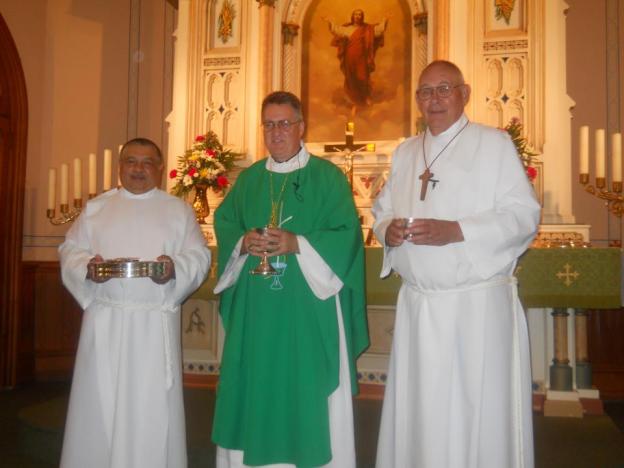
One of the biggest kicks I get being the pastor of such a church is showing people the church sanctuary. I don’t think it’s failed to happen yet, you hear them silently, reverently suck in a little air and say a quiet wow! You want a place that evinces true Christian spirituality? Look at the featured picture, and that really doesn’t do it justice. If you don’t know where you are, well you have problems that I can’t help you with.

I did find the point of bringing nature into a church an interesting one. . I’d like to see if we could do more of that. I will say Christmas the altar is covered with poinsettias and Easter with lillies. But it is an inner-city church and a place in the church that would be a place where we could have some plants and some kind of natural effects would have a huge benefit, so thanks for the suggestion. Let’s see some of these people who talk a good game show up and put it in motion, I’ll be right there with you.

Respite” “Millenials, perhaps more than any other generation, have a deep need for peace and quiet; they long for a sanctuary. ‘Our culture is fragmented and frenetic and there are few places to take a breather to gain much-needed perspective,’ says Kinnaman. ‘Ironically, most churches offer what they think people want: more to do, more to see. Yet that’s exactly the opposite of what many young adults crave: sacred space.,’ ”

“Our churches are places of action, not places of rest; spaces to do rather than spaces to be. The activities, of course, are designed to connect people with God and each other – and some Millennials hope for that, too – but many just want an opportunity to explore spiritual life on their own terms, free to decide when to sit quietly on the edges of a sacred space and when to enter in.”

My answer, you need sacred space at two in the morning, you call me up and I will come down and open up the church. But you better be serious, don’t be there whining, be there genuinely searching. I would love it! We have action, we are an inner-city church and we often have to deal with real issues, but our priority is always spiritual health. Dr Luther describes pastors as Seel Sorgers, ‘soul healers’ that’s what I am first and foremost, but I try to do the other things.

When we first got to First St Johns, we set up a “Prayer Room”, I also had a few, very few, people want to go into the sanctuary to pray. We have prayer groups right after worship, we have a prayer breakfast once per month, we have a “Healing Service” one per month, Matins worship Thursday mornings and Sunday morning. I’d happily do some of these much more often, but frankly, not exactly overwhelmed with response as it is now.

“Give them Jesus – building relationships and learning about Jesus are two central reasons why Millennials stay connected to church. Barna’s research shows that young adults who remain involved in a local church beyond their teen years are twice as likely as those who don’t to have a close personal friendship with an older adult in their faith community (59% vs 31%).”

For a small church, we do this pretty well, we could do better, but there has to be buy-in from everyone and again I would jump through hoops to facilitate it.

So to Marian and David, Taylor and Heather, here you go. This is it right here. Genuine worship, genuine doctrine, genuine space, genuine relationships and authenticity. Let’s sit and talk, let’s really deal with our relationship with Jesus and genuinely worship and honor Him. Does He need our worship? No, but we need to worship and we need to do it with authenticity, not sit back and fill me/entertain me. Don’t expect me to just pat you on the head, sure when it’s needed, but today, we need to get real and get back to the real church and not the happy/clappy God just wants me to be happy. No, it’s joy in Christ, won’t always be pleasant, but it is true relationship. Do you want that or not?

Remembering our sin in preparation for the Child First St Johns November 30, 2014 Isaiah 64: 1-9

For the audio version of this sermon, click on the above link, or copy and paste it into your web browser. Thank you and God bless.

We make our beginning in the Name of God the Father and in the Name of God the Son and in the Name of God the Holy Spirit and all those who prepare for the coming of the Son in the new liturgical year said … AMEN!

Happy New Year, sounds a little weird, aren’t we supposed to have Christmas first and then have New Year? Today is the first Sunday of the church New Year, the time of Advent, the time where we wait in anticipation, our whole life is a time of waiting in anticipation of the coming of Jesus in the clouds of His power and glory. But for now we wait on the feast, the celebration of the coming of the Christ child. The Advent of His Kingdom in the world. We joined together in the Apostle’s Creed to remember that He will come again, to judge both the living and the dead. Those who have died in Christ will be raised to the resurrection the eternal Kingdom, the New Jerusalem.

Isaiah says “Be not so terribly angry, O LORD, and remember not iniquity forever. Behold please look, we are all your people.” (Is 64:8-9) Ya, Isaiah is addressing the Old Testament God. Remember Isaiah 6? Isaiah is raised into the presence of God: “Woe is me, I am a man of unclean lips… for my eyes have seen the King, the Lord of Hosts!’ (Is 6:5)? From the beginning of Isaiah to the end, our reading today, Isaiah is readily acknowledging the fact that we are sinful and unclean, we are simply not suitable to be in the presence of a pure, holy, God. Clearly God has revealed to Isaiah that we are sinful and there needs to be a solution to our condition. Yahweh makes it very clear to Isaiah that the sacrifices of Israel; rams, bulls, lambs, just doesn’t cut it. Read all through Isaiah 1: 10-15. But then what does God do? He promises that they will be made as white as snow… our sins will be like wool, nice and white, cleaned, made pure. He makes it very clear all through Isaiah’s book that we are sinful, and Isaiah is completely aware of his own condition. Imagine being brought straight into the presence of our completely holy God, just being overwhelmed by His holy presence, His Holy being and our being, the complete opposite, totally depraved and sinful. It must be an overpowering experience. Many people demand that God come into their presence, we couldn’t begin to cope with that, we would be consumed by our sinfulness in contrast to His holiness, we would be completely blown away and that’s why God won’t do it.

Until we completely internalize Paul’s words in our epistle reading: “I give thanks to my God always for you because of the grace of God that was given you in Christ Jesus… who will sustain you to the end, guiltless in the day of our Lord Jesus Christ.” ( 1 Cor 1: 4, 8) Only in Christ are we guiltless, that we can then be in the presence of the Father, totally righteous and holy, but only through our baptism-new life, we are made holy, we don’t have to be reduced to the fear and disgust that Isaiah felt. In Christ, in the Father’s presence we are lifted up to joy, we can rejoice. I have no doubt that it will be an overwhelming feeling of love and freedom in Christ, in the Father’s presence.

Isaiah is making a plea for restoration. He has been made completely aware of how unworthy he is, how unworthy we all are. Isaiah is no better or worse then we are, none of us is any better or any worse. Isaiah is making this plea that we can be restored. In what way are we restored? We can now be in the Father’s presence, we are no longer separated from Him, alienated from Him. We are alienated from Him because we are aliens in relation to Him. No we aren’t green or odd-shaped, we don’t have antenna’s in our head, but our nature, as Isaiah has been made profoundly aware of, is totally opposite to His. He is completely holy, completely perfect, we are imperfect and deeply sinful. Walter Roehrs in the Concordia Self-Study Commentary writes: “Isaiah devotes the remainder of his book to correct two misconceptions his hearers and readers are prone to harbor about the way God wants to lead them to glory.” I might add that this is the way we think today, probably more so, then what the people in Isaiah’s time thought. “It is a fatal mistake on the one hand, to … walk with God with one foot, and with the other to stalk through the sewer of sin.”1 That’s the way we think today, “I’m good enough, I haven’t killed anyone, there are others much worse than me.” So we continue to live our lives in this mind-set that I can give God what ever I decide and He has to take what I give Him and deal with it. God is not a half-way kind of guy, it’s His way or no way. How the world comes to another conclusion totally baffles me. Why should a perfect, holy God be happy with some scraps that we throw Him, bring us into His presence and just allow whatever phony, mooshy, sentimental whim we chose over His perfect being? Why would He let our lusts and greed overcome His Holiness. Through our sin, we’ve messed up what God created, away from Him, cutoff from Him. He drove Satan out of heaven when Satan presumed to be better than God, why would He let us in to do the same thing Satan did? He’s not and if you think otherwise, you’re only kidding yourself. Dr Roehrs writes: “Isaiah had to set Israel straight [and by extension us who are now Israel] on both counts. He [Isaiah] foretold certain disaster for a sinful nation, a people laden with iniquity’ and so depraved as to lift ‘hands … full of blood’ to the Lord in a pose of prayer.” (Is 1: 4, 15)2 That’s us, and that’s not going to work in the presence of God the Father, but in Christ we become cleansed and pure and suitable enough to be saved to eternity in God’s salvation in Jesus.

Isaiah is acutely aware of the human condition in relation to God: “We have all become like one who is unclean and all our righteous deeds are like a polluted garment. We all fade like a leaf and our iniquities, like the wind, take us away.”

So what now, what needs to happen. Can we do anything that is going to make us closer to God, to make us more desirable, more deserving of being in His presence? No… But earlier in his book, Isaiah knew that God was going to move, to do something. It was going to take about 700 years, for us that would be intolerable! We want the solution, we want it now and well, if you can’t make it happen on our time table, we’re just going to have to get ourselves a new “god”. But in God the Father’s time, it is perfect, complete, not a band-aid fix, an eternal, complete, perfect fix: “For to us a child is born, to us a son is given; and the government shall be upon his shoulder, and his name shall be called Wonderful Counselor, Mighty God, Everlasting Father, Prince of Peace.” (Is 9:6) I like what David Johnson says: “…Advent is not just anticipatory of a saccharin sweet nativity story, but bona fide bitter judgment against sin! Heaven and earth collide and are mingled in Jesus! God and man! Jesus is wrapped in human flesh; the world is wrapped in divine grace…”3 The seasonal color for Advent is usually blue, although purple is acceptable also. What other season is purple the seasonal color? Lent. The blue, and some say it’s bluish-purple, is a symbol of waiting, it represents Mary waiting with the rest of the church for her child. But the more traditional color is purple and like Lent means a time of repentance, in the sense of preparing for the coming of the Savior in repentance, being prepared for Him by repenting of our sins. That’s why we don’t normally sing Christmas carols, which are celebration, we are faithfully preparing and repenting so that in the Christ Child we are saved and we spend the Christmas season in joy and celebration. Spend the Advent season raising up your sins for forgiveness, clean out your heart, like you clean your house on Shrove Tuesday and you will be prepared to receive the child on Christmas Day as we receive the risen Christ on Easter.

The peace of God which passes all understanding keep your hearts and minds in Christ Jesus. Shalom and Amin.

1Roehrs, Franzman Concordia Self-Study Commentary p 490

2Ibid

3David A Johnson Concordia Journal Fall 2014 p 322

Sheep protected and led by the Great Shepherd First St Johns, York, Pa. Ezekiel 34: 11-16, 20-24 November 23, 2014

to listen to the audio of this sermon, please click on the above link or copy and paste into your browser

We make our beginning in the Name of God the Father and in the Name of God the Son and in the Name of God the Holy Spirit and all those who will be together in the glory and plenty of eternity in Christ shouted out … AMEN

Our readings today are about eschatology, these are eschatological studies, don’t try saying that at home, I’m a trained professional. I’m thinking in terms of the ultimate Thanksgiving. You think you need a big kitchen table at your house for Thanksgiving? Think about how big God’s table is going to be that He will need for His promised time of life in the Resurrection. “And I will bring them out from the peoples and gather them from the countries, and will bring them into their own land. And I will feed them on the mountains of Israel.” (Ezekiel 34:13)

If you’ve ever been to Quincy Market in Boston, there is a restaurant named Durgin Park. This restaurant goes back to the turn of the 20th century and if you’re in the right parts, well you can tell how old it is. They have great seafood, they have great prime rib, lots of other dishes, but here’s the deal, it’s served to you family style. You don’t have little tables all around, you have big long tables and you just grab your seat. There’s no maitre di, no pretense, you get a menu on the way, grab your seat, order your food and while you wait get to know the people all around you. It’s one reason you go there. It’s not for the service, the wait staff seems to make it their mission to see how uncomfortable they can get you, the food is great, like I said the atmosphere is early 20th century, but it’s great food, in an “interesting” facility. There are plenty of other people around you and you all know you’re there to meet people and you do, very little in terms of being bashful. Get a great dinner, stay for awhile, you have to because there’s so much to eat, and enjoy the impromptu goings on.

This is what it will be like at the dinner that God is promising Ezekiel. Being invited to the White House for dinner is a series of hoops and rolls, waiting, anticipating. How will the feast that God is talking about happen? “I myself will search for my sheep and will seek them out… I will rescue them from all places where they have been scattered on a day of clouds and thick darkness…” You won’t be expecting anything and then you will be in His presence and He is going to give you the ultimate offer you can’t refuse. Durgin Park’s food is good, but how much better, how much more, how much more fun will the feast, the banquet at the end of time be? The ultimate open menu; You want New England Lobster, here it is. Cheasapeake Bay crab cakes? The best you’ve ever tasted. Chicago prime rib? New York City pizza, … what, huh? Really pizza, at the marriage feast of the Lamb? OK, you got it.

He promises us that we will be with people scattered from all places. Places that for a day were cloudy and dark, that’s where we are right now. Life…, in terms of eternity? It’s a day, it’s over before you know it, life is not reality, the resurrection is reality, this is eternal reality. You may be in those dark, cloudy places where you know you don’t belong. Not because you’re good or too smart or even unworthy, you’re there because He took you up, the Father saw His Son in you. Jesus came to you and said “Come, you who are blessed by my Father, inherit the kingdom prepared for you from the foundation of the world.” (Matt 25: 34). You will be there for one reason and one reason only and it has nothing to do with anything you did, it’s all about how you were saved by Christ. You were saved in baptism, you became that new creation in baptism, you were faithfully led by the Holy Spirit to worship, to take the Body and Blood of Jesus. Those small bits of bread and wine, His Body and Blood, are only a reminder of the immensity of what you will inherit, of what the Father will bring you to “…the kingdom prepared for you from the foundation of the world.”

In our passages today God is showing you the ultimate Thanksgiving Day feast. You didn’t do a thing for it. Moms, you aren’t going to cook, you aren’t going to serve, you aren’t going to clean up, you will be there with Christians from around the world, rejoicing with each other that you are saved, that you are eternally going to enjoy all the great gifts of the resurrection, the new world, the world the way it was intended to be, life and life more abundant. Abundance you can never imagine in the here and now.

A friend of mine had relatives in Lithuania, his parents were from Lithuania. My friend took them to the grocery store and when they got inside and saw all the marvelous food just waiting to be taken off the shelf and put in the shopping cart they were so overwhelmed some of them actually started to cry. That will be us when we’ve been rescued from the clouds and darkness of the world and brought to the marriage-feast.

I know for many people this may not sound initially inviting, you will be sitting with people that you may have never met, Christian brothers and sister, and they will be from all the places that God scattered them in life. Many will probably have gone through difficult, even serious trials, some life or death trials because of their faith. But they won’t talk about the unpleasantness of those trials, they will talk about how thankful they are that even through difficult times God provided, God gave them the hope and promise of being provided for. They will be celebrating their deliverance, we all will be, we all will be celebrating how faithful God was to provide in life, even in those times of pain and loss. The pain and loss of earth will be a dim memory, even if it was only a few hours ago for some.

The idea of sitting with a bunch of what you might think of as strangers might seem a little uncomfortable to some of you, but if you’ve ever had to do a lot of traveling, which often involves being in an unfamiliar place, with unfamiliar people, meals are often a chore and often uncomfortable. That’s why Durgin Park is appealing to many who are traveling to Boston, they will be with a bunch of other people who want to be with a friendly group and I can assure you I’ve never had a bad dinner there. But in the resurrection we will be with people who are true brothers and sisters in a world that will dazzle even us who think that we’re hard to impress. We will be like the relatives from Lithuania, overwhelmed in delight at what God has provided for us and for those whose earthly life might have been in material poverty and need.

In his book “Heaven” Randy Alcorn writes: “We know that people in Heaven have lots of feelings – all good ones. We’re told of banquets, feasts and singing. People will laugh there (Luke 6:21) Feasting, singing and rejoicing involve feelings.”1

Alcorn quotes Seneca the Roman philosopher who said, “The day thou fearest as the last is the birthday of eternity.”2

I have no doubt that you will enjoy your Thanksgiving celebration with family and friends, it will be a time of pleasure and belonging. But it will be a snack compared to what you will be given when you are picked by the Lord and brought to that banquet, eternally in the presence of the crucified and Risen Savior, our Redeemer. It won’t be a feast of just food and companions, it will be a feast of life and life more abundant, a world that will be just waiting for you to enjoy it’s splendour, its activity and its vastness, a world where even in eternity you will not be able to experience everything it has to offer. God is an infinite God, He delights in the pleasure of His children. To be sure, the world is often not very delightful, if not downright troubling. But the world that God brings us to will be a continuous celebration of life, eternal life to His glory, forever and ever …

The peace of God which passes all understanding keep your hearts and minds in Christ Jesus. Shalom and Amin.

1Randy Alcorn Heaven p 284

2Ibid p xvii

God’s minister or the people’s minister?

Yes, for the second day in a row I am ripping off Dr Dale Meyer, but for good reason, because it brought up an issue that is important regarding worship. Dr Meyer’s commentary is first and then my slant  on the reasons why I preach from the pulpit.

Meyer Minute for November 21

Here’s a question I’m often asked. “Does the Seminary teach students to preach in or out of the pulpit?” This ranks right up there with the other great questions of the universe. Why does God hide Himself from us? Why does God permit suffering? How can Christianity claim to be the only true religion and only way to heaven? Catch my sarcasm?

We have chapel services on campus every weekday. Most chapel sermons are delivered from the pulpit but it’s not unusual for the preacher to stand in the center of the chancel or even down in the aisle. I teach preaching and always get the question, “What about preaching out of the pulpit?” There are, I answer, logistical considerations. For example, if you’re standing in the aisle, can the people on the flanks or in the balcony see you? There are deeper considerations. What is the congregation used to? If they’re used to one way or the other, is this an issue worthy of controversy? Ask the elders, I tell them. But going farther, my sarcasm getting the better of me, why do you ask? I’ve learned that they imagine that standing out of the pulpit somehow means being relevant. I also hear lay people say, “We love our pastor. He preaches out of the pulpit.” Huh? The real issue is what he’s preaching! A compelling sermon from God’s Word will be compelling wherever it’s delivered from. A sermon of theological jargon that doesn’t speak to life will be irrelevant wherever it comes from.

In my mind it comes down to this. To congregation members: Are we so at home with one worship style that we get upset by something different? Aren’t we driven to come to church by this question, “Lord, to whom shall we go? You have the words of eternal life.” (John 6:68) To students: Don’t make the pulpit the hill you’ll die on, or off. Instead, make God’s Word so applicable to people’s lives that they’ll listen intently wherever you are. In or out? Sounds like a belly-button question, naval gazing. I’m desperate to know more God, wherever the preacher stands.

My thoughts on why I preach a certain way – Pastor Jim Driskell

I certainly get Dr Meyer’s point, well I kind of have to, he’s the one that taught my Homiletics II course, I passed. Fits with my philosophy of life “Semper Gumby”, always flexible. You do have to factor in the situation, the hearers, survey all the considerations. All things being equal, I do prefer the pulpit. It’s not due to some ego need, but I also have to remember what I’m doing there. Richard Foster asked the rather germaine question; “Am I a minister of the people or of Christ.” I’m called “minister” because I represent Jesus to His church, His people. Yea, sometimes you do have to come down and get right in the middle of people. But as I’ve been discussing for awhile, it’s not our “comfort” that it’s about, it’s how we glorify the Lord and pick a part of His earthly ministry and you can see that He was terribly concerned about our “comfort” He was concerned that we are growing, that we are becoming mature in Jesus. How does that apply here? I feel it’s my duty in as many ways as possible to remind people of the Lordship of Jesus. Not that He’s aloof, or separated from us, He’s not, as baptized children who eat Jesus’ Body and drink His blood, we could not be closer or more apart of anyone. But we also let ourselves get way to buddy-buddy with Jesus and we forget what He’s done, continues to do and what He will do. He told us that when He returns He will return in His glory, we know that He rules in glory from heaven. If He chooses to treat us as His friends, and He told us He did, that’s His call and I would certainly welcome it. But as His minister, as one who has been chosen to represent Him and bring Him due honor in front of His people, that’s what my aim is. That when we are in worship together we all know that it’s Jesus who is with us, who is using me to preach. I may not be that great as I conduct worship and I may not be worthy of that tremendous privilege and duty, but I strive to do it to the best of my ability and I want people coming in and thinking about our Great King and I intend to honor Him that way and leave it to Him if He chooses some other way. So Dr Meyer’s point is well taken, if you are in worship, be there for the right reasons. It does none of us any good to get hung up on whether I’m in a pulpit, wandering around, yada, yada. Be focused on what God’s doing, that, hopefully, He is using me to preach His word and I’m doing it well enough and you are getting a message that will lift you and encourage you, know that our great and powerful God is in control and watching over you and to bring Jesus to all you know. In the meantime I will faithfully do what I can to honor Him.

Meyer Minute, Dr Dale Meyer, David’s Psalms read by Jesus which makes them important to us.

The Rev Dr Dale Meyer has had a varied and tremendous ministry, filling the pulpits of prominent churches of the Lutheran Church, in broadcast and now as President  of Concordia Seminary St Louis, Mo. one of the largest Christian seminaries in the United States. The following is a “minute” describing the connection between King David’s (most of them at least) Psalms and Jesus, who of course is linked to us. Friend Dr Meyer on FaceBook to get his daily “minutes” he’s at Dale Meyer
So check out
2 hrs ·

Meyer Minute for November 20

The print on your phone or tablet isn’t large enough? Want the picture bigger? Do the magic thing with your fingers and presto, the print is larger and you get it.

When a follower of Jesus zooms in on the Psalms, the picture of the ages gets clearer. At first blush, each psalm is about something in someone’s life long ago. For example, the writer of Psalm 118 had survived a battle and so he exults. “Glad songs of salvation are in the tents of the righteous… I shall not die, but I shall live.” (Psalm 118:15-17) OK, good for him. You read further and come across this, “The stone that the builders rejected has become the cornerstone.” (22) Whoa! As a Jesus follower you know that the New Testament uses that passage for Jesus. You reread and see the psalm also describes Jesus. “I shall not die, but live” came to fulfillment in Jesus, who did die but arose and lives forever. Zoom even closer. Since Jesus promises, “Whoever believes in me, though he die, yet shall he live,” you also see your future in the psalm. (John 11:25) You shall not die but live! “Glad songs of salvation are in the tents of the righteous.”

The Psalms are the prayer book of the Bible. There’s probably no emotion of your life that isn’t talked about and prayed about in the Psalms. More than that, the Psalms were Jesus’ personal prayer book. He prayed these very words you are reading and praying. Now you’re zooming wide! The psalmist long ago, you, Jesus…people of the kingdom, members of the Body of Christ, all united with Jesus in praying the psalm. “This is the Lord’s doing; it is marvelous in our eyes. This is the day that the Lord has made; let us rejoice and be glad in it.” (23-24) The picture of the ages gets very clear!

Holy communion, a time of great reverence and thankfulness, Jesus gives us His Body and Blood for our forgiveness and strengthening

I did a blog awhile ago on the Lord’s Supper and I have wanted to pick that discussion up in more detail because this is a real sore spot with people who try to make this out to be some sort of egalitarian issue. It’s not and I need you to put aside your prejudices, and your idea that it’s all about you, it’s not, it’s about God, Father, Son and Holy Spirit. I intend to do a series of blogs on this, the issue is not as simple as many would like to make it out to be, the reason why I’m doing it in a series of discussions.

The Lutheran view of the Lord’s supper is unique in Christianity. There are two sacraments in the Lutheran Church, baptism, where the Holy Spirit gives the recipient new life, they are born again in Christ. The Holy Spirit becomes part of that person and that person becomes a child of God. The second is the Lord’s Supper, where we receive the true Body and Blood of Jesus. As God’s child, we receive our Savior’s Body and Blood in order to be assured of our forgiveness by Jesus’ sacrifice and to receive the nourishment that we need as I say ” to strengthen body and soul to life everlasting”.

So here’s the rub, this is exclusive, you have to be baptized, a triune baptism, and you have to be a member of the Lutheran Church. This is not to impose some arbitrary exclusivism, this is to honor and treat with great reverence the Body and Blood of our Savior. We are in agreement with Roman Catholics that the Lord’s Supper is about the true Body and Blood. We however disagree on the means, but that will be part of a later discussion in this series and yes that difference is a fundamental issue.

I don’t make membership a long process or jumping through hoops. I take people through what we are about, why we do what we do and to impress upon people that it is about God, not about us. A lot of the discussion in the previous post was in the sense of “that’s not fair to me”, “I should have what anyone else has”, “Why can’t I”, etc, etc. Basically, it’s all about me and how I should be treated and very little in terms of treating the Lord’s Body and Blood with due and extreme reverence. I am a Lutheran pastor, I take the responsibility of administering the Lord’s Body and Blood with the utmost reverence and giving me arguments that it’s all about me is not going to be received with any respect and is just not valid. After I go through instructions, we take time during worship to ask them if they understand the teachings of the Lutheran Church and if they vow to abide by these teachings. This is the sense of a wedding, as I wrote about in an earlier blog, we treat weddings as worship, taking vows, making promises in the presence of God and brothers and sisters in Jesus. We do the same with membership, that you understand what we are doing and you promise before God and brothers and sisters that you will honor and uphold these teachings. It’s not your call, it’s what Scripture tells us it is. I am retired enlisted in the U.S. Coast Guard. Every four years I had to re-enlist and take an oath to uphold and defend the Constitution of the United States. I took those vows very seriously and I should, my country is important. But by far God is more important. If I take the U.S. Constitution seriously, I take God much more seriously. When people take a vow before God you need to take it seriously. At that point, knowing that they understand and accept the Church’s teaching, I with great joy welcome them into the Church and happily give them the Lord’s Body and Blood, there is no higher act, the Body and Blood that was sacrificed to pay for our sins and to give us the assurance of life everlasting in the Resurrection. Why someone thinks I should take that less than seriously is totally bizarre to me. In short, those of a Reformed, Arminian or other Protestant, non-denominational etc church do not have this understanding, why would they with any integrity still insist on taking the Lord’s Body and Blood?

It is a very deep issue and deserves much more discussion than the superficial treatment given by many other Christian churches. I welcome you to join in that discussion as I try to honor the Body and Blood in subsequent blogs.

Rev Dr Kurowski quotes the following in his book and it underscores the discussion about how our worldly attitude towards the Lord’s Supper is just not valid, God tells us what it is and that is what we honor and not our “opinion”: “In their case the god of this world has blinded the mind of unbelievers, to keep them from seeing the light of the gospel of the glory of Christ, who is the image of God. For what we proclaim is not ourselves, but Jesus Christ as Lord, with ourselves as servants for Jesus sake.” (2 Corinthians 4: 4-5)

I would highly recommend a book by Rev Dr Peter Kurowski on the discussion of close/closed communion “Close Communion Conversations”. I am sure your order will be happily received at  lawgospel@lawgospel.com  or 877-CMS-1962

We serve the ultimate Commander in Chief Veterans Day observance First St Johns Nov 9, 2014

Traducción española sigue el Inglés

We make our beginning in the Name of God the Father and in the Name of God the Son and in the Name of God the Holy Spirit and all those who know Jesus as the leader of their life said … AMEN
Before I begin the planned sermon, I would like to take a moment to remember our brother, the Rev. Donald Biggs. Pastor Biggs has been a member of our congregation since he retired from the ministry. I have very much appreciated his guidance and support as I started my ministry. We certainly offer our condolences to his wife Mary Lynn our beloved sister and their two sons, daughters-in-law and grandchildren. We continue to keep Mary Lynn in our prayers as she has been suffering from health problems and we trust in the promises of Jesus that Pastor Don is in the presence of Jesus, now in perfect health and in perfect bliss before the throne of our Lord. (Time for silent prayer)
Today we honor our veterans, men and women who made a commitment to serve, protect and defend. Many of whom were often put into, at least, uncomfortable situations far from home, if not outright dangerous situations. The military teaches leadership right from the very beginning, even the most junior people are put into leadership positions or responsibilities. Beginning in boot camp there is a recruit company commander and other recruits put into leadership positions. Even in day to day situations junior people are often given authority for different tasks. The U.S. Military is unique among any other organizations in the world, often you are expected to follow commands without question, but quite often responsibility is pushed down to the lowest level to make decisions, part of being in the military is to not just be a good follower, but also a good leader. It has been recognized throughout history that quoting Aristotle: “’He who cannot be a good follower cannot be a good leader.” Despite the stereotype of those who have served in the military, you usually find people who are much more balanced, much more aware of the need to be an effective leader, much less concerned about their own gratification. There’s a very good reason for that, in politics, in government, in business, science, academia, it’s all about me and how I get ahead. There’s no danger, there’s no sharing, there’s no need to watch out for someone else, unless it’s to your benefit, it’s all about how anything enhances your life, everyone else just has to take care of themselves. Yea, in the military the consideration can be to your benefit, that you don’t get killed. But because you have built that sense of camaraderie with brothers and sisters, you also want to watch their backs. It is also much more about the common good, the good of each individual, when one benefits usually everyone does.
Again, too many times our “leaders” are only about how they are enhanced by being a leader. That’s simply not leadership. Leadership is about that agape love, that selfless love, that love that wants what is truly best for each person God leads you to, that love that Jesus showed to us on the cross and gives to us everyday through His grace, His hope, His promise. Napoleon said “A leader is a dealer in hope.” No doubt Napoleon’s motivation/definition of hope was in a very worldly sense and he wasn’t thinking about Jesus when he said that. But it is certainly true in Jesus, not in a cynical way, but in that true agape love way. The hope that He gives us in His resurrection, in the hope that He gives us for life eternal. Pastor Don liked to tell me how on Easter everyone was kept out of the sanctuary at sunrise, he came out on the roof of a tomb that had been built and with the sun at his back announcing to all who gathered “he is not here, He has risen”. We have that hope of eternal life, “He is risen…[He is risen indeed, hallelujah!]
Imagine a world where you did not have that love/leadership, not knowing that Jesus did step up, as Jesus tells us: “I have overcome the world.” This is so empowering, so comforting, so reassuring. In a recent study it was show that when people were monitored at work their quality and productivity was worse, they were stressed over being constantly watched, versus being enabled to be productive. Business is not a very forgiving environment, there may be ‘love’ when you’re on top, but there sure isn’t any if things aren’t going well. That’s what the world is all about, an old saying: “The world doesn’t want to hear about the labor pains, they just want to see the baby.” The further implication that not just having the baby, but also that the baby better stack up in terms of the expectations of the world, otherwise both mother and child have failed.
We know that the Holy Spirit dwells within us, we are a temple of the Holy Spirit. We are loved, we are inhabited by love and leadership, we have ready access to the forgiveness that is Jesus. He knows when we try for Him, when we demonstrate that sacrificial leadership of discipleship. He encourages us, He strengthens us, He picks us up, He dusts us off, maybe gives us new direction with promise and hope and then puts us on our feet, makes sure we know that we are loved with an everlasting love, squares our shoulders in the direction He wants us to go and then leads us on the path He puts us on. The Law/the world, monitors and checks us and usually intimidates the toughest of us. The Law/the world, never loves, it keeps us in fear and bondage and because of that we suffer, we don’t live to the level that God intends us to live at and when we fail (not if), the world just casts us into the junk heap. True leadership picks us up, equips us, loves us, is always with us “And behold, I am with you always, to the end of the age.” (Matt 28:20 ESV) The Coast Guard motto is Semper Paratus always ready and we are always ready in Jesus.
Like the military you can be a new disciple and still be used mightily by the Lord, it is a lot like the military when you can be a junior person and still have responsibility over more senior person. I was in Puerto Rico for Tall Ships in 2001 to do security as coxswain of a 41 foot boat. Ended up doing a lot of taxiing, because it was the biggest most comfortable boat. Had to drive the zone commander from one end of the harbor to the other, going past where all the tall ships were moored. At one point a helicopter roars overhead and the commander tells me to hurry up because the vice commandant of the Coast Guard is on the helicopter. I had about a dozen passengers on board going past a bunch of historic ships and chose to ignore the commanders request. The safety and integrity of other people and boats took priority. He was just going to have to be a little late for the vice commandant. Often we have to ignore the world and rely on what the true CNC tells us, God is always our commander in chief, He wants what is best for us and for us to minister to those around us accordingly. When we are true leaders, true servants of Him, ready to serve and sacrifice as so many who do who are serving or have served in our military, then we are truly doing His will.
The peace of God which passes all understanding keep your hearts and minds in Christ Jesus. Shalom and Amin.

Servimos el último comandante en jefe Día de los Veteranos observancia First St Johns 09 de noviembre 2014

Hacemos nuestro comienzo en el Nombre de Dios el Padre y en el nombre de Dios el Hijo y en el Nombre de Dios el Espíritu Santo, y todos los que conocen a Jesús como el líder de su vida dijo … AMEN
Antes de comenzar el sermón planeado, me gustaría tomar un momento para recordar a nuestro hermano, el reverendo Donald Biggs. Pastor Biggs ha sido miembro de nuestra congregación desde que se retiró del ministerio. He apreciado mucho su orientación y apoyo cuando empecé mi ministerio. Ciertamente Ofrecemos nuestras condolencias a su esposa Mary Lynn nuestra querida hermana, y sus dos hijos, hijas-en-ley y nietos. Seguimos mantener Mary Lynn en nuestras oraciones como ella ha estado sufriendo de problemas de salud y confiamos en las promesas de Jesús de que el pastor Don está en la presencia de Jesús, ahora en perfecto estado de salud y en la felicidad perfecta delante del trono de nuestro Señor. (La hora de la oración en silencio)
Hoy honramos a nuestros veteranos, hombres y mujeres que hicieron un compromiso de servir, proteger y defender. Muchos de los cuales fueron a menudo ponen en, al menos, las situaciones incómodas lejos de casa, si no en situaciones francamente peligrosas. El ejército enseña liderazgo adecuado desde el principio, incluso las personas más jóvenes se ponen en posiciones o responsabilidades de liderazgo. Comenzando en el campo de entrenamiento hay un comandante de la compañía recluta y otros reclutas puestos en posiciones de liderazgo. Incluso en el día a día situaciones de las personas jóvenes a menudo se dan autoridad para diferentes tareas. Los EE.UU. Militar es única entre las otras organizaciones en el mundo, a menudo se espera que siga órdenes sin cuestionarlas, pero muy a menudo la responsabilidad es empujado hacia abajo al nivel más bajo para tomar decisiones, parte de estar en el ejército es no sólo ser un buen seguidor, sino también un buen líder. Se ha reconocido a lo largo de la historia que citando a Aristóteles: “.” El que no puede ser un buen seguidor no puede ser un buen líder “A pesar del estereotipo de los que han servido en las fuerzas armadas, que se suele encontrar personas que son mucho más equilibrada, mucho más conscientes de la necesidad de ser un líder eficaz, mucho menos preocupados por su propia gratificación. Hay una muy buena razón para ello, en la política, en el gobierno, en los negocios, la ciencia, la academia, es todo acerca de mí y cómo me pongo por delante. No hay peligro, no hay intercambio, no hay necesidad de mirar hacia fuera para otra persona, a menos que sea para su beneficio, es todo acerca de cómo nada mejora su vida, todos los demás sólo tiene que cuidar de sí mismos. Sí, en el ejército la consideración puede ser para su beneficio, que no te maten. Pero debido a que usted ha construido ese sentido de camaradería con los hermanos y hermanas, que también quiere ver a sus espaldas. También es mucho más sobre el bien común, el bien de cada individuo, cuando uno se beneficia por lo general todo el mundo hace.
Una vez más, muchas veces nuestros “líderes” son sólo sobre la forma en que se ven reforzadas por ser un líder. Eso simplemente no es liderazgo. El liderazgo es acerca de que el amor ágape, el amor desinteresado, ese amor que quiere lo que es realmente mejor para cada persona que Dios te conduce a, de que el amor que Jesús mostró a nosotros en la cruz y nos da todos los días a través de su gracia, su esperanza, su prometer. Napoleón dijo: “Un líder es un distribuidor en la esperanza.” No hay duda de la motivación / definición de Napoleón de esperanza fue en un sentido muy mundana y no estaba pensando acerca de Jesús cuando dijo eso. Pero lo cierto es en Jesús, no de una manera cínica, pero en la que el verdadero camino del amor ágape. La esperanza de que Él nos da en Su resurrección, en la esperanza de que Él nos da la vida eterna. Pastor Don gustaba decirme cómo en Pascua todo el mundo se mantuvo fuera del santuario al amanecer, salió en el techo de una tumba que había sido construido y con el sol a sus espaldas anunciando a todos los que se reunieron “él no está aquí, ha resucitado “. Tenemos la esperanza de la vida eterna, “Él ha resucitado … [Él ha resucitado, aleluya!]
Imagina un mundo donde no tiene que el amor / liderazgo, sin saber que Jesús intensifique, como Jesús nos dice: “. Yo he vencido al mundo” Esto es por lo que empodera, tan reconfortante, tan reconfortante. En un estudio reciente se muestra que cuando las personas se controlaron en el trabajo de su calidad y la productividad era peor, se destacaron por haber sido constantemente vigilado, frente está habilitado para ser productivos. Negocio no es un ambiente muy indulgente, puede haber ‘amor’ cuando estás en la cima, pero no seguro que no es ninguna si las cosas no van bien. Eso es lo que el mundo es todo alrededor, un viejo dicho: “El mundo no quiere oír hablar de los dolores de parto, lo que quieren es ver al bebé.” La implicación, además, que no sólo tenga el bebé, sino también de que el bebé mejor apilan en términos de las expectativas del mundo, de lo contrario la madre y el niño han fallado.
Sabemos que el Espíritu Santo mora en nosotros, somos un templo del Espíritu Santo. Somos amados, que están habitadas por el amor y el liderazgo, tenemos fácil acceso al perdón que es Jesús. Él sabe cuando tratamos de Él, cuando se demuestra que el liderazgo sacrificial de discipulado. Él nos anima, nos fortalece, nos levanta, nos desempolva, tal vez nos da una nueva dirección con la promesa y la esperanza y luego nos pone en pie, se asegura de que sabemos que somos amados con un amor eterno, plazas nuestros hombros en la dirección que quiere que vayamos y luego nos lleva por el camino que Él nos pone. La Ley / el mundo, los monitores y los controles de los Estados Unidos y por lo general intimida el más duro de nosotros. La Ley / el mundo, nunca se ama, que nos mantiene en el miedo y la esclavitud y por eso sufrimos, no viven al nivel que Dios nos tiene la intención de vivir en y cuando fallamos (no si), el mundo sólo nos hace caer en el montón de chatarra. El verdadero liderazgo nos recoge, nos equipa, nos ama, está siempre con nosotros “Y he aquí que yo estoy con vosotros todos los días hasta el fin del mundo.” (Mateo 28:20 NVI) El lema de la Guardia Costera es Semper Paratus siempre listo y estamos siempre listos en Jesús.
Al igual que los militares puede ser un nuevo discípulo y todavía ser usado poderosamente por el Señor, que se parece mucho a los militares cuando se puede ser una persona menor y aún así tener la responsabilidad sobre más persona mayor. Yo estaba en Puerto Rico para la Tall Ships en 2001 para hacer la seguridad como timonel de un barco de 41 pies. Acabé haciendo un montón de rodaje, porque era el mayor barco más cómodo. Tuvimos que conducir el comandante de zona desde un extremo del puerto al otro, más allá de ir a donde estaban amarrados los barcos de altura. En un momento un helicóptero ruge encima de la cabeza y el comandante me dice que se diera prisa porque el vice comandante de la Guardia Costera está en el helicóptero. Tuve una docena de pasajeros a bordo que van más allá de un puñado de barcos históricos y decidió ignorar solicitan los comandantes. La seguridad y la integridad de otras personas y embarcaciones tomaron prioridad. Él sólo iba a tener que ser un poco tarde para el vice comandante. Muchas veces tenemos que ignorar el mundo y confiamos en lo que el verdadero CNC nos dice, Dios es siempre nuestro comandante en jefe, Él quiere lo mejor para nosotros y para nosotros para ministrar a los que nos rodean en consecuencia. Cuando somos líderes verdaderos, verdaderos siervos de Él, dispuestos a servir y sacrificio como tantos que hacen que están sirviendo o han servido en nuestras fuerzas armadas, entonces estamos haciendo realmente su voluntad.
La paz de Dios que sobrepasa todo entendimiento, guardará vuestros corazones y vuestros pensamientos en Cristo Jesús. Shalom y Amin.

Los santos de Jesús, los que viven con autenticidad Primera Saint Johns, 02 de noviembre 2014

Hacemos nuestro comienzo en el nombre de Dios Padre y en el nombre de Dios el Hijo y en el Nombre de Dios el Espíritu Santo. Yo voy a decir buenas santos de la mañana de York y vas a dar los buenos días en Saint Jim, buenos santos de la mañana de York …
Y todo el pueblo de Dios dijo AMEN! Celebramos hoy el Día de Todos los Santos, que es también el mismo día como Día de la Reforma que observaremos en el culto de esta tarde, el día en que Martín Lutero clavó sus 95 tesis.
Halloween, que se observó el viernes, tiene sus raíces en un día de fiesta pagano gaélico llamado Samhain [Sawin pronunciado], que es cuando se pensaba que los espíritus y hadas podían moverse con mayor facilidad en el mundo físico. Las almas de los muertos visitaban los lugares donde vivían. Halloween es la segunda fiesta más observado después de la Navidad. Para aquellos en el mundo secular que les gusta pensar en cómo pragmático y la realidad que son impulsados​​, un escritor señaló que “Halloween es él último día de fiesta de fingir … nos vestimos y ‘pretender’ ser alguien o algo distinto de nosotros mismos. .. “En otras palabras, simplemente pone de relieve la falsedad del mundo en que vivimos. un mundo que niega la realidad de un cariño, Dios Creador y trata de hacer en algo mucho mejor que no lo es. El mundo ama a preocuparse de su auto con el aspecto falso de “espiritualidad” que muchas personas hoy en día comprar fácilmente en y negar la verdadera espiritualidad que es Jesucristo. Sigo buscando, pero no encuentro donde explica que lo que la gente realmente piensa que tipo de espiritualidad va a hacer, excepto que les da la sensación de estar en control, pero nunca realmente cómo se realiza ese control. ¿Cómo funciona en términos de la eternidad? Nadie parece ser el más mínimo interés. El mundo habla un buen juego de ser “auténtico”, de autenticidad, pero que rara vez se ve, es sólo en términos de su percepción ilusoria de un mundo sin Dios y luego se preguntan por qué siempre se siente perdida, asustada y sola. Sólo hay una fuente de autenticidad y que está en Jesús. Cuando estamos a un santo en Jesús son verdaderamente auténtico, parte de la cual está siendo humilde, que es cuando confiamos en el Señor para vivir la vida que Él nos ha salvado para. Para estar seguro de ser cristiano es mucho más que las Bienaventuranzas, nuestra lectura de hoy, pero sin duda modelar autenticidad cuando hacemos nuestro mejor esfuerzo para vivir esa vida a través del poder del Espíritu Santo. Las Bienaventuranzas no son nuestras obras, que son el fruto del Espíritu Santo que está trabajando a través de nosotros. Todavía el pecado, el mundo piensa que debemos vivir en la perfección. No, los santos siempre serán personas falibles, el anciano vive en cada uno de los santos, pero el Espíritu Santo nos mueve una y otra vez a la altura de las Bienaventuranzas. El mundo trata de vivir sus propias virtudes, pero es muy claro que esas virtudes son sólo para mejorar su propia vida y el fruto de su propio espíritu, el espíritu del mundo y no del Espíritu Santo. Roy Lloyd dice lo siguiente: “… un hombre que llegó en 1953 en la estación de ferrocarril de Chicago para recibir el Premio Nobel de la Paz. Como él bajó del tren … como las cámaras destellaron y funcionarios de la ciudad se acercaron … él les dio las gracias cortésmente. Entonces él pidió ser excusado por un momento. Caminó a través de la multitud hacia el lado de una mujer de negro anciano que lucha con dos grandes maletas. Él los recogió, sonrió y la escoltó hasta el autobús, la ayudó a subir y le deseó un buen viaje. Luego Albert Schweitzer se volvió hacia la multitud y se disculpó por mantenerlos esperando. Se ha informado de que un miembro del comité de recepción le dijo a un reportero, “Esa es la primera vez que vi un pie sermón. ‘” Schweitzer fue un teólogo alemán, luterano, un organista que estudió Bach, un médico, un médico misionero a África. Fue galardonado con el Premio Nobel de la Paz por su filosofía de “Reverencia por la Vida”, se evidencia en su fundación de un hospital en Gabón alrededor de la vuelta del siglo XX. Es interesante cómo un santo de Cristo, que produce tanta fruta como un discípulo cristiano, por lo realizado y aún en una gran multitud, era el único que se dio cuenta de una anciana que necesitaba ayuda, entonces y allí, para hacer su próxima conexión para su viaje. Un simple acto de un hombre que sirvió a nuestro Señor de una manera tan magníficas, un gran santo de Cristo.
David Kinneman fue el orador en la conferencia en Carolina del Norte que asistí. Una cosa que él regresó a una y otra vez en su presentación fue que las generaciones más jóvenes de hoy en día y, a mi juicio la mayoría de la gente en el mundo, están buscando, es authenticty, genuinness. Ellos saben y nosotros, los que están en Cristo saben que el mundo no es genuino. Todas las instituciones del mundo fallan en repetidas ocasiones y, sin embargo tratar de convencer de su autoridad y autenticidad, incluso mientras ellos imponen en nuestra sociedad y en repetidas ocasiones fallan. Todos nosotros podemos relacionar con la forma en que podemos ver a través del fino velo de la hipocresía que nos rodea. La iglesia es a menudo acusado de hipocresía y, a menudo por una buena razón. Tratamos de convencer al mundo de que somos santos perfectos en Jesús y sin embargo nuestro intento se hizo añicos cuando nos fijamos en los santos verdaderos. Pablo llamó a sí mismo el jefe de todos los pecadores. Él no dijo que en un intento de que parecen ser piadoso, él sabía de los pecados que había cometido en contra de Jesús y su iglesia y él los reconoció y continuó a producir el fruto del Espíritu Santo. No es como una especie de forma de expiar sus pecados. ¿Por qué? Sus pecados han sido pagados a la Cruz, Pablo sabía que no había nada que pudiera añadir a sacrificio de Jesús por nosotros. Jesús pagó por nuestros pecados a través de Su sufrimiento y sacrificio. Nosotros, como sus santos, somos salvos en Su sacrificio, sino como sus santos que fielmente seguimos el liderazgo, ánimo, esperanza y promesa del Espíritu Santo, que es la única manera en que podemos vivir las Bienaventuranzas. Reconocemos nuestras faltas, nuestros pecados. Cuando tratamos de convencer al mundo de que somos perfectos, y sobre todo el mal del mundo, el mundo puede ver a través de nosotros. Pero cuando reconocemos que la única manera de que somos perfectos es a través de Jesús y sólo a través de su gracia y el perdón, que todavía luchamos y todavía fallamos en el pecado, entonces el mundo conozca la salvación a través de Jesús.
Estamos valioso, nosotros somos su creación y somos salvos por Él a través de Cristo. Tenemos que recordar lo valioso que somos para Dios. Juan escribe: “ver qué tipo de amor [que es el amor ágape} el Padre nos ha dado: que seamos llamados hijos de Dios; y así estamos. La razón por la cual el mundo no sabe de nosotros es que no lo conocía … pero sabemos que cuando él se manifieste, seremos semejantes a él, .. “Vamos a ser sus santos y vamos a ser perfecto, no en nosotros mismos, sino en Aquel que murió por nosotros, y debido a que somos valiosos para el Padre y Él ama a sus hijos con la expresión más alta del amor.
Dr. Lutero escribió: “Mañana tengo que dar una conferencia sobre la embriaguez de Noé [Génesis 9: 20-27]; así que deben beber suficiente esta noche para poder hablar de que la maldad como alguien que sabe por experiencia. “Lutero era auténtica, no te estoy diciendo que imitar autenticidad a ese grado, pero es reconocer que somos tentados y ocasionalmente fallar.
Dado que los ancianos, los santos en Cristo se reunieron alrededor del trono de Dios en el cielo, como leemos en Apocalipsis 07:12, los santos alabando a Dios y lo adoran, vamos a tirar hacia fuera las letras insertadas en su boletín y Alabemosle aquí y ahora: Te amo Señor, letra de Petra …
La paz de Dios que sobrepasa todo entendimiento, guardará vuestros corazones y vuestros pensamientos en Cristo Jesús. Shalom y Amin.