Tag Archives: Body of Christ

Sabiduría en un mundo de pragmatismo, la “sabiduría” del mundo 1 Reyes 3 Lucas 2: 47 First St Johns

Hacemos nuestro comienzo en el Nombre de Dios el Padre y en el nombre de Dios el Hijo y en el nombre de Dios el Espíritu Santo y todos los que que quieren ser fuertes en la sabiduría de Dios dijo … AMEN!

No sabemos mucho acerca de la infancia de Jesús, nuestra lectura de hoy es sobre el único registro que se tiene de su infancia en absoluto. Pero las lecturas de hoy son sin duda un contraste en la sabiduría. En nuestra lectura del Antiguo Testamento vemos, lo que, al menos, parece ser, una especie de acto altruista por parte de Salomón. El texto dice: “Salomón amó a Jehová, andando en los estatutos de su padre David; sólo, … “Pero también vemos Salomón poniendo un poco demasiado atrapados en los caminos de la política mundial. Se casó con una hija de Faraón. Ahora bien, esto es contrario a la Ley que Jehová dio vuelta en el Pentateuco, los primeros cinco libros de la Biblia. Eliezer Shemtov escribe: “La fuente primaria de la que la prohibición de que un Judio se case con un no-Judio se encuentra en (Deut. 7: 3):” No casarse con ellos (los gentiles), que no dará su hija a su hijo y no tomarás a su hija para tu hijo “.

La razón de esta prohibición está claramente en el siguiente versículo: “Porque él va a llevar a tu hijo descarriado de Mí y que servirá dioses extraños …” (“dioses ajenos” pueden también ser interpretados en el sentido de esos ideales y ‘ismos’ que no se ajustan a los dictados de la Torá, …) 1 vemos Salomón conseguir un poco atrapados en los caminos del mundo y olvidar lo que Jehová les había dicho que hiciera. La Biblia de Estudio cronológico escribe: “El matrimonio es un medio eficaz para la creación de alianzas entre las naciones antiguas. La esperanza era que uno podría tratar más amablemente con los familiares que con los extraños. No hay mayor evidencia de la importancia de Salomón entre los países vecinos sería que para registrar su matrimonio con una hija de un faraón egipcio. Como política, los faraones de Egipto no dieron sus hijas a los reyes extranjeros. “2 El pasaje de 1 Reyes 3: 1 nos dice:” Salomón hizo una alianza matrimonial con Faraón rey de Egipto. Él tomó la hija de Faraón, y la trajo a la ciudad de David … “(ESV) Además, el pasaje nos dice que” … el rey fue a Gabaón a sacrificar allí, porque ese era el lugar alto principal. Salomón usó para ofrecer mil holocaustos sobre ese altar “(1 Reyes 3: 4). Esa es una impresionante sacrificio! Pero ¿por qué Salomón hacer una ofrenda allí? El Arca de la Alianza, el tabernáculo estaba en Jerusalén. ¿Por qué no hacer sus sacrificios? La tradición de las religiones paganas era hacer sacrificios en “lugares altos”. Más tarde, en 2 Reyes, el escritor señala: “Y el pueblo de Israel hizo en secreto contra el Señor su Dios las cosas no rectas. Ellos construyeron para sí mismos lugares altos en todas sus ciudades, … “(2 Reyes 17: 9) Hay 75 versículos en el Antiguo Testamento acerca de” lugares altos “y todos ellos condenan el hecho de que Israel adoró en” lugares altos “. Ya en Levítico Jehová dice: “Y destruiré vuestros lugares altos, y derribaré vuestras imágenes, y pondré vuestros cuerpos muertos sobre los cuerpos muertos de vuestros ídolos, y mi alma se abominará.” (Lev 26:30) Doesn ‘t parece haber ninguna duda de que hay! Está claro que Israel no es el uso de “lugares altos” para la adoración de Yahvé. Sin embargo, es en Gabaón que Yahvé viene a Salomón en un sueño y le dice “Pide lo que te daré.” Salomón ciertamente dice las cosas correctas. Habla de cómo Jehová fielmente amado padre de Salomón David y David amaba a Yahvé. Salomón reconoce que Yahvé ahora lo ha hecho rey de Israel, y por lo que parece que Salomón realmente entiende por qué está donde está. Sus palabras están justo en el mensaje: “Dale a tu siervo un corazón con entendimiento para gobernar a tu pueblo, para discernir entre el bien y el mal, porque ¿quién podrá gobernar este tu pueblo tan grande” Salomón sabe que Israel es el pueblo de Yahweh, que sólo Dios hábilmente puede gobernar y Salomón parece entender que él ha sido puesto allí para gobernar con fidelidad como Jehová lo ha colocado allí.

Salomón fue sin duda brillante, Israel se elevó a la altura de su poder bajo Salomón. Se convirtió en el reino más poderoso de la región, era rico más allá de la imaginación. Se dice que Salomón no hizo uso de la plata para decorar cualquiera de sus edificios porque el oro era tan común. La Reina de Saba viajó desde su reino africano de tomar en la sabiduría de Salomón. Pero con toda la sabiduría, el poder y el material bendición del mundo, Salomón hizo demasiado enamorado de su poder mundano y lo hizo todo lo necesario para mantener su poder y riqueza. Él ya no confiaba en la sabiduría de Jehová a gobernar a Israel, pero confiaba en la sabiduría del mundo. Él construyó su poder mundano al casarse con mujeres de muchos reinos diferentes: “Pero el rey Salomón amó a muchas mujeres extranjeras, además de la hija de Faraón: moabita, amonita, edomita, de Sidón, y las mujeres hititas, … Él tenía 700 esposas, princesas y 300 concubinas. Y sus mujeres desviaron su corazón. “(1 Reyes 11: 1, 3) El escritor de Reyes señala:” Jehová había dicho a los hijos de Israel: “No contraer matrimonio con ellos, ni se ensayarán con usted , porque ciertamente harán inclinar vuestros corazones tras sus dioses “. Salomón se aferró a ellas en el amor “Más inquietante Isho’dad escribe:”. La razón de esa prohibición era no sea que [sus hijas] podría hacer que sus hijos también se prostituyen a sus dioses “3 Todas estas mujeres de diferentes partes del mundo,. éstos a Salomón un gran hombre en el barrio. Todas las naciones que lo rodean entienden su poder debido a todas sus esposas y alianzas. Vieron su poder como resultado de estas alianzas, y no como resultado de lo que el Señor había previsto para él y lo hicieron a través de él. Porque Salomón confió en el poder en el mundo, comenzó a ignorar Yahweh y confiar en los “dioses” de sus esposas. Eso resultaría en un desastre para Israel, que pasaría de ser el gorila de 800 libras, que dividida, pobre, constante lucha interna y, finalmente, sería invadida y su gente asesinados o deportados a países extranjeros. Sólo podemos imaginar lo que Israel habría sido como si Salomón y los reyes posteriores habían seguido fielmente Yahweh.

Mientras Salomón parecía venir aparte debido a su sabiduría, vemos que Jesús también comenzó como sabio. Salomón era joven cuando fue concedido gran sabiduría por Dios y, desde luego, ya que Jesús es Dios, Él tenía una gran sabiduría desde el principio. Demostró que la sabiduría desde el principio. Los maestros del templo, los hombres que han pasado toda su vida estudiando Torá “se admiraban de su inteligencia y de sus respuestas.” Esto sería como un niño de doce años de edad hoy en día ir a una reunión en la Escuela de Derecho de Harvard y “sorprendentes” todos los profesores ya está. Es sólo que no iba a pasar, los maestros del templo probablemente tenía un conocimiento más profundo de la Torá entonces los profesores de Harvard tienen de la ley.

La diferencia es la siguiente. Mientras que Salomón llegó a pedazos como escribió en el libro de Eclesiastés: “Vanidad de vanidades, dice el Predicador, vanidad de vanidades! Todo es vanidad. “Todo es inútil cuando seguimos la sabiduría del mundo, todo sólo se rompe. Pero con Jesús: “Y Jesús crecía en sabiduría, en estatura y en gracia ante Dios y los hombres.” (Lucas 2: 52 ESV)

Lo vemos a nuestro alrededor. La gente se llena de sí mismos debido a su poder o sabiduría o la riqueza. Ellos ya no confían en la dirección de Dios, confían en lo que está a su alrededor. Ellos confían en el mundo y su propia comprensión y al final, como Salomón, se encuentran con que todo era inútil, que no hace ningún bien a nadie, si algo causa daño y destrucción. Por otro lado, Jesús ciertamente no llegó a ser rico o poderoso, ni ninguno de sus discípulos. Sin embargo, lo que dejaron fue una iglesia que sigue sirviendo, edificar y animar a la gente de Jesús. La vida de Jesús terminó en la cruz y lo que podría parecer en la pérdida y la derrota, pero Él venció a la muerte. Jesús resucitó de entre los muertos para darnos la promesa de la vida eterna. No puede haber mayor contraste, la mundanidad y la derrota de Salomón, tan lleno de promesas. La santidad y la victoria de Jesús, que vino al mundo sin nada, vivían una vida que el mundo diría nada y, sin embargo, nos da la promesa y la esperanza de Su en este mundo y también en la eternidad.

Salomón falló, confiando en el mundo. Jesús triunfó confiando en la esperanza y la promesa de Dios. Ya que estamos en el comienzo de un nuevo año, vamos a tomar un giro diferente en nuestras resoluciones del Año Nuevo y realmente pensar en lo mucho que nos hemos alejado de el plan de Dios para nuestra vida y de confianza demasiado en las promesas del mundo.

¿Qué podemos hacer en nuestras vidas para volver a dedicarnos a Dios y su voluntad para con nosotros y comenzar a mirar las cosas en nuestra vida que son demasiado acerca de riqueza, el poder, la comodidad y muy poco acerca de la vida en Cristo, por nosotros y por todos los que nos guía el Espíritu Santo para testificar a.

La paz de Dios que sobrepasa todo entendimiento, guardará vuestros corazones y vuestros pensamientos en Cristo Jesús. Shalom y Amin.

Wisdom in a world of pragmatism, the world’s “wisdom” 1 Kings 3 Luke 2: 47 First St Johns

Please click on the above link to hear the audio of this sermon or copy and paste into your browser.

This is my 300th post, so Yaaaay, appropriately enough it’s my sermon from last week.

We make our beginning in the Name of God the Father and in the Name of God the Son and in the Name of God the Holy Spirit and all those who who want to be strong in God’s wisdom said … AMEN!

We don’t know much about Jesus’ childhood, our reading today is about the only record we have of His childhood at all. But today’s readings are certainly a contrast in wisdom. In our Old Testament reading we see, what at least appears to be, a sort of altruistic act on the part of Solomon. The text says “Solomon loved the Lord, walking in the statutes of David his father; only,…” But we also see Solomon getting a little too caught up in the ways of world politics. He married a daughter of Pharoah. Now this was contrary to the Law that Yahweh gave back in the Pentateuch, the first five books of the Bible. Eliezer Shemtov writes: “The primary source upon which the prohibition for a Jew to marry a non-Jew is to be found in (Deut. 7:3): “You shall not marry them (the gentiles), you shall not give your daughter to their son and you shall not take his daughter for your son.”

The reason for this prohibition is clearly spelled out in the following verse: “Because he will lead your son astray from Me and they will serve strange gods…” (“Strange gods” can also be interpreted to mean those ideals and ‘isms’ that do not conform to the dictates of Torah,… )1 We see Solomon getting a little caught up in the ways of the world and forgetting what Yahweh had told them to do. The Chronological Study Bible writes: “Marriage was an effective means for creating alliances among ancient nations. The hope was that one would deal more kindly with kin than with strangers. No greater evidence of Solomon’s importance among the nearby countries would be than to record his marriage to an an Egyptian pharaoh’s daughter. As policy, Egypt’s pharaohs did not give their daughters in marriage to foreign kings.”2 The passage in 1 Kings 3: 1 tells us: “Solomon made a marriage alliance with Pharaoh king of Egypt. He took Pharaoh’s daughter and brought her into the city of David…” (ESV) In addition the passage tells us that “…the king went to Gibeon to sacrifice there, for that was the great high place. Solomon used to offer a thousand burnt offerings on that altar.” (1 Kings 3:4) That’s quite an impressive sacrifice! But why would Solomon make an offering there? The ark of the Covenant, the tabernacle was in Jerusalem. Why not make your sacrifices there? The tradition of the pagan religions was to make sacrifices on “high places”. Later in 2 Kings, the writer notes: “ And the people of Israel did secretly against the LORD their God things that were not right. They built for themselves high places in all their towns,…” (2 Kings 17:9) There are 75 verses in the Old Testament about “high places” and all of them condemn the fact that Israel worshiped on “high places”. As early as Leviticus Yahweh says: “And I will destroy your high places and cut down your incense altars and cast your dead bodies upon the dead bodies of your idols, and my soul will abhor you.” (Lev 26:30) Doesn’t seem to be any doubt there! It is clear that Israel is not to use “high places” for the worship of Yahweh. Yet it’s at Gibeon that Yahweh comes to Solomon in a dream and says “Ask what I shall give you.” Solomon certainly says the right things. He talks about how Yahweh faithfully loved Solomon’s father David and David loved Yahweh. Solomon acknowledges that Yahweh has now made him king of Israel and so it appears that Solomon really understands why he is where he is. His words are right on message: “Give your servant therefore an understanding mind to govern your people, that I may discern between good and evil, for who is able to govern this your great people?” Solomon knows that Israel is Yahweh’s people, that only God can capably rule and Solomon seems to understand that he has been put there to faithfully rule as Yahweh has placed him there.

Solomon was definitely brilliant, Israel rose to the height of its power under Solomon. It became the most powerful kingdom in the region, was wealthy beyond imagination. It’s said that Solomon didn’t use silver to decorate any of his buildings because gold was so common. The Queen of Sheba traveled from her African kingdom to take in the wisdom of Solomon. But with all the wisdom, power and material blessing of the world, Solomon became too in love with his worldly power and did whatever was necessary in order to maintain his power and wealth. He no longer trusted in Yahweh’s wisdom to rule Israel, but trusted the wisdom of the world. He built his worldly power by marrying women from many different kingdoms: “Now King Solomon loved many foreign women, along with the daughter of Pharaoh: Moabite, Ammonite, Edomite, Sidonian, and Hittite women,…He had 700 wives, princesses, and 300 concubines. And his wives turned away his heart.” ( 1Kings 11: 1, 3) The writer of Kings points out: “the LORD had said to the people of Israel, “You shall not enter into marriage with them, neither shall they with you, for surely they will turn away your heart after their gods.” Solomon clung to these in love.” More unsettling Isho’dad writes: “The reason for that prohibition was lest [their daughters] might make your sons also prostitute themselves to their gods.”3 All these wives from different parts of the world, these made Solomon a big man in the neighborhood. All the nations around him understood his power because of all his wives and alliances. They saw his power as a result of these alliances and not as a result of what Yahweh had intended for him and did through him. Because Solomon trusted in the world’s power, he began to ignore Yahweh and trust in the “gods” of his wives. That would result in disaster for Israel, it would go from being the 800 pound gorilla, to divided, poor, constant in-fighting and eventually it would be overrun and it’s people killed or deported to foreign countries. We can only imagine what Israel would have been like if Solomon and subsequent kings had faithfully followed Yahweh.

While Solomon seemed to come apart because of his wisdom, we see that Jesus too started out as wise. Solomon was young when he was granted great wisdom by God and certainly, since Jesus is God, He had great wisdom from the start. He demonstrated that wisdom from the beginning. The teachers of the temple, men who spent their entire lives studying Torah “were amazed at his understanding and his answers.” This would be like a twelve year old today going to a meeting at the Harvard Law School and “amazing” all the professors there. It just wouldn’t happen, the teachers of the temple probably had a more profound knowledge of Torah then Harvard professors have of the law.

The difference is this. While Solomon came apart at the seams as he wrote in the Book of Ecclesiastes: “Vanity of vanities, says the Preacher, vanity of vanities! All is vanity.” It’s all pointless when we follow the world’s wisdom, it all just breaks down. But with Jesus: “And Jesus increased in wisdom and in stature and in favor with God and man.” (Luke 2: 52 ESV)

We see it all around us. People get full of themselves because of their power or wisdom or wealth. They no longer trust God’s leading, they trust what is around them. They trust in the world and their own understanding and in the end, like Solomon, they find that it was all pointless, it doesn’t do anyone any good, if anything it causes harm and destruction. On the other hand, Jesus certainly didn’t become wealthy or powerful, nor did any of His disciples. Yet what they left was a church that continues to serve, build up and encourage the people of Jesus. Jesus’ life ended at the Cross and it might appear in loss and defeat, but He defeated death. Jesus rose from the dead to give us the promise of eternal life. There can be no greater contrast, the worldliness and defeat of Solomon, so full of promise. The holiness and victory of Jesus, who came into the world with nothing, lived a life that the world would say had nothing and yet gives us the promise and hope of being His in this world and also in eternity.

Solomon failed, trusting in the world. Jesus triumphed trusting in the hope and promise of God. Since we are at the beginning of a New Year, let’s take a different twist on our New Year’s resolutions and really think about how much we have fallen away from God’s plan for our life and trusted way too much in the world’s promises.

What can we do in our lives to rededicate ourselves to God and His will for us and to start to look at the things in our life that are too much about wealth, power, comfort and too little about life in Christ, for us and for all those who the Holy Spirit guides us to witness to.

The peace of God which passes all understanding keep your hearts and minds in Christ Jesus. Shalom and Amin.

2Chronological Study Bible p 454

3Marco Conti Ancient Christian Commentary on Scripture OT V p 13 quoting Isho’dad of Merv quoting Ex 34:16

Get real! You want real worship? It’s right there, churches like First St Johns

The evidence keeps rolling in, while people don’t seem to actively express the desire, more and more it seems that people want worship that is serious.

The common rap is that “liturgical” worship is “boring”, it’s not fun, it’s not entertaining. Who said that worship was suitable for any of this. No it isn’t entertainment. But when you actively participate, when you genuinely try to understand versus this odd idea that most come into worship with: “I’m an empty vessel fill me”. These same people have been going to worship for years, decades, yet two, maybe three times a month, they go to worship and say “fill me, I haven’t done anything, you need to do it for me.” OK, sure, I’m there “to do”, to lead in worship. But folks, this is the “Body of Christ”. If you come in with the attitude that it’s all about me and you need to do for me, it’s not going to work and I submit that is becoming more evident in all these “churches” that do everything but worship.

People are looking to be connected to God, we are connected to the Father, because of the Son, by the Holy Spirit. As I said, this is “the Body of Christ.” What does that mean? The head does all the work and everything else just hibernates. That’s not going to work in human biology, why would it work as a Christian. If the heart stops beating, the head isn’t going to be of much use. You can sit there with head and heart, but if nothing else works, you’re simply not going to get it. Christian worship is participatory, not passive taking in. The issue becomes who is worship for? Well yes, it is for you, it is for those around you, it is for those out in a dark, cold world. It’s not for God. He wants us to worship and through our worship He feeds us, He builds us up, but you need to genuinely be heart and soul in worship, passively sitting back doesn’t work for you, brothers and sisters in Jesus or God. The church is there to serve, to equip you in order to grow in Jesus, but my philosophy is that if there is 5, 50 or 500 it’s still the same. If 5 have shown up, I’m not going to get all bitter with the others who didn’t. Five people, plus me, showed up to worship. I have 5 faithful brothers and/or sisters (it’s only 5 it could be all guys…) Anyway, they are there for me, I am there for them, we’re all there before God, that’s all that matters.

In a Leadership Journal article Marian Liautaud likes to pat herself on the back as to how millenials have become so critical in their thinking. (Make Room for Me Fall 2014 pp 55-57)They haven’t found genuine worship in churches, so they don’t go to worship. I’d like to assure them genuine worship is very much alive, if you haven’t found it, you haven’t looked to hard. Now, I have to wonder, is this just an excuse to avoid worship or a lack of effort to truly look. My answer is “yes”. Everyone likes to pat themselves on the back as to their critical thinking and discernment, but they frankly still want to sit back and just be an empty vessel. Frankly, I don’t even get the title. I assure you Marian, 100%, you show up with a genuine willingness to be a part, I will do back flips for you to be a part. But frankly in that generation I get this sort of “arms-length” attitude, they really don’t want to make an effort, they want someone to read their mind and they then still continue to dissemble.

Heather Stevens, a junior in college, writes “If you are a church leader, this data should stop you in your tracks. It should make you think, ‘What the heck am I doing wrong?'”

Wow, isn’t that just precious, her go to position is someone else is doing something wrong. I would agree to an extent, there is a lot of “wrong” “worship” out there. Seems to me Heather is more concerned about changing the places she thinks are wrong to fit her profile, versus finding the places that will meet her questions. This is another indication that people today, and frankly it’s any age group, are not very critical in their thinking. ‘Something’s wrong, so it must be someone else’s fault.” Instead of, I need to keep an open mind to the other possibilities out there, that do offer genuine worship and are eager to share that, to disciple others. I would jump through flaming hoops to have such a group together, but they won’t, they’re not really looking for answers, they’re just about airing out their lungs, letting everyone else know what their uninformed opinion is.

However, and I’ve said this before, the church has messed itself up too, The church has tried, for at least, the last three generations, to cater to this attitude that Heather expresses. So it’s not just millenials, it goes back to at least to people in the Depression Era. The church hasn’t stood up and said “this is what’s important”, it’s kind of groveled and said “tell us what you want, just try to make it in a Christian context.”

Just expressing what any contemporary American could/would say Taylor Snodgrass says: “Our generation has been advertised at our whole life and even now on social media,’… Consequently, if a church isn’t giving you the whole story, if it’s sugarcoated or they’re onstage putting on an act 20s see through this. It causes us to leave. We’re good at seeing when people are lying.” Well bless your heart Taylor, you have part of it, but it’s still a copout, an excuse. Great, if you think that, but be as honest as you claim to be. You don’t really want the truth, I feel like Jack Nicholson here, “You can’t handle the truth.” You want to avoid and you’re using someone else’s failure to drop out. Believe me, if people were genuine in these assertions, the church I pastor would be heaving at the seams, instead it’s excuse after excuse.

Ya, maybe my candor, might be a little intimidating, but that’s what all these “get real” types want, isn’t it? No, they want nice, they want sugar coated, just their way, not their parents. I’m not saying beat people, pummel them with truth, that’s not my style either. But my style is to be upfront, to challenge, to deal with the real issues. Come on, let’s deal with them together, I’d love it!

To wit, let’s look at the rest of what millennials want and a church like First St Johns has. “Visual clarity: ‘Millennials want to be able to answer the questions ‘Where am I?’ and ‘What’s expected of me?” This is according to David Kinnaman, president of the Barna Group….”

“As part of Barna’s study on Millenials and church architecture, they brought two groups of 20-somethings to modern churches, and then to cathedral style churches. In the cathedrals, ‘they felt it was a space for serious activities such as prayer, coping with tragedy and communing with God. They sensed the spirituality of the place,’ says Kinnaman. ‘At the same time, they were concerned about how they would fit in – If I visit, do I need to wear dressy clothes? – and a few participants, especially unchurched people, felt intimidated by the spiritual intensity of the space.'”

Well! Welcome to First St Johns. First off, no, believe me “dressy clothes” are not a big priority. We have plenty of people who do the best they can, that’s all I can ask.

One of the biggest kicks I get being the pastor of such a church is showing people the church sanctuary. I don’t think it’s failed to happen yet, you hear them silently, reverently suck in a little air and say a quiet wow! You want a place that evinces true Christian spirituality? Look at the featured picture, and that really doesn’t do it justice. If you don’t know where you are, well you have problems that I can’t help you with.

I did find the point of bringing nature into a church an interesting one. . I’d like to see if we could do more of that. I will say Christmas the altar is covered with poinsettias and Easter with lillies. But it is an inner-city church and a place in the church that would be a place where we could have some plants and some kind of natural effects would have a huge benefit, so thanks for the suggestion. Let’s see some of these people who talk a good game show up and put it in motion, I’ll be right there with you.

Respite” “Millenials, perhaps more than any other generation, have a deep need for peace and quiet; they long for a sanctuary. ‘Our culture is fragmented and frenetic and there are few places to take a breather to gain much-needed perspective,’ says Kinnaman. ‘Ironically, most churches offer what they think people want: more to do, more to see. Yet that’s exactly the opposite of what many young adults crave: sacred space.,’ ”

“Our churches are places of action, not places of rest; spaces to do rather than spaces to be. The activities, of course, are designed to connect people with God and each other – and some Millennials hope for that, too – but many just want an opportunity to explore spiritual life on their own terms, free to decide when to sit quietly on the edges of a sacred space and when to enter in.”

My answer, you need sacred space at two in the morning, you call me up and I will come down and open up the church. But you better be serious, don’t be there whining, be there genuinely searching. I would love it! We have action, we are an inner-city church and we often have to deal with real issues, but our priority is always spiritual health. Dr Luther describes pastors as Seel Sorgers, ‘soul healers’ that’s what I am first and foremost, but I try to do the other things.

When we first got to First St Johns, we set up a “Prayer Room”, I also had a few, very few, people want to go into the sanctuary to pray. We have prayer groups right after worship, we have a prayer breakfast once per month, we have a “Healing Service” one per month, Matins worship Thursday mornings and Sunday morning. I’d happily do some of these much more often, but frankly, not exactly overwhelmed with response as it is now.

“Give them Jesus – building relationships and learning about Jesus are two central reasons why Millennials stay connected to church. Barna’s research shows that young adults who remain involved in a local church beyond their teen years are twice as likely as those who don’t to have a close personal friendship with an older adult in their faith community (59% vs 31%).”

For a small church, we do this pretty well, we could do better, but there has to be buy-in from everyone and again I would jump through hoops to facilitate it.

So to Marian and David, Taylor and Heather, here you go. This is it right here. Genuine worship, genuine doctrine, genuine space, genuine relationships and authenticity. Let’s sit and talk, let’s really deal with our relationship with Jesus and genuinely worship and honor Him. Does He need our worship? No, but we need to worship and we need to do it with authenticity, not sit back and fill me/entertain me. Don’t expect me to just pat you on the head, sure when it’s needed, but today, we need to get real and get back to the real church and not the happy/clappy God just wants me to be happy. No, it’s joy in Christ, won’t always be pleasant, but it is true relationship. Do you want that or not?

Where the Christ child is said to have laid His first night on earth

The featured image is where, according to legend, the Baby Jesus was laid after He was born, His first day as a human, as one of us. . 11_12

The featured image is where Mary is said to have laid when she gave birth to Jesus.

Needless to say, what is now an incredible church (if maybe a little over the top) is vastly different then what it was on the first night. A stable, actually almost a cave, with animals, no doubt dirtier than we would even keep  a stable today. A very humble place, where Jesus was born. He who gave up the glory of heaven to live life as a human.

Best wishes for a Blessed Christmas, remembering that it really is about God being with us in our lives on earth. That is certainly something to celebrate, and we should, but while we have so much and we celebrate amid all the lights and warmth of modern life, the Baby was born in the dark and the cold. “…the light has come into the world, and people loved the darkness rather than the light because their deeds were evil. For everyone who does wicked things hates the light and does not come to the light, lest his deeds should be exposed. But whoever does what is true comes to the light, so that it may be clearly seen that his deeds have been carried out in God…” (John 3: 19-21 ESV). We have all done evil, but Jesus came into the world, that new Baby so that we may come into the Light and it started here in Bethlehem, so that we could come into the Light and know peace with God, Father, Son and Holy Spirit.

Science and Christian apologetics

It is important. I realize that too much focus on the “apologetics”, the issues that are based more in terms of history, science, social sciences, archaeology should never overshadow faith. They should never be the reason that we are Christians, that we know Christ as our Lord and Savior. Because I am giving this issue a lot of attention is not my way of saying Christianity is real, look at the documented facts. People may find the arguments compelling, they may even be convinced, but you are going to be saved by what the Holy Spirit is doing in your soul. Hey, who knows He may be using these arguments, but the cut to the chase is that coming to know Christ as your Lord will be because of Him, not because of what you do.

Now that I’m over the Gospel disclaimer, I move along to a book that I’ve been reading by Philip Yancey. I’ve written about those writers who, if they published their grocery list, I would read it. Yancey is one of those writers and much thanks to my brother in the Lord Rev Dr Mike Ramey for this gift.

The book, “Vanishing Grace”, seems to be sort of in the series of books, “What’s So Amazing About Grace”, for example, by Yancey. He discusses the fact that Christians and the church don’t seem to really practice grace and that there certainly isn’t any grace in contemporary society.

As part of the discussion he includes a section on the relation of science and Christianity. Most would say say that they are mutually exclusive, but when God is the One who has created all that science studies, clearly they aren’t. Yancey quotes Sir William Bragg, “…a pioneer in the field of X-ray crystallography, who was asked whether science and theology are opposed to one another: ‘They are: in the sense that the thumb and fingers on my hand are opposed to one another. It is an opposition by means of which anything can be grasped.’ For much of history the great scientists – Copernicus, Kepler, Galileo, Newton, Leibniz – believed their discoveries in ‘the ‘the book of nature’ comprised a form of revelation, teaching us clues about a creator God.” (p 177)

“I suggested to the panel that although science had contributed much to modern life, there are at least three important questions for which it has no answers since they lie beyond its bound. (1) Why is there something rather than nothing? (2) Why is that something so beautiful and orderly? (3) How ought we to conduct ourselves in such a world?…” (p 177)

Theology used to be considered the “Queen of the sciences”, that it was where all the sciences end up. There are those whose “faith” is in science, the evolutionists believes in Darwin’s writings even though it is not even a good hypothesis, no less ‘theory’. Their faith, compared to the reality of Jesus and His incarnational ministry, is most definitely “blind faith”. The historocity of Jesus is really beyond dispute, He is the most studied individual in history and despite fallacious attempts to discredit the original texts and writings down through the centuries the certainty of His life is more than any figure in antiquity.

Another discussion that’s been impressed on me is the impossibility of life here on earth. “Scientism” (my own creation for the ‘religion of science’) ‘science’ insists that there has to be life elsewhere. Hey maybe there is, God’s going to do His will regardless of the ‘impossibility’ involved, we’re here aren’t we? But to say that life can be blindly reproduced in other parts of the universe, despite the impossible odds of life on earth, is just not dealing with reality. “…In their heyday the Soviets swept the sky with huge antennas listening for messages. Some scientists estimated the universe the universe would reveal a hundred thousand, perhaps a million advanced civilizations. Enthusiasm cooled as, one by one the projects failed to turn up any evidence of intelligent life.” (p 178)

I would quickly note that the “SETI” program in the United States has been mostly discontinued except for sparse private funding.

Yancey elaborates on the discussion about the impossibility of blind creation of the universe. “Scientists themselves who calculate the odds of the universe coming into existence by accident suggest such boggling figures as one in 10 to the 60th power. [That’s one chance in 10 with 60 zeros]. Physicist Paul Davies explains, ‘To give some meaning to those numbers, suppose you wanted to fire a bullet at a one-inch target on the other side of the observable universe, twenty billion light years away. Your aim would have to be accurate to that same part in 10 to the 60th power.’ Stephen Hawking admits that if the rate of expansion one second after the big bang had varied by even one part in a hundred thousand million million, the universe would have recollapsed. That’s only the beginning: if the nuclear force in certain atoms varied by only a few percentage points then the sun and other stars would not exist. Life on earth depends on similarly delicate fine-tuning: a tiny change in gravity, a slight tilting of earth’s axis, or a small thickening in its crust would make conditions for life impossible.” (p 178)

Yancey goes on to describe the responses of the high-priests of evolution (my snide remark) and undirected creation which are to the effect, ‘hey don’t try to confuse me with the facts: “Confronted with the staggering odds against random existence, Richard Dawkins simply shrugs and says, ‘Well, we’re here, aren’t we?’ He, along with many others, sees no need to assume a Designer behind such apparent evidence of cosmic design (although in a conversation with Francis Collins, Dawkins admitted that the fine-tuning of the universe is the most troubling argument for nonbelievers to counter). Scientists in the U.S. are equally divided, with 51 percent believing in some form of deity.” (p 179)

“…it occurred to me, that if the odds were reversed we likely would not have had a discussion. If someone calculated the odds of God’s existence at one in 10 to the 60th power, I seriously doubt any scientists would waste their time discussing faith issues with people who believed in such an improbable God. Yet they happily accept those odds of a universe randomly coming into existence on its own.” (p 179)

Yancey goes on to write about the narrow mindedness, the denial of facts that’s often attributed to religious fundamentalists that scientists demonstrate. They are not just in denial, but they are pejorative in their attitudes towards people of faith. There is certainly antagonism by Christians towards the secular, but the antagonism of those of the faith of “scientism” is much more narrow minded and dismissive. “When I talked with the Nobel laureates later, I asked about their own belief or disbelief in God. All three spoke of a strict Jewish upbringing against which they later reacted. Martin Perl, discoverer of the Tau lepton particle, said candidly, ‘Ten percent of Americans claim to have been abducted by aliens, half are creationists, and half read horoscopes each day. Why should it surprise us if a majority believe in God? I oppose all such superstition, and in my experience religion is mostly harmful. I limit my beliefs to observation, not revelation.'” Wow, that’s pretty narrow and bigoted. I know Yancey would not appreciate my lack of graciousness, but come on, really I’m just pointing out the obvious.

This obvious narrow-minded bigotry is not, mercifully, universal among scientists. But you have to wonder, people who claim to be driven by “observation”, can sure pick and choose and live in such denial. “…Albert Einstein, was more receptive to faith: ‘The scientist must see all the fine and wise connections of the universe and appreciate that they are not of man’s invention. He must feel toward that which science has not yet realized like a child trying to understand the works and wisdom of a grown-up. As a consequence, every really deep scientist must necessarily have religious feeling.”‘

“Einstein marveled that our minds are able to assemble patterns of meaning. As he told a friend, ‘A priori, one should expect a chaotic world which cannot be grasped by the mind in any way.’ The fact that this isn’t the case, that the cosmos is comprehensible and follows laws gives evidence of a ‘God who reveals himself in the harmony of all that exists.’ Yet Einstein could not bring himself to believe in a personal God such as the Bible portrays…” (p 180)

“Other scientists share Einsteins’ childlike wonder. Alexander Tsiaras, a professor at the Yale Department of Medicine, entranced a sophisticated crown at a TED conference with a video of the fetal stages from conception to birth. he had written the soft ware to utilize an MRI technique that had earned its inventor a Nobel Prize. The video compresses nine months of growth and development into a nine-minute film…”

“The human body largely consists of collagen – hair, skin, nails, bones, tendon, gut, cartilage, blood vessels – Tsiaris explains in his introduction. A rope-like protein, collagen changes its structure in only one place, the cornea of the eye, where it spontaneously forms a transparent grid pattern. As the video of speeded-up fetal development plays, this mathematician drops his objectivity, awed by a system ‘so perfectly organized it’s hard not to attribute divinity to it… the magic of the mechanism inside each genetic structure saying exactly where that nerve cell should go.'”

“…the programmer Tsiaras remarks, ‘The complexity of the mathematical models of how these things are done is beyond human comprehension. Even though I am a mathematician, I look at this with marvel: How do these instruction sets not make mistakes as they build what is us? It’s a mystery, it’s magic, it’s divinity.'” (p 181)

Carl Sagan was, of course, the  high priest of “scientism” and was usually very antagonistic to Christianity. Despite his profound knowledge of the facts, he seemed to be much more motivated by self-promotion and enhancing the faith system he promoted. But Yancey writes:”…In an exchange of letters with Robert Seiple, then president of World Vision USA, Carl Sagan clarified that even he remained open to belief in God. He viewed with wonder the beauty and simplicity in the laws governing the cosmos. Summing up, he wrote, ‘As a scientist, I hold that belief should follow evidence and to my mind the evidence of the universe being created is far from compelling. I neither believe nor disbelieve. My mind is, I think, open, awaiting better data.'” (p 182)

I really hate it when someone plays me, and Sagan was playing. “Creationism” isn’t “proved” so I’m going to be a proponent of something that is statistically impossible, unless and until such time as there is proof of God. Huh? This is a person that is in denial. People like this love to talk about their objectivity, but they have none. Sorry, but these are narrow minded fanatics that insist that you agree with them in every detail or you’re the one with a problem. I’ve been watching a television show on people and their families who are out on the street abusing drugs. Frankly the attitude seems to be the same in “scientism”, don’t judge me, don’t try to confuse me with the facts, just enable me and leave me alone in my addiction, my denial, my own little abusive world. There are many scientists that are objective and have no problem trying to reconcile the reality of the created universe and the One who created it and His Son Jesus Christ who came to reveal the will of the One through whom all was created. I have always had an interest in various aspects of science long before I was a Christian. The astronauts of the 60s and 70s were my heros, I loved reading books dealing with astronomy and space travel. One of the earliest books I remembered reading was on Clyde Tombaugh, you know who he is? I have always been fascinated by astronomy, but seriously don’t get in my face trying to convince me that this massive, elaborate, amazing universe all spun into existence by accident. It didn’t and anyone who can understand probability understands that.

Holy Communion continued I

My Christian background is a little odd, although more and more it’s becoming common among younger generations and is not out of the question with in my “baby boomer” generation. I was dedicated as an American Baptist (“Baptists” don’t baptize infants. Parents “dedicate” their children, promising that they will raise their child as a Christian in the Baptist Church.) I was married by a “Congregational” minister (it’s now called United Church of Christ). I was baptized by a United Methodist Minister and ordained by a Lutheran minister. I cannot say I was “raised’ as a Christian, no less in any particular tradition. I’m not saying that based on my checkered past that I’m an expert on various traditions of the Lord’s Supper, but my experience might give me a little bit of a unique perspective.

To be clear, yea, I have a firm conviction about the Lord’s Supper, I’m very serious about the Lord’s Supper. Lutherans would agree with Roman Catholics that the Bread and Wine in the Lord’s Supper is the true Body and Blood of Jesus. There’s disagreement as how that’s arrived at and dealt with, but just to give you a place to start to understand what the church’s position is. Having been a Methodist, I’ve seen the Lord’s Supper treated more like a cookie and coco break during worship, I’ve seen it treated pretty cavalierly in other traditions too, it’s offensive, it’s really offensive, it’s the Holy Body of our Lord and Savior.

I know I’m kind of stacking the discussion, but Jesus told us: “Take, eat; this is my body.”, Not this is a symbol, this is something I’m doing to be chummy, this is some weird mystical thing. No this is My Body, this is My Blood. This is what has been sacrificed for you, this is what has been given to be a part of you, this is what was given in order to assure you I paid the price for you sin and you are now forgiven, there should be no doubt in your mind about this.

OK? Don’t think there’s a lot of room to maneuver. When we treat the Body and Blood less than that, then it’s hard to take seriously those who treat His Body so lightly. For those of you who are so easily offended, this is real offense, mistreating the true Body and Blood of your Savior, the One who died to pay for your sins.

Rev Dr Peter Kurowski has written a really great book “Close Communion Conversations”, discussing issues associated with the Lord’s Supper. Since different denominations have different perspectives on the Lord’s Supper, most denominations try to specifiy with whom it is appropriate to allow to share communion with outside the denomination. For most of Protestant Christianity all you have to do is profess some acceptance of Christ and be able to fog up a mirror. Lutheran Church Missouri Synod takes our most solemn sacrament very seriously and, I feel at least, that it should be treated seriously by everyone, regardless of church or lack of church.

Therefore I refer to Dr Kurowski’s book to discuss the concepts of “Open Communion”, “Closed Communion” which are the two contrasts, and “Close Communion” which Dr Kurowski labels the middle ground.

Open Communion in the extreme is the notion that the Lord’s Supper is administered to all people who come to the altar without any due diligence on the part of the administering pastor. This is not how Jesus wants His supper distributed. (1 Corinthians 4:1; Matthew 28: 18-20) Such a position is reckless and loveless. It creates Corinthian confusion. Church bodies that run this direction invariably will lose a true gospel centeredness lapsing into lawlessness. The person of Christ is diminished and “It is finished!” is rarely heard by the famished (John 19:30).”

Closed Communion” in the extreme is the notion that the Lord’s Supper is administered only to people who are communicant members of a denomination that has publicly declared altar fellowship. Though well meaning, this brittle approach is a reproach to many a saint who comes to the Lord’s Table hungering for righteousness but is met with a stone wall rather than a cup of compassion. The damage done when one’s position is too narrow is chilling, devastating and at times causes irreparable harm turning the Church – a hospital for sinners – into a kind of “Club Christ”, or a “Christ who clubs!”

Close Communion Conversations” seeks to pursue the good golden gospel middle of genuine evangelical theology on altar fellowship issues…The guideline in service of the gospel runs this way: Although we have as a general rule closed communion we have exceptions to the rule. Both the general rule and the exceptions to the rule are for the sake of the gospel. At the same time the exceptions ought not t become the rule.”

“Because of this evangelical guideline, I prefer the term close communion. It captures the theological tensions in which evangelical Christianity must live. It brings with it a paradoxical Lutheran edge.” (pp 9-10)

This sets the discussion and I want to emphasize that when in doubt, my preference is to have “closed’ communion. I’ve written about this before, but it is not to set some sort of “more worthy Christian”, but to assure that the recipient truly understands and accepts a correct understanding of what the Lord’s Supper truly is. I often tell those who are new to the Lutheran Church that we don’t want them to feel excluded, we want them to understand how seriously we take the Lord’s Supper, that it is for their spiritual health. As a member eligible to receive the Lord’s Supper a person stands before the church that, as a part of membership, they vow to accept the true understanding of what the Lord’s Supper truly is. I want to give people the Lord’s Supper, believe me it is one of the great parts of being a pastor. But I want to do it to the recipients spiritual health and nourishment and knowing that we both understand what we are doing.

Please feel free to discuss and I plan to have more discussion.

God’s minister or the people’s minister?

Yes, for the second day in a row I am ripping off Dr Dale Meyer, but for good reason, because it brought up an issue that is important regarding worship. Dr Meyer’s commentary is first and then my slant  on the reasons why I preach from the pulpit.

Meyer Minute for November 21

Here’s a question I’m often asked. “Does the Seminary teach students to preach in or out of the pulpit?” This ranks right up there with the other great questions of the universe. Why does God hide Himself from us? Why does God permit suffering? How can Christianity claim to be the only true religion and only way to heaven? Catch my sarcasm?

We have chapel services on campus every weekday. Most chapel sermons are delivered from the pulpit but it’s not unusual for the preacher to stand in the center of the chancel or even down in the aisle. I teach preaching and always get the question, “What about preaching out of the pulpit?” There are, I answer, logistical considerations. For example, if you’re standing in the aisle, can the people on the flanks or in the balcony see you? There are deeper considerations. What is the congregation used to? If they’re used to one way or the other, is this an issue worthy of controversy? Ask the elders, I tell them. But going farther, my sarcasm getting the better of me, why do you ask? I’ve learned that they imagine that standing out of the pulpit somehow means being relevant. I also hear lay people say, “We love our pastor. He preaches out of the pulpit.” Huh? The real issue is what he’s preaching! A compelling sermon from God’s Word will be compelling wherever it’s delivered from. A sermon of theological jargon that doesn’t speak to life will be irrelevant wherever it comes from.

In my mind it comes down to this. To congregation members: Are we so at home with one worship style that we get upset by something different? Aren’t we driven to come to church by this question, “Lord, to whom shall we go? You have the words of eternal life.” (John 6:68) To students: Don’t make the pulpit the hill you’ll die on, or off. Instead, make God’s Word so applicable to people’s lives that they’ll listen intently wherever you are. In or out? Sounds like a belly-button question, naval gazing. I’m desperate to know more God, wherever the preacher stands.

My thoughts on why I preach a certain way – Pastor Jim Driskell

I certainly get Dr Meyer’s point, well I kind of have to, he’s the one that taught my Homiletics II course, I passed. Fits with my philosophy of life “Semper Gumby”, always flexible. You do have to factor in the situation, the hearers, survey all the considerations. All things being equal, I do prefer the pulpit. It’s not due to some ego need, but I also have to remember what I’m doing there. Richard Foster asked the rather germaine question; “Am I a minister of the people or of Christ.” I’m called “minister” because I represent Jesus to His church, His people. Yea, sometimes you do have to come down and get right in the middle of people. But as I’ve been discussing for awhile, it’s not our “comfort” that it’s about, it’s how we glorify the Lord and pick a part of His earthly ministry and you can see that He was terribly concerned about our “comfort” He was concerned that we are growing, that we are becoming mature in Jesus. How does that apply here? I feel it’s my duty in as many ways as possible to remind people of the Lordship of Jesus. Not that He’s aloof, or separated from us, He’s not, as baptized children who eat Jesus’ Body and drink His blood, we could not be closer or more apart of anyone. But we also let ourselves get way to buddy-buddy with Jesus and we forget what He’s done, continues to do and what He will do. He told us that when He returns He will return in His glory, we know that He rules in glory from heaven. If He chooses to treat us as His friends, and He told us He did, that’s His call and I would certainly welcome it. But as His minister, as one who has been chosen to represent Him and bring Him due honor in front of His people, that’s what my aim is. That when we are in worship together we all know that it’s Jesus who is with us, who is using me to preach. I may not be that great as I conduct worship and I may not be worthy of that tremendous privilege and duty, but I strive to do it to the best of my ability and I want people coming in and thinking about our Great King and I intend to honor Him that way and leave it to Him if He chooses some other way. So Dr Meyer’s point is well taken, if you are in worship, be there for the right reasons. It does none of us any good to get hung up on whether I’m in a pulpit, wandering around, yada, yada. Be focused on what God’s doing, that, hopefully, He is using me to preach His word and I’m doing it well enough and you are getting a message that will lift you and encourage you, know that our great and powerful God is in control and watching over you and to bring Jesus to all you know. In the meantime I will faithfully do what I can to honor Him.

Meyer Minute, Dr Dale Meyer, David’s Psalms read by Jesus which makes them important to us.

The Rev Dr Dale Meyer has had a varied and tremendous ministry, filling the pulpits of prominent churches of the Lutheran Church, in broadcast and now as President  of Concordia Seminary St Louis, Mo. one of the largest Christian seminaries in the United States. The following is a “minute” describing the connection between King David’s (most of them at least) Psalms and Jesus, who of course is linked to us. Friend Dr Meyer on FaceBook to get his daily “minutes” he’s at Dale Meyer
So check out
2 hrs ·

Meyer Minute for November 20

The print on your phone or tablet isn’t large enough? Want the picture bigger? Do the magic thing with your fingers and presto, the print is larger and you get it.

When a follower of Jesus zooms in on the Psalms, the picture of the ages gets clearer. At first blush, each psalm is about something in someone’s life long ago. For example, the writer of Psalm 118 had survived a battle and so he exults. “Glad songs of salvation are in the tents of the righteous… I shall not die, but I shall live.” (Psalm 118:15-17) OK, good for him. You read further and come across this, “The stone that the builders rejected has become the cornerstone.” (22) Whoa! As a Jesus follower you know that the New Testament uses that passage for Jesus. You reread and see the psalm also describes Jesus. “I shall not die, but live” came to fulfillment in Jesus, who did die but arose and lives forever. Zoom even closer. Since Jesus promises, “Whoever believes in me, though he die, yet shall he live,” you also see your future in the psalm. (John 11:25) You shall not die but live! “Glad songs of salvation are in the tents of the righteous.”

The Psalms are the prayer book of the Bible. There’s probably no emotion of your life that isn’t talked about and prayed about in the Psalms. More than that, the Psalms were Jesus’ personal prayer book. He prayed these very words you are reading and praying. Now you’re zooming wide! The psalmist long ago, you, Jesus…people of the kingdom, members of the Body of Christ, all united with Jesus in praying the psalm. “This is the Lord’s doing; it is marvelous in our eyes. This is the day that the Lord has made; let us rejoice and be glad in it.” (23-24) The picture of the ages gets very clear!

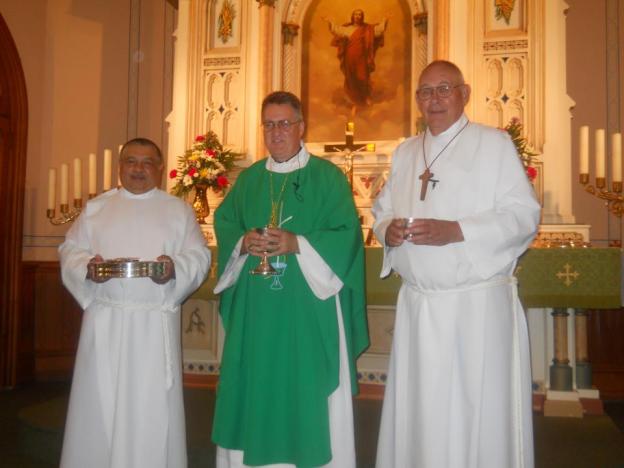
Holy communion, a time of great reverence and thankfulness, Jesus gives us His Body and Blood for our forgiveness and strengthening

I did a blog awhile ago on the Lord’s Supper and I have wanted to pick that discussion up in more detail because this is a real sore spot with people who try to make this out to be some sort of egalitarian issue. It’s not and I need you to put aside your prejudices, and your idea that it’s all about you, it’s not, it’s about God, Father, Son and Holy Spirit. I intend to do a series of blogs on this, the issue is not as simple as many would like to make it out to be, the reason why I’m doing it in a series of discussions.

The Lutheran view of the Lord’s supper is unique in Christianity. There are two sacraments in the Lutheran Church, baptism, where the Holy Spirit gives the recipient new life, they are born again in Christ. The Holy Spirit becomes part of that person and that person becomes a child of God. The second is the Lord’s Supper, where we receive the true Body and Blood of Jesus. As God’s child, we receive our Savior’s Body and Blood in order to be assured of our forgiveness by Jesus’ sacrifice and to receive the nourishment that we need as I say ” to strengthen body and soul to life everlasting”.

So here’s the rub, this is exclusive, you have to be baptized, a triune baptism, and you have to be a member of the Lutheran Church. This is not to impose some arbitrary exclusivism, this is to honor and treat with great reverence the Body and Blood of our Savior. We are in agreement with Roman Catholics that the Lord’s Supper is about the true Body and Blood. We however disagree on the means, but that will be part of a later discussion in this series and yes that difference is a fundamental issue.

I don’t make membership a long process or jumping through hoops. I take people through what we are about, why we do what we do and to impress upon people that it is about God, not about us. A lot of the discussion in the previous post was in the sense of “that’s not fair to me”, “I should have what anyone else has”, “Why can’t I”, etc, etc. Basically, it’s all about me and how I should be treated and very little in terms of treating the Lord’s Body and Blood with due and extreme reverence. I am a Lutheran pastor, I take the responsibility of administering the Lord’s Body and Blood with the utmost reverence and giving me arguments that it’s all about me is not going to be received with any respect and is just not valid. After I go through instructions, we take time during worship to ask them if they understand the teachings of the Lutheran Church and if they vow to abide by these teachings. This is the sense of a wedding, as I wrote about in an earlier blog, we treat weddings as worship, taking vows, making promises in the presence of God and brothers and sisters in Jesus. We do the same with membership, that you understand what we are doing and you promise before God and brothers and sisters that you will honor and uphold these teachings. It’s not your call, it’s what Scripture tells us it is. I am retired enlisted in the U.S. Coast Guard. Every four years I had to re-enlist and take an oath to uphold and defend the Constitution of the United States. I took those vows very seriously and I should, my country is important. But by far God is more important. If I take the U.S. Constitution seriously, I take God much more seriously. When people take a vow before God you need to take it seriously. At that point, knowing that they understand and accept the Church’s teaching, I with great joy welcome them into the Church and happily give them the Lord’s Body and Blood, there is no higher act, the Body and Blood that was sacrificed to pay for our sins and to give us the assurance of life everlasting in the Resurrection. Why someone thinks I should take that less than seriously is totally bizarre to me. In short, those of a Reformed, Arminian or other Protestant, non-denominational etc church do not have this understanding, why would they with any integrity still insist on taking the Lord’s Body and Blood?

It is a very deep issue and deserves much more discussion than the superficial treatment given by many other Christian churches. I welcome you to join in that discussion as I try to honor the Body and Blood in subsequent blogs.

Rev Dr Kurowski quotes the following in his book and it underscores the discussion about how our worldly attitude towards the Lord’s Supper is just not valid, God tells us what it is and that is what we honor and not our “opinion”: “In their case the god of this world has blinded the mind of unbelievers, to keep them from seeing the light of the gospel of the glory of Christ, who is the image of God. For what we proclaim is not ourselves, but Jesus Christ as Lord, with ourselves as servants for Jesus sake.” (2 Corinthians 4: 4-5)

I would highly recommend a book by Rev Dr Peter Kurowski on the discussion of close/closed communion “Close Communion Conversations”. I am sure your order will be happily received at  lawgospel@lawgospel.com  or 877-CMS-1962

We serve the ultimate Commander in Chief Veterans Day observance First St Johns Nov 9, 2014

Traducción española sigue el Inglés

We make our beginning in the Name of God the Father and in the Name of God the Son and in the Name of God the Holy Spirit and all those who know Jesus as the leader of their life said … AMEN
Before I begin the planned sermon, I would like to take a moment to remember our brother, the Rev. Donald Biggs. Pastor Biggs has been a member of our congregation since he retired from the ministry. I have very much appreciated his guidance and support as I started my ministry. We certainly offer our condolences to his wife Mary Lynn our beloved sister and their two sons, daughters-in-law and grandchildren. We continue to keep Mary Lynn in our prayers as she has been suffering from health problems and we trust in the promises of Jesus that Pastor Don is in the presence of Jesus, now in perfect health and in perfect bliss before the throne of our Lord. (Time for silent prayer)
Today we honor our veterans, men and women who made a commitment to serve, protect and defend. Many of whom were often put into, at least, uncomfortable situations far from home, if not outright dangerous situations. The military teaches leadership right from the very beginning, even the most junior people are put into leadership positions or responsibilities. Beginning in boot camp there is a recruit company commander and other recruits put into leadership positions. Even in day to day situations junior people are often given authority for different tasks. The U.S. Military is unique among any other organizations in the world, often you are expected to follow commands without question, but quite often responsibility is pushed down to the lowest level to make decisions, part of being in the military is to not just be a good follower, but also a good leader. It has been recognized throughout history that quoting Aristotle: “’He who cannot be a good follower cannot be a good leader.” Despite the stereotype of those who have served in the military, you usually find people who are much more balanced, much more aware of the need to be an effective leader, much less concerned about their own gratification. There’s a very good reason for that, in politics, in government, in business, science, academia, it’s all about me and how I get ahead. There’s no danger, there’s no sharing, there’s no need to watch out for someone else, unless it’s to your benefit, it’s all about how anything enhances your life, everyone else just has to take care of themselves. Yea, in the military the consideration can be to your benefit, that you don’t get killed. But because you have built that sense of camaraderie with brothers and sisters, you also want to watch their backs. It is also much more about the common good, the good of each individual, when one benefits usually everyone does.
Again, too many times our “leaders” are only about how they are enhanced by being a leader. That’s simply not leadership. Leadership is about that agape love, that selfless love, that love that wants what is truly best for each person God leads you to, that love that Jesus showed to us on the cross and gives to us everyday through His grace, His hope, His promise. Napoleon said “A leader is a dealer in hope.” No doubt Napoleon’s motivation/definition of hope was in a very worldly sense and he wasn’t thinking about Jesus when he said that. But it is certainly true in Jesus, not in a cynical way, but in that true agape love way. The hope that He gives us in His resurrection, in the hope that He gives us for life eternal. Pastor Don liked to tell me how on Easter everyone was kept out of the sanctuary at sunrise, he came out on the roof of a tomb that had been built and with the sun at his back announcing to all who gathered “he is not here, He has risen”. We have that hope of eternal life, “He is risen…[He is risen indeed, hallelujah!]
Imagine a world where you did not have that love/leadership, not knowing that Jesus did step up, as Jesus tells us: “I have overcome the world.” This is so empowering, so comforting, so reassuring. In a recent study it was show that when people were monitored at work their quality and productivity was worse, they were stressed over being constantly watched, versus being enabled to be productive. Business is not a very forgiving environment, there may be ‘love’ when you’re on top, but there sure isn’t any if things aren’t going well. That’s what the world is all about, an old saying: “The world doesn’t want to hear about the labor pains, they just want to see the baby.” The further implication that not just having the baby, but also that the baby better stack up in terms of the expectations of the world, otherwise both mother and child have failed.
We know that the Holy Spirit dwells within us, we are a temple of the Holy Spirit. We are loved, we are inhabited by love and leadership, we have ready access to the forgiveness that is Jesus. He knows when we try for Him, when we demonstrate that sacrificial leadership of discipleship. He encourages us, He strengthens us, He picks us up, He dusts us off, maybe gives us new direction with promise and hope and then puts us on our feet, makes sure we know that we are loved with an everlasting love, squares our shoulders in the direction He wants us to go and then leads us on the path He puts us on. The Law/the world, monitors and checks us and usually intimidates the toughest of us. The Law/the world, never loves, it keeps us in fear and bondage and because of that we suffer, we don’t live to the level that God intends us to live at and when we fail (not if), the world just casts us into the junk heap. True leadership picks us up, equips us, loves us, is always with us “And behold, I am with you always, to the end of the age.” (Matt 28:20 ESV) The Coast Guard motto is Semper Paratus always ready and we are always ready in Jesus.
Like the military you can be a new disciple and still be used mightily by the Lord, it is a lot like the military when you can be a junior person and still have responsibility over more senior person. I was in Puerto Rico for Tall Ships in 2001 to do security as coxswain of a 41 foot boat. Ended up doing a lot of taxiing, because it was the biggest most comfortable boat. Had to drive the zone commander from one end of the harbor to the other, going past where all the tall ships were moored. At one point a helicopter roars overhead and the commander tells me to hurry up because the vice commandant of the Coast Guard is on the helicopter. I had about a dozen passengers on board going past a bunch of historic ships and chose to ignore the commanders request. The safety and integrity of other people and boats took priority. He was just going to have to be a little late for the vice commandant. Often we have to ignore the world and rely on what the true CNC tells us, God is always our commander in chief, He wants what is best for us and for us to minister to those around us accordingly. When we are true leaders, true servants of Him, ready to serve and sacrifice as so many who do who are serving or have served in our military, then we are truly doing His will.
The peace of God which passes all understanding keep your hearts and minds in Christ Jesus. Shalom and Amin.

Servimos el último comandante en jefe Día de los Veteranos observancia First St Johns 09 de noviembre 2014

Hacemos nuestro comienzo en el Nombre de Dios el Padre y en el nombre de Dios el Hijo y en el Nombre de Dios el Espíritu Santo, y todos los que conocen a Jesús como el líder de su vida dijo … AMEN
Antes de comenzar el sermón planeado, me gustaría tomar un momento para recordar a nuestro hermano, el reverendo Donald Biggs. Pastor Biggs ha sido miembro de nuestra congregación desde que se retiró del ministerio. He apreciado mucho su orientación y apoyo cuando empecé mi ministerio. Ciertamente Ofrecemos nuestras condolencias a su esposa Mary Lynn nuestra querida hermana, y sus dos hijos, hijas-en-ley y nietos. Seguimos mantener Mary Lynn en nuestras oraciones como ella ha estado sufriendo de problemas de salud y confiamos en las promesas de Jesús de que el pastor Don está en la presencia de Jesús, ahora en perfecto estado de salud y en la felicidad perfecta delante del trono de nuestro Señor. (La hora de la oración en silencio)
Hoy honramos a nuestros veteranos, hombres y mujeres que hicieron un compromiso de servir, proteger y defender. Muchos de los cuales fueron a menudo ponen en, al menos, las situaciones incómodas lejos de casa, si no en situaciones francamente peligrosas. El ejército enseña liderazgo adecuado desde el principio, incluso las personas más jóvenes se ponen en posiciones o responsabilidades de liderazgo. Comenzando en el campo de entrenamiento hay un comandante de la compañía recluta y otros reclutas puestos en posiciones de liderazgo. Incluso en el día a día situaciones de las personas jóvenes a menudo se dan autoridad para diferentes tareas. Los EE.UU. Militar es única entre las otras organizaciones en el mundo, a menudo se espera que siga órdenes sin cuestionarlas, pero muy a menudo la responsabilidad es empujado hacia abajo al nivel más bajo para tomar decisiones, parte de estar en el ejército es no sólo ser un buen seguidor, sino también un buen líder. Se ha reconocido a lo largo de la historia que citando a Aristóteles: “.” El que no puede ser un buen seguidor no puede ser un buen líder “A pesar del estereotipo de los que han servido en las fuerzas armadas, que se suele encontrar personas que son mucho más equilibrada, mucho más conscientes de la necesidad de ser un líder eficaz, mucho menos preocupados por su propia gratificación. Hay una muy buena razón para ello, en la política, en el gobierno, en los negocios, la ciencia, la academia, es todo acerca de mí y cómo me pongo por delante. No hay peligro, no hay intercambio, no hay necesidad de mirar hacia fuera para otra persona, a menos que sea para su beneficio, es todo acerca de cómo nada mejora su vida, todos los demás sólo tiene que cuidar de sí mismos. Sí, en el ejército la consideración puede ser para su beneficio, que no te maten. Pero debido a que usted ha construido ese sentido de camaradería con los hermanos y hermanas, que también quiere ver a sus espaldas. También es mucho más sobre el bien común, el bien de cada individuo, cuando uno se beneficia por lo general todo el mundo hace.
Una vez más, muchas veces nuestros “líderes” son sólo sobre la forma en que se ven reforzadas por ser un líder. Eso simplemente no es liderazgo. El liderazgo es acerca de que el amor ágape, el amor desinteresado, ese amor que quiere lo que es realmente mejor para cada persona que Dios te conduce a, de que el amor que Jesús mostró a nosotros en la cruz y nos da todos los días a través de su gracia, su esperanza, su prometer. Napoleón dijo: “Un líder es un distribuidor en la esperanza.” No hay duda de la motivación / definición de Napoleón de esperanza fue en un sentido muy mundana y no estaba pensando acerca de Jesús cuando dijo eso. Pero lo cierto es en Jesús, no de una manera cínica, pero en la que el verdadero camino del amor ágape. La esperanza de que Él nos da en Su resurrección, en la esperanza de que Él nos da la vida eterna. Pastor Don gustaba decirme cómo en Pascua todo el mundo se mantuvo fuera del santuario al amanecer, salió en el techo de una tumba que había sido construido y con el sol a sus espaldas anunciando a todos los que se reunieron “él no está aquí, ha resucitado “. Tenemos la esperanza de la vida eterna, “Él ha resucitado … [Él ha resucitado, aleluya!]
Imagina un mundo donde no tiene que el amor / liderazgo, sin saber que Jesús intensifique, como Jesús nos dice: “. Yo he vencido al mundo” Esto es por lo que empodera, tan reconfortante, tan reconfortante. En un estudio reciente se muestra que cuando las personas se controlaron en el trabajo de su calidad y la productividad era peor, se destacaron por haber sido constantemente vigilado, frente está habilitado para ser productivos. Negocio no es un ambiente muy indulgente, puede haber ‘amor’ cuando estás en la cima, pero no seguro que no es ninguna si las cosas no van bien. Eso es lo que el mundo es todo alrededor, un viejo dicho: “El mundo no quiere oír hablar de los dolores de parto, lo que quieren es ver al bebé.” La implicación, además, que no sólo tenga el bebé, sino también de que el bebé mejor apilan en términos de las expectativas del mundo, de lo contrario la madre y el niño han fallado.
Sabemos que el Espíritu Santo mora en nosotros, somos un templo del Espíritu Santo. Somos amados, que están habitadas por el amor y el liderazgo, tenemos fácil acceso al perdón que es Jesús. Él sabe cuando tratamos de Él, cuando se demuestra que el liderazgo sacrificial de discipulado. Él nos anima, nos fortalece, nos levanta, nos desempolva, tal vez nos da una nueva dirección con la promesa y la esperanza y luego nos pone en pie, se asegura de que sabemos que somos amados con un amor eterno, plazas nuestros hombros en la dirección que quiere que vayamos y luego nos lleva por el camino que Él nos pone. La Ley / el mundo, los monitores y los controles de los Estados Unidos y por lo general intimida el más duro de nosotros. La Ley / el mundo, nunca se ama, que nos mantiene en el miedo y la esclavitud y por eso sufrimos, no viven al nivel que Dios nos tiene la intención de vivir en y cuando fallamos (no si), el mundo sólo nos hace caer en el montón de chatarra. El verdadero liderazgo nos recoge, nos equipa, nos ama, está siempre con nosotros “Y he aquí que yo estoy con vosotros todos los días hasta el fin del mundo.” (Mateo 28:20 NVI) El lema de la Guardia Costera es Semper Paratus siempre listo y estamos siempre listos en Jesús.
Al igual que los militares puede ser un nuevo discípulo y todavía ser usado poderosamente por el Señor, que se parece mucho a los militares cuando se puede ser una persona menor y aún así tener la responsabilidad sobre más persona mayor. Yo estaba en Puerto Rico para la Tall Ships en 2001 para hacer la seguridad como timonel de un barco de 41 pies. Acabé haciendo un montón de rodaje, porque era el mayor barco más cómodo. Tuvimos que conducir el comandante de zona desde un extremo del puerto al otro, más allá de ir a donde estaban amarrados los barcos de altura. En un momento un helicóptero ruge encima de la cabeza y el comandante me dice que se diera prisa porque el vice comandante de la Guardia Costera está en el helicóptero. Tuve una docena de pasajeros a bordo que van más allá de un puñado de barcos históricos y decidió ignorar solicitan los comandantes. La seguridad y la integridad de otras personas y embarcaciones tomaron prioridad. Él sólo iba a tener que ser un poco tarde para el vice comandante. Muchas veces tenemos que ignorar el mundo y confiamos en lo que el verdadero CNC nos dice, Dios es siempre nuestro comandante en jefe, Él quiere lo mejor para nosotros y para nosotros para ministrar a los que nos rodean en consecuencia. Cuando somos líderes verdaderos, verdaderos siervos de Él, dispuestos a servir y sacrificio como tantos que hacen que están sirviendo o han servido en nuestras fuerzas armadas, entonces estamos haciendo realmente su voluntad.
La paz de Dios que sobrepasa todo entendimiento, guardará vuestros corazones y vuestros pensamientos en Cristo Jesús. Shalom y Amin.