Category Archives: Christian discipleship

Confession or separation and from whom

Unconfessed sin isn’t fooling anyone. God certainly knows, and come on those around you? They know. Unconfessed sin also separates us, from each other and from God. God knows, but since you have chosen to suppress, conceal, downplay, dismiss, your sin separates you from a perfect, holy God. Hasn’t a child, spouse, someone close tried to ignore unconfessed sin with you? Can’t you sense a very real separation from that person until you come to grips with that person and their sin. As a fellow sinful being we can kind of understand that, and God certainly understands and forgives, but can’t you still sense the distance, separation, even barrier it has created?

Mark Buchanan points out in Peter love covers a multitude of sins. Sure we get it, you are forgiven, Jesus died for that sin. Pastor Buchanan points out “Love can’t cover over what pride or shame covers up.’ He who conceals his sins does not prosper, but whoever confesses and renounces them finds mercy.’ (Proverbs 28:13) (Your God is too Safe p 170) Last I checked pride is sin, aren’t we compounding the original sin or subsequent sin? Sin does create separation and barriers: “If anyone is going to love you and if you are going to love anyone the way Scripture exhorts and commands, you’re going to have to show someone the real you. The real you will have to stand up. You’ll need to confess.” (Ibid)

I really like how Pastor Buchanan expands on what this separation and barrier of unconfessed sin creates. Are we Christians, loving not just each other, but those who may even actively oppose us? And not this phoney, shmaltzy, cheesey love. Love is genuine put it on the line, up to the point of sacrificing your life for the best and betterment of someone who truly needs you to stand up for them? How can we truly be the Body of Christ, to trust our lives, to truly be a part of the integrated Body of Christ, if we let sin, pride separate us. We still need to use discretion, as I pointed out in my last blog, there is someone who you should trust with high confidence. Your Pastor. At least as a Lutheran, your pastor has a high level of training, is under the seal of the confessional, which is still recognized under secular and canonical law, who cannot discuss anything with anyone else that you discuss with him. As you grow in relationship with other Christians, sure you should be much more open with them. But remember your pastor has a lot to offer, including: “as a called and ordained servant of Jesus Christ I tell you, for Him, that you are forgiven.” You want an authority figure on the matter, who is better suited than your pastor?

But Buchanan presents the perspective of a regular practice of unconfessed sin: “The first is that Christian fellowship becomes a masquerade – a game of hide-and-seek, of pretense and jargon, with no real life and no real depth. We end up investing so much in the appearance of holiness that we miss the substance of it. We end up so preoccupied with saving face that we fail to live in God’s saving grace. We walk around with insecurity and fear: If you really knew me, you wouldn’t like me. The Only reason you like me is you don’t really know me.” (Ibid)

In other words, a phoney Christian life. I have gone into churches where there’s a lot of phoniness, there’s no real Christian confession, just as Buchanan points out; “pretense and jargon” and that is just not a healthy place to be. You can almost cut the subterfuge with a knife. It’s almost suffocating. In a congregation where  confession, trust, openness, smacks you right in the face like a crisp, winter seabreeze, it’s bracing and challenging, and it’s also refreshing and just makes you want to push right in and get more.

“But confession and true fellowship are deeply joined. John in his first letter makes that explicit. He writes, ‘If we claim to be without sin, we deceive ourselves and the truth is not in us. If we confess our sins, he is faithful and just and will forgive us our sins and purify us from all unrighteousness’ (1 John 1: 8-9).”  He goes on to note that: “…When we walk in the truth and in the light, we have real fellowship … not among perfect people, but honest ones, people willing to deal with their imperfections. Otherwise we have a country club, not a church.”

“That’s one consequence of a people without the holy habit of confession: Our fellowship becomes a shallow, gaudy, fickle thing, a nonfellowship, an exercise in faking it.” (Ibid pp 170-171) And isn’t that sin? Aren’t we called to fellowship? Aren’t we called to be genuine? It’s not easy and I doubt I will ever be “good” at it. But that’s not an excuse for me to avoid striving for it either.

Let’s do everyone a big favor, start to truly live that Christian life in confession. Let’s start trusting those clergy that God has give to us in order for us to grow closer to God, instead of all the pretense and baloney that we substitute instead. Let’s do our best to grow in our relationship with fellow Christians. Yes, we have to maintain some discretion and common sense. But at least keep pushing the boundaries. Can you get burned? Yup, but it won’t be on you, you will be living the life in Christ, it will be for that person who failed in your trust. Pray for them and for all Christians who can’t step up in maturity and move on as a faithful Christian disciple.

Confession, bone deep honest with God, with His minister

Dr Martin Luther did not post his 95 Theses and then be pursued for the next 30 odd years to have the baby thrown out with the bath water. He had problems with the Roman Church, but it was not about liturgy or Biblical practices, it was about abuses that arose from the Roman Church adding to the Bible. Communion, baptism, confession were not an issue, Luther had no problem with these because they were Biblical. He did have problems with the ways they had become corrupted, but not with the biblical principals.

However subsequent “reformers” chose to dump those practices that they just did not like. Not that they were unbiblical, they just didn’t like practices such as understanding that baptism meant new birth in Jesus. They just did not like that the bread and wine in communion, were the actual Body and Blood of Jesus, they didn’t like the idea of confessing to another person, even though the Bible is pretty clear. It frankly seems as though those who come through Reformed Christianity or other avenues that only seem to emphasize personal preferences, or personal improvement in order to further their own lives, come to the realization that the spiritual practices of Christianity do have a much more profound meaning and do what is far more important in our lives, build our relationship with God.

Mark Buchanan is very much in the Reformed Christian branch of Protestantism, an ordained Baptist minister and well known author. He also quotes Richard Foster, a Quaker, definitely not Lutheran!  In his book Your God is too Safe (p 166) “…Protestants became so scornful of the Roman Catholic practice of confession that we dropped it altogether and ended up creating churches of smiling, laughing, savvy people who are dying on the inside and too afraid to let anyone know. First Church of the Whitewashed Tombs. This, too, bypasses the real issue of spiritual growth. Rather than bear fruit, we’ve tended to paint it on and hope nobody notices that we have no real roots or sap to grow fruit anyhow.”

Full disclosure, I would have to concede, that even though Lutherans retain the confessional, corporate and individual confession, they don’t really practice it. When I was at seminary, graduated 2010, the seminary chaplain held confession every Wednesday. Out of about 500 students and maybe 100 professors, staff etc, he said that he had about 25 people attend confession, about 5% of the possible population. I was one of the 5% and found great benefit in personal confession. Lutherans talk confession, but actual practice, eh… not so much.

Lutherans do practice corporate confession, meaning at the beginning of every worship, we have confession, agreeing we are sinners in need of divine forgiveness and then I announce that as “a called and ordained servant of Jesus Christ and by His authority I forgive you all of your sins.” So I’m sure many feel that the base is covered.

Pastor Buchanan goes on to say: ” Confession is when we quit all the deal making, the sidestepping, the mask wearing, the pretense and preening and we get bone-deep honest before God…” (p 167)

“…In order to present our real selves to God, we need to be honest with ourselves about ourselves and honest about ourselves to at least one other trusted and godly person.” 

I submit, being a person that has to learn all about the subject, has been trained to listen, has taken an oath to never discuss anything that has been confessed to him, called the “sanctity of the confessional” which is even recognized under the law and would be a reason to discharge me from the ministry should I violate that sanctity, that maybe you want me to be that “trusted and godly person.” Puhlease do not get some goofy idea that this feeds some prurient interest on my part. Nothing could be further from the truth, hearing someone’s confession is not something that I relish or look forward to. But I see it as a responsibility. As a pastor I am going to be held to a higher standard in the final judgment and I am not going to be put in the position of being asked, “it would have helped people to know that you offered regular confession, you had the opportunity to do it, why didn’t you?

While Dr Luther did not have a problem with confession, he did have a problem with how the Roman church did business conducting confession. I will readily stipulate that because the concept of confession has been undermined and frankly trivialized by the Roman church (to wit, go and say five Hail Marys and the stations of the cross, come back and I will forgive you), that has allowed most to simply dismiss it as a relic of a past church. As a baptized Christian you are forgiven, we have that assurance when we take the Body and Blood of Jesus in the Lord’s Supper. Yes you are forgiven. Jesus died for all your sins. Your works do not add to your forgiveness.

Having said that Pastor Buchanan quotes Richard Foster (please note that Mr Foster is a Quaker, again not a Roman Catholic with an agenda, or Lutheran for that matter.):

“The person who has known forgiveness and release from persistent, nagging habits of sin through private confession [that is, to God alone] should rejoice greatly in this evidence of God’s mercy. But there are others for whom this has not happened. Let me describe what it is like. We have prayed, even begged, for forgiveness and though we hope we have been forgiven, we sense no release. We doubt our forgiveness and despair at our confession. We fear that perhaps we have made confession only to ourselves and not to God. The haunting sorrows and hurts of the past have not been healed. We try to convince ourselves that God forgives only the sin; he does not heal the memory. But deep within … we know there must be something more. People have told us to take our forgiveness by faith and not call God a liar. Not wanting to call God a liar, we do our best to take it by faith. But because misery and bitterness remain in our lives, we again despair. Eventually we begin to believe either that forgiveness is only a ticket to heaven and not to affect our lives now, or that we are unworthy of the forgiving grace of God.”

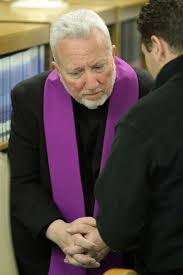
I’ve had men tell me “I don’t confess my sin to men.” Well tough guy that’s not biblical, it’s just not. James’ epistle 5:16 clearly states: “Therefore confess your sins to each other and pray for each other so that you may be healed. The prayer of a righteous person is powerful and effective.” Ya, you may think you have it altogether, but honestly, those are the type of people that end up with all sorts of additional problems that they allow to come between themselves and God. The manly thing to do? I did it. Sit across from someone who you can trust and say I need absolution, I need to know from someone I can trust (your pastor) that I am forgiven. If you want to go into detail I will certainly listen and help you. I do not, however, need to hear the detail. I do not even need to hear the particular besetting sin. But if you are in any doubt, or need assurance, your pastor will sit across from you and provide that. That is at least for those churches that provide for confession.

Listen, tough guy, you want to be tough? Stand up, admit your sin, know that you are forgiven, go back into the world and truly live the life in Christ. Frankly the biggest cowards I’ve seen are the ones that can’t stand up to their sins, to those they’ve sinned against and of course that is always against God. Who refuse to know that they are forgiven and will know how to live his life truly in Jesus. Ask yourself can you really continue to live a life that is as Pastor Buchanan describes: “in churches of smiling, laughing, savvy people who are dying on the inside and too afraid to let anyone know. First Church of the Whitewashed Tombs.” Ya know, going through the motions, doing the “right” thing, knowing that you are just living a farce, never really dealing with your relationship with Jesus and your fellow man, just making it up. Wow, this is from guys who would tell me how much they can’t stand phonies. Ya, really dude? Take a look in the mirror.

Let’s all be real, strong men (and women), deal with the things we need to deal with, with someone we can trust. Get in their with your pastor, tell him what’s happening, get the assurance that you are forgiven in Jesus, maybe some objective guidance as to how to move on from a besetting sin, put it behind you and grow in your relationship with Jesus. Sorry guys, you are nowhere near as smart and tough and savvy as you think. I know that, because I know I’m not. Let’s get real together, move on as men together and do some real stuff. Then we can really smile, laugh and be savvy and show the world what it really means to be a Christian man.

The Faith we are given in Jesus and what He does is what defeats Satan

“Christians are not called to defeat Satan. God has already done that in Christ! Nor is it our mandate to “bind” Satan.” (Henry Blackaby, Richard Blackaby Experiencing God Day by Day p 305) That last sentence really does get me. Regardless of what you’d like to think, my Pentecostal friends, Satan is still a servant of God. Only God “binds” Satan, certainly not any human. Satan is not a being to play fast and loose with or get cute with. Satan has been around thousands of years, no doubt learning a great deal about human nature and how to use it against us. He was created to be the most magnificent, brilliant being by God Himself. So much so that he thought he could, maybe even should, be God. For a human being to trifle with Satan is stupid. While there are Christians who think that they can take on Satan, they will only end up looking stupid. Frankly those who do it make the rest of Christians look stupid, in so many ways. I’m not going to be charitable about this, because there are too many Christians out there who presume way too much. They feel it’s up to them to confront and battle and direct the Holy Spirit as to who, where etc. It’s kind of too bad, like so many other Christians who presume, how much better would it be if we were following the Holy Spirit’s leading, waiting for His guidance, instead of us presuming to be able to call down the Holy Spirit against Satan. Do you have some bizarre idea that God is not aware of what Satan is doing? Let’s let God do it and we do what He guides us to do. “You will find yourself fighting battles that Christ has already won!” Indeed, Satan was defeated by Jesus’ death on the cross, we were saved in Jesus’ sacrifice. Do we pray for Jesus’ protection and guidance. Absolutely, but there is a difference between asking for protection and presuming to direct it.

Does Satan attack? Certainly, not as much as we often like to think. Too often people invite demons in, versus their somehow being an innocent victim. Messing around with the occult, with drugs, alcohol, sex, letting Satan guide and shunning the Holy Spirit. Anytime we fail, or seem to get slammed down does not mean that Satan is attacking either. Often times it is our own failure and we’d much rather shift that on Satan instead of taking responsibility. Does Satan oppress Christians? Absolutely, but too often it is a Christian messing around where he/she shouldn’t be messing around and inviting the oppression. Can a Christian be possessed? I don’t think so. Greater minds than mine have made this case, suffice to say, if we are genuinely indwelt by the Holy Spirit, there is no room for any kind of demonic occupation.

To be sure: “ESV Ephesians 6:12 For we do not wrestle against flesh and blood, but against the rulers, against the authorities, against the cosmic powers over this present darkness, against the spiritual forces of evil in the heavenly places.” I would never disagree with Paul that there are demonic forces acting on us, the world all around us is seeking to turn us away from Jesus to anything else. The Blackabys talk about the fact that Paul was certainly regularly opposed by demonically inspired people on a regular basis in the Book of Acts. I often feel that when others oppose me, the inspiration for this opposition is Satanic. Believe me I’ve seen it in the church. I honestly wonder sometimes how some “Christians” sincerely come to the conclusions they do and take the positions they take. Too often it seems to me, that they have an agenda that they think the church should be picking up on, instead of following the church’s agenda in Jesus.

Absolutely we will be opposed, as Christians, by Satan. If we are faithfully following God’s leading if we are being a faithful servant of Christ and doing His will, there will be those who will be inspired by Satan because they are convinced that their agenda is more important than the church’s the Body of Christ. The Blackabys make the case that we need to be sensitive to the fact: “Your adversary may be hopelessly in bondage to sin. Rather than retaliating, you should immediately and earnestly intercede for that person.” Absolutely you should keep that person in prayer, that they will be lead by the Holy Spirit and put aside their agenda and trust how the Holy Spirit wants them to proceed. Having said that, you don’t let them lead you in the wrong direction. Too often well meaning Christians will be more concerned about the “relationship” versus God’s will. If God is leading me and someone else is trying to take me off track at the risk of “relationship”, my relationship with the Father is far more important than any other person. There are simply too many people out there who are willing suckers for Satan, often for the most frivolous reasons, and expect you to just detour for them and their misguided agenda. We are always looking to build relationships with those who are Christian brothers and sisters and those who are not. But you have to use some genuine Christian discernment. You are pointing them to Jesus, not being led by their misguided “opinion”. Don’t get me started, how many times someone has expected me to fold up like a cheap cot to their uninformed, misguided opinion.

The Blackabys assert that others are often just “misguided”, sort of benignly, innocent, even “unwitting instruments of the spiritual forces of darkness.” (Ibid p 304) Yaaa, I’m not so sure. If these people were sincerely committed to their Christian walk, being true Christian disciples, I would make the case that they would not be so easily misguided, duped. Hey I’m sure I’ve been led astray and thought something was OK, or knew it wasn’t but worked overtime to rationalize it. But I would not expect to be coddled and excused, but that I would be confronted and held accountable. Sure, remember that they are probably being demonically affected, and hold that up in prayer. I can think of occasions in my life where I should be more actively praying for someone who is being misguided. Too many times someone has drowned because they made a well meaning attempt to save someone else, but let that person drag them in and in their panic overwhelmed their presumptive rescuer and ended up letting themselves and their rescuer die. Paul was never bashful about confronting those who opposed him in evil. I’m not saying get all Pentecostal on someone, but I am saying not to let them drag you down with them. They need to be opposed but only in the strength of the Holy Spirit, because if I go up against Satan that is a ridiculous mismatch. If the Holy Spirit confronts Satan to protect and guide me, well Satan will lose, game, set and match. I’m smart enough to figure out how I want to figure in that equation.

Satan is defeated, he is a clever opponent, he has nothing to lose and certainly he is going to oppose anyone who is being used and guided by the Holy Spirit. We who are serving Christ are going to have to expect to take a lot of hits from Satan. That’s a good thing, it means we are truly serving Christ. We should pray for relief and for the protection of the Holy Spirit, but we are also given the faith we need to know that we are also being guided by Jesus’ plan, not ours. That is also a good thing. We should pray that another person be relieved of their being influenced, oppressed, even possessed by demonic forces. But we should never be guided by them out of some misguided “compassion” on our part. They are only going to suffer, maybe destroyed and pull us down with them, somewhere we don’t need to go. Let’s be a positive, pro-active witness for Christ. Not dancing around or presuming to have gifts we don’t have or confronting demons in our own power, it’s just not going to end up well, more than likely being chewed up and spit out. Then we will be wondering why the Holy Spirit didn’t act according to our instructions and maybe even ending up just denying Christ entirely. Satan really doesn’t care how he gets you there, so long as it’s away from salvation and eternal life in Jesus.

Suffering as a Christian, supported by the Body of Christ, the Church

Despite what others say and might think it’s supposed to be, quite often becoming a Christian does mean that you are going to experience, at least, challenges, if not more. Now before you go running back to your little hiding place, where you’ve been hoping the rest of the world will just pass you by, I ask you, do you have a better idea? I don’t care if you’re a big tough guy, or a little woman, you all have your hiding places, thinking no one will see you and just pass you by. If you just let things alone, pass from life into death, you might just get through life without much difficulty. It is a lousy way to live the life that God has given you, but I guess you managed to get through without having your prissy little sensibilities hurt.  Good for you, you had a sad little life, you’ve sinned against God by piddling away your life and ignoring Him and since you did it all your way, and ignored God, well God has ignored you and let you condemn yourself to eternal separation from Him and eternal condemnation in Hell. You sent yourself there, God did permit it, goody for you, you had your free will.

For those who are in Christ you will experience challenges, there will be difficult times. It stands to reason, if you put yourself out there and are serving others you are going to take hits, you just are. In fact if you consider yourself a Christian and have just been cruising through, you might want to take a serious look at your relationship with Jesus, been a little too much about you and not really much about Him? I would question if you are still in relationship with Jesus and have slipped into the nice, cozy little world of condemnation.

My theme, lately, has been about the Body of Christ and how we all seem to feel like free agents, it’s all about me and Jesus and forgetting that it’s really about Jesus and His Body, His Bride, the church. All those fellow believers who are all experiencing challenges. Doesn’t it make more sense to turn to and rely on Christian brothers and sisters in times of trouble? Who else would know better the attacks of Satan and the world then someone else who has undergone those attacks? A brother or sister, someone who is in the Body, who also hurts when another part of the Body, you, me, brothers and sisters, has been hurt, we should be there to support others and know they support us.

We certainly have the Holy Spirit who is watching over us, we are protected, although we will stay take shots and hits in the world. But doesn’t it help more to have a flesh and blood brother watching over you and you watching over him? To build each other up and support each other? that other person may not be in the same church. I may not totally agree with him, but if he is genuinely in Jesus, we need to have each other’s “six”.

Whether you are new or been a long time in the Body of Jesus, you will experience adversity in the world. If the world rejected Jesus, it will challenge and reject you. That’s why you have the church and brothers and sisters. For those guys who think they’re so tough and can do it on your own, don’t be surprised when you are chewed up and spit out and leave yourself condemned to hell also, it will happen, I see men and women like that all the time. Tough guy, know it alls who end up flat on their back looking up at the sky and then expecting someone else to pick up the pieces because they were smart guys. If not for yourself, be there, at church, daily lives of Christians, for others to help them. I will bet an enormous amount you will be blessed and start wondering how you ever survived without brothers and sisters in Jesus.

One Flesh, One Body in Jesus Mark 10: 2-16 First St Johns October 4, 2015

[for the audio version of this sermon click on the above link]

We make our beginning in the Name of God the Father and in the Name of God the Son and in the Name of God the Holy Spirit and all those who know they are of one flesh with their spouse and of One Body with Christ said … AMEN!

The world does continue to push on the Body of Christ. That is the way it has been and will continue to be. I’ve said this before, but there were more Christian martyrs in the twentieth century than in the previous 1900 years of the Christian church, combined. The twenty-first century, is beginning to seem like it will exceed the previous one.

We remember brothers and sisters in Jesus who were singled out in the shootings at Umpqua Community College. Another incident that hits close to home for us.

Since I saw the readings for this Sunday and especially since Thursday when reports of the tragic events in Umpqua came out, I have really felt led to remember that yes, Jesus was certainly quoting God in Genesis that a man and woman become one flesh when they are married within the church. We who are in Jesus are part of the Body of Christ, This is not “one-flesh”, but it certainly does say to us that when those who are in Christ, are part of the Body of Christ as those who died in Umpqua are, that we feel something of what they were subjected to. I wish I could really convey what this means, and this is more than empathy. We’re all human, we all have some empathetic understanding of what it means to be killed or to die. But for us who are part of the Body of Christ this treatment that we are seeing of Christians has to transcend just this feeling of just human empathy. When we become aware of those who are part of the Body of Christ who die because of their witness to Christ, there must be an emotion that runs through the entire Body, exceeding empathy that understands the communion we have with those who have died witnessing to Jesus. When we take communion, the true Body and Blood of Christ, we are making a statement that we are very much a part of the Body of Jesus. The Body of Jesus is His church. You can’t be in communion with Jesus unless you are in communion with His Body and His Body is His Church, us, all brothers and sisters in Jesus. I am not making some call to action either. I’m not trying to sensationalize this like some others are. I’m certainly not endorsing Ron Ramsey’s call for Christians to get gun permits. The church has gone through periods like this before. The Acts church was sorely persecuted, starting with Stephen who was taken out and stoned when he stood before the Sanhedrin and proclaimed that Jesus is Messiah, God the Son. The church is going through persecution. Our society today has turned against Christ, Jesus told us that there would be those in the world who would murder Christians thinking they are serving God. Clearly we are seeing a realization of that prophesy. Our society is straight out teaching that the church is somehow evil, the enemy. I’m not saying that anyone, who is credible, is saying that Christians should be killed, but it is clear that in the United States the church of Jesus, the Body of Christ is being portrayed as somehow evil and the enemy. I really have pondered over what I am trying to convey in this sermon. Really wrestled with trying not stir people into a frenzy, create fear and feelings of chaos. That is not how we are supposed to feel as Christians. We are told not to be fearful, we are told that God is in control. God is in control and we should have no doubt that all we see around us is under His control. Christians have suffered martyrdom all through history. We have to come to grips with that realization, that just because we here in this part of the world, are so incredibly privileged, that we are not immune to what is going on around us. That we do need to have a revitalized realization that we are part of the Body of Christ, and that those in this country, in Umpqua, Charleston SC, Columbine Colorado, even right next door in Bart Township, and certainly those Christians in Iraq, China, Africa, India, Syria, are suffering for the cause of Christ. It will probably sound outright bizarre that we trust that this is all to the glory of Jesus. I really don’t want to think that way. But it is hard for me to dismiss. Too often we have seen an amazing growth of the Church because of those who suffered martyrdom. Many who might not come to know eternal salvation in Christ, have been saved because of the sacrifice of others.

The church in eastern Europe suffered severe persecution up until the fall of communism. Now we see a remarkable revitalization of the church in Russia and eastern Europe. Hundreds of Muslims are becoming Christians in what was the communist part of Germany twenty years ago. The church in China is still being actively persecuted and yet there are estimates that there will be more Christians in China than any other country in the world in the next twenty years. Tertullian, a father of the church, said that “The more you mow us down, the more numerous we grow”, “the blood of the martyrs is the seed of the church”. Tertullian was a Roman who died in 225 AD, he saw some of the most vicious persecutions of Christians in history. These persecutions started under the Roman Emperor Nero in 64 AD and lasted until 313 AD when Constantine made Christianity the official religion of the empire. In all these persecutions from Rome up to the present day in China and eastern Europe, Christians have never responded with violence. Jesus was completely innocent and holy and He suffered a violent death, even praying that God the Father would forgive those who persecuted Him because they did not know what they’re doing. Today, there are those being indoctrinated in our society to hate Christians. We cannot respond in hate. Jesus showed love and forgiveness even while He was undergoing the agony of the cross. For us to respond in hate and violence would be sin, and would be an unfaithful witness to the church, the Body of Christ. We are about forgiveness, we are about life. We must respond in true love and forgiveness in order to faithfully witness to Jesus. He died in order that our sins would be forgiven and that we would be saved who are lost in our sin. Certainly we have seen that martyrs all through history up until right now have died so that, as Tertullian said, their blood would be the seed that others might be a part of the church of Christ, to be a part of the Body of Christ, to be saved because others have died. Jesus modeled true courage for all who are in Him. We must show that courage now. We must be in prayer for those who hate us because of our faithfulness to Jesus and His church. Many continue to be led away from true life in Jesus and even if we suffer it must be so that others will come to know Christ and be saved to life, life more abundant in Jesus, eternal life in the resurrection. One of the things that our different prayer groups here have committed to, is to keep a list of those they know who have not been saved in Jesus. I ask all of you here today to put together a list of those who you know who are not saved in Christ. Some of those might be people who you consider to be hostile to you personally. All the more reason why they should be included. Jesus told us in the Sermon on the Mount: “ESV Matthew 5:43 “You have heard that it was said, ‘You shall love your neighbor and hate your enemy.’ 44 But I say to you, Love your enemies and pray for those who persecute you.” It will not be easy, but certainly Jesus did not take the easy way out for us.

The peace of God which surpasses all understanding keep your hearts and minds through Christ Jesus. Amin and Shalom

One flesh

My sermon for the past Sunday was on “One Flesh”, it refers to the Genesis 2:24 and Mark 8 passages. Clearly these passages speak to the physical marriage of man and woman, but we seem to not remember that as Christians we are the part of the Body of Christ, that His Church is the Body of Christ, which we, who are saved in Jesus, are part of. As discussed in Revelation 21, 22, the Church is the Bride of Christ. Now I’m not trying to get cute or all weird, but it does seem to follow that because of that, because we take the true Body and Blood of Jesus, that we all become one flesh. Yes, the Bible passages are to be understood as a man and a woman becoming one flesh. They should both readily understand that and that Jesus’ command that “…What therefore God has joined together, let not man separate.” (Matthew 19:6) An aside, I have to tell you for those who are involved in facilitating divorce; judges, clerks, lawyers, I truly feel at least a concern. I do not know how people can participate in something that Jesus clearly condemns.

I was also reading Henry and Richard Blackaby’s devotional (Experiencing God Day by Day p 277) which starts “Christians do not live in isolation”. No we certainly don’t, and yet too many who call themselves “Christian” will simply not understand the idea of the Body of Jesus, Bride of Jesus, one flesh etc. We are too much about what are we getting out of this and not at all about what is the Body of Jesus about. I get it, most of us have difficult lives, pressing concerns and different demands that we do need to confront immediately. Certainly the media is beating us into submission, compassion fatigue and when things happen, over and over, in the Body of Christ, we just have to withdraw or be overwhelmed. Yea, I get it. However, we are, nonetheless, part of the Body of Christ. One flesh? Not now, but ultimately, in the resurrection, in the same sense of a married man and woman? Yes. But just because we are not in the same sense as Genesis and Mark describe, does that make it any less genuine? And now, in the shadow of the murders at Umpqua Community College, Charleston SC, Columbine, Lancaster, Pa, just for the United States and the horrific murders in Iraq, Syria, China, Africa on and on shouldn’t that be a signal pain in the Body of Christ, and if we are part of that Body shouldn’t we at least wince?

Maybe there is a fatigue going on, but if the persecutions of Christians throughout history that resulted in resolve and strength to the Body, shouldn’t that be apparent now? If so, how does that look? If your reaction is “wow that’s too bad” or “see that’s why we need gun control” or “every Christian should carry a gun” as the Lt Governor of Tennessee suggested, shouldn’t that suggest to the individual that maybe they’re not in communion with the Body of Christ as they should be?

The Blackabys write: “We depend on one another, and this influences everything we do. Jesus said that even when we pray, we are to begin by saying ‘our Father’ (Matt 6:9). We must do everything with our fellow Christians in mind. (1 Cor 14:12)” Yes, He is our Father. OK, that means children? Yes, it does. Is this another mystery of being in Christ along with the Trinity, Incarnation, Redemption, Resurrection? Yea, apparently. Does it mean that just because the concept seems obscure, it’s not valid? No, I don’t think so. The Blackabys suggest: “Ask God to place a burden on your heart for fellow believers.” I do think it’s necessary. Can you ignore such profound pain in your body and not feel it, dismiss it? I’m not sure what the “cure” is. Certainly we are always called to pray. We should remember Tertullian’s words, a Roman, in the middle of the persecutions of the early Christian. He said “the blood of the martyrs is the seed of the church.” Certainly those who are martyred receive great reward, but for us still in our earthly life, to simply dismiss the suffering and murder of Christian brothers and sisters is not acceptable. As with everything in our Christian life we are always in prayer. We also are to be guided by the Holy Spirit, where is He moving us to confront or to help those in persecution? What are the opportunities He is presenting us and our local church with in order to witness to Jesus to a world that is lost and filled with death. A world that hates God and His people and believes that it is somehow serving a greater God by killing Christians. “”If the world hates you, know that it has hated me before it hated you.” (John 15:18) Jesus’ words, we certainly trust His Words and this is face to face reality for many. The answers aren’t easy we are to trust in God. Paul certainly appealed to civil law for protection against the mob and unfair judgment. I’m not saying to roll over and play dead, but certainly we remember those Christian Martyrs  who gave up everything they had and witnesses to Christ and sacrificed their life. That is a witness to the world that the Holy Spirit uses to change lives and bring them to salvation in Jesus. Stay in prayer, pray for those who hate and abuse you, and know what the Holy Spirit is putting on your heart and act accordingly.

The Bible’s authenticity

In his book Walking The Bible, (published 2001 by William Morrow) Bruce Feiler writes about taking a trip, by various modes, through the lands of the Pentateuch (first five books of the Bible). These books describe Moses’ journey through , essentially, the Sinai, Jordan and Israel. Over 400 pages of Feiler going to some of the most challenging sites described in the Bible; walking, all terrain vehicles, jeeps, camel, donkey. It is definitely an interesting read, in which he also includes a lot of the contemporary political situation in the area. As much as I can remember Feiler doesn’t write about any of his personal religious beliefs. Furthermore he regularly contributes to National Public Radio’s “All Things Considered” and also writes for the New York Times, Conde Nast and Gourmet. None of which makes one think of “Christianity Today”, in other words, if he is a Christian or Jewish, he doesn’t make it apparent in 400+ pages.

There is doubt, there are questions, reservations, disagreements, but through it all he interacts with Arabs, Bedouins, Christians all of various stripes and he seems to maintain a respect even admiration for vastly different people. He seems to maintain a good level of professional objectivity (which is becoming very rare in this day and age), and let’s the facts and guidance of various people take him where it seems most reasonable to go. So yes, overall, definitely a worthwhile read.

This leads me to one of his closing observations: “Put tautologically: The Bible lives because it never dies. As a rabbi friend of mine said, it’s like a fungus that can live underground for long periods then pop up and thrive whenever it appears.”

“Though my friend quickly regretted his remark, he actually made a significant point. Easily the most impressive thing I learned during my trip was that the Bible’s ability to be relevant to contemporary life was by no means guaranteed. If anything, over the last two hundred years it has undergone the most concentrated and ruthless academic scrutiny that any written book has ever faced. This scientific interrogation, from every conceivable corner – archaeology, history, physics, metaphysics, linguistics, anthropology – was designed, in many cases to undermine the Bible, to destroy its credibility. But in every case (at least the ones involving historical events, after the primeval stories of Creation), the Bible not only withstood the inquisition but came out stronger, with its integrity intact, and its nuances more on display. The doesn’t mean that the stories are true, but it does mean that they’re true to their era. The bible lives today not because it’s untouchable but precisely because it has been touched – it has been challenged – and it remains undefeated.” ( Bruce Feiler Walking The Bible pp 408-9, 2001).

The Bible, Jesus, have been the most highly scrutinized book and person in history, by far. Does kind of make you wonder why this agenda to so relentlessly and aggressively try to undermine the Bible. If, as most sceptics like to point out, the Bible is a book of fables and myths, why is there this zealous need to take it down. And then ironically, not weaken it, but strengthen the Bible’s scholarly authenticity, in addition to the fact that it is the inspired word of God. So it does stand to reason the more God’s word is scrutinized, the more it would validated, whether that was the intent of the scrutinizer or not.

Dignity and respect, let’s try to live that at the appropriate times in our relationship with Jesus.

I’ve been meaning to write this for awhile, it’s been over a year since the events I will describe happened, so ya, it’s been bugging me for awhile.

I went to the bedside of a man who was dying. He was a member of my congregation, but not really. Ya kinda one of these deals. He had pretty much just walked away a few years before I got there, and while I had visited him at home, he frankly kind of abused that too and I called a stop to the home visits. But now he was dying and didn’t have another pastor and I couldn’t turn my back, regardless of his questionable decisions.

I am  doing my best to get this man focused on Christ as my parishioner goes through his last moments on earth. While I am with him, the man in the next bed is also in his last few hours. In romps his 20-something pastor, suitably attired in shorts, baseball shirt and wearing his baseball hat, backwards. It used to be customary for a man to at least remove his hat in a  hospital, certainly in the presence of a dying parishioner. It was pretty obvious that this guy wasn’t really concerned, didn’t want to be there, didn’t appreciate the gravity of the situation. He certainly wasn’t the least bit concerned with the dignity of the pastoral office, or the dignity of the dying. He was doing what he had to do and then to get on to what was really important, the softball game he was on his way to.

Oh yea, I can hear those oh so open minded souls out there clucking their tongue at me: “It doesn’t matter what he’s wearing, it doesn’t matter what his attitude is, you’re just an old fuddy-duddy”, although I’m sure they would probably call me something much more colorful. Nevertheless Ms Free Spirit, how would your attitude change if it was your faithful, much loved grandmother/father, on that bed, expecting to be faithfully served by their pastor? Oh yeah, your tune would change in a trice. Just a truly classless, move on the pastor’s part, but frankly that’s where our culture is well on its way to. We’re really not concerned with the dying, they’re just kind of a nuisance, a chore to handle, not a person in pain and fear. I often do feel a little at a loss when I’m in the presence of the dying (I’ve had a lot of experience, 29 years active and reserve in the U.S. Coast Guard, five years of ministry, averaging 5 funerals a year). And for most of the big box churches, death just doesn’t fit into their message. Afterall, if that person had more faith, he wouldn’t be dying????

Speaking of baseball, apparently the parishioner was a regular attendee at the local college baseball team’s games. OK, good for him, I’m a baseball fan, I should try to get to more of the local teams baseball games myself. Lutheran worship is not about eulogies. It is about the person faithful in Jesus, and His church and how Jesus has saved Him and also intended to be a message to those in attendance. You need to really pray that God is merciful and will save you too. I very bluntly told people who asked, that any eulogies would be after the funeral service.

This may sound a little harsh, but good call on my part. The eulogies lasted longer than the funeral service. They were all about how this man showed up at every game to score the game. OK, nice, certainly worthy of mention. But it was essentially the topic of every eulogy for about a half hour. (At least the interment went on in a dignified manner, there really weren’t that many people there.)

There was little mention of his work, and essentially none of his life in Christ, just college baseball. Hey fine, we all want to be remembered for our unique life, but I, want to be remembered for that unique life as a servant of Christ. It’s not that any life is more or less worthy, as long as it’s in Jesus.

As a Coast Guard Petty Officer I was both a United State Law Enforcement Officer and also a member of the Armed Forces of the United States. In both capacities the uniform conveyed important messages. As a police officer to assert control, protect anyone from harm and to neutralize anyone that constituted a threat. The more I asserted power and authority through my uniform and weapons, the more seriously I would be taken and the less likely other people, me included, would be hurt. If I looked less than professional, than I would not be as capable of asserting control, I would not be taken seriously and other people might be more in jeopardy. The same principal as a pastor. The more I appear as a serious representative of Christ, what I say about Jesus, the more I symbolize Jesus and His promises (the black shirt, suit, the white collar, the prominent cross/crucifix) all assert things about my relationship with Jesus, how I represent Him to others. This is taken seriously and the intent is to comfort those who are going through trauma, up to and including death. Anything less than that trivializes you, trivializes Jesus, trivializes the comfort that you are trying to provide to those who are going through their final moments and to those who will be left behind to mourn his/her loss.

There’s a time and a place for casual clothes and conduct, playing, games, jump around singing. But we have to make time for the dignity of a human life, to honor and respect the person who is dying or dead. We have become such a frivolous world, “hey, don’t want nothing to harsh my buzz. Need to make this as easy as I can, I don’t want to be uptight.”

Sure remember happier times of their lives. But please if you can’t think of more than one limited capacity that person was in, don’t camp on it over and over. It takes it from an interesting aspect of one’s life, to overdoing it to the point of being a tragic waste of life. Death is a time to remember what Jesus does in our life, in our death and in the eternal life of the resurrection and to remind others that it is about what Jesus has done for us. Let’s not trivialize it.

Prayer. Let’s just get started!

Again one of my beefs with Reformed Christianity, Christianity that is so prevalent in the United States today, is this obsessiveness with how everything has to be done right. Otherwise? What, just don’t?
I’m really not picking on the Blackabys but again, there are differences between Lutheranism and Reformed Christians. “Only when we pray according to God’s will is He pleased to grant our requests (John 15:16)”. So we limit God to what wecan request and require Him to answer prayer within these limits? Sounds a little presumptuous, He is going to do what His will is and, as it often goes, it’s not going to always make sense to us.
I submit that if it’s a choice between someone who’s not praying or, they will pray but they might not be in conformance with the rules the Blackabys list out:
If we are selfish. (James 4:3)
Are our requests worthy of the God we approach?
Do we lack the faith God requires…? (Matt 17:20)
Is there unconfessed sin? (Isaiah 1:15)
If we will ask according to His will. (Jeremiah 33:3)
(Henry, Richard Blackaby “Experiencing God Day by Day p 244)
I’d much rather that they pray. I have no doubt that God leads us in prayer. That by our taking a submissive posture, intentionally turning to and addressing Him, that He will lead us in prayer and that He is going to get us where He wants us to be from there, which doesn’t require our going through a briefing of what is and isn’t acceptable. But we have to start by being in prayer.
Getting people obsessed with, again, rules will discourage or give them another excuse not to even get started.
Bartimaeus asked to not be blind, to have sight (Mark 10:51), that’s kind of selfish. He could have asked for someone else’s benefit. But from that Jesus led Bartimaeus to follow Him. Maybe Bartimaeus became a disciple who subsequently taught and led other people.
As mature Christians we should pray in His will, and shouldn’t be self-centered. People will grow into spiritual maturity led by the Holy Spirit and hopefully by a faithful mature Christian disciple. Isn’t the Holy Spirit going to lead that new person into maturity? I have no doubt many aspects of a new prayers life are brought into closer conformance with Jesus’ will by taking to prayer. Let’s not get people obsessed with dos and don’ts, let’s get them praying first, then disciple them into efficacious prayer.

You cannot “earn” your way to salvation in Jesus, it is a gift through grace.

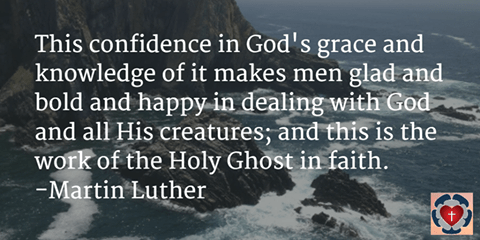
When Dr Martin Luther started to raise issues with the Roman Catholic Church (remember he was an Augustinian monk), he wasn’t trying to undermine the church, he was trying to reconcile his Biblical studies and the teachings of the church. The church emphasized what we are supposed to do in order to be “worthy” of salvation. Dr Luther said, No! What can we add to what Jesus did? He was the sacrifice that paid for our sins. What else can we add through anything we could do to Jesus’ full payment for our sins? Are we fully forgiven in Jesus? Yes, we know Him as our Savior, we are baptized into new life in Jesus, we take His Body and Blood, we hear His preached word, we are saved. We are led to salvation by the Holy Spirit, not by anything we do. All of these things are given to us as part of the Body of Christ, His church. We receive baptism, we receive His Body and Blood, we receive/hear His preached Word. Nothing we did, all of what He did.

Dr Luther tries to lead the Christian church back to the original understanding that we are only forgiven and saved in what Jesus does, nothing that we do. Do we do good works? Absolutely, but these are works that are done through us by the Holy Spirit. Any works we do don’t get us any more saved. When we are baptized, the old/dead man is drowned and we are born again, we are a new creature in Jesus. We are now children of God the Father and are His. Nothing that we did, everything that Father, Son and Holy Spirit did for us.

So there were new Christian churches, teaching and preaching that we are wholly saved by what Jesus does and nothing about what we do. But along comes these Americanized Christians who decide that there must be something that we need to add to Jesus’ works in order to assure us of our salvation. “Yet with salvation comes the responsibility to work out our salvation.” (Henry, Richard Blackaby Experiencing God Day by Day p 205). This is referred to as “works righteousness” in other words, it’s our works that make us righteous in addition to what Jesus did. There has to be both what Jesus did and what we add to that.The Blackaby’s are great Christian brothers, but there are too many in Christiandom that continue to try to stress what we do and undercut what Jesus has done and does do for His people. The extreme examples being Mormons and Jehovah’s Witnesses who try to put our salvation entirely on our efforts and try to undercut Jesus entirely. I’ve always wanted to ask one of them, what if I am just not capable of doing anything? Then what? Too bad for me?

In the July 17 devotional (p 199), the issue is that not only are there works that need to be done by us, but we also seem to achieve almost sinlessness. Don’t get me wrong, I am not preaching antinomianism (the belief that since we’re saved in Jesus, then we can pretty much sin at will because our forgiveness is already assured because of our redemption in Jesus). Reality is this, we are never going to be sinless, we just aren’t. Sure I hope that in Jesus the Holy Spirit is going to make me completely pure, holy and sinless. I am completely righteous through Jesus! But I’m not through me, or some bizarre idea that I have achieved sinless perfection. I’m just never going to make that level

The Blackaby’s say “It is exhilarating to be set apart by God, knowing that God observes your consecrated life and is pleased with what He sees.” Sure, absolutely! I do want to lead a God pleasing life and I should not be committing gratuitous sins. But the fact of the matter is that I will be. At the beginning of every Lutheran worship we start with Confession and Absolution. Well if we have just been perfect in our selves for the past week, what do we need that for? Because the reality is that we need forgiveness, as often as possible. We aren’t going to make it through a week without sin. Sure sometimes they’re acts of omission vs commission, but sin nonetheless and we want to be absolved, to be forgiven and not by virtue of having “a special place in God’s heart!” We do! By virtue of what Jesus did, nothing we’ve done. Not by virtue of our works or our sinlessness, solely through redemption in Jesus’ sacrifice.

I’ve talked to many people who have experienced Reformed Christianity (various types of Calvinism, Arminianism), that feel they’ve had to jump through hoops to be “saved”. There’s of course the “accepting” Jesus, Walking down the aisle during worship to declare that you have some how “chosen” Jesus. Ya…, no! “You didn’t chose me, I chose you.” Jesus tells us. Martin Luther put it forthrightly, you are saved by grace, sola gratia, nothing you did, everything Jesus did. Stop fretting whether you’ve done enough works, or too much sin. Jesus died for your sins, you are saved in Him. If He has chosen you to be saved, you are saved! Done deal, lead pipe guarantee, nothing you did, everything He did. That should be incredibly reassuring. If God has done it, it’s done! If part of it is up to us, oh boy, that is a problem! It’s not, you’re saved in Him. Not in you. Praise God, Father, Son and Holy Spirit for that! Sola Fide, Sola gratia, Sola Scriptura, Sola Christi. If you don’t know what that means drop me a message.