Tag Archives: Christ Jesus

We serve our God who serves us in His will Mark 10: 32-45 First St Johns Mar 22, 2015

We make our beginning in the Name of God the Father and in the Name of God the Son and in the Name of God the Holy Spirit and all those who know they are  sons and daughters of the Father said … AMEN!!!

Dear Ma & Pa,
Am well. Hope you are. Tell brother Walt & brother Elmer the Marine Corps beats working for old man Minch by a mile. Tell them to join up quick before maybe all of the places are filled.
I was restless at first because you got to stay in bed till nearly 6 a.m., but am getting so I like to sleep late. Tell Walt & Elmer all you do before breakfast is smooth your cot and shine some things. No hogs to slop, feed to pitch, mash to mix, wood to split, fire to lay. Practically nothing.
Men got to shave but it is not so bad, they git warm water. Breakfast is strong on trimmings. Like fruit juice, cereal, eggs, bacon, etc…, but kind of weak on chops, potatoes, ham, steak, fried eggplant, pie, and other regular food. But tell Walt & Elmer you can always sit between two city boys that live on coffee.
Their food, plus yours, holds you till noon, when you get fed again. It’s no wonder these city boys can’t walk much. We go on “route” marches, which the Platoon Sergeant says are long walks to harden us. If he thinks so, it is not my place to tell him different. A “route march” is about as far as to our mailbox at home. Then the city guys gets sore feet and we all ride back in trucks. The country is nice, but awful flat.
They don’t bother you none. This next will kill Walt & Elmer with laughing. I keep getting medals for shooting. I don’t know why. The bulls-eye is near as big as a chipmunk and don’t move. And it ain’t shooting at you, like the Higgett boys. All you got to do is lie there all comfortable and hit it. You don’t even load your own cartridges.
Be sure to tell Walt & Elmer to hurry & join before other fellers get into this setup & come stampeding in.

Your loving daughter, Gail[1]

It is kind of a matter of perspective, here you have John and James, they have been in the presence of the Lord for three years now, they really don’t appreciate what they have, they seem to think that it’s just straight up ok to go to God the Son: “Teacher, we want you to do for us whatever we ask of you.” I mean wow, right up front pretty obnoxious!? It’s as if they weren’t even listening. Didn’t Jesus just tell them what would happen to Him? I’m going to be turned over to be killed, that’s bad, but then I will rise, that’s great! What’s their response? Hey we want you to do this for us Jesus. Gail appreciates where she’s been, even in Marine Corps boot camp. She thinks her new life is just terrific. James and John, they seem to forget where they’ve been, they seem to think they’re entitled to an upgrade in life. Yea, I know we’ve all been there, we all want better. But too often it’s our idea of “better” and we just ignore God’s idea.

John and James, like the rest of the disciples, frankly, like too many of us, still have not gotten the idea, it’s not about them and what they get, it’s about what God has for our lives. As it says in your bulletin: “Our old, sinful selves still sometimes want Jesus to be like a genie in a bottle who will give us three wishes rather than a Lord and Savior who has forgiven our sins.” It really comes down to this; as Christians who are in charge of our lives, who do we serve? Is it all about me? Or is it all about our brothers and sisters in Jesus and ultimately/most importantly about Jesus? About Him who sacrificed and suffered everything in order to serve us? He really does serve us, He gave us our relationship with the Father, He fulfills our hope of life – life eternal, we know all those in the world who are without hope, we have the promise, we know we don’t have to jump through hoops to have what we hope for. “For by grace you have been saved through faith. And this is not your own doing; it is the gift of God,” (Eph 2:8). Sola Gratia, grace alone that is given to us because of what Jesus did for us. We couldn’t do anything to earn that if we wanted to. What could we possibly add to what Jesus did for us? We are baptized in the Name of the Triune God. Jesus saved us and He gives us the grace, the faith to know that we’ve been saved. All this is done for us, through nothing that we’ve done. Paul goes on in Eph 2:9 “not a result of works, so that no one may boast.”

The motto of my first undergraduate college was “…not to be served, but to serve..”, This is an old public college, in liberal Massachusetts, I didn’t know what that motto was about when I went there and I’d bet pretty much no one else, student, teacher, staff knew where it was from. Jesus promised to serve us, He did and He continues to.

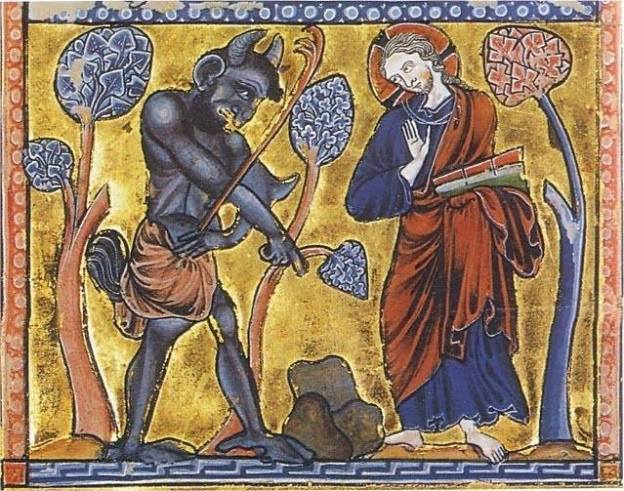
Private Gail, she’s serving, she’s in the Marines, while she serves, she appreciates how much that she has, how good life is. In the world we serve Satan/old man Minch. We may not see it, but he is cruel, merciless and at some point he will drop the hammer on those who are not in Jesus. This might be a little weird, but the Marines, being kind of like Jesus? May seem hard, but to us who have lived in the world and know the harshness of the world, Jesus tells us: “For my yoke is easy, and my burden is light.” (Matt 11:30) Let’s appreciate what Jesus has done, let’s hear what He has to say and not just push through with our agenda. The world/old man Minch, will only serve us at a price and it’s a pay me now and pay me later. With Jesus He lived, died, served, for John and James, all for we who are His and for all eternity.

The peace of God which surpasses all understanding keep your hearts and minds through Christ Jesus. Amin and Shalom

Relationships, strength, encouragement, shared joy, on and on, only come through the smaller, Bible believing Christian church

Another blogger opined that since the millenials (ages from about 18 years old to 30 years old), don’t go to church and use their computers, almost exclusively, for socializing, that we should have “on-line” church.

I’m not opposed to putting worship on-line. We have plans for doing that here at First St Johns. Sure there are people out there who we should be reaching and need to be included in church and, for whatever reason, cannot attend brick and mortar churches. I get it.

The problem is this, how much do you really encourage this growing dependence on using a computer for “fellowship”. A great deal of being in church is to fellowship, is to show support and be a part of something bigger. We already have way too many people who huddle away in some part of their house, all by themselves and genuinely think they have a lot of “friends”, that is the Face Book, Twitter, Snapchat, type friends. Sorry but this is, in no way, shape or form a healthy trend. How do you baptize someone on line? How do they receive the Body and Blood of Jesus? On-line confession and absolution? No, that’s just a phoney way out. How do you really build relationships on line? You don’t!

Being a part of the Body of Christ is being with a group of people who have shared beliefs and shared doctrine in Jesus. Please don’t hand me the lame line that it’s all about “love”, first off, how do you really “love” on-line? Ya, there are those who do. Look me in the face and tell me that’s healthy.

You need that contact with people, we encourage each other, strengthen each other, learn from each other, often help in material ways. Sorry, but I’m not going to jump through hoops for someone who can’t even schlep down to worship on a regular basis, who could otherwise. I’ve had people try it on me. Ya, no! Go to the big-box churches, if you will settle for the illusion of worship and fellowship. Otherwise drag yourself down to First St Johns.

In some ways it’s like saying that it’s the same as being at Fenway Park, being part of the crowd, having it all in front of you, being able to personally booh the Yankees. You can sit at home and listen on the radio, but who you going to fuss at when Papi grounds out in the shift?

But really, being in, sharing with, showing support of worship has always been what is a fundamental part of being a Christian. It’s not just what you benefit from, but often what you do in order to help others. How about the elderly man or woman in the pew in front of you. Quite often, their only genuine human contact is church. To those of you who are children, young man or woman, the 20 something family with the little boy and girl. I really want you to realize that you give real joy and encouragement to others around you who have very little contact with younger people, who often only see people in their own age group. Are you away from your family, but you’d still like your children to have a whole bunch of spiritual grandparents, aunts, uncles? Take ’em to church, your cup will overfloweth.

The person who is going through some kind of crisis and who comes to church to share, maybe he’s led there by the Holy Spirit in order to be in front of you who can readily help. Seriously where is that in the rest of our society?

It’s tough enough being a Christian in today’s world. For the people who are out in the work force and hardly ever encounter a fellow Christian. For the mom at home who often has little adult contact and also, not often with another Christian. Children who need real contact with other kids their age who are Christians. The world is not a friendly place to Christians. Where are you going to get that contact, that encouragement, that strength to carry on? On-line? No! You’re just not and you know it. It’s truly sad to imagine how many people thought they could see the world through their computer and because they had no one else, no other Christian to be there for them that they lost hope in the Holy Spirit which is only truly efficacious when they share with other Christians.They forgot about the promise of Jesus, because the guy who stands with them at the altar to receive the Lord’s Supper, isn’t beside you, because you’re not there.

The writer of Hebrews directs: “ESV Hebrews 10:24 And let us consider how to stir up one another to love and good works, 25 not neglecting to meet together, as is the habit of some, but encouraging one another, and all the more as you see the Day drawing near.” (Bibleworks) Certainly we see “the Day drawing near.” How can you show brotherly love over the computer, really? How can you show Christian hospitality. All the virtues that are being lived out in Christian worship, will simply not be obvious.

I have this posted on First St Johns FB page: “WORSHIP – Rekindles our hope, reenlists us for service, renews our confidence, restores our perspective, restores our joy, releases our anxieties, reconnects us with God.”  I would add that sitting at home, simply reminds us how sad our life has become and not only does not equip us with those benefits, but reminds us how far away we are. That is not going to give us the hope and promise of Jesus, but sink us into further despair and make us feel even more distant from Jesus.

And since I’m riding this hobby horse, I would also like to point out that the opposite is true. You can sit at home and be isolated, and you can also sit in a big crowd and be isolated. Want to talk to the pastor? Yea, good luck with that. These “big box” pastors have more important things to do than make house calls or hospital calls to give you personal attention. Everybody around you, they’re there for the same reason you are, to hide in the open. They’re not interested in you, they’re only interested in what they want. Jesus did the first two plus years of ministry among groups and very much in the public. He didn’t hide away, he was right there in the middle of people. Not some new-age big screen television, talk about “Big Brother”. In a smaller congregation you build those relationships, I’ve only been a pastor for just less than five years. In my first twenty or so years as a Christian I probably have, at least, a half dozen each spiritual mothers, fathers, brothers, sisters and pastors that I have had the opportunity to grow in Christian love with. Ya, tell me you’re going to get that at home on the computer or at the “big box”. Find a smaller, vibrant, liturgical, Bible believing, truly Christian church. You want growth, encouragement, strength for the journey, joy, service, confidence, connections, being in God’s presence with serious believers. It’s churches like First St Johns that will provide it. The “millenials” are all hung up on authenticity, being genuine and then hide at home instead of being where it’s at? And that goes for more than just the twenty-somethings. Try really being genuine and authentic. Put the phones and ipads etc away and get with real people. Otherwise, you should just put a cork in it, because you have no clue what genuine authenticity it.

For God so loved all peoples, all heritages John 3: 14-21 First St Johns Mar 15, 2015

[For the audio version of this sermon please click on the above link]

We make our beginning in the Name of God the Father and in the Name of God the Son and in the Name of God the Holy Spirit, and all those who are brothers and sisters in Jesus said … AMEN!!

You may have heard me refer to St Patricks as the “high holy day”, if you grew up where I grew up, it would be easy to come to that conclusion. I went to the St Patrick’s Day mass in Boston, once. It was conducted, by then, Cardinal Law. You wanna talk “high holy day”, that was it. The worship service, for what was during the week, was very ornate and well attended. This was at the Cardinal’s seat at Holy Cross Church in Boston. Say what you will about the Roman Catholic Church, but I left there very much feeling as if I had been in worship.

The story is told of Mayor James Michael Curley of Boston. Mayor Curley was quite the character, sort of a Robin Hood figure at the time, which was pretty much during the depression. He couldn’t make March 17 a holiday for a Christian Saint, he tried to find an historical event to commemorate. He hit upon the fact that March 17 is when the British evacuated Boston during the Revolutionary War. Well the fact that our Boston ancestors drove the mighty British out of Boston wasn’t something that not only the old Boston Yankees would happily commemorate, but also the Irish-American population would also buy into. Call it what you would, there was a holiday on March 17 and we all know what it’s really about. Evacuation Day is still a recognized holiday in Middlesex and Suffolk counties where Boston is located in. And it is duly celebrated.

Heritage is an important thing, it should be shared and celebrated. Right here we have at least four different groups in First St Johns Lutheran Church that are very serious in the living and celebrating of their heritage and there is nothing wrong with that. In a society that has become so splintered and so alienated, I submit that those people who remember their heritage, share that heritage with others of the same group, make sure that their children, grandchildren and other relatives remember that and don’t surrender to what has become an increasingly homogenized society. As much as diversity is promoted in today’s society, it really is putting away ethnic and religious heritages, to be bound together under an increasingly secular and humanist heritage. Many talk a good game about heritage, the lack of knowledge of American and ethnic history is getting to be scandalous. Too many young people can’t even think in historical terms, as if what came before them doesn’t matter and yet has very much made them what they are. This lack of anchoring in our society, to our Christian heritage and our family heritage has left us with a society that is increasingly detached and alienated.

When you were baptized, you became a new person. In Baptism you are “born again”, you are given real life, in Jesus Christ, you are that new man or woman. Because of that you are born into a new heritage. You may be of German ethnicity or Irish or Spanish, African-American, Italian, but as the song says “…in Christ alone…” We share a heritage that goes back to the beginning in Jesus. As Paul wrote to the Galatian brothers: “There is neither Jew nor Greek, there is neither slave nor free, there is neither male nor female, for you are all one in Christ Jesus.” (Galatians 3:28)

Because it is the “high holy day”, I bring this up because I do try to make St Patricks a little special. I know it’s the middle of Lent and should be somber. Sundays, though, even in Lent, are still festival days on the church calendar. It’s odd how it works out and if you would like me to explain it, I will, but I see St Patricks as a way to kind of stay in touch with the culture that I was brought up in and even as a Lutheran was included in. I have to admit, being of Irish/Yankee ethnicity, makes me an oddball in the Lutheran Church. Although it’s not the only thing that does, but I see St Patricks as a way to remember not just our ethnic identity, but so much more importantly our identity in Jesus.

One reason that I have felt it was so important to recite the Apostle’s and Nicene Creeds with the word “catholic” is to emphasize that the Lutheran Church is very much a universal church. We should not concede that to any other church. We are universal and the Lutheran Church has members and churches in almost every country in the world. There are countries where Christianity is seriously repressed, so we really don’t know what church is or isn’t represented. The fastest growing Lutheran population in the world is not in the United States or Europe, it’s in …. Africa, by far. “…there are over 16 million Lutherans in Africa?  To put that in perspective, that’s more Lutherans than in all of North America. Unlike the Church in Europe and North America, Africa as well as Asia is seeing phenomenal growth in membership.” Put in perspective, from Dr Luther grew the churches of modern Protestantism. [1] Anglicans, Baptists, Methodists, genuine Protestant Christian, excluding Anabaptist churches, churches are the result of what Martin Luther did 500 years ago. We are all truly brothers and sisters in Christ. Often more brothers and sisters than the people that we share physical parents with.

I may use St Patricks Day to add a little twist into worship, I try to do it better, but it never seems to come about. But we have a shared heritage that far transcends what countries our ancestors were born in, we have a heritage that matters for eternity. Jesus died for all of us equally, we are all equally saved in Jesus, whether you were baptized last week, or seventy years ago. I am no more saved because I’m of Irish descent than you are of German descent, or Spanish, African American. In the eternal resurrection our heritage is solely in He who died so that we could be saved. He who is the Lord of our life, in this life and in the life eternal. “For God so loved the world that He gave His only Son…” World, ko,smoj in Greek means “…the inhabitants of the earth, men, the human race”[2] We are all brothers and sisters in the Holy Catholic, universal Lutheran church of Jesus Christ.

The peace of God which passes all understanding keep your hearts and minds in Christ Jesus. Shalom and Amin.

[1] See more at: http://www.messiahlacrescent.org/2010/09/lutherans-in-africa/#sthash.x7ApeFjD.dpuf

[2] BibleWorks

True disciples in Jesus, not phoney expectations

This is from Henry and Richard Blackaby’s Experiencing God Day by Day p 142: “James and John sought to outmaneuver their fellow disciples in order to gain the places of greater honor next to Jesus (Mark 10:37). Over and over the disciples’ actions showed that they did not truly understand who Jesus was (John 6:7-9; Mark 6:49). Even after three years with Jesus, Peter was afraid to confess Christ before a young servant girl (Matt 26:69-75).

Yea these guy’s definitely failed, but I respectfully disagree being in Jesus does not mean that we all of a sudden become lions for Jesus. As a Lutheran we certainly know that we become a new creation in Jesus. Baptism makes us a new man or woman, we have been born again in the Spirit a new creature. We absolutely do. But Martin Luther always cautioned that the old/worldly person would always be lurking waiting for the chance to jump in and assert itself.

When it’s not about Jesus it’s about me. I have no doubt that the ratio is well over fifty percent weighted to me. Sure they became new men on the day of Pentecost and we praise God for that. We do become spiritual beings in Jesus and the Holy Spirit does keep working on us.  I pray that we do respond to Him when we are called on, that we are raised up far more than we fail.  But the beef I have with Reformed theology falls in to works righteousness theology, that we have to become virtually perfect. This side of heaven we aren’t going to be perfect or even too close. I’ve talked to too many people who have given up, have despaired because some uneducated, self-proclaimed “evangelist”, who doesn’t know what he/she is talking about and makes it up. Who genuinely thinks he/she has reached some state of perfection and thinks everyone else should be. They just don’t know what they’re talking about. The Blackabys certainly are much better educated than me, but all Reformed theology still breaks down in this works righteousness and creates an environment where too many give up because they can’t reach an impossible goal of perfection.

I’m not saying give up and don’t strive. Christians should always be striving for Jesus. But don’t get sucked into this idea that you’re going to be perfect and have it all together. Too many have been spit out the “big box” church because of faulty teaching and faulty people. These are the kinds of Jim Jones/cult kind of thinking that causes serious spiritual dysfunction. The fastest way to truly die is to let your spiritual life be undermined.

Look at ISIS, all the places where Christians are truly persecuted and truly living for Christ. They don’t have the time and resources for big box Christianity, the Joel Osteen, Mark Driscoll, nonsense. We have brothers and sisters in Africa, Asia who have and continue to suffer persecution. While people sit in their non-denominational big boxes being amused and convinced they’re perfect just by virtue of being them, the denominational churches, the ones who live the life and put it on the line are out there truly serving. I wonder when non-denominational churches are going to be sending military chaplains who are right on the front line. Who are going to do the work of Lutheran World Missions, for those who sit in pretty sanctuaries, world pleasing sanctuaries.

The big box phoney churches can try to sell that you need to be perfect, but for those who are living the life by actually serving, who are suffering, who know the real world of Christianity, we aren’t perfect. Dr Luther knew the old man, and I certainly have never known a Christian more real than Martin Luther. We need to quit creating phoney expectations that are not Biblical and are only in the head of some self-important big box player to the crowd. Let’s stand up as true brothers and sisters in Jesus accept that we and those around us are fallible and go out and really live the life in Jesus. Let’s not set people up for failure which the big box churches are doing.

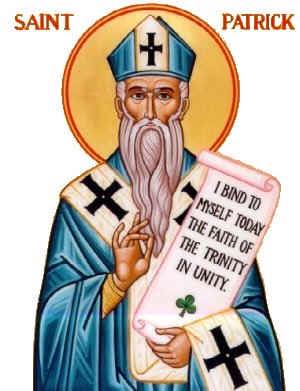
Patrick’s method of evangelizing the Irish reblogged from David Mathis

Remember Saint Patrick

March 17, 2014

Remember Saint Patrick

Saint Paddy’s Day is for the pagans.

You might say it that way, and then carefully wash your Christian hands of all the carousing and empty revelry that makes all things Irish into an excuse for a godless spring party. But you might say the same thing, and mean it not as a call to circle the wagons, but to charge the hill.

Deep beneath much of what the day has become is the inspiring mission of Patrick pioneering the gospel among an unreached people, despite the frowning face of the church establishment. Saint Patrick’s Day, in its truest meaning, is not about avoiding the lost, but bringing them good news. It turns out Saint Paddy’s Day really is for the pagans.

The Gospel to the Irish

The March 17 feast day (first declared in the early 17th century) remembers Patrick as the one who led the fifth-century Christian mission to Ireland. Unlike Britain, the Emerald Isle lay beyond the bounds of the Roman Empire. The Irish were considered uncivilized barbarians, and many thought their illiteracy and volatile emotions put them outside the reach of the gospel.

But Patrick knew better. In a strange and beautiful providence, he had spent six years among them as a captive, learned their language, and developed a heart for them. Like Joseph sold into slavery to one day save Egypt and his brothers, God sent Patrick into slavery to ready Ireland for a coming salvation.

The Surprising Turn

Patrick was born in the late fourth century — many speculate around 385 — in what is now northeast England. He was born among the Celtic “Britons,” to a Romanized family of Christians. His father was a deacon, and his grandfather a priest. But his parents’ faith didn’t find a place in his heart in his rearing. In his youth, according to George Hunter, “he lived toward the wild side” (The Celtic Way of Evangelism, 13).

But God soon arrested him with severe mercy. Kidnapped at age sixteen by Irish raiders, he was taken back to the island, where he served as a slave for six years under a tribal chief, who was also a druid. While in bondage in Ireland, God unshackled his mind and opened his eyes to the gospel of his childhood.

“God sent Patrick into slavery to ready Ireland for a coming salvation.”

And so, as a captive, “he came to understand the Irish Celtic people, and their language and culture, with a kind of intuitive profundity that is usually possible only, as in Patrick’s case, from the ‘underside’” (14). When he eventually escaped from slavery in his early twenties, he was a changed man, now a Christian from the heart. He studied for vocational ministry, and led a parish in Britain for nearly twenty years.

Reclaiming Retirement

That could have been the end of the story. But at age 48 — “already past a man’s life expectancy in the fifth century” (15) — Patrick had a dream, which proved to be his own Macedonian Call (Acts 16:9). An Irish accent pled, “We appeal to you, holy servant boy, to come and walk among us.”

Having known the language and the customs from his captivity, and having long strategized about how the gospel might come to the Irish, he now answered the call to return to the place of his pain with the message of joy. The slave returned to his captors with good news of true freedom.

Back in Saint Patrick’s Day

But this would be no ordinary mission. The Irish Celtics were “barbarians.” They may have had a few Christians among them, but as a people, they were unreached, with no thriving church or gospel movement.

“Patrick, the former slave, returned to his Irish captors with good news of true freedom.”

Patrick would take a different and controversial approach to the prevailing missionary efforts of the fifth-century church. Instead of essentially Romanizing the people, by seeking to “civilize” them with respect to Roman customs, he wanted to see the gospel penetrate to the bottom of the Irish culture and produce an indigenous movement. He didn’t mean to colonize them, but truly evangelize them.

Understanding the People

Hunter tells the story in the first chapter of his book on Celtic evangelism.

The fact that Patrick understood the people and their language, their issues, and their ways, serves as the most strategically significant single insight that was to drive the wider expansion of Celtic Christianity, and stands as perhaps our greatest single learning from this movement. There is no shortcut to understanding the people. When you understand the people, you will often know what to say and do, and how. When the people know that the Christians understand them, they infer that maybe the High God understands them too. (19–20)

Patrick knew the Irish well enough to engage them as they were, and build authentic gospel bridges into their society. He wanted to see the gospel grow in Irish soil, rather than pave it over with a Roman road.

Ministering with a Team

Essential to Patrick’s strategy was that he not fly solo. Just as Jesus sent out his disciples together (Luke 10:1), and Paul and Barnabas went out together (Acts 13:3), so Patrick assembled a close-knit team that would tackle the work together, in the same location, speaking the gospel and making disciples, before moving on together to the next tribe. It was, what Hunter calls, a “group approach to apostolic ministry.”

We have no detailed record of Patrick’s ministry teams and strategies, but according to Hunter, “from a handful of ancient sources, we can piece together [an] outline of a typical approach, which undoubtedly varied from one time and setting to another.”

“Patrick wanted to see the gospel grow in Irish soil, rather than pave it over with a Roman road.”

Patrick’s teams would have about a dozen members. They would approach a tribe’s leadership and seek conversion, or at least their clearance, and set up camp nearby. The team “would meet the people, engage them in conversation and in ministry, and look for people who appeared receptive” (21). In due course, “One band member or another would probably join with each responsive person to reach out to relatives and friends” (22).

They would minister weeks and months among them, eventually pursuing baptisms and the founding of a church. They would leave behind a team member or two to provide leadership for the fledgling church and move, with a convert or two, to the next tribe. With such an approach, the church which grew up among the people would be “astonishingly indigenous” (22).

Priority Time with Pagans

While Patrick’s pioneering approach is increasingly celebrated today — and is a model, in some respects, of the kind of mission needed in our increasingly post-Christian society — most of his contemporaries weren’t impressed. “The British leaders were offended and angered that Patrick was spending priority time with ‘pagans,’ ‘sinners,’ and ‘barbarians’” (24).

But Patrick knew such an approach had good precedent. The one who saved him while a nominal Christian and an Irish captive was once called a “friend of tax collectors and sinners,” and said, “I came not to call the righteous, but sinners” (Mark 2:17). The stakes were high, but he knew it was worth the risk.

Something Worth Remembering

Instead of acquiescing to the religious establishment, Patrick took the gospel to the uncouth, and ventured all for the unreached Irish. Instead of coasting toward a cushy retirement, he gave nearly three decades to the nation-transforming evangelization of Ireland. Patrick truly was for the pagans.

According to tradition, Patrick died March 17. Many think the year was 461, but we don’t know for certain. While today’s trite celebrations may leave much to be forgotten, for those who love Jesus and the advance of his gospel, Patrick has left us some remarkable things to remember. And to learn from.


Related Articles

“Patrick took the gospel to the uncouth, and ventured all for the unreached Irish.”

Thoughts on Predestination from the Church Fathers to Martin Luther May 14, 2010

When I started this study on predestination, I assumed that this was simply to discuss that God must foresee the destiny of each person. Through this study though various writers have pointed to the need for God’s foreknowledge in all things. Certainly if God knows the destiny of Jim Driskell this has to include His foreknowledge of the entire environment, the history and the future in order to fit my life into my environment. In his commentary on Romans, Leon Morris explains the process that Paul describes in his letter, that it is indeed not just knowing who is saved but it is a process: “Those he predestined God also called (again the call is an effectual call, for it is preceded by predestination). Those he called God also justified … This is an important concept for Paul and receives special emphasis in this epistle. It leads on to glorification, for those whom God justified he also glorified. The aorist tense here is unexpected… it is more likely that it is used of set purpose to bring out the truth that our glorification is certain. So certain is it that it can be spoken of as already accomplished.”[1] So certainly Paul clearly intended for us to understand that the predestination he was talking about was not something that was just being worked out, it was, but the end had already been determined. The focus of much of the discussion on predestination is on Romans 8:28 – 9:24, specifically 8: 29 – 8:30.

Needless to say to take on such a study is staggering in its immensity and yet what is known with certainty is miniscule, what we know is rather speculative except for a few Bible passages that refer to God’s foreknowledge but not necessarily what that entails. That being the case we should work under the assumption that God knows everything. Of course this raises questions as to how man’s “free will” plays out in this. If I have free will can I act in a way that undermines God’s foreknowledge, or His plan as it were? If this means that God foreknew what I would do then does that preclude free will? Could there a middle ground? In situations like Judas does God predestine some things, maybe just the “important” things and then lets us kind of live our otherwise ordinary lives out according to our personal preferences and prejudices, does God really map out everything or just the “big” events that require divine intervention. Of course that then raises the question as to what is “important” and what is otherwise ordinary, something that really doesn’t require God’s attention?

The Book of Concord, which writing was led by Dr. Martin Luther, gives us a good explanation as to why we should examine the question of predestination, but Dr Luther writes, a great deal, in other places that while we discuss the question, we don’t become consumed by it, or try to presume to know God’s intentions and think that we can somehow understand what God’s intent really is. Clearly the Bible writes about it and we are aware of it, but it is through our faith in God that He is going to act according to His great holiness, grace, compassion and knowledge. We should trust in that and to quote Dr. Luther: “God doesn’t want you to know the future. So stick with your calling, remain within the limits of God’s Word, and use whatever resources and wisdom God has given you. For instance, I can’t foresee what my preaching will produce – who will be converted and who won’t. What if I were to say, ‘Those who are meant to be converted will be converted even without my efforts, and what’s the use of trying to convert those who aren’t meant to be saved?’ Saying that would be foolish and irreverent. Who are we to ask such questions? Take care of your responsibilities and leave the outcome to God.”

The writers of the Book of Concord wanted to clarify why it was necessary to discuss this issue: “Therefore, in order by God’s grace to prevent, as far as we can, disunity and schism in this article among our posterity, we have determined to set forth our explanation of this article in this document so that all men may know what we teach, believe, and confess in this article. 2 If the teaching of this article is set forth out of the divine Word and according to the example it provides, it neither can nor should be considered useless and unnecessary, still less offensive and detrimental, because the Holy Scriptures mention this article not only once, and as it were in passing, but discuss and present it in detail in many places. 3 In the same way, one must not by-pass or reject a teaching of the divine Word because some people misuse and misunderstand it; on the contrary, precisely in order to avert such misuse and misunderstanding, we must set forth the correct meaning on the basis of Scripture.”[2]

Fr William Most did a survey of the Church Fathers regarding predestination and he concludes that they all agree to some extent that merit figures in some way to God’s determination as to who will be saved. He starts by giving his understanding of how the Thomists, that is those who adhere to the school of Thomas Aquinas see predestination:

““The older Thomists, in general, explain it thus:

  1. In the order of intention: God first decides on the end, i.e., eternal glory for the predestined man. Then He decrees the merits needed for this end. Finally He decrees the graces needed for those merits.
  2. In the order of execution: God, in eternity, decrees the execution in time of the decrees He has already made/ First He decrees the graces needed for merits, then He decrees the merits, finally He decrees glory for the predestined man. For a reprobate however, he first decrees only sufficient graces (or, at least He does not decree efficacious graces t such an extent that the man would be saved), then He decrees the absence of merit after sufficient graces. Because it is metaphysically inconceivable for a man to perform a good work with such graces, sins infallibly follow, or rather, God moves the man to these. (Cf. 132.5) Because of the sins, He decrees eternal punishment.”[3]


The following is Fr Most’s summation of the Fathers’ view of predestination:

St Justin Martyr: “But I have already shown that it is not by the fault of God that those angels and men do become wicked who are foreseen as going to be unjust, but [rather that] by his own fault each one is such as he will appear [then].”[4]

St Irenaeus: “If therefore even now God since He foreknows all things, has handed over to their infidelity as many as He know will not believe, and has turned His face away from such ones, leaving them in the darkness which they chose for themselves: How is it strange if then He handed over to their own infidelity Pharaoh, who never would believe, and those who were with him?”

Fr Most’s comments on St Irenaeus’ view indicates that it is not a consideration of merit that God predestines some men, but because they chose sin: “…St Irenaus does not say that they lack the faith because God deserted them, but rather, that God handed them over to infidelity because they chose darkness for themselves… It is clear also that St Irenaeus by no means says that men can merit predestination. He does not, actually, speak at all about the positive side, but only about reprobation.”[5]

This seems to refute Fr Most’s argument. We are all condemned as a result of original sin, “”None is righteous, no, not one;” (Romans 3:10) So if we come into the world under sin and continue in our sin and God has foreseen that “He knows will not believe…” then they are left in their sin and surely God has determined that they will be left in their sin. There is no assertion that they can “earn” their salvation, it must be assumed that Irenaeus acknowledged this and therefore did not make a case that they could “earn” their salvation.

Clement of Alexandria: ‘For the coming of the Saviour did not make [men] foolish and hard of heart and faithless, but prudent, amenable to persuasion, and faithful. But they who were unwilling to obey, departing from the voluntary adherence of those who obeyed, were show to be imprudent and unfaithful and foolish. ‘But to those who are called, both Jews and Greeks, Christ the power of God and the wisdom of God.’ Should we not, then consider as negative (as is better) the statement ‘God has not made foolish the wisdom of the world’ (1 Cor 1:20)  …lest the cause of their hardheartedness seem to have come to them from God ‘who made foolish the wisdom [of the world]’? For altogether, since they were wise, they were more at fault in not believing the preaching. For the preference and choice of the truth is voluntary. But also the statement: ‘I will destroy the wisdom of the wise’ (1 Cor 1:19) means that He sent forth light, in contrast to the despised and condemned barbarian philosophy; just as also a lamp that is shone on by the sun is said to have perished, since it does not exert equal power [in comparison to the light of the sun]. Although, then, all men are called, those who willed to obey are named ‘called’. For there is no unrighteousness with God. So those out of each people who believed are the ‘chosen people’. And n the Acts of the Apostles you would find ‘So those who received His word were baptized’ but those who were unwilling to obey, obviously separated themselves. To them the prophecy says: ‘And if you wish and hear me, you will eat the good things of the land, showing that it lies in us to accept and to turn aside.’”[6] It again seems to me that the person Fr Most is quoting agrees that men can resist God, that God has left them in their sin and no doubt foresaw that they would. There is no indication that Clement claims, in any way, that man can somehow earn their salvation and that God foresaw that they would earn their salvation and thereby predestine them to salvation on that basis.

Fr Most states that ”…But he is anxious to show that the reason why some rejected the faith and others did not is found in men, not in God: ‘For there is no unrighteousness with God.’ And he finds the explanation implicitly contained in a line of the Acts of the Apostles: ‘So those who received His word were baptized.’ From this he concludes: ‘those who were unwilling to obey, obviously separated themselves.’ For : ‘It lies in us to accept and to turn aside.’[7] This last quote is from Isaiah 1:19. I do not understand how either Clement or Fr Most can understand this quote to mean that we can chose or refuse salvation. The context of the passage seems obvious to me, it seems to be a left hand/ right hand kingdom argument more then a way to merit salvation. That is if you obey then that can lead to a better life where you are. If you continue to sin, as Israel did, then they will not only not eat the good things of the land, they will not be on the land anymore. This certainly doesn’t apply to whether they will be saved or not.

The next discussion is based on St Gregory of Nazianzus comments on Matthew 19:12. “…When you hear ‘to whom it has been given,’ add: It is given to those who are called, and to those who are so disposed. For when you hear those words: ‘There is question not of him who wills nor of him who runs, but of God showing mercy,’ I judge you should think the same thing. For since there are some who to such an extent are proud of their good deeds that they attribute all to themselves and noting to the one who made them and made them wise and led them to good, this text [of St Paul] teaches them that even to will good needs help from God. Or rather, that the very choosing of the things that should be chosen is something divine, and a gift from God’s love of man. For it is necessary that salvation depends both on us and on God. Hence he [St Paul] says: ‘There is question not of him who wills,’ that is, not only of him who wills, ‘nor of him who runs’ only, ‘but’ also ‘of God showing mercy.’ So, since even the act of will is from God, he properly attributed all to God.’ And after a bit St Gregory continues, explaining the words of Christ to the mother of the sons of Zebedee, from Mt 20:23: ‘You will drink my cup, but to sit at my righthand and at my left is not mine to grant, but it is for those for whom it has been prepared by my Father.’ He comments: ‘Does then our mind that guides [count for] nothing? … Does fasting [count for] nothing? … Shall none of these profit a man anything but [instead] by a sort of capricious choice, is Jeremia sanctified, while others are rejected from the very womb? … There too, to the words ‘for whom it has been prepared’ add this: who are worthy, and who have not only received from the Father that they may be such, but also have give [it] to themselves.’”[8]

As far as his last questions goes I would take them as rhetorical and suggest that while the answer may be no, what is the reason we may do good works or fast? I would submit that it is because the Holy Spirit is working through us. If the Holy Spirit is working through us it would stand to reason that we are part of the Body of Christ. If we are part of the Body of Christ it is because we have been predestined to salvation. Furthermore why would someone use Matthew 20:23 to say that we are saved by our works? Clearly Jesus indicates that the choice is the Father’s, if James’ and John’s works don’t get them on the left and the right, I’m pretty sure that mine won’t get me there either.

St Gregory of Nyssa: “’The Father raises the dead and gives them life, and the Son give life to whom he will.’ We do not conclude from this that some are cast out from the lifegiving will; but since we have heard and we believe that all things of the Father belong to the Son, we obviously also see the will of the Father, as one of all these, in the Son. If then the Father’s will [attitude]is in the Son, and that Father, as the Apostle says, ‘will all men to be saved and to come to the knowledge of the truth’ it is plain that He who has everything that is the Father’s, and has the whole Father in Him along with the other good things of the Father, has fully also the salvific will…For not because of the Lord’s will are some saved but others are lost: for then the cause of their ruin would come from that will. But by the choice of those who receive the word, it happens that some are saved or lost.”[9]

There is no one questioning that the Father’s will is in the Son, but it should not be an issue at this point as to whether it is the Father’s will for a person to be condemned. It is not, God wills that all be saved, “And we should not regard this call of God which takes place through the preaching of the Word as a deception, but should know certainly that God reveals his will in this way, and that in those whom he thus calls he will be efficaciously active through the Word so that they may be illuminated, converted, and saved. For the Word through which we are called is a ministry of the Spirit — “which gives the Spirit” (2 Cor. 3:8) and a “power of God” to save (Rom. 1:16). And because the Holy Spirit wills to be efficacious through the Word, to strengthen us, and to give us power and ability, it is God’s will that we should accept the Word, believe and obey it. 30 The elect are therefore described as follows: “My sheep hear my voice, and I know them, and they follow me; and I give them eternal life” (John 10:27, 28), and they who are decreed “according to God’s purpose” to “the inheritance” hear the Gospel, believe on Christ, pray and give thanks, are sanctified in love, have hope, patience, and comfort in afflictions (Eph. 1:11, 13; Rom. 8:25).”[10] It is man’s evil that condemns him from the beginning. He can resist God’s will to save Him, but He can’t do anything to otherwise earn his salvation. God is not willing them to evil, He is just not choosing them for salvation.

It seems to me that Jerome was never a favorite of Luther and I can certainly see why from this quote: “If … the patience of God hardened Pharao, and for a long time put off the punishment of Israel, so that He more justly condemned those whom He had endured so long a time, God’s patience and infinite clemency is not to be blamed, but the hardness of those who abused the goodness of God to their own destruction. Moreover, the heat of the sun is one and according to the kind of thing that lies beneath it, it liquefies some, hardens others, loosens some, constricts others. For wax is melted, but mud is hardened: and yet, the nature of the heat [that each receives] is the same. So it is with the goodness and clemency of God: it hardens the vessels of wrath, that are fit for destruction; but it does not save the vessels of mercy in a blind way, and without a true judgment, but in accordance with preceding causes; for some did not accept the Son of God; but others of their own accord willed to receive Him.”[11] The Bible plainly states that God hardened Pharaoh’s heart, but it was a heart that was already evil, who rejected Yahweh in favor of the “gods” of Egypt. Pharaoh’s heart was made of stone and got a bit harder. So what makes him different that his heart is of stone (or mud as it were) and those who are saved are made of wax. God can melt or harden stone, but the heart is stone either way, that is evil, it is God’s prerogative to predestine “and those whom he called he also justified, and those whom he justified he also glorified.” (Rom 8:30) For the rest they were sunk in their evil, God did inflict it on them.

It appears that there is no hard and fast basis in the Fathers for a concept of predestination in any respect. But it would appear that they would not disagree with Augustine and his concept, despite what a typical Roman Catholic perspective would be, that being predestination based on some kind of merit, that all except for Jerome would agree that it is solely God’s decision. That they evil man does is clearly his own, if God hardens his heart, it is not to say that his heart wasn’t already hard enough for condemnation and if God lifts another man up for salvation, that is certainly his prerogative.

Although the Roman Catholic church drifted from the Augustinian view of predestination, toward a view that as we’ve seen is an attempt to try to rationalize the need for works, it is clear that Augustine was the demarcation between the tenuous concepts of the Fathers and the much more defined concepts of the medieval age. Albeit Roman Catholic dogma took it and twisted it to a works belief, that is represented by the bias shown to “Thomist’s” explanation of predestination by Fr Most.

Augustine took predestination and took the small foundation given to him by the Fathers and built a fortress on the foundation. In addition Augustine realized that predestination required more from God for man then just an assurance that he was saved. Certainly God can save whomever He wants, but Augustine felt that in order for man to demonstrate that God was guiding His chosen to salvation, God equipped man with perseverance and faith. Augustine describes at length God’s gifts of perseverance and faith to those whom He predestined. “Augustine’s intention in writing these works was to establish in the preaching of predestination an impenetrable bulwark for the defense of God’s grace against the teaching on meritorious deeds proposed by Pelagius’s followers (persev. 21.54). Predestination was understood, broadly speaking, as the preparation of grace by God, while grace itself was defined as a gift.”[12]

A lot of the argument, as we have seen, has been that either God foreknew what someone would do and elected that person based on his deed or decision. Fitgerald points out: “Predestination was not based upon God’s foreknowledge of human deeds, but was to be situated in God’s eternal decree and was therefore unfailing. This also meant that human beings had no right to claim God’s grace. Predestination, moreover, was for some and not all. The grace of perseverance in faith was no longer set aside for all the baptized, but only for those faithful people chosen by God from the massa damnata (or the massa perditionis or massa peccati), God’s electi.”[13]

Free choice is one of the basic arguments of the concept of predestination. In this letter of Bishop Evodious to Abbot Valentine: “…Adam, had the full reality of free choice, but he made bad use of the divine gift. Now man has free choice, but an injured choice … For from the moment free choice was damaged, it is for us sufficient only for perdition,…”[14] As Luther will point out, man really has no free choice, he is either called to the Kingdom by Christ or if man resists he is condemned to stay and die in the world, unsaved. Adam had the clear choice between keeping what he had, salvation in the Garden, or choosing to defy God and as a result was sent into the world. There is no salvation in the world, it is up to Jesus to predestine whom He will, therefore the choice was taken out of man’s hands.

Saint Fulgentius of Ruspe was bishop of the city of Ruspe, North Africa in the 5th and 6th century. He was from a wealthy family and probably received an excellent education. He stood up against the Arians in Ruspe and was exiled for a short period of time. He was called back to Ruspe to lead the people there back to the orthodox Catholic faith.[15]

Fulgentius was strongly in agreement with Augustine, but he seems to extend               Augustine’s position by saying that the will is prepared from the beginning of time in the individual to be worthy and therefore predestined to salvation. Much of his position on predestination is a strong echo of the Augustinian position, in that nothing we do justifies being predestined to salvation, that in fact we are predestined before we are ever born: “Let us enquire whether God must be believed to have predestined the works of the wicked for which he condemns them just as he is said to have predestined what he crowns in the saints? When we enquire about the cause of the condemnation of the wicked and of the glorification of the saints, we do not deny that the former are predestined to punishment or the latter to glory. But whether, just as the good works for which the just will be glorified are believed to be divinely predestined, must the evil works for which the unjust will be punished forever, be believed to be divinely predestined? For it is said in the book of psalms: ‘The unjust will be punished and the seed of the impious will perish, but the salvation of the just is from the Lord.’ Concerning both, our Savior also says, ‘And those will go off to eternal punishment but the righteous to eternal life.”

“In both, therefore, i.e., in the just and the unjust, I think that there are three things which must be considered: the beginning, the will; the unfolding, the work; the end, reward or punishment. That we may attribute to the just and good; we know that those things in which we find neither goodness nor justice are unworthy of God. And having considered the quality of works, we believe those things which are found to be worthy of and befitting the divine mercy or justice are predestined by God, ‘the gracious, merciful and righteous Lord.”

“And first we confess that the beginning of the whole of a good will is predestined and given by that eternal Trinity which is the one, sole, and true God. With a free justification, he has given this prepared to humankind, that which he had prepared to be given in eternal predestination. I shave shown this preparation of the will above, by the testimony of Holy Scripture, where it is said: ‘The will is prepared by the Lord.’”

“Therefore, the will is prepared by him who mercifully accomplishes in us both the willing and the completion. For the Apostle says, ‘For God is the one who, for his good purpose, works in you both to desire and to work.’ God, speaking through the prophet, confirms that it is he who empowers the faithful to do what they do, according to that oracle which has been cited by us above, where he says, ‘[I will] make you follow my statutes and be careful to observe my ordinances.’ [Ex 36:27] But what is ‘I will make you follow …’ except; all the good you will do is my doing. So he does that we may do. With him at work in us, every good thing we do comes about. Concerning this it is said in Hebrews: ‘[May he] furnish you with all that is good … May he carry out in you what is pleasing to him.’” [Heb 13:21]

“…We are in no way permitted, indeed, in a salutary way, we are forbidden, as much in our faith as in our works, to claim anything for ourselves as if it were our own. For the vessel of election says, ‘What do you possess that you have not received? But if you have received it, why are you boasting as if you did not receive it?’ [1 Cor 4:7] And in the holy Gospel, the word of the Lord’s precursor is ‘No one can receive anything except what has been given him from heaven.’ James the Apostle testifies, ‘All good giving and every perfect gift is from above, coming down from the Father of lights…’” [Jas 1:17][16] Clearly Fulgentius was an advocate of predestination and understood it to be a work solely of God and that man contributed nothing toward his predestination.

Gregory of Rimini (1300 – 1358) Was an adherent of Augustine, but seems to take the predestination discussion to the concept of “double predestination”, that is that God elects people to both salvation and damnation as an act of deliberate will. It could be argued that Augustine also condoned the idea of double predestination at some point in his writings. In The Predestination of the Saints he writes: “What the chosen have obtained, therefore, they have obtained gratuitously. The did not already have something of their own which they might first give to him order that they might be repaid. He saved them in return for nothing. But the rest who were, as the apostle did not fail to mention there, received this blindness as a repayment…Unsearchable then are both the mercy by which he gratuitously sets some free and the judgment by which he justly judges others.”[17] Later, however Augustine seems to acknowledge that this is a gift to some. All men are condemned, so if God decides to chose some, it is not that He has decided others are elected to condemnation, He is simply leaving them in the state they were in, choosing to make a gift to some others: “…this gift is given to some and not given to others. But why it is not given t all ought not to disturb a believer who believes that because of the one all have entered into condemnation, which is undoubtedly most just, and that there would be no just grounds for blaming God, even if no one were set free from it.”[18]

Gregory would be in agreement that God predestines us to both “glory and reprobation”: “In the first place God’s will becomes the sole agent whether in election to final glory or in condemnation to final reprobation. In the second place, His decision is free and unconditional, motivated by nothing but His willing. It is form obedience to these assumptions that his extremeism springs: for he [Gregory] refuses to go beyond the almost literal interpretation of God as the cause of both glory and reprobation (the so-called double predestination) with the result that, whereas his contemporaries and forerunners sought to mitigate the latter in attributing some part at least of the sinner’s penalty to his own sins, Gregory in effect denies him any such role. No less than he is who is saved, the man I reprobation owes his disability entirely to God. Consequently, as we shall see, Gregory’s outlook is distinguished not so much in the effects of predestination as in its cause, for it is with God that its most striking features lie.”

“Gregory, in accordance with common usage, defines predestination as election to eternal life and reprobation as the refusal of eternal life. They are eternally willed by God, and, as St Paul has said, it rests with God’s mercy whether a man is saved or not. Predestination is therefore God’s preparation and justification of the saved for eternal life while reprobation has no such end.”[19] He goes on to qualify this further by saying: “…on the other, it helped to point to reprobation as in some way having its case in the deficiency of those damned, as opposed to being directly willed by God.”[20] It is not clear if there is an “indirect” connection, other then sin on the part of the reprobate. So Gregory seems to be trying to remove blame from God, but somehow still trying to accommodate God’s foresight of all men, those saved and those condemned.

Thomas Bradwareine brings the debate up to the fourteenth century and also the British. He was a chancellor of Oxford as well as a professor of divinity and for a short period Archbishop of Canterbury.[21] “Bradwardine’s contribution to this process was no less far reaching. By removing faith from reason’s sphere, he was making it independent of everything but authority and dogma. Faith was the sole motive force once reason was withdrawn; belief had no use for reason’s aid or the knowledge which was from practical experience, for it proceeded independently upon an entirely different plane.” “Bradwardine having established that merit de congruo cannot be separated from merit de condigno, hasleft himself the comparatively straightforward task of showing that this cannot come from man. By rejecting the distinction between de congruo and de condign, he is able to confront its supporters as complete Pelagians: either they withdraw and accept that merit must come from grace and so have a supernatural value, or they expose themselves to denying merit as a supernatural quality and thus set up men’s natural powers on an equal footing with God’s… merit de congou as potential merit, does not really exist, merit de condigno, as a supernatural virtue, comes from God alone.”

“Bradwardine’s position, in fact, amounts to a complete rejection of merit as a human achievement. There can be no good act by a man which is not incited and aided by God’s grace.” [22]

The bookends of the predestination issue were Augustine of Hippo and Martin Luther. It seems in some ways as those who lived in the years between these two men were trying to rehash what had already been decided or were trying to somehow make man more complicit in their destiny. Generally that man would somehow merit his final disposition, either through his sin leading to condemnation or his works leading to his glorification. Quick referral to Augustine shows that he felt the issue settled: “But this whole argument by which we are maintaining that the grace of God through Jesus Christ our Lord is truly grace, that is, that it is not given in accord with our merits, is stated with the greatest clarity by the testimonies of the words of God.”[23]

It was Augustine who also went a few steps further to link predestination to a process. First that the saint would have to persevere: “But in the eyes of human beings it seems that all who are seen to be good believers ought to have received perseverance up to the end. God, however, has judged that it is better that some who will not persevere be mingled with the certain number of his saints in order that those people for whom it is not useful to be assured of their salvation amid the temptation of this life cannot be assured of their salvation.”[24] Faith obviously plays a part in our salvation, therefore faith had to be either a product of man’s will or a gift of God. Clearly the process had to include this being a work or God: “…both the beginning of faith and perseverance n it up to the end are gifts of God…But if each of them is a gift of God and if God foreknew that he would give these gifts of his – and who would deny this? – predestination must be preached in order that the genuine grace of God, that is, grace which is not given according to our merits, can be defended by an insurmountable bulwark.”[25] Thus all the gifts of God are accounted for in order for someone to be predestined; faith, perseverance and grace all result in the predestination of one to salvation.

In the interim between the men who had denied human merit and purely the will of God, the church had decided that it was indeed human merit that earned salvation for man. Martin Luther burst on the scene and went back millennium and rediscovered Augustine’s writings on predestination and Luther reestablished this teaching in the Reformation. While the Roman Catholic church had been empowering itself and seeming to reduce God in the equation, Luther asserts: ”He would be a ludicrous Deity – idol, rather – if His foreknowledge of the future were unreliable and could be falsified by events; for even the Gentiles ascribed to their gods ‘fate inevitable’! He would be equally ludicrous if He could not and did not do all things, or if anything were done without Him. But if the foreknowledge and omnipotence of God are conceded, it naturally follows by irrefutable logic that we were not made by ourselves, nor live by ourselves, nor do anything by ourselves, but by His omnipotence. Seeing that he foreknew that we should be what we are, and now makes us such, and moves and governs us as such, how, pray, can it be pretended that it is open to us to become something other than that which He foreknew and is now bringing about?”[26]

Clearly Dr Luther was not inclined to accept that man could do anything to effect God’s judgment: “Suppose we imagine that God ought to be a God who regards merit in those that are to be damned. Must we not equally maintain and allow that He should also regard merit in those that are to be save? If we want to follow Reason, it is as unjust to reward the undeserving as to punish the undeserving. So let us conclude that God ought to justify on the grounds of merit preceding; or else we shall be declaring Him to be unjust. One who delights in evil and wicked men, and who invites and crowns their impiety with rewards! But then woe to us poor wretches with such a God! But who shall be saved?”[27]

Clearly God does not save us by our merits. In the mystery of His plan He decided at the beginning of time who would be saved, that the rest of humanity already being in a state of depravity would be condemned. But God in His infinite wisdom chose to save some, when He could have let all die in their sins. So Luther teaches that we should we should proceed in faith: “Yes, it’s true that what is predestined will happen. However, we aren’t commanded to know what is predestined. In fact, we are forbidden to know it. We test God when we delve into unknowable matters. God has given Scripture to us so that we can know what we should and shouldn’t do. He expects us to act on this knowledge. What we cannot know, we should leave to God. We should stick to our responsibilities, vocation, and position in life. God and God alone knows what is predestined.”[28] God has given us the marks of the church, we have been baptized in His name. We then have His promises to rely on and it would not accomplish anything for us to become engrossed as to whether we are saved or not: “This doctrine must be preached and expounded to Christendom in general, but it must also be impressed so that each individual Christian can practice and apply it in his own particular trials. When the devil hits the heart with his darts (Eph. 6:16), labeled eternal predestination or God’s wrath and judgment, then I must be steeled against these with the Word of Christ and say: “Away with you, you vile spirit of lies! Go devour your own stench, and do not distract me with such thoughts! For I have learned from Christ and from God Himself that if I want to know how God is disposed toward me and what His plans are for me, I must listen to none other than my Lord’s voice. There I see and hear nothing else than His gift of Baptism, His Sacrament; there I see that He absolves me from sin and acquits me. There is no threat at all that He wants to hurl me into hell. He does not want to drown me in Baptism; He wants to wash, cleanse, and quicken me.” [29]

There can be no doubt that God is in complete control. That it is His will that determines what will transpire in history, the present and the future. Would an omniscient God simply disregard His people? He has given us His promises that He is with us always. “For those whom he foreknew he also predestined to be conformed to the image of his Son, in order that he might be the firstborn among many brothers.

And those whom he predestined he also called, and those whom he called he also justified, and those whom he justified he also glorified.” (Rom 8: 29-30 ESV) To those He has predestined to salvation He has given them what they need; faith, perseverance and grace. Need we look farther? We should live the life that He has granted us, secure in the blessing of our salvation, praise and glorify the Father, Son and Holy Spirit. Give thanks to the Son who died in order that His Father would chose us for salvation.

BIBLIOGRAPHY

Fulgentius of Ruspe The Fathers of the Church Fulgentius Selected Works translated by Robert Eno (Washington, Catholic University of America Press) 1997

Luther, M. 1999, c1961. Vol. 24: Luther’s works, vol. 24 : Sermons on the Gospel of St. John: Chapters 14-16 (J. J. Pelikan, H. C. Oswald & H. T. Lehmann, Ed.). Luther’s Works. Concordia Publishing House: Saint Louis

Luther, Martin The Bondage of the Will Translated by J. I. Packer and O. R. Johnston (Grand Rapids, Fleming H. Revell) 2006

Tappert, T. G. 2000, c1959. The book of concord : The confessions of the evangelical Lutheran church. Fortress Press: Philadelphia

Teske, Roland Translator The Works of Saint Augustine volume IV (New York, New City Press) 1999

Fitzgerald, Allan Augustine Through the Ages (Grand Rapids, Eerdmans Publishing Co) 1999

Galvin, James E. Martin Luther Through Faith Alone (Saint Louis, Concordia Publishing House) 1999

Leff, Gordon Bradwardine and the Pelagians (Cambridge, Cambridge at the University Press) 1957

Leff, Gordon Gregory of Rimini (Manchester, Manchester University Press) 1961

Morris, Leon The Pillar New Testament Commentary The Epistle to the Romans (Grand Rapids, Eerdmans Publishing Co) 1988

Most, Fr William G  Grace, Predestination and the Salvific Will of God (Front Royal, Va, Christendom Press) 1997

[1] Morris, Leon The Pillar New Testament Commentary The Epistle to the Romans pp 333-334

[2] [2]Tappert, T. G. 2000, c1959. The book of concord : The confessions of the evangelical Lutheran church. Fortress Press: Philadelphia

[3] Most, Fr William G  Grace, Predestination and the Salvific Will of God p 250

[4] Ibid p 259

[5] Ibid p 261

[6] Ibid pp 261-262

[7] Ibid p 263

[8] Ibid pp 265-266

[9] Ibid pp 267-268

[10] Tappert, T. G. 2000, c1959. The book of concord : The confessions of the evangelical Lutheran church. Fortress Press: Philadelphia

[11] Most, Fr William G  Grace, Predestination and the Salvific Will of God pp 274-275

[12] Fitzergeral, Allan Augustine Through the Ages p 678

[13] Ibid p 678

[14] Teske, Roland translator The Works of Saint Augustine volume IV  p 42

[15] Background information from Wikipedia

[16] Fulgentius of Ruspe The Fathers of the Church Fulgentius Selected Works translated by Robert Eno pp 205-208

[17] Teske, Roland translator “The Predestionation of the Saints” The Works of Saint Augustine volume IV  p 158

[18] Ibid p 163

[19] Leff, Gordon Gregory of Rimini pp 196-197

[20] Ibid p 199

[21] Background information from Wikipedia

[22] Leff, Gordon Bradwardine and the Pelagians p 263

[23] Teske, Roland translator “The Predestionation of the Saints” The Works of Saint Augustine volume IV  p 168

[24] Ibid p 201

[25] Ibid p 228

[26] Luther, Martin The Bondage of the Will pp 216-217

[27] Ibid pp 233-234

[28] Galvin, James E. Martin Luther Through Faith Alone

[29]Luther, M. 1999, c1961. Vol. 24: Luther’s works, vol. 24 : Sermons on the Gospel of St. John: Chapters 14-16 (J. J. Pelikan, H. C. Oswald & H. T. Lehmann, Ed.). Luther’s Works. Concordia Publishing House: Saint Louis
Vocations that Christians would not be involved with?

I’d like to think that I’d be surprised, maybe even shocked, that I see this. But to be frank, what surprises me is that it took this long, if it even did, this guy is just the one to actually make it happen.

Guy in question is Noel Biderman, who frankly by the picture in the article, looks like the kind of guy who thinks he’s so clever and is actually just kind of creepy and smarmy. Reason? Mr Biderman has established an on-line company: “…Ashley Madison a website that facilitates extramarital romance and sex. ‘There are times that I have told people, and that’s the end of the conversation.'” Again judging by the tone of the article he actually seems surprised by that. (Adam Tanner  Forbes Feb 9, 2015, pp 46-48).

The only other thing that actually does surprise me is the amount of revenue generated. Gross revenue for 2014 was $115 million, up from $78 million in 2013. Mr Biderman won’t be making his first billion (total personal fortune), anytime soon, but, that an on-line venture like this could generate $115 million in one year is a substantial sum and a substantial commentary on contemporary America. It’s sad to think that the state of the United States is such that there are enough unfaithful people out there to pay enough to generate this much revenue. Between Biderman’s site and a few others, there are 30 million registered users. That would be one-tenth  the the population of the United States, if you exclude the under-age and over-age, you could imagine that up to twenty percent of American, one out of five American adults are actively participating in extra-marital affairs.

Adam Tanner, the author, does note: “Even in an era of ubiquitous Web porn, a site promoting adultery (after murder in the Ten Commandments) still has the power to offend…” You might want to consider that Microsoft’s Bing will not run ads for Ashly Madison, although Google will. Most television stations in the U.S. won’t. So, there is some reassuring news, but continued vigilance and integrity are necessary on the part of the rest of us. Hey I don’t want to sound like some sort of hysterical huckleberry, but on the other hand, when is enough, enough? When do we people in Christ, who live in integrity, who want what is best for all, instead of standing by while all around us continues to slide into just gross depravity?

Yea I know, getting all moralistic, heck anything goes, right? Now of course this is all cloaked with this thin veneer of “serving”,: “I understand the problems of monogamy and the people who need (emphasis mine) my service.” Really? Wow, PT Barnum was right. Any lameo excuse to make a hundred million, just take it right down to the lowest common denominator. This guy thinks he’s Dr Albert Schweitzer, serving a bunch of people who are unfaithful sneaks. I get it, I’m a man, we feel lust, we all know the drill. The answer, Mr Biderman is not to make it easier to do, to prey on others weaknesses and to boot make a lot of money out of that. Just how far have we fallen into corruption in this country. Sure this is a quiet corner of cyber space, that only wants attention to make money. But I do wonder why there isn’t more of an outcry? Oh yeah, “it’s victimless”. People will actually say that?! Sure, right, just ask innocent spouses and children of broken homes. Other relatives, friends, fellow Christians. Right, no victims. But when people lust and grasp, they will use any justification, just like a drug addict. Just get the fix, right man? It gets to be almost as lame and ridiculous as 1970’s porn.

I feel safe in assuming that Biderman is not a Christian, although with some definitions, he or others like him, might call himself that. But when you are facilitating busting the seventh commandment, you can call yourself what you want, you ain’t no Christian. But this does call into question the issue that some try to make in terms of “well I’m a good Christian drug dealer” or “I’m a good Christian porn star” etc. Are there vocations, professions, trades, practices that would by definition preclude a practitioner from presuming to call themselves a Christian. Can you be a pornstar (obviously an extreme example), but still call yourself a Christian? If we are called, guided by the Holy Spirit in all facets of our life and certainly vocation is a huge part of our life, would He call us to be a good Christian porn star?

OK, so ya I’m kind of stacking the deck, but if you want to start a discussion, bring it on.

We can also discuss it Wednesday, coffee shop corner of Beaver and W King Sts downtown York, Pa. You are welcome to park behind the church and walk about fifty yards. We meet at ten am, ya, kind of an odd time, but in the middle of the week, might be worth it for you. If you have suggestions as to other times and functions for a group to meet around the subject of living your Christian life in the workplace, I would be very interested in hearing it. I was part of a really great group in Boston, and I’d like to pull together a like group here. No charge or obligation and I will buy the coffee for first timers. God bless.

NFL’s Benjamin Watson Urges ISIS Victims, Christians to ‘Stand Firm’ With Jesus in the Face of Death; Says Rise of Persecution Indicates Christ’s ‘Imminent Return’

The following is from christianpost.com dated March 4, 2015

NFL’s Benjamin Watson Urges ISIS Victims, Christians to ‘Stand Firm’ With Jesus in the Face of Death; Says Rise of Persecution Indicates Christ’s ‘Imminent Return’

1
Sign Up for Free eNewsletter ››
BY SAMUEL SMITH , CP REPORTER
March 4, 2015|4:49 pm
Benjamin Watson is a tight end for the New Orleans Saints.(PHOTO: EAG SPORTS MANAGEMENT)

Benjamin Watson is a tight end for the New Orleans Saints.

Outspoken Christian NFL player Benjamin Watson recently issued a powerful Facebook post writing about the Islamic State and the rise of Christian persecution throughout the world, asserting that all Christians should be ready to die for upholding their faith in Jesus Christ.

“The images keep flooding our timelines and news feeds. Men being burned alive or beheaded by masked assassins. Stories of families on the run, fleeing their homes while they are pillaged and burned,” Watson’s Saturday Facebook post explained. “Their testimonies hold a familiar chord: ‘Convert, Pay or Die!'”

Watson, an 11-year NFL veteran who’s a tight end for the New Orleans Saints, wrote that although extremist groups like ISIS and Boko Haram in Nigeria have risen to prominence and are out to destroy Christianity, believers should never deny Christ in order to save their lives.

Watson cited Luke 12:8 and further explained that Jesus specifically told his followers that those who deny Him in in the face of death will be punished.

“‘And I say to you, everyone who confesses Me before men, the Son of Man will confess him also before the angels of God; but he who denies Me before men will be denied before the angels of God’ Luke 12:8,” Watson wrote.

Although Watson admits that the idea of being killed over his faith in Jesus is a frightening thought, he wrote that it’s important to remember that some of the bravest followers of Christ were killed for refusing to denounce Jesus.

“The persecution of Christians is not a new concept. As early as the first century we read about the Spirit-filled boldness of Christians, like Stephen and Paul, who proclaimed the Gospel through beatings and imprisonment, torture and death,” Watson wrote. “We remember Christ’s disciples, most of whom were killed just like their master. Roman emperors like Nero executed Christians in the most ghastly ways, using them as torches to light the evening sky.”

Although Christians have been beaten, killed and tortured for thousands of years over their faith, Watson further emphasized that the light of Christ continued to spread because of the brave followers who stood firm in their faith.

“In spite of all this adversity, Christianity continued to spread because men and woman, empowered by the Holy Spirit, stood strong in the face of certain death; some being delivered and others falling,” Watson wrote. “As I sit here in a 21st century United States, I can’t help but wonder when we, too, will face martyrdom for our faith. On this very day nearly 50 countries have laws that restrict or outlaw Christianity, leading to the harassment, imprisonment and death of those who follow Christ.”

The post continued by listing the number of countries today that prevent Christians from practicing their faith, such as North Korea and China.

“On this day, in countries like North Korea and China, Christians gather for church underground to avoid being arrested by police. On this day, in Nigeria thousands mourn the deaths of their loved ones killed by Boko Haram in their quest to overthrow the government and create an Islamic state. On this day, in Cuba, Christian ministries continue to risk their freedom as the country continues to feel the effects of Communist rule,” Watson continued. “BUT, on this day, Jesus’ words in Luke still ring true.”

Although many Christians live safe, well-protected lives in America and other countries that protect religious freedoms, Watson contends that persecution of Christians in America will come sooner or later.

“Rest assured, fellow Americans, if it hasn’t already, our day WILL COME,” Watson asserted. “My only hope in such trying times is the power of the Holy Spirit. He is the X factor. He will give us the strength, words, and vision when our backs are against the wall. Jesus promised the believer many things. Eternal life, abundant life, peace, purpose and forgiveness to name a few. He also promises that they, like him, WILL be betrayed, hated and persecuted, even to death. (Luke 21:12-19).”

When that day arrives, Watson encourages Christians not to tremble in fear when in the face of persecution because it’s a sign of the nearing return of the Messiah.

“[W]e must WAKE UP from our slumber, be on guard and stand firm. A house divided against itself cannot stand,” Watson added. “Spiritual unity in the body will help us weather the coming storms. We must REMEMBER that as terrible as things are and will become, they are simply signs pointing to one thing; His imminent return.”

Temptation Eyes James 1: 12-18 First St Johns Feb 22, 2015

We make our beginning in the Name of God the Father and in the Name of God the Son and in the Name of God the Holy Spirit and all those who have remained steadfast under trial said … AMEN!

In the early 1970’s, one of the first songs that I remember as a teen, ironically, was by a group called the Grass Roots, titled “Temptation Eyes”. It was a hard driving rock song, which, really characterizes temptation. For me, temptation is sort of this hard driving, almost drilling into you this desire, you just have to have it. The lyrics, for a secular song, really do give you a sense of temptation. “She’s got something that moves my soul…”[1] A secular song talking about something that reaches right down into the soul. This temptation that is so compelling is moving this singer with a hard rock rhythm.

Have no doubt that when Jesus was being tempted by Satan, Jesus was feeling temptation that was drilling down into Him. The desert is not a welcoming place, it’s hot, it’s dry (unless of course it’s snowing and freezing rain in York, then it’s almost inviting.) temptation for shelter from the sun, for cool, refreshing water, for food, is compelling in the desert. But as the writer of Hebrews tells us: “For because he himself has suffered when tempted, he is able to help those who are being tempted. This passage assures us that Jesus did suffer. He felt temptation deep down. He knows that we are tempted and He knows that temptation can steer us to things that aren’t good for us, that take our eyes off of Him who is our hope and promise. But also because of this we know that we can trust Him.

Too often we deal with things in our lives that reach down into our soul. Others will try to give us comfort and assurance, “oh it’s nothing”, we can stay strong and cope. It’s a big difference between men and women. There are things women contend with, that they are tempted by, that as men we just don’t get. We just cannot empathize with the compulsion they feel. And certainly vice versa. We can tell each other nice things, and think that we are helping, but too often we really aren’t and may be aggravating the situation. However, with Jesus, based on James’ words and of the writer of Hebrews, we are assured that Jesus understands. Too often we get an image of God as angry and vengeful, just waiting to strike us down when we are even so much as tempted. That is God to many, to those who are not saved in Jesus. But we, who are saved in Jesus, who are born again as new men and women, saved in Christ, we have a Savior who understands, who wants to help us push back against temptation before we are overwhelmed and give in. Temptation is not a sin, Mark tells us that Jesus was tempted (Mark 1:13), we certainly know that Jesus did not sin. But for us, who are weak in ourselves, it is much too easy for that temptation to push us into something that is sin. James writes: “…each person is tempted when he is lured and enticed by his own desire. Then desire when it has conceived gives birth to sin and sin when it is fully grown brings forth death.” (Jas 1:14-15) Temptation is all around us, the Ben and Jerry’s you know is in the freezer, anger, vengeance, doing things that hurt you and someone else. Turn on the television, computer, books, magazines, its everywhere. When we give in to sin, we come up with excuses and rationalizations that push Jesus away and make that sin an idol, and then we cross the line and commit sin.

Our Savior understands that, He’s not standing over us just waiting for us to make that wrong move, that gotcha. He has been there, in this time of Lent we remember His time in the desert. From that Jesus can relate to those who are His, because, as the writer of Hebrews pens: “For we do not have a high priest who is unable to sympathize with our weaknesses, but one who in every respect has been tempted as we are,…” (Heb 4:15), but then goes on to say, “yet without sin.”

Jesus knows what confronts us, He does relate to us. Even more, if we let Him, the Holy Spirit will reach down and strengthen us. We often think of that sin as a treat, we pooh-pooh things like over indulging in food. It’s not healthy for us, it’s weakening our body, it makes us less able to serve Jesus and our brothers and sisters in Jesus. Sure in moderation, but in this day and age? We are not a moderate people. Have you seen Ben and Jerry’s concoction, formulated by Jimmy Fallon, it puts me into a diabetic coma just looking at it.

It does make you wonder, why Satan would even try with Jesus. Satan knows as well as anyone how this is going to end up. But he wants us to fail. He wants us to quit. Clearly Jesus had come into the world to mess up Satan’s plans and schemes. You can’t expect Satan to just twiddle his thumbs while Jesus undoes all the evil and sin of the world. You can’t expect him to give up, he wants to unravel the world, he’s condemned, he wants everyone condemned. So he had to push back against Jesus. But Satan isn’t normally over the top, he’s not usually in your face. He is usually subtle, continually trying to undermine us. He’s putting temptation in front of you so that you will quit and give in. You will stop caring about what Jesus wants and only focus on the object of your desire.

Writing about our vocations in life; work, family, church, community; “Wingren says that ‘Temptation in vocation is the devil’s attempt to get man out of his vocation” (121) Dr Gene Veith goes on to write: The devil wants you to quit. He wants you to quit your job. He wants you to get a divorce. He wants you to stop doing things for that ungrateful bunch at church. He wants you to tell your kids to ‘Do whatever you want to do. I give up.’ He wants you to leave that congregation because it’s nothing but trouble.”[2] Is that not the world we see today? Left and right we see this giving into temptation. Not just the obvious temptations, lust, gluttony, greed, anger etc. The more subtle temptation of giving up. Why try? The government will provide for you, some relative will provide for you, the church, should, provide for you. Why try at work? People are just mean to you there. Why try in your marriage? If someone doesn’t make you happy, dump ‘em. Why try with your kids, they’re just going to do what they want. Why try with your church? The pastor is hopeless, nothing good is happening and of course, we know that the church is just full of hypocrites anyway.

Yea, the quitter mentality we see in the world today. You can give into the world, you can let Satan lead you away and give into the temptation that he waves in front of you to quit, to give up. Jesus could have quit out in the desert, just packed it in, “hey, not my problem, they’re going to have to deal with this temptation stuff themselves.” He didn’t! He was faithful to you, to make sure you had that hope and promise that you have a Savior who will not quit on you. He gives us the faith to continue to trust in Him, but we just go ahead and chuck it? Then what? Revelation chapters 2 and 3, Jesus is telling the readers that they will face terrible tribulation. Jesus promises the one who overcomes: “The one who conquers and keeps my works until the end, to him I will give authority over the nations… He will be clothed in white garments and I will never blot out his name out of the book of life. I will confess his name before my Father and before his angels…Hold fast so that no one will seize your crown… I will make him a pillar in the temple of my God…” Read chapters 2 and 3 in the Book of Revelation. He warns us, but the promises He makes to those who are faithful, are eternal and overwhelming.

The great thing is, Jesus doesn’t leave us to our own strength to overcome temptation and sin. We know we have His promise to defend us, to protect us, to give us the faith we need. But how sad is it, when He is standing there protecting us and we just run away, concerned only about ourself? Mandisa is a great Christian rock singer, these lyrics are from a recent song:

“Everybody’s been down Hit the bottom, hit the ground, Ooh, you’re not alone
Just take a breath, don’t forget, Hang on to His promises, He wants You to know

You’re an overcomer, Stay in the fight ‘til the final round, You’re not going under
‘Cause God is holding you right now[3]

Be an overcomer, don’t give into temptation. The lyrics of the Grass Roots song are instructive: “But she lets me down everytime, can’t make her mind she’s no one’s lover…” Temptation will always let you down, will fail you. But Christ will always strengthen you and save you. You can continue to deal with temptation or be an overcomer.

The peace of God which passes all understanding keep your hearts and minds in Christ Jesus. Shalom and Amin.

[1] Grass Roots  “Temptation Eyes”

[2] Gene Veith “God at Work” quoting Wingren “Luther on Vocation”

[3] Mandisa “Overcomer”