Category Archives: Uncategorized

Christian contemporary music.

http://www.jango.com/stations/113264965/tunein

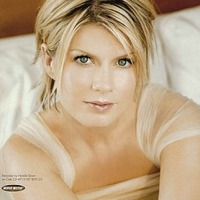
Contemporary Christian music is a genre that just doesn’t get enough consideration. There are great artists that do such inspiring, uplifting, compelling music. Yea, there are some that just kind of do Christian mantras, and I think that is something that has run its course and we are back to deep, meaningful music. The above link is to Natalie Grant, just an amazing voice and music that tells of the great love of Jesus.
I like the insight one of the parishioners here made about contemporary Christian music, he suggested that you count the number of personal pronouns; I, me, mine. Gives you an idea of whether the song in question is about Jesus and He who is our Lord and Savior, or is it all about me and what I want. So you do need to be a little discerning, is it a piece about Him, or just about me?
Christian music has been great art through the centuries, at least since Bach and even Gregorian chant can be a great way to worship and praise the Lord. I’m not knocking the hymns of the past centuries and they have their place in worship as a way to reinforce the teaching in the worship service. I’ve been to Bach concerts, I’ve been to contemporary Christian concerts, both edify, teach and inspire. But give the Natalie Grant site a click and enjoy an artist who surely is inspired.

God’s Not the Bad Guy

I should’ve written this! Great job and thanks.

Crusty's avatarThe Ramblings of a Crusty Old Sailor

Gods-Not-the-Bad-Guy

Reposted from Old Paths Journal

A pastor up in the Northeast asked me if I wanted to go have steak after the Sunday morning service. Asking me if I want steak is like asking a child if they want candy. Of course I wanted to have steak, I love steak! After the morning services, he took me to a steak house that is only located in that region of the country. I was so looking forward to having a steak. The waitress took our order and then told us it would be a few minutes. Finally, the waitress brought our steaks to the table. The juices in my mouth were just exploding with the anticipation of biting down into a delicious steak. After prayer, I cut into my steak and took a bite. To my dismay, the steak was horrible. It was like eating raw leather. The steak was tough…

View original post 2,828 more words

A “draft for the ages”? Certainly eternal consequences.

Pastor Jim Driskell, Lutheran Church's avatarPastor Jim Driskell

I’m sure you’ve heard the “big news” by now, the first openly homosexual man to be drafted by an NFL team was drafted by the St Louis Rams. I was watching the NFL channel coverage of the draft and you would think a cure for cancer, or getting rid of ref’s entirely and having entire games called by video had just happened. There are about 1,700 players in the NFL at any one time. The NFL has been around since the 1920’s, (albeit with far fewer teams), so conservatively somewhere around 100,000 men have played in the NFL and one of them is finally homosexual. Listening to the coverage you’d think that because Michael Sam is homosexual that this is somehow as Sporting News called it, “A Draft for the ages”. Huh? Not too hyperbolic?

A little context and a lot of this is coming out of the Boston sports…

View original post 1,795 more words

Lonlier, Less connected, even in the digital age

Pastor Jim Driskell, Lutheran Church's avatarPastor Jim Driskell

I think we all have intuitivelly understood the following, but I think that the “Barna Group” research organization has articulated what at least I’ve suspected: “…some household structures struggle more than others, singles and divorcees, in particular. “The simple fact is that ‘unmarried America’ perceives itself to be lonelier, more indebted and more aspirational about getting ahead in life than the married cohort of Americans,” Kinnaman says. “While marriage is not a realistic option for everyone, the nation’s continued shift away from marriage as the standard household type to one of digitally connected tribes of ‘friends’ is going to have significant impact on the psychographics of the nation in the next decade.”
He continues: “As a nation, we are embracing the digital revolution and, ironically, we are becoming a lonelier population. While there are many benefits of being participants in possibly the most relationally connected age in human history…

View original post 100 more words

Wired by God, for God

Interesting how you can hear of the Higgs-Boson particle (yeah, I know what?). The so-called God particle from a year ago, published all over until reporters and editors found out what it really meant, then not so much yada-yada.
But when genuine scientific findings are made confirming over and over how, not only are we designed, but how the entire universe is designed, well that doesn’t get any newspaper ink.
Case in point, the recent “Leadership Journal” (Summer 2014) which goes into detail as to how our brains can be or are wired to be receptive to God.

Leadership Journal develops this rather extensively and it goes into some heavy detail, which I will attempt to lighten. I’m going to do a few blogs on this so that I can digest it betterand hopefully spew it out to you somewhat intelligentyl . I would like to add that if you are in ministry or any kind of lay leadership you really should get Leadership Journal it’s just an outstanding publication.

John Ortberg points out that our brains are wired so that “mostly our behavior does not consist of a series of conscious choices. Mostly, our behavior is governed by habit.” (p 21)
We usually think in terms of “bad habits”, which we all have much too much of. Ortberg points out: “Habits are enormously freeing. They are what allows my body to be driving my car while my mind is planning next week’s sermon.” Yea, right, texting on my phone, shaving, applying makeup, eating a big sloppy burger (not my imagination, I’ve seen each in real life). Point is, there is so much we do in life that doesn’t require us having to make a deliberate action, much of what we do is habit and happens because of conditioning.
“But sin gets into our habits. “…what Paul meant when he talked about sin being ‘in our members.’ He was talking about human beings as embodied creatures – sin is in the habitual patterns that govern what our hands reach to and where our eyes look and words our mouths say. Habits are in our neural pathways. And sin gets in our habits. So sin gets in our neurons.” (p 21)

Quoting St Paul “…there is nothing good in our sinful nature.” Ya, I know a little harsh, but let’s face it, we have developed a lot of bad habits. “Paul is a brilliant student of human life who knows that evil, deceit, arrogance, greed, envy and racism have become ‘second nature’ to us all.” Harsh? Ya, but true. Even our best qualities when you hold them up to the perfection of our God, then ya, our “bad” habits are much more obvious and our good habits, at best, ho hum.

Ortberg notes that our willpower is just not going to cut it. Let’s face it, we try to do it alone and usually we are back to the races. “…acquiring new habits through which we can receive power from God to do what to do what willpower never could.”

Ortberg’s next line is compelling because there has been a long standing belief that the physical really doesn’t affect the spiritual. The physical is certainly about the mind. Is there really any doubt that when we abuse our body it affects our mind. I doubt that anyone would seriously question that physical abuse, bad diet, drugs, lack of exercise, affects the mind, certainly affects the chemical composition of the mind. Couldn’t the physical/mental attributes of the mind, if they are abused, affect our spiritual outlook? Trying to separate the physical/mental/spiritual is just a false paradigm. As Ortberg notes: ” Neuroscience has helped to show the error of any spirituality that divorces our spiritual life from our bodies.”

I say AMEN! There are many belief systems that try to make it just about the spirit, that the body is just a husk. POPPYCOCK. Gnosticism, an heretical Christian belief tries to make the material evil, the spiritual, as it were, good. That when the spiritual separates from the physical then it will be hunky-dorey. That attitude has infused itself through orthodox Christianity. the image of spirit beings sitting on clouds in heaven. Certainly physical beings can’t sit on clouds, but the question is; is heaven the end? Eastern religions believe that once we get it right, we leave the evil of the bodily and the material world and then (yippee, skippee), we become some sort of ethereal being and then drop into the ocean of all ethereal beings where our ethereality (no I doubt seriously that’s a real word) merges us with the universe. Again, yippee, skippee.

Why the gratuitous sarcasm? God created the material and He pronounced it good. This also includes our body which He intended to be perfect, incorruptible and eternal. Where else could it have come from? Unless the rapture happens tomorrow, our body will give out and we will, in the spiritual, be in the presence of the Lord. But again, is that the end? No! Not by a long shot. At the final judgment we will all be restored to physical bodies, those who are in Christ, the “Lamb’s Book of Life” will proceed from the judgment to the New Jerusalem. The New Jerusalem will be the world as God had intended. No doubt, it will be much like the world that we left, but it will be restored to perfection, it will be familiar but it will be restored to a perfection that we can’t imagine. Certainly we will be restored to our physical bodies, again, the way they were intended to be before we messed them up with our sin. These bodies will be strong, healthy, immune to injury or damage. We were made by God to be both physical/mental/spiritual and we will be restored to eternity perfectly in all aspects of our being.

In the meantime we will continue to discuss how the physical/mental changes our spiritual outlook as we continue to affect the mental by our habits old and bad or new and good. OK, at least hopefully.

 

In the fullness of Time

Dr Paul Maier became one of my favorite authors and I didn’t even realize who he is. Come to find out that he is a Vice President of the Lutheran Church, he has been a history professor at Western Michigan University and he’s written historical novels about Pontius Pilate, Christians in Rome during Nero’s reign, a novel describing how things might be if Jesus’ Body was ever discover, “A Skeleton in God’s closet” and other novels that I just haven’t gotten to yet. I’m not really a big novel reader, but all of Dr Maier’s novels were just excellent and one of my life goals is to make sure I read all his novels.
But he is also more than capable of writing non-fiction and another book you need to read if you are at all interested in Christianity, Christian history, Christian apologetics, or being a Christian, you have to read “In the Fullness of Time”. This is a look at historical Christianity and provides concrete affirmations of Jesus and the disciples in history and of the experience of the Christian church.
It has often been noted that God could not have picked a better time for His Son to come into the world, that would most effectively reach many people under conditions that would facilitate that spread.
Dr Maier puts this whole concept succinctly in the following paragraph:
“Paul’s famous comment that the Nativity happened ‘in the fullness of time’ is usually interpreted to mean that God had a good sense of timing, since conditions prevailing in the Mediterranean world could not have been more favorable for the spread of Christianity. The Old Testament had predicted the birth of a Messiah for centuries, and the Greeks had given their world a universal language through which Jesus’ message could spread easily and quickly. The Roman empire had organized the whole Mediterranean basin into one vast communications network, almost perfectly geared to foster the spread of Christianity, since its missionaries could travel from city to city without fear of piracy at sea or brigands by land. Rome had also spread the welcome blanket of peace across the world, the “Pax Romana”, a time in which the new faith could thrive.” (“In the Fullness of Time” pg 24)
One could certainly make the case that God set up the conditions to send His Son into. In today’s parlance you might say that God set His Son up to succeed. It only makes sense that God had every intention of making sure that the church established by His Son would be given every opportunity to spread to all mankind. Well it certainly has. In the beginning Christianity spread to all the points of the empire. God picked the perfect time and conditions in order to enable His disciples to move as easily as possible to spread the Gospel. He took a man, Saul of Tarsus, who was remarkably equipped, incredibly motivated. He met Saul on the road to Damascus, knocked him off his donkey and made it abundantly clear what His plans were for Paul.
You could make the case that God could probably have not picked a better person than the Apostle Paul to utilize the conditions that God, no doubt, created in order for Paul to, probably, go all the way to Spain to spread the Good News of Jesus Christ.
There is no doubt in my mind, that it was God’s intention to guide the world to reach the place where the incarnation of Jesus Son of Joseph, Son of David, Son of God to come into the world and begin the process of restoring our relationship with Him. Is there any doubt that He would have done it in the most effective way possible?
Dr Maier’s book is a treasure trove of how the sovereign will of God has shown up all through history and no where more striking then in Bethlehem, in Israel, in the reign of Caesar Augustus. The featured picture shows the place where God started it off, the birthplace of Jesus. It’s plain that all this happened and it happened for a reason. That God, Father, Son and Spirit, worked in concert to make all this happen in order for us to have every opportunity to know salvation in Jesus Christ.

Inner city ministry

We have a guest today, Dr Dale Meyer is the President of Concordia Seminary in St Louis, Mo. He was the president there will I studied for my Masters of Divinity degree and I understand that he suffered some minor trauma as the result of my being time there, sorry Dr Meyer. He’s a tough guy, he handled it. Dr Meyer writes a daily commentary, that you can subscribe to, he has great insights. Today’s particularly hit home with me. I am very much about inner-city ministry and blogged on it in the past, in particular my admiration for Rev Tom Wildner down in Baltimore, Md. Dr Meyer’s commentary today is about the church and ministry in the city:

“Meyer Minute for August 14

Over the decades my denomination pretty much abandoned the major metropolitan areas of the United States. We weren’t alone, other denominations moved out too, and for very understandable reasons. So this isn’t about blame. People seek good and safe places to live.

The real city is a strange place. Oh, I can handle myself quite well walking on Broadway in New York or Michigan Avenue in Chicago, and so can you. But what about living in Harlem or Chicago’s south side, “Bad, Bad Leroy Brown” territory? Fear in the city is definitely not “false evidence appearing real.” The real city is strange, a foreign, foreboding place to many of us.

“How shall we sing the Lord’s song in a foreign land?” asked the psalmist when he and his people were exiled in Babylon (Psalm 137:4). From suburbs and small towns, we look at the city… People who didn’t move out watch their churches decline or close… And if we care, that’s a big if, if we care, we feel alienated from the city life of decades ago. For many of us, being in the real city is being in exile.

“Seek the welfare of the city where I have sent you into exile, and pray to the Lord on its behalf, for in its welfare you will find your welfare.” (Jeremiah 29:7) The early growth of Christianity was through the great urban centers of the Mediterranean region. There are some stirrings among church people to get back into the city, voluntary exile, because God wants His Church where the masses are. Jesus saw “a great crowd and he had compassion on them.” (Mark 6:34) I don’t know about you, but this makes me uncomfortable sitting in my cushy suburban church pew.”

I, Jim Driskell, am the pastor of a great old church in a smallish size city, but with definite inner city problems, just smaller scale. I frankly feel very strongly about these great old churches that were built to the glory of God vs a lot of churches today that were built more for pleasing man. The church certainly has a ministry, we have tried to do a lot of work to provide for our neighbors. But frankly there is a lot of need around us and by virtue of the “urban retreat”, churches like First St Johns, are pretty short in resources. We have a great congregation that really sacrifices and scrounges, but certainly could use more support. I tell have told people many times, if they want to do real ministry, they will get it here at a church like First St Johns. It’s interesting that Dr Meyer’s commentary comes out after Reggie McNeal’s presentation. Pastor McNeal is certainly calling for the suburban church to get serious about ministry. Churches like First St Johns are very visible symbols of the Kingdom in the middle of cities. They should be preserved and built up in terms of support from serious brothers and sisters in Christ.

Judgment Seat

In sermons and in reading the Scripture you probably saw something about a “Judgment Seat”. This was common to a town of any decent size in Israel. In the Book of Ruth, for example, when Boaz goes to gates of the city where the judgment seat is to “redeem” Ruth and Naomi. In that time an unmarried/widowed woman would rely on family to provide for her. The closest man relative would take her in and provide and that man would be the “kinsman redeemer”.
The leaders of the town would meet regularly at the city gate to conduct the business of the town, they would meet where the “Judgment Seat” would be. Today we would go to a courthouse if there is some legal issue we needed to handle. In that day a person would go to the city gate and that is what Boaz, who was the next closest relative to Naomi, did to formalize the arrangement regarding Ruth and her mother in law Naomi, to be their kinsman redeemer. The featured picture shows the judgement seat of this particular town where it has stood for centuries in front of the gate of this particular town in Israel.

Bill Gates says, “I think it makes sense to believe in God”!

Funny how that wasn’t a big headline in the Huffington Post!
It is from an article in an unlikely source, “The Rolling Stone” magazine. Certainly my impression of Gates has been one of a very secular, materialistic, yea, just plain corporate person.
Now don’t get some crazy idea that Gates all of a sudden became a Christian. But it does, somewhat, rebuff the idea that the contemporary, corporate individual is beyond redemption. Frankly I think that in the post-modern world, we have realized that there is much more than just science, technology. Well one of the pillars of post-modern technology is coming around to the fact that there must be a God. This is how he responded to Jeff Goodell’s question, “Do you believe in God?”
“…After admitting that science can’t explain everything , Gates shared an intriguing comment about his openness to God:
‘The mystery and the beauty of the world is overwhelmingly amazing, and there’s no scientific explanation of how it came about. To say that it was generated by random numbers, that does seem, you know, sort of an uncharitable view [laughs]. I think it makes sense to believe in God,…” (Rolling Stone Magazine Mar 27, 2014 as quoted in Leadership Journal vol 35 No 6)
Guess it’s no surprise this wasn’t reported on CNN.
Let’s discuss, Wednesday’s at First St Johns 140 W King St 10am, park right behind the church. No charge, no obligation.