Category Archives: Christian discipleship

Fruits of the Spirit? Not unless it gets me something

The “Fruits of the Spirit” Galatians 5: 22-23 love, joy, peace, long-suffering, kindness, goodness, faithfulness, gentleness, self-control. As a Christian these are supposed to be our attributes, our goals, how we should emulate the character of Jesus as we grow as His disciples. Really? No.
These are the way we see those attributes in this day and age. Our attitude is to the effect , “hey I do some good things, throw a few crumbs to help others, but come on, I have to watch out for me, it’s all about me.
I can’t (read won’t ) strive for the Fruits of the Spirit”, but sure as heck, everyone else needs to treat me according to the Fruits.
After all how can I be joyful? I don’t have everything I’m entitled to? I only know joy through what I have. Peace? No! Because people won’t give me what they should, so I resent everyone. I deserve to be treated patiently, everyone should know all my trials, I’m just suffering, so everyone has to treat me patiently.
So long as I don’t do anything mean to someone else, that should be sufficient, I deserve kindness, I shouldn’t have to be kind to others.
I can’t be good that’s weak! I have to be bad and do whatever I have to, to grab everything I can for me, yes just for me. Why be faithful? If it’s not convenient for me, then why do I have to bother? Spouse, child, parents, anyone who becomes a burden, I should just be able to just get rid of it so I’m not inconvenienced.
Resist temptation!? Are you joking? I’m entitled. There’s nothing I need to resist, and if it makes me unhealthy, too much food, alcohol, tobacco, drugs, sex, then someone else needs to fix it and someone else needs to pay for it.
I’m entitled to have other people lay down their life for me. If I was careless and start a fire, someone needs to rush in and find me. If I get in trouble someone has to step in and get me out, even if I’m some place I don’t belong and with people I shouldn’t be associating with. I don’t give anything up for anyone, they give up for me. And if they don’t do it as quickly or as much, or upset my delicate sensibilities, then I’m going to complain, March in the streets, destroy things, steal (for myself of course) and then when those who were serving have then been removed, I will start complaining again because there won’t be anyone handing me things.
It’s all about me and the fact is, until I understand living the Fruits of the Spirit (which will only happen when I stop rejecting the Holy Spirit), I’m going to be miserable, bitter, resentful and selfish and have no idea why I don’t experience joy in the Spirit.

Our emotional responses

I guess this is a follow up on the previous diatribe, it’s not intended to be, not as high minded but something I feel I should raise. Henry Blackaby (Experiencing God day by day p 19) “…discipleship … Is learning to give Jesus Christ total access to your life so He will live His life through you…” Okay, I’m not sure about Jesus “living His life through us” I would see it more as Him guiding our life to be more like Him.  Blackaby goes on to write:”when others see you face a crisis, do they see the risen Lord responding? Does your family see the difference Christ makes when you see a need? What difference does the presence of Jesus Christ make in your life?”

” God wants to reveal Himself to those around you by working mightily through you…” I will say that when it comes to genuine crisis that I respond pretty rapidly and effectively. Over twenty years of being in a U.S. Coast Guard boat station, responding to many cases I have had to deal with many life threatening situations and I can only remember one time when I had an emotional reaction and I did get that under control.  Business, church, I think I do well in that area. If I do get a little assertive I think it is for the right reasons. I’d like to say it’s always Christ like, conforming to His nature, but I’m sure you would be, at least dubious and rightly so. I do need to respond in a more Christlike way and set aside the emotion, except for compassion. But the areas I really need help in is the petty nonsense.  I just get so fed up with the selfish, lazy (intellectualy and physically) attitudes. I expect others to be Christlike because I try to be and when I see the failure in others prayI respond in a manner that is most definitely not Christlike. I end up shooting my self in the foot by exemplifying unChristian behavior to those in the world who are certainly never going to be Christlike.

I need your prayers to help me to respond in the highest manner. Sometimes that response does require an emphatic demonstration that shows this is serious and vitally important. But if the other person just doesn’t even get it, what’s the point of getting in a twist? Pray that I can properly respond. To remain composed in a crisis, to respond lovingly to those who just don’t know better and in those times, which will be rare to be emphatic, but to not lose my composure. I do have to be strong. We just had Good Shepherd Sunday. The point being that Jesus stays strong and vigilant to protect us and isn’t going to stand for Satan’s nonsense or the nonsense of the world, He is there to protect the flock, His church, from so many dangers. As a pastor I am an under shepherd and Jesus uses me to protect the part of the flock I’m responsible for.  Help me do it in a way that honors Jesus. So that the world knows I, in Christ, am serious, determined even to death. But still compassionate and welcoming. And also so that my share of the flock will feel safe and secure in Christ. Thank you for your prayers.

Should the church cater to the consumer mentality?

This is from Leadership Journal,      http://www.christianitytoday.com/parse/2015/april/dangers-of-consumer-church.html?paging=off

Dangers of Consumer Church

Can self-centeredness be leveraged for the gospel?

“We are unapologetically attractional. In our search for common ground with unchurched people, we’ve discovered that, like us, they are consumers. So we leverage their consumer instincts.”—Andy Stanley in Deep and Wide

“In order to help people follow Christ more fully, we would have to work against the very methods we were using to attract people to our church…we slowly began to realize that, to be faithful to the gospel of Jesus, consumerism was not a force to be harnessed but rather an anti-biblical value system that had to be prophetically challenged.”—Kent Carlson and Michael Lueken in Renovation of the Church

So which is it?

Are “consumer instincts” morally neutral (or at least morally inevitable) and thus fair game for being leveraged toward spiritual ends, or are they something the gospel intends to crucify?

Can a person’s innate self-orientation be used to introduce him to Jesus and to becoming less self-oriented and more God-oriented? Or is a person’s self-centered orientation the very problem that the gospel seeks to cure?

Wasn’t Jesus “attractional”?

Most of us want to believe the church’s relationship to consumerism is a both/and. I want to believe consumerism is simply an inevitable (and perhaps a bit less than ideal) reality that might as well be leveraged in the name of Jesus.

That seems to be Andy Stanley’s point and the conviction that shapes the way North Point practices church. There is something refreshing about Andy’s candor and you can sense the freedom this approach has afforded North Point—freedom from neurotic analysis and endless introspection; freedom that becomes energy to go and do church in a winsome way.

While Andy deserves kudos for even taking the time to defend the church’s relationship with consumerism in a culture where many pastors don’t think to bother, sometimes his rationale is problematic:

“When you read the Gospels, it’s hard to overlook the fact that Jesus attracted large crowds everywhere he went. He was constantly playing to the consumer instincts of his crowds. Let’s face it: It wasn’t the content of his messages that appealed to the masses. Most of the time they didn’t even understand what he was talking about … People flocked to Jesus because he fed them, healed them, comforted them, and promised them things.”

Was Jesus’ goal to attract a large crowd? We cannot ignore the fact that in John’s gospel, Jesus reprimands the large crowd that flocks to him for food and miracles (6:26-40), which sets in motion a chain of events that prompt Jesus to say some rather abrasive things about eating his flesh and drinking his blood, which causes the crowd to thin out considerably, leaving only the twelve and perhaps a few more (6:52-68). I don’t think this is Jesus appealing to the consumer instincts of his crowds.

Or there is the stark solemnity of Mark’s gospel, where Jesus hangs all alone, forsaken by every male disciple and glimpsed only by a few female disciples from a safe distance. Yes, at times there were large crowds, but Jesus’ ultimate goal seemed to be something else. In other words, in the Gospels a large crowd is not the unreservedly positive thing we often assume a large crowd to be. Indeed, large crowds are especially prone to miss the point.

I’m not sure the Gospels anywhere imply that Jesus desired to attract a large crowd. It seems Jesus desired to show and tell the truth about the kingdom of God while being absurdly hospitable to all manner of sinners and nobodies because that is what the kingdom is like. Nowhere do I find some sort of calculated exploitation of consumer instincts (“how attractive are we to our target audience?”).

If a large crowd showed up to hear and see the truth about the kingdom, great. If it didn’t, great. I don’t think it moved the needle for Jesus either way—certainly he didn’t feel obligated to get the crowd to return, or to grow the crowd even larger. Nor did his stomach sink at the sight of a small one. None of this is because he didn’t care about how many people entered the kingdom (Jesus certainly wants a full house at the wedding feast!), but because Jesus knew it mattered how you entered the kingdom.

Kent Carlson and Mike Lueken pastored a church that also believed we could and should exploit consumerism. But through a long and arduous process of examination, they changed their mind. They came to believe that the way we practice church forms us in ways that rival, and at times, preempt the things we say. We can tell people to practice self-denial, but when everything we do caters to their felt needs as consumers (from their placement in small groups, to their participation, or lack thereof, in worship), our practice contradicts the teaching. It’s no wonder so many well-meaning church goers find the call to a cruciform life utterly incoherent.

What do I mean by consumerism? I believe it’s best understood as an ideology that sees personal freedom as the highest human good, and that freedom is realized in a person’s ability to take and throw away, whatever, however, and whenever he/she wants (be it spouses, babies, genders, goods, ideas). In our culture, this is freedom, the highest good: “the perfect, unconstrained spontaneity of individual will is its own justification, its own highest standard, its own unquestioned truth.”

Mixed Messages

When we talk about leveraging “consumer instincts” in the way we practice church, we are taking the ideology of the market and the narrative of acquisitive freedom as the highest good and baptizing them. We are telling our people that their wants and felt needs need no further justification and need not be questioned. What is most important is not that they become like Jesus (unless of course they feel like it), but that they are free (and comfortable) to become whatever they want to become.

Of course we will do all of this while saying the exact opposite, encouraging people to follow Jesus, to be transformed into Christ’s likeness, to die to sin and walk in newness of life.

The unspoken assumption is that this is a no-obligation relationship. You can have a relationship with Jesus as long as you feel like it … and if not, that’s totally okay. Come and go as you wish.

Few of us consciously propagate the ideology of the free market to the detriment of the gospel. Our motives for exploiting consumerism are benign if not pious. We want as many people as possible at our churches because that means more people get a chance to meet Jesus and that is justification enough for leveraging consumerism. I can go down that road, so long as I don’t think about it too much.

So what does this mean for the way we do church? I have formed a core conviction as I sort through all of this: The primary goal of a church is to be a faithful expression of God’s kingdom.

I think the Anabaptist tradition is on to something here. The church’s deepest calling is to be the kingdom of God in the world; not to change the world, not to save the world, but to be a glimpse and partial embodiment of a different world: God’s world.

It seems to me the primary goal of many churches is to grow as large as possible while still being a faithful expression of church. I think the goal must be to be as faithful an expression of church as possible, while also seeking to grow as big as being a faithful expression of church allows. We do this by practicing radical hospitality, love, and forgiveness..

I think Jesus wants a full house, but I don’t think we have permission to make growing as big as possible our primary goal. If we aim at growing as big as possible—while still seeking, when possible, to be a faithful-ish expression of church—we inevitably lose our way.

Some may see this as splitting hairs, and perhaps it is. Consumerism obviously exists on a continuum. A church like North Point is, clearly, a beautiful expression of the kingdom. But a split hair can change trajectory, and trajectory, over time, can make all the difference in the world.

So which is it? Should the church make a habit of leveraging consumer instincts, or not?

I think “consumer instincts” can be a euphemism for the modern ideal of acquisitive freedom—an ideal the gospel has every intention of crucifying. I think consumerism, at its core, is rooted in taking, getting something for ourselves, while the gospel, at its core, is rooted in God’s grace to us in Christ, and our response of faith and hope and love. These are not always easy bedfellows.

So what am I suggesting? Go out of your way to make your church smaller (surely many churches don’t need any help with that)? Frustrate people with petty inconveniences (surely the standard truths of the gospel are inconvenient enough)? Reenact the early church’s policy of asking unbelievers to leave before serving the Eucharist? Stop serving good coffee? Use incompetent musicians?

No. What I’m am suggesting is that many of us have become far too obsessed with making people comfortable, far too fluent with the grammar of the market, far too timid in our practice of the most revolutionary phenomenon the world has ever seen: The Church.

Austin Fischer is the teaching pastor at Vista Community Church in Temple, Texas.

Living as brothers and sisters in Christ Acts 4: 32-35 First St Johns April 12, 2015

[for the audio version of this sermon, please click on the above link]

We make our beginning in the Name of God the Father and in the Name of God the Son and in the Name of God the Holy Spirit and all those who are brothers and sisters in Jesus said … AMEN! Then we said He has risen! He has risen indeed!

As you have probably realized, one of my main themes is the resurrection of Jesus. In his commentary on the Book of Acts, Dr McGee points out: “…in the early church the resurrection of Jesus Christ was the very center and heart of the message, and no sermon was preached without it. The theme of Peter on the Day of Pentecost was the resurrection of Jesus Christ.”[1] Another observation Dr McGee makes, a subject that comes up in terms of Jesus being in heaven: “…He has ascended … But He is still at work! He has moved His headquarters. As long as He was here on this earth, His headquarters were in Capernaum. Now His headquarters are at the right hand of the Father.”[2] That’s more of a discussion for Ascension Day, but can never be overemphasized. Jesus is in glory at the right hand of God continually interceding for His people, for us!

The other thing that we overlook in the Acts church is the fellowship of the church. Lots of people like to say they’re an “Acts” church, but really I haven’t seen it and I’m not sure it can really be replicated. “Now the full number of those who believed were of one heart and soul.” This is something that you just don’t see in the church anymore. I believe one big reason is that we are all so immersed in the world, that we project that life into our church life. Too many people see the church not as a place to worship, to truly lift up and glorify God at which the Holy Spirit comes to us and gives us the faith, strength and integrity we need to go into the world for God. Instead it’s where we lift up to God our wants in the sense of “ok God, I’m here, You owe me, come on and back me up, help me with my agenda.” We may never be able to replicate the Acts church, until, I imagine the resurrection, but we should always strive for that as a goal. Our mission statement here at First St Johns gives us that focus: “Spiritual Warriors, Faithful Servants, Disciples of Jesus”. Are we focused on what is in Jesus or our agenda? Certainly the church of Jesus Christ has an agenda, Martin Luther put us back on that agenda: ““Unless I am convinced by Scripture and plain reason – I do not accept the authority of the popes and councils, for they have contradicted each other – my conscience is captive to the Word of God. I cannot and I will not recant anything for to go against conscience is neither right nor safe. God help me. Amen.” It is always and forever about God’s Word and not about our agenda. In a world where we see Scripture being tortuously warped out of shape, the Lutheran Church, at least should be, all about His Word.

Yes, we all have lives, but, as Christians it’s not about how we make God’s Word apply to our life as it is how is God working through us, according to His Word, to shape not just our life, but the world around us. We are way too quick to discount that we are all in the Body of Christ, all indwelt by the Holy Spirit. We take Jesus’ Body and Blood as very real sustenance, if you don’t understand and accept that, then you abuse His Body and Blood. The Body and Blood that were abused to give us true forgiveness of sin. How can we then reabuse that same sacred body? We become part of His Body when we are given the Lord’s Supper, but too often when we hit that door on the way out, it’s no longer about Him, it’s all about getting back to life. Our life is in Him! How can we justify trying to impose our agenda on Him who gave Himself for us when He has promised us “life and life more abundant” in Him? We are complete, when we are together in the Body of Christ, His church, His people. That is very much how the Acts Church was, totally about the Body of Christ.

We have to remember the extremely difficult life that people came in to when they became a Christian. In our reading from Palm Sunday we read: “Yet at the same time many even among the leaders believed in him. But because of the Pharisees they would not confess their faith for fear they would be put out of the synagogue, for they loved praise from men more than praise from God.” (John 12: 42-43) What we have in Acts is the result of what happened when people were put out of the synagogue. Anyone could be thrown out. Today, people change churches on a whim. In that time, it could be the difference between making a living or being in poverty, possibly even being left to starve. No Jew would do business with someone who wasn’t a part of the temple, they would not hire them as an employee. When these people became Christians they often had little or nothing in terms of money or material possessions. They usually needed the basics, food and clothing. The Acts Church found itself in the position of having to support its members. We sure don’t have that today. I’ve had this discussion with a few people lately. We do things to help our non-Christian neighbor, but that is not what we are about. We cannot be a general social service agency, the Holy Spirit leads us to do good works and we do good works. But our priority is always about our brothers and sisters in Jesus. First St Johns is a great old church, it has been sustained marvelously by its members. Many who came here at the beginning had nothing and many members of this church gave in order to support those who were in need. We need to recapture that focus here. We don’t have a lot in terms of resources, time, treasure and talent, we have become dependent on what has been left by members and feel that should be enough to further our mission. It is just not enough. We have become way too self-focused, what I get out of the church and that was not what the Acts Church was about. Many Christian brothers and sisters would have starved except; “for as many as were owners of lands or houses sold and laid it at the apostles’ feet and it was distributed to each as any had need.”

Your church, First Saint Johns, does much, but there is so much to do. When we rely on what was left to us and decide that should be enough to get what we need, we certainly have forgotten what the church is all about. In a way this is a sermon about stewardship, about how we need to portion our time, treasure and talent to the church. But it is also about how we need to be Jesus’ church the way it was originally formed. The Book of Acts is often called the Acts of the Apostles or the Acts of the Holy Spirit. It is because it was a church that followed the Acts that the Holy Spirit guided the church in. Are we living that today?

Let’s take a look at how we share with our brothers and sisters in Jesus, which is part of our Christian life as the original church Acted in the Book of Acts. The apostles gave “their testimony to the resurrection of the Lord Jesus and great grace was upon them all.” Me, you, we can all do better, it’s not to say that we’re going to sell everything we have. But as a church we can share, we can share space in our marvelous building and not begrudge its use, we can share our time to serve brothers and sisters and then others, we can share what we have, including but not limited to money. But as always we dedicate more of our time to growing in our faith and sharing that with those who do not know Jesus and helping them in ways that will show them the love of Christ and His church.

The peace of God which surpasses all understanding keep your hearts and minds through Christ Jesus. Amin and Shalom

[1] J Vernon McGee “Thru the Bible Commentary Series Acts” p ix

[2] Ibid p viii

It’s God’s will, we are in His will or we are condemned.

What seems to be missed by people is this idea that there are “choices”. When it comes right down to it, there really aren’t. Sure there are choices that you make like, I like the whopper better than I like the Big Mac. I like the Red Sox, I don’t like the Yankees. What house I’m going to buy, yea, maybe. When it comes right down to it, like it or not, the real choices are in God’s hand. We are either in His will or we are separated from His will.

That doesn’t mean we sit and obsess if we really can’t discern God’s will. A lot of times in my life, I can honestly say that I knew what His will was/is, and He made it very plain how I should follow it. At other times, I did the best I could, put it in prayer and trusted Him that what i was doing was the way He wanted. I can’t say that I was always right or that I did it faithfully, that I did it according to His will. Sometimes, frankly, I have to admit I didn’t even take His will into account. Seemed obvious, jumped in and then afterwards realized that I should have given it more time, more work, more consideration. As in anything in humans, we’re just not going to be perfect. We do the best we can to pull it together, to execute the plan and then leave it in His hands. Sometimes it doesn’t work because He wanted us to do it and He used it to His own will, even if it seemed that it wasn’t such a good deal to us. “ESV Romans 8:28 And we know that for those who love God all things work together for good, for those who are called according to his purpose.” [Bible Works]

I am trying to write, that for those who pursue this attitude, that God is somehow unfair, because many go to Hell, Jesus made it very clear that many would chose to ignore Him, that they would chose their own path: ” ESV Matthew 7:13 “Enter by the narrow gate. For the gate is wide and the way is easy that leads to destruction, and those who enter by it are many. 14 For the gate is narrow and the way is hard that leads to life, and those who find it are few.” [Bible Works]
Dr Martin Luther in his book Bondage of the Will addresses the idea that there is “free-will” in terms of our salvation. The idea that we are in some way “free agents”. The only way that works is God’s way in Jesus. Any “free-will” is purely from Satan and puts the individual on the path of destruction.

Luther writes: “You describe the power of ‘free-will’ as small, and wholly ineffective apart from the grace of God [Luther’s NB – As in those who lack grace (special grace, I mean) reason is darkened but not destroyed so it is probable that their power of will is not wholly destroyed, but has become ineffective for upright actions.’] Agreed? Now then, I ask you: if God’s grace is wanting, if it is taken away from that small power, what can it do? It is ineffective, you say, and can do nothing good. So it will not do what God or His grace wills. Why? Because we have now taken God’s grace away from it, and what the grace of God does not do is not good. Hence it follows that ‘free-will’ without God’s grace is not free at all, but is the permanent prisoner and bondslave of evil, since it cannot turn itself to good…it is ineffective apart from God’s grace, straightway you rob it of all its power. What is ineffective power but (in plain language) no power? So to say that ‘free-will’ exists and has power, albeit ineffective power, is, in the Sophists’ phrase, a contradiction in terms. [Luther’s NB – oppositum in adiecto]” p 104

“…that we do everything of necessity, and nothing by ‘free-will’; for the power of ‘free-will’ is nil, and it does no good, nor can do, without grace … The term ‘free-will’ is too grandiose and comprehensive and fulsome. People think it means what the natural force of the phrase would require, namely, a power of freely turning in any direction, yielding to none and subject to none. If they knew that this was not so, [p 105] and that the term signifies only a tiny spark of power, and that utterly ineffective in itself, since it is the devil’s prisoner and slave,…” [p 106]

“…However, with regard to God, and in all that bears on salvation or damnation, he has no ‘free-will’, but is a captive, prisoner and bondslave, either to the will of God, or to the will of Satan.” [p 107]

You have either stopped resisting what God is doing to you and are chosen by Him to be your Lord, or your right where you are because you have resisted the Holy Spirit and simply want to wallow in where you are. If you aren’t in Jesus, you are already condemned. While you continue to assert your own will, to think it’s all about you, that you are the master of your own fate, then it’s just another way for Satan to assert his control over you. If you come to the realization, that God is in control, that it really isn’t about you, that it’s all about what the Holy Spirit is doing in you, then you are saved.

Once we accept that it is about God and His will, that what we do outside His will is separation from God, that separation is Hell, is condemnation. There is no will for salvation other than God’s. Anything is the path to destruction. Separation from God is Hell.

In Revelation 12: 7-17 and 13:5-8 God has removed His hand from earth, Basically He has said that this is the end, that there is no more grace and man is left to his own devices. Honestly, how do you really think that’s going to work out? I know there are times when things look crazy and out of control, but God is still very much in control. The difference will be very obvious when Satan rules and there will then be unrestrained evil. We like to think we are somehow able to conduct ourselves properly, but when God removes His hand, when God simply allows us to do our own will, is there any doubt that the outpouring of evil, of violence, of greed will be absolutely stupefying? Is there really any doubt in anyone’s mind that when God has removed the Holy Spirit, when Satan rules that there will be unrestrained evil? This is what those who reject God will have, what they’ve accepted, there will be survival of the fittest. They don’t want God’s control, His blessing, although they think they’re entitled to the benefits of His blessing. They don’t realize what unrestrained evil is and they’ve shown that they really don’t care. And we’ve all met people that fill that bill, there are those who are obvious and the rest, not so obvious.

God is good, God is perfectly Holy. Being in a downtown church, being in the inner-city, albeit a small city, there are still lots of people who will knock on the church door and expect that I will just hand over money to them. In more subtle ways, there are plenty of people out there who have the same attitude, they expect God to hand over everything, including salvation on their terms. Then they will accuse God of not being “good” because He won’t save them! God is perfectly good, not according to our individual agenda (let’s face it, there’s God’s agenda, then there’s yours. In the end, which one do you really think is going to win out?)

God is perfectly good, perfectly holy, perfectly all knowing, all powerful, transcendant beyond anything that we can understand. Your agenda is just not going to be perfectly good, come on, it’s going to be covered in sin, if not completely submerged. It’s all of us, we are all completely unredeemed sinners and the only way to redemption is through Christ, The Son of God. God certainly does have an agenda, He revealed it, in His revelation, the Bible. We look to God for Him to guide us in how we fit in that agenda. Not our way, but His. Certainly that agenda is different for different people. If you are a great Christian mom, or Christian office worker, or Christian soldier/sailor, or Christian plumber, Christian factory worker, does that not serve God? We are put where we are at to serve God to the best of our ability, to be the best Christian factory worker we can as a witness to those around us to Jesus. We like to think that it’s all about us, it’s all about our control. Let’s face it the more you try to assert control, the more you realize that you just don’t have control. You can keep wrestling with God over it or figure out that it is all about Him and not about you. When we stop resisting the leading of the Holy Spirit and surrender to His will, when we are concerned about God’s agenda and not ours, when you trust His control, His will, and operate our life accordingly, It may not be “easy”, but it will be much easier then struggling against God.

Relationships, strength, encouragement, shared joy, on and on, only come through the smaller, Bible believing Christian church

Another blogger opined that since the millenials (ages from about 18 years old to 30 years old), don’t go to church and use their computers, almost exclusively, for socializing, that we should have “on-line” church.

I’m not opposed to putting worship on-line. We have plans for doing that here at First St Johns. Sure there are people out there who we should be reaching and need to be included in church and, for whatever reason, cannot attend brick and mortar churches. I get it.

The problem is this, how much do you really encourage this growing dependence on using a computer for “fellowship”. A great deal of being in church is to fellowship, is to show support and be a part of something bigger. We already have way too many people who huddle away in some part of their house, all by themselves and genuinely think they have a lot of “friends”, that is the Face Book, Twitter, Snapchat, type friends. Sorry but this is, in no way, shape or form a healthy trend. How do you baptize someone on line? How do they receive the Body and Blood of Jesus? On-line confession and absolution? No, that’s just a phoney way out. How do you really build relationships on line? You don’t!

Being a part of the Body of Christ is being with a group of people who have shared beliefs and shared doctrine in Jesus. Please don’t hand me the lame line that it’s all about “love”, first off, how do you really “love” on-line? Ya, there are those who do. Look me in the face and tell me that’s healthy.

You need that contact with people, we encourage each other, strengthen each other, learn from each other, often help in material ways. Sorry, but I’m not going to jump through hoops for someone who can’t even schlep down to worship on a regular basis, who could otherwise. I’ve had people try it on me. Ya, no! Go to the big-box churches, if you will settle for the illusion of worship and fellowship. Otherwise drag yourself down to First St Johns.

In some ways it’s like saying that it’s the same as being at Fenway Park, being part of the crowd, having it all in front of you, being able to personally booh the Yankees. You can sit at home and listen on the radio, but who you going to fuss at when Papi grounds out in the shift?

But really, being in, sharing with, showing support of worship has always been what is a fundamental part of being a Christian. It’s not just what you benefit from, but often what you do in order to help others. How about the elderly man or woman in the pew in front of you. Quite often, their only genuine human contact is church. To those of you who are children, young man or woman, the 20 something family with the little boy and girl. I really want you to realize that you give real joy and encouragement to others around you who have very little contact with younger people, who often only see people in their own age group. Are you away from your family, but you’d still like your children to have a whole bunch of spiritual grandparents, aunts, uncles? Take ’em to church, your cup will overfloweth.

The person who is going through some kind of crisis and who comes to church to share, maybe he’s led there by the Holy Spirit in order to be in front of you who can readily help. Seriously where is that in the rest of our society?

It’s tough enough being a Christian in today’s world. For the people who are out in the work force and hardly ever encounter a fellow Christian. For the mom at home who often has little adult contact and also, not often with another Christian. Children who need real contact with other kids their age who are Christians. The world is not a friendly place to Christians. Where are you going to get that contact, that encouragement, that strength to carry on? On-line? No! You’re just not and you know it. It’s truly sad to imagine how many people thought they could see the world through their computer and because they had no one else, no other Christian to be there for them that they lost hope in the Holy Spirit which is only truly efficacious when they share with other Christians.They forgot about the promise of Jesus, because the guy who stands with them at the altar to receive the Lord’s Supper, isn’t beside you, because you’re not there.

The writer of Hebrews directs: “ESV Hebrews 10:24 And let us consider how to stir up one another to love and good works, 25 not neglecting to meet together, as is the habit of some, but encouraging one another, and all the more as you see the Day drawing near.” (Bibleworks) Certainly we see “the Day drawing near.” How can you show brotherly love over the computer, really? How can you show Christian hospitality. All the virtues that are being lived out in Christian worship, will simply not be obvious.

I have this posted on First St Johns FB page: “WORSHIP – Rekindles our hope, reenlists us for service, renews our confidence, restores our perspective, restores our joy, releases our anxieties, reconnects us with God.”  I would add that sitting at home, simply reminds us how sad our life has become and not only does not equip us with those benefits, but reminds us how far away we are. That is not going to give us the hope and promise of Jesus, but sink us into further despair and make us feel even more distant from Jesus.

And since I’m riding this hobby horse, I would also like to point out that the opposite is true. You can sit at home and be isolated, and you can also sit in a big crowd and be isolated. Want to talk to the pastor? Yea, good luck with that. These “big box” pastors have more important things to do than make house calls or hospital calls to give you personal attention. Everybody around you, they’re there for the same reason you are, to hide in the open. They’re not interested in you, they’re only interested in what they want. Jesus did the first two plus years of ministry among groups and very much in the public. He didn’t hide away, he was right there in the middle of people. Not some new-age big screen television, talk about “Big Brother”. In a smaller congregation you build those relationships, I’ve only been a pastor for just less than five years. In my first twenty or so years as a Christian I probably have, at least, a half dozen each spiritual mothers, fathers, brothers, sisters and pastors that I have had the opportunity to grow in Christian love with. Ya, tell me you’re going to get that at home on the computer or at the “big box”. Find a smaller, vibrant, liturgical, Bible believing, truly Christian church. You want growth, encouragement, strength for the journey, joy, service, confidence, connections, being in God’s presence with serious believers. It’s churches like First St Johns that will provide it. The “millenials” are all hung up on authenticity, being genuine and then hide at home instead of being where it’s at? And that goes for more than just the twenty-somethings. Try really being genuine and authentic. Put the phones and ipads etc away and get with real people. Otherwise, you should just put a cork in it, because you have no clue what genuine authenticity it.

True disciples in Jesus, not phoney expectations

This is from Henry and Richard Blackaby’s Experiencing God Day by Day p 142: “James and John sought to outmaneuver their fellow disciples in order to gain the places of greater honor next to Jesus (Mark 10:37). Over and over the disciples’ actions showed that they did not truly understand who Jesus was (John 6:7-9; Mark 6:49). Even after three years with Jesus, Peter was afraid to confess Christ before a young servant girl (Matt 26:69-75).

Yea these guy’s definitely failed, but I respectfully disagree being in Jesus does not mean that we all of a sudden become lions for Jesus. As a Lutheran we certainly know that we become a new creation in Jesus. Baptism makes us a new man or woman, we have been born again in the Spirit a new creature. We absolutely do. But Martin Luther always cautioned that the old/worldly person would always be lurking waiting for the chance to jump in and assert itself.

When it’s not about Jesus it’s about me. I have no doubt that the ratio is well over fifty percent weighted to me. Sure they became new men on the day of Pentecost and we praise God for that. We do become spiritual beings in Jesus and the Holy Spirit does keep working on us.  I pray that we do respond to Him when we are called on, that we are raised up far more than we fail.  But the beef I have with Reformed theology falls in to works righteousness theology, that we have to become virtually perfect. This side of heaven we aren’t going to be perfect or even too close. I’ve talked to too many people who have given up, have despaired because some uneducated, self-proclaimed “evangelist”, who doesn’t know what he/she is talking about and makes it up. Who genuinely thinks he/she has reached some state of perfection and thinks everyone else should be. They just don’t know what they’re talking about. The Blackabys certainly are much better educated than me, but all Reformed theology still breaks down in this works righteousness and creates an environment where too many give up because they can’t reach an impossible goal of perfection.

I’m not saying give up and don’t strive. Christians should always be striving for Jesus. But don’t get sucked into this idea that you’re going to be perfect and have it all together. Too many have been spit out the “big box” church because of faulty teaching and faulty people. These are the kinds of Jim Jones/cult kind of thinking that causes serious spiritual dysfunction. The fastest way to truly die is to let your spiritual life be undermined.

Look at ISIS, all the places where Christians are truly persecuted and truly living for Christ. They don’t have the time and resources for big box Christianity, the Joel Osteen, Mark Driscoll, nonsense. We have brothers and sisters in Africa, Asia who have and continue to suffer persecution. While people sit in their non-denominational big boxes being amused and convinced they’re perfect just by virtue of being them, the denominational churches, the ones who live the life and put it on the line are out there truly serving. I wonder when non-denominational churches are going to be sending military chaplains who are right on the front line. Who are going to do the work of Lutheran World Missions, for those who sit in pretty sanctuaries, world pleasing sanctuaries.

The big box phoney churches can try to sell that you need to be perfect, but for those who are living the life by actually serving, who are suffering, who know the real world of Christianity, we aren’t perfect. Dr Luther knew the old man, and I certainly have never known a Christian more real than Martin Luther. We need to quit creating phoney expectations that are not Biblical and are only in the head of some self-important big box player to the crowd. Let’s stand up as true brothers and sisters in Jesus accept that we and those around us are fallible and go out and really live the life in Jesus. Let’s not set people up for failure which the big box churches are doing.

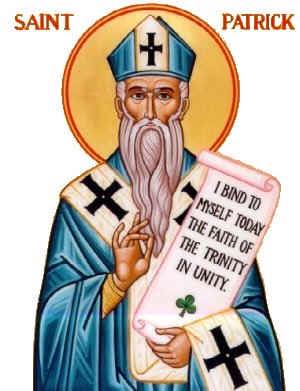
Patrick’s method of evangelizing the Irish reblogged from David Mathis

Remember Saint Patrick

March 17, 2014

Remember Saint Patrick

Saint Paddy’s Day is for the pagans.

You might say it that way, and then carefully wash your Christian hands of all the carousing and empty revelry that makes all things Irish into an excuse for a godless spring party. But you might say the same thing, and mean it not as a call to circle the wagons, but to charge the hill.

Deep beneath much of what the day has become is the inspiring mission of Patrick pioneering the gospel among an unreached people, despite the frowning face of the church establishment. Saint Patrick’s Day, in its truest meaning, is not about avoiding the lost, but bringing them good news. It turns out Saint Paddy’s Day really is for the pagans.

The Gospel to the Irish

The March 17 feast day (first declared in the early 17th century) remembers Patrick as the one who led the fifth-century Christian mission to Ireland. Unlike Britain, the Emerald Isle lay beyond the bounds of the Roman Empire. The Irish were considered uncivilized barbarians, and many thought their illiteracy and volatile emotions put them outside the reach of the gospel.

But Patrick knew better. In a strange and beautiful providence, he had spent six years among them as a captive, learned their language, and developed a heart for them. Like Joseph sold into slavery to one day save Egypt and his brothers, God sent Patrick into slavery to ready Ireland for a coming salvation.

The Surprising Turn

Patrick was born in the late fourth century — many speculate around 385 — in what is now northeast England. He was born among the Celtic “Britons,” to a Romanized family of Christians. His father was a deacon, and his grandfather a priest. But his parents’ faith didn’t find a place in his heart in his rearing. In his youth, according to George Hunter, “he lived toward the wild side” (The Celtic Way of Evangelism, 13).

But God soon arrested him with severe mercy. Kidnapped at age sixteen by Irish raiders, he was taken back to the island, where he served as a slave for six years under a tribal chief, who was also a druid. While in bondage in Ireland, God unshackled his mind and opened his eyes to the gospel of his childhood.

“God sent Patrick into slavery to ready Ireland for a coming salvation.”

And so, as a captive, “he came to understand the Irish Celtic people, and their language and culture, with a kind of intuitive profundity that is usually possible only, as in Patrick’s case, from the ‘underside’” (14). When he eventually escaped from slavery in his early twenties, he was a changed man, now a Christian from the heart. He studied for vocational ministry, and led a parish in Britain for nearly twenty years.

Reclaiming Retirement

That could have been the end of the story. But at age 48 — “already past a man’s life expectancy in the fifth century” (15) — Patrick had a dream, which proved to be his own Macedonian Call (Acts 16:9). An Irish accent pled, “We appeal to you, holy servant boy, to come and walk among us.”

Having known the language and the customs from his captivity, and having long strategized about how the gospel might come to the Irish, he now answered the call to return to the place of his pain with the message of joy. The slave returned to his captors with good news of true freedom.

Back in Saint Patrick’s Day

But this would be no ordinary mission. The Irish Celtics were “barbarians.” They may have had a few Christians among them, but as a people, they were unreached, with no thriving church or gospel movement.

“Patrick, the former slave, returned to his Irish captors with good news of true freedom.”

Patrick would take a different and controversial approach to the prevailing missionary efforts of the fifth-century church. Instead of essentially Romanizing the people, by seeking to “civilize” them with respect to Roman customs, he wanted to see the gospel penetrate to the bottom of the Irish culture and produce an indigenous movement. He didn’t mean to colonize them, but truly evangelize them.

Understanding the People

Hunter tells the story in the first chapter of his book on Celtic evangelism.

The fact that Patrick understood the people and their language, their issues, and their ways, serves as the most strategically significant single insight that was to drive the wider expansion of Celtic Christianity, and stands as perhaps our greatest single learning from this movement. There is no shortcut to understanding the people. When you understand the people, you will often know what to say and do, and how. When the people know that the Christians understand them, they infer that maybe the High God understands them too. (19–20)

Patrick knew the Irish well enough to engage them as they were, and build authentic gospel bridges into their society. He wanted to see the gospel grow in Irish soil, rather than pave it over with a Roman road.

Ministering with a Team

Essential to Patrick’s strategy was that he not fly solo. Just as Jesus sent out his disciples together (Luke 10:1), and Paul and Barnabas went out together (Acts 13:3), so Patrick assembled a close-knit team that would tackle the work together, in the same location, speaking the gospel and making disciples, before moving on together to the next tribe. It was, what Hunter calls, a “group approach to apostolic ministry.”

We have no detailed record of Patrick’s ministry teams and strategies, but according to Hunter, “from a handful of ancient sources, we can piece together [an] outline of a typical approach, which undoubtedly varied from one time and setting to another.”

“Patrick wanted to see the gospel grow in Irish soil, rather than pave it over with a Roman road.”

Patrick’s teams would have about a dozen members. They would approach a tribe’s leadership and seek conversion, or at least their clearance, and set up camp nearby. The team “would meet the people, engage them in conversation and in ministry, and look for people who appeared receptive” (21). In due course, “One band member or another would probably join with each responsive person to reach out to relatives and friends” (22).

They would minister weeks and months among them, eventually pursuing baptisms and the founding of a church. They would leave behind a team member or two to provide leadership for the fledgling church and move, with a convert or two, to the next tribe. With such an approach, the church which grew up among the people would be “astonishingly indigenous” (22).

Priority Time with Pagans

While Patrick’s pioneering approach is increasingly celebrated today — and is a model, in some respects, of the kind of mission needed in our increasingly post-Christian society — most of his contemporaries weren’t impressed. “The British leaders were offended and angered that Patrick was spending priority time with ‘pagans,’ ‘sinners,’ and ‘barbarians’” (24).

But Patrick knew such an approach had good precedent. The one who saved him while a nominal Christian and an Irish captive was once called a “friend of tax collectors and sinners,” and said, “I came not to call the righteous, but sinners” (Mark 2:17). The stakes were high, but he knew it was worth the risk.

Something Worth Remembering

Instead of acquiescing to the religious establishment, Patrick took the gospel to the uncouth, and ventured all for the unreached Irish. Instead of coasting toward a cushy retirement, he gave nearly three decades to the nation-transforming evangelization of Ireland. Patrick truly was for the pagans.

According to tradition, Patrick died March 17. Many think the year was 461, but we don’t know for certain. While today’s trite celebrations may leave much to be forgotten, for those who love Jesus and the advance of his gospel, Patrick has left us some remarkable things to remember. And to learn from.


Related Articles

“Patrick took the gospel to the uncouth, and ventured all for the unreached Irish.”

God gives us Barnabases

I have been feeling kind of beat down lately. Things have been going, been interesting, combined with the liturgical season though, it’s been kind of a beat down. I can see where God really does provide, just the right people at the right time. I’m not going to name names. But when the meeting is getting a little hectic, when that one person pops up and quietly assures “keep doing what you’re doing”, that is absolutely priceless.  When it’s seemed that the joy is getting kind of beat down and someone comes along and tells you how joyful and another tells you how encouraging, it is truly beyond meaure.

This may sound a little goofy, but I know these are from God, because the comments pop up out of no where and often from a most unexpected person.

There certainly is a time and place for that same friend or certainly another friend with different gifts, to come along and encourage by telling you: “That’s not working” or “Jim you have to change this or that about yourself.” That is encouraging too, because you know that someone has “your six” and they’re watching out for you. I am very grateful that people have been there to encourage and redirect. It takes effort on their part and I am very grateful that they (and I’m hope they all know who they are from this blog) will exert their time and effort to spend it on me encouraging and guiding.  It certainly is a mark of friendship, the Jonathan and David kind to invest that in someone else. That’s also why men’s groups are so important. They do give guys the mutual encouragement and strength to go back out and deal with their world.  You can do that when you know another strong brother has your six.  Thanks to those guys who have mine at First St Johns they have no idea how much they have blessed me. In probably none of those cases has it been a situation where I or they have felt compelled to be friends.  But They were put there by God, they saw the need and what God was leading them to do. I saw what God was doing and was blessed to receive it.

This is a hard thing for guys, we have to be self-sufficient.  Well that’s the world talking. The smart guy remembers God’s word in Proverbs 27:17 “Iron sharpens iron. So a man sharpens the countenance of his friend.” So guys who is God putting you with for mutual strength and encouragement? Who is your Barnabases? (Refer to Acts 4:37, 9:26-28, 11:25-26).

It’s about God and brothers and sisters in Jesus, it’s not about you

I was listening to J Vernon McGee while I was reading this devotional by Henry Blackaby and I noticed how the common thread was “it’s not about you” or me, it’s about God!

Dr McGee was answering the tire old nonsense “a loving God wouldn’t send anyone to hell.” I really wish people would think a little more and quit with the simple little cliches. People love to say how much smarter they are than everyone before or now. It’s not true. Dr McGee points out that God is loving. He is also righteous, just and holy.  He has given us a way to be saved unlike any other belief system, but it has to be on the basis of salvation in His Son. But in our day and age when we think it’s all about us, we think God is supposed to take whatever we offer Him. No! It’s not your way it’s God’s way.

We are holy in Jesus.  In Jesus we are in the presence of the Lord, God is holy. That means set apart, sanctified. He will not accept anything less, His nature abhors anything less. The “ONLY” way we can be holy is through God the Son. There is no other way. Jesus said “no one comes to the Father except through Me.”

Dr Blackabys devotional was on how what we do and don’t do affects other Christians. We should act only after we consider how our actions will affect other Christians. When we sin “Sin promotes independence. It isolates you from others… God designed you for interdepenence.”

We do have responsibility to our brothers and sisters in Jesus. But that does raise the question in terms of those who aren’t in Jesus. The Acts church was solely focused on only supporting fellow Christians. The church I pastor does reach out to help, but frankly there’s only so much we can do and we have a responsibility to help brothers and sisters. I think we should be very discerning in who we help because we just do not have the resources. The church at all levels does so much with so little for so many and yet the average secularist (who statistically) does very little for anyone else still likes to wag their finger at the church. Yes those same people who love to say how non-judgmental they are.

The take away is this.  It’s just not about you. If you really don’t understand what God is about, you better not go around making statements about what God will or won’t do. I mean come on that’s just stupid. God gave His Son for our salvation we are saved in Him or we condemn ourselves.

We need to remember when we sin, it’s not just about us. Our sin reflects on and affects countless numbers of other Christians. And we should be in service, but primarily to brothers and sisters in Jesus. We are guided by the Holy Spirit to help others but we are focused on serving those who are in Jesus.

Dr J Vernon McGee weekly question and answer podcast for March 14, 2015

“experiencing God Day by Day Henry and Richard Blackaby  p 130