Author Archives: Pastor Jim Driskell, Lutheran Church

Unknown's avatar

About Pastor Jim Driskell, Lutheran Church

I am the pastor of Trinity Lutheran Church in Chestertown, Md. I pray that you will come and worship with us, worship is 10 am Sundays. We are a renewal church and we are lifting God up in classical worship, and being faithful disciples of our Lord Jesus Christ. 101 Greenwood Av, Chestertown. Plenty of parking behind the church.

Sponsoring children through Christian organizations really works

My wife and I sponsored a child in Indonesia for a number of years, until he turned 18 and started his life. It was interesting to get mail from him and to write back and to learn about him, his family and life in Indonesia. It would be great to hear back from him. Life kind of got in the way with us, four years of active duty, four years of seminary and over four years getting started in ministry kind of got us off that track. Based on the following we should get back on track. Based on the following from Christianity Today, these sponsorship programs do work. (Bruce Wydick June 2013 pp 22, 23)

The study was done on Compassion International that dates back to the time of the Korean War. The organization started in the United States, was set up to support Korean children during and after the war.

“…In all six countries , we find that sponsorship results in better educational outcomes for children. Overall, sponsorship makes children 27 to 40 percent more likely to complete secondary school and 50 to 80 percent more likely to complete a university education. Child sponsorship also appears to be the great equalizer in education: In areas where outcomes are worse, such as sub-Saharan Africa, impacts are bigger. In countries where existing outcomes aren’t as bad, like in India and the Philippines, impacts are significant but smaller. In countries where existing outcomes are higher among boys, the impact on girls is larger; in counties where the existing educational outcomes are higher for girls, the impact on boys is larger. We even find some evidence for spillover effects on the unsponsored younger siblings of sponsored children.”

While Compassion does sort of shepherd things while the child is in school, there are very interesting results after school. “…when the child grows up, he is 14-18 percent more likely to obtain a salaried job, and 35 percent more likely to obtain a white-collar job. Many of the Compassion-sponsored children become teachers as adults instead of remaining jobless or working in menial agricultural labor. We found some evidence that they are more likely to grow up to be both community leaders and church leaders.”

I believe that the biggest crisis in America is the lack of hope. As most of society becomes functionally atheistic, and rejects the notion of anything after life; the more that society basis their expectations on the material, that which is easily destroyed, can easily malfunction, be lost. In all our affluence, we find more and more that the material just does not satisfy and the more we lose hope. Compassion is giving hope to children who live in much more dire circumstances than you can often imagine: “…In each of the studies, we found that sponsored children consistently had significantly higher expectations for their own schooling than unsponsored children, even when controlling for family and other factors…. Many of these findings came close to mirroring the adult differences we measured between formerly sponsored children and nonsponsored children.”

That is they are given hope in the here and now, hope that those around them probably don’t know. And since Compassion is a Christian organization, they are also getting the hope of eternal life in Jesus. So based on this article, my personal experience, I highly recommend this as something that your family could do, your children’s class, groups, sports teams. Yours or your spouses groups, Bible study classes. Cost of sponsorship is usually around $35 per month. Not exactly big bucks for us, but a whole new life, filled with hope for a child that lives in a place that is so deprived, so lacking in hope.

Christian creeds, what we really vow to truly believe before God

I did a post yesterday based on an article in Leadership Magazine about “Evangelcial Christian” churches who just dispense with Christian worship. They call it worship but is it? When you don’t even do the basics of Christian worship? Please feel free to check it out and let’s talk.

In the meantime, in my other reading I’m reading a book titled “The Catholicity of the Reformation”. That Dr Martin Luther really had no issue with Roman Catholic worship the liturgy, for the most part. What he had a problem with was the doctrine and traditions that had grown up in the church.

The book by Carl E Braaten and Robert W. Jenson discusses how much even liturgical churches have slid into American Evanglical Chritianity, as it were. It’s a regular issue in the Lutheran Church that some pastor is making worship too Catholic. I know what that means, but I don’t think the person(s) saying it really knows what it means. If worship is getting liturgical, that’s not a problem in the Lutheran church. Luther never proscribed the liturgy, he frankly encouraged it. But the American Lutheran Church has become so affected by American evangelicalism that it really has lost its identity. The liturgy in the Lutheran Church faithfully lifts up Scripture and true worship. It is what we should be doing and not getting into what was frontier/camp meeting “worship” led by, often, self- appointed “preachers”. Generally there were too many preachers that were uneducated, didn’t really understand the Bible, doctrine and the purpose of actual worship. They made a bunch of nice-sounding noises and played to the crowd, but did little real teaching and no one really knew to keep them accountable. Hence, today, we have all sorts of nice sounding stuff, that has little with actual Christian worship. Oh, I can hear it now,  “yada, yada, that’s your opinion, we can do what we want, yada, yada” which only illuminates the speakers lack of understanding of Christian worship.

One thing that particularly caused me agita (although I don’t think I can ever get over the idea that a “Christian” church doesn’t included the Lord’s prayer in worship!!!), was the lack of a creed, confession. In this day and age when all sorts of organizations, from Fortune 500 companies, huge government agencies, down to the smallest organizations, are told to develop mission statements and mottoes, to think that the Christian church shouldn’t be likewise focused is just stunning!

Braaten and Jensen write: ” The function of the creeds and confessions is to provide standards by which the church can judge and condemn false teaching contrary to the gospel.” (p 59) Would any knowledgeable Christian disagree with that? Really, how could you disagree? They go on to point out: ” …heresy has become virtually outmoded in the modern church…” Would any of the same people disagree with that? No! Yea, guess I’m going to be a little catty here, but when we join together as the Body of Christ and recite a creed (Apostles, Nicene, Athanasian) we are making a vow, before God, in terms of what we genuinely believe. So my catty comment is; Why don’t so many churches (many flat-line, uhmmm, I mean main-line) say the creeds? Because they know their teachings are false, and they’re at least smart enough to not offend God any further, by making false promises. Do I give them credit for at least a little integrity?

The writers go on to say: “…the enlightenment brought the age of tolerance in which the rules that set limits to heresy were overthrown. Orthodoxy was put on the defensive. Heresy become a matter of religious freedom and human rights. The threat of heresy to personal salvation that prevailed in the ancient church was annulled…Dissent was permitted so long as it did not break the unity of the church. Not heresy but schism became the more serious concern. To prevent heresy from leading to schism, the churches today, maintaining their organization unity at almost all costs, have taken to promoting inclusivity and diversity at the expense of revealed truth and biblical morality, pushing back the limits to heresy, to the point where people are ‘tossed to and fro and blown by every wind of doctrine’ (Eph 4:14)

I know, maybe another cheap shot, but certainly Mark Driscoll and Mars Hill comes to mind. But certainly so many other “Christian churches” who become much more  about other things. The Mormon Church is much more about big business. Churches that are all about their pastor, their building, their… You name it. But are just not about real Christian doctrine. Why don’t they want to get into creeds, because genuine Christian worship is just not what they’re about.

Yea, I’ve singled some out, but this is so widespread that the actual orthodox Christian churches are the ones that are perceived as odd-ball and the rest of the churches are seen as “real” Christian churches. The result of that is a cynical perception of the church by the general population. If the big churches really don’t teach Christianity, and they must be representative because they have all the money and people. Well then the church is actually just a feel-good-rah-rah operation. To most people that translates into phoney and I’m certainly not going to disagree. But for those churches that are genuinely Christian, who do lift up the creeds, who do the things in worship that do turn us to God, who do lift up Jesus as the atonement of our sins and the Lord of our salvation, solely because of His works, they are lumped in with the phoney. That is not a desirable result for any church, or believer.

Maybe those “churches” and all who claim to be true Christian churches might start getting on track and we might be able to all make a true witness to the rest of the world of genuine Christianity, to our Savior Jesus Christ, by making it regular practice to profess a genuine/historical creed (Apostles, Nicaean, Athanasian) Come on, really impress everyone and take time once per month to do the Athanasian Creed. Look it up.

Action oriented, not afraid of risk, being what you need to be in Jesus.

I will be frank here, I’m not really sure where I’m going with this and I’m not sure there is a definitive destination. I wouldn’t be surprised to get feedback that “wow”, that was five or so minutes out of my life I’ll never get back.

Back hey, lets rush in, where angels might fear to trod.

“Gallup identified three basic leadership styles and determined the dominant style of each CEO from the Inc 500 and national sample.” (Inc Magzine Sept 2014 p 31)

The chart compares “Activation, Strategic and Relational”. By far, Inc 500 CEO’s are more on “activation”, then the other styles. Activation is described as “Action oriented, focused on results, unafraid of risk, forceful, pushes people to improve, high expectations.” If I was to pick anyone in the Bible that I’d describe as an entrepreneurial, risk taking, CEO type. It would be St Paul. Yes, he was relational, but I really think that it was in terms of results. He had no compunction about confronting, he repeatedly said we should rebuke, exhort. He wasn’t bashful about pushing on people and people at all levels of society.

“ESV 1 Corinthians 9:19 For though I am free from all, I have made myself a servant to all, that I might win more of them. 20 To the Jews I became as a Jew, in order to win Jews. To those under the law I became as one under the law (though not being myself under the law) that I might win those under the law. 21 To those outside the law I became as one outside the law (not being outside the law of God but under the law of Christ) that I might win those outside the law. 22 To the weak I became weak, that I might win the weak. I have become all things to all people, that by all means I might save some.”
We might think that Paul was being a little crass. I really read this passage as saying: “I will do whatever it takes to get the results (within the law). But what is the real point of getting those results? Now I’m not going to say that Paul “led” someone to Christ, that he converted people, however you want to state it in Reformed theology. But let’s just say in terms of being used by the Holy Spirit to witness to others to Jesus. Sure Paul could, although I’m sure he wouldn’t, claim to have all these converts. But clearly, he was used powerfully by the Spirit in order to bring thousands to Christ in his relatively short ministry. In an era where there was no mass communication, transportation, lacking a large organization, Paul showed up in a city and within what we can guess was a short period of time, established meetings, designated leaders and, essentially built churches.

Did Paul build relationships? Absolutely. I don’t see how you can be a leader and not build relationships as a part of the efforts to establish an organization. Feel free to tell me I’m wrong, but I think that when people start to associate with you in a common cause, they are more motivated to help to establish that organization, then they’re concerned with building a relationship. In fact I would submit that, especially for guys, that relationships are built as a result of the efforts put forth for the enterprise to grow.

Paul said that he would do whatever it takes in order for someone to come to Jesus and to be saved in Him. Sure there’s a relationship involved, but I don’t think Paul was particularly concerned whether he had a “relationship” with each person. The goal was for them to know Christ as Savior, if a relationship grew out of that, and they certainly did, so much the better. But the goal for him and should be for all of us is to do what we can do in order for someone to come to know Jesus.

If Paul was in the corporate world and made promises such as “I am made all things to all men,” it might even seem somehow unauthentic. “Do whatever it takes to make the sale???” I suppose, but… What is the goal? The emphasis seems to be in building relationships and I understand that and that would be highly desirable. I’d love to have an active, deep relationship with everyone in my church. I’m not sure that everyone would want that in my church, but that would be the ideal. But would that be achieving the ultimate goal? No.

Let’s face it, there’s no guarantee that I will wake up in the morning. I’ve lost two brothers, both younger then me. I have no assurance that I will be able to build a relationship with someone else. Even worse what happens if they die without any evidence that they are in Jesus? Hey if I don’t wake up in the morning I know that I will be in the presence of the Lord. Can I say that about everyone I know? No, I can’t.

Yea, relationships are great. I think that they are really the result of people who share goals and dreams, instead of people who are unequally yoked? Yes, there’s certainly something to be said that you don’t want to make someone a “project” and you certainly don’t want them to feel that way. There has to be a sense of urgency, is it really ever too soon to know Jesus as Savior? Life can be too fragile and when we lack of sense of urgency, we can fail to faithfully follow how the Holy Spirit leads us.

It’s not a hard sell and I know that. I think it is frankness, candor, putting it on the line and knowing that what you say will be rejected. Remember, they’re rejecting the Holy Spirit, not you. It’s the Holy Spirit who puts us in the presence of those He wants us to witness to.

Inc CEO’s put aside fear of risk, they to push people to improve (can you improve in salvation? Salvation is a vast improvement over damnation!) and they have expectations. Let’s have high expectations of the Holy Spirit, if He leads us, as He led Paul, to “be” what was necessary to “be” in order to show Christ to others, then let’s have a sense of urgency and follow the Spirit’s leading.

We need to always keep in mind, that we cannot drag anyone into the Kingdom, it certainly will always be the work of the Holy Spirit. But if we are being urged by the Holy Spirit and we do not put into action what He is leading us to do, we take the risk that we have failed. We can sin as much by omission as we can by commission. We aren’t on commission, for those who are baptized in the Name of Father, Son and Spirit, when we hear the preached Word and study the Word, when we take the Body and Blood, we are saved in Jesus. But we aren’t being faithful to Him who died for us when we put off pointing others to Jesus.

I’d like to talk about it more. We meet Wednesdays at 10am at the coffee shop corner of W King and Beaver St’s in downtown York, Pa. Feel free to park behind the church, I’ll even buy your first cup of coffee. Just look for me.

Evangelical, worship?

For those who think that I’m being unreasonable in respect to “big-box, happy-clappy” “church”, I submit the following from John Stackhouse in Leadership Journal (Winter 2015 p 14). Leadership Journal is a great publication, all due respect to them and John Stackhouse, but neither are known for their support of “high-church/liturgical” worship.   

“As for reciting creeds, well, no: evangelicals normally do not recite creeds in our services. [help me out here, do you really believe that if you say Jesus a couple of times in a sermon and then make the rest of it about you, don’t do any of the things that Jesus told us to do or we do in order to strengthen ourselves in Jesus, that is being a Christian? Seriously how do you figure? We are told that we are supposed to take our relationships seriously and then we make the one with Jesus all about me? How does that work?] “Evangelicals that are not part of liturgical traditions – and that’s most of us – instead tend to worship in “hymn sandwich” [and what evangelicals sing are not hymns] services: lots of singing, with maybe a greeting and some announcements in the interstices, then a longish sermon, then more singing – with perhaps a collection and a closing prayer … No call to worship, no confession and absolution of sin, no series of Scripture readings (OT, Gospel, Epistles,) no congregational prayers, NO “OUR FATHER” [???], no Creed … And so on. It’s pretty bad – and it’s actually regressing…

…nowadays the trend-setting churches seem to have fallen back into two halves – singing and preaching – … that’s pretty much all there is to the service.” [pg 14 Leadership Journal]

Sorry folks that is not Christian worship! Throw Jesus’ Name around a couple of times and that’s Christian worship? Ya… No! Heavens, can’t mention sin! We have some sensitive souls here and anyway, we’re all basically good suburban-living people. None of that blood and gore stuff, the crucifixion? Just doesn’t work for us. There certainly won’t be a crucifix in any “Evangelical” sanctuary and ya, no cross either. Lord’s Supper? Body and Blood! Really? Confession? I refer you back to line 3 of this paragraph. And no Lord’s Prayer? What is the point? We were told to do these things, or at least we are honoring the Lord when we do this. The point of worship is to lift up and praise and worship God. One woman, from “evangelical” tradition, complained that I had my back to the audience most of the time. Ya, her words. No Creed? Really what do you believe? Ya, you, it’s all about you.

And gotta tell you, “sermons”? Pretty much Joel Osteen feel good, how can we have a better life, yada, yada. Hey there’s plenty of good Christian music out there. I have no problem with Christian music, I will sprinkle it into worship once in awhile to enhance the sermon. But, sorry, one reason why men do not get involved with Christian worship is because, when it’s singing, dancing around and a little gratuitous preaching, it’s hard to take it seriously. If guys really can’t see the point and have nothing to take seriously, they aren’t going to do it and this is alienating a lot of guys from Christ. The happy-clappy types will be called to account for the way that they don’t worship, that they make it too much about them and very little about Jesus.

This kind of worship is a travesty, it’s not worship. It’s self-gratification and mutual edification, but no room for God- Father, Son and Holy Spirit. Sorry, but we continue to look ridiculous and irrelevant to the rest of the world. If we don’t take Christ seriously, why on earth would the world?

Running the race in faith in God’s standards, not ours. First St Johns Lutheran Church, York, Pa. February 8, 2015

[The picture is of Pheidippides accouncing the victory of the Greek forces over the Persians to the Athenians Luc-Olivier Merson, 1869 ]

(For a audio version of this sermon, click on the above link or copy and paste it into your browser)

We make our beginning in the Name of God the Father and in the Name of God the Son and in the Name of God the Holy Spirit and all those who run the race of faith in Christ said …   AMEN!

I have done a marathon, I have done a century. A marathon is a 26.1 mile race, I did it in Falmouth, Ma. A century is a bike ride/race of 100 miles, I did that at the seminary. I’ve done 56 triathlons. Paul could have been talking about running a Marathon. The Battle of Marathon occurred in 490 BC and the Greeks may have included the marathon as a competition in their Olympics which would have made the marathon known to the entire Roman world, Israel and Paul included.

Paul is telling us that we have to do life, like these physical tests, with endurance. The problem is we have pasted over these with our own expectations. As Lutherans, too often, we think we don’t have to do anything. We’re saved by grace, we don’t have to do that. But let’s say you should do that. I still think you have to because I honestly believe God still pushes us to stretch in life. We are saved by grace, but that does not mean that we get to sit and just vegetate, especially when it comes to our relationship with Jesus. He gave His best, why on earth should we think that we don’t have to give our best.

Another issue that always seems to be, at least to me, an excuse with Lutherans and too many other people. “If we can’t run the race, if we can’t ride the bike, if we can’t entertain, or maintain or serve or witness … well then we just shouldn’t do it.” Heck, if that’s the issue what am I doing here? I’m sure not, no Billy Graham, or Dale Meyer, or Matt Harrison, or Jon Diefenthaler. If I’m really not that great as a pastor, as a preacher, the one charged with worship, what am I really doing here?

What I am doing, what you are doing is being led by what God wants us to do in our lives. No where in the Bible does it say, “well you have to do everything and anything with excellence, otherwise, just don’t bother doing it!” It doesn’t say that anywhere, no one demands it or expects it. None of us is perfect, none of us is going to do anything perfectly. We should strive to do our best, to serve as perfectly as possible, but it’s not going to happen all the time, we’re just not going to make it. Sometimes it does look perfect and that’s a great thing, and we should salute excellence, but we should never expect perfection, from ourselves or anyone else.

Recently, studies have shown that perfectionism is really just a form of procrastination. We seem to have always celebrated the “perfectionist”. This is the person who, “well I just won’t put this out into the world until it’s absolutely perfect”. We all think how marvelous that is, this kind of integrity. I’m certainly not saying be sloppy, but I’m also not saying that you use every little thing for an excuse to avoid doing the things that you need to do.

We are called to be disciples. That is a race, that is an endurance effort that makes the Hawaii Ironman look like a walk in the park. Are we called to be excellent disciples? No. Does it mean that we can throw God any old little effort that we want to whenever we want to? No! He doesn’t do that to use. God gives us His best everyday. He’s given us His best in Jesus. God’s not sitting up there grading us, not even on the curve, “well poor Jim, I know about him, I’ll cut him some slack”. It’s not about how great or how bad. It is about do we serve Father, Son, Holy Spirit, brothers and sisters in Jesus and the world to the best of our ability? Not in a one shot, here it is take it or leave it. We serve in the sense of the long-haul, making constant effort. We are always looking for the opportunities, always looking for where God leads us. We do it with the understanding that, Yes, we grow through this process. We also serve others through this process. Service isn’t often a one-shot deal, it’s a matter of endurance. Of continuous service.

I have no doubt in my mind that Paul was probably one crispy-critter by the time he got to Rome. Think of all that he had done, all that he endured, all that he sought to maintain and build. It’s staggering! I doubt that in what was maybe a ten-year period, no other person in Christian history did as much to spread Christianity as Paul. We have to remember that he really had no basis. Sure he had the local synagogues, but often they became as hostile as the pagan world, if not more so. So there’s a great excuse right there; “sorry, we can’t have worship because we can’t use the synagogue on Sunday, they kicked us out”. You know as well as I do that would be a ready made excuse for many people today. Paul could say I don’t have the right clothes, I can’t preach like this! No, he did what he could do with what he had. He could have said; “well, we just haven’t worked out the proper teaching, the proper doctrine here, so as soon as I get all that down perfectly I will get back to you.” Heck if I did that I’d never preach, I sincerely hope you don’t think that I am the fount of all Christian knowledge. But did that keep Paul from preaching and teaching? Would that keep me from preaching and teaching?

I’m not saying don’t prepare to the best of your ability. But I think one thing that military training, even athletics has taught me. At some point there is going to be a case, a mission. Probably the biggest case I had, a really bad situation that was my Damascus Road experience. Someone asked the boat coxswain afterwards and he replied, “I’ve never done that before, I was scared to death, I can’t believe I got through that”. He was as prepared as he could be for that storm, he  showed up and people needed help and he got to where people needed him. He didn’t wait until he was perfect, he didn’t have that luxury. He had trained to the best of his ability and likewise the rest of us in the crew, and when the call came we responded to the best of our ability. Despite very difficult circumstances, we got the best possible outcome and all of us that were involved in that case, got an education that we could never have paid for, never arranged, have never gotten under any circumstances other then we were there, we were called, we went out and put on our best effort and, the outcome was as good as it could have been expected.

As I said, yes I ran a marathon, yes I have done a century, yes I have done 53 triathlons. Having said that, I wouldn’t be too impressed if I were you. I did the marathon in 4 hours and 57 minutes. Most people finish under 4 hours and the winning times are almost under three hours. I finished the century in about 8 hours. I did finish before two other people, but otherwise the rest of my group had finished anywhere between 3 and 4 hours earlier than me. So does that mean I should just hang my head in shame, “oh how embarrassing, I’d never tell anyone that I did a marathon or century”… uhmmm no! I can tell anyone that I have finished either one, it’s called bragging rights. I did it and I’m entitled to put a little plate on my Road ID to say I did it. I may not camp on the fact that I took almost 2 to 4 hours longer than most, but I can say that I did it.

Yes I might be able to brag, a little, about what I’ve done and I have no doubt that everyone of you out there has done something that the average mortal never really does and you are entitled to bragging rights. Go ahead, yea Christian humility and we should be humble, but hey, in these cases be a little obnoxious. But when it comes to running and ultimately finishing the Christian race, we do that with humility. Why? Did we really run it in our strength? No! I have no doubt in my mind that my thirty years as a Christian and where the Holy Spirit has put me, that it was entirely through the strength and guidance of the Holy Spirit, not mine. How can I take credit for something that someone does through me? But does that make me any less saved? No! I am perfectly saved and if I faithfully follow that leading and do the things that I’m lead to do, in the time I’m lead to do them, then I am a faithful servant. I have been put into plenty of situations by the Holy Spirit, where I knew that a lot more preparation would have been good. I assure you and anyone at Concordia Seminary would agree, that new pastors have a lot to work out when they get to a parish. Frankly some more than others. But is that a valid excuse to avoid what you’re supposed to do and not run the race? No! Sometimes the trial is the teaching moment, the growth moment. That the Father knows that you will only grow through doing versus sitting around talking about it or reading about it. We should continually strive to be the best possible disciples we can be, our Savior is the best and most perfect and He gave us all that we have or ever will need. But we should be ready to run that race at any moment. Not when we decide that we are ready, but when the Holy Spirit hits that alarm and tells us we need to jump up and run out that door. Sometimes we may never even know to what we are running, but we run anyway instead of waiting until we’re perfect because the Father has given us the faith to trust in Him, not in our abilities.

I didn’t run/ride the races perfectly, but I did do them. We aren’t called to run/ride/fight the faith perfectly, we are called to serve the Lord in obedience. God says I am more interested in your obedience then your sacrifice. When we faithfully obey, even we don’t do it the best we can, we are doing God’s will and will be rewarded on that basis. Not on the basis of what we think is acceptable, what is up to our standards, but what we did when we responded to God’s call in faith.

May God the Father and God the Son and God the Holy Spirit bless and preserve you to all eternity. Shalom and Amin.

No missing link here

Neanderthal Men Were Modern Men

A set of fossilized human remains has been discovered in Iberia that shows partial Neanderthal characteristics, proving again that Neanderthals interbred with anatomically modern men.1 This adds to a growing list of evidence, consistent with biblical history, that demonstrates Neanderthal to have been fully human, rather than an evolutionary transition.2

Though evolution models once held that Neanderthal man was one of the “missing links” between an ape-like ancestor and modern man, the repeated discoveries of Neanderthal remains right next to those of modern humans—instead of in separate, lower, older strata—have forced him out of the pool of “pre-human” evolutionary ancestor candidates. In contrast to ever-evolving naturalistic interpretations, the biblical creation model has consistently maintained that Neanderthal man was just that—man.

Neanderthal did have distinct characteristics that are apparently now either extinct or diffused, but his family line was fully human for several hundred years after Noah’s Flood, when humans repopulated the earth about 4,300 years ago.

The mounting evidence for Neanderthal and modern man’s coexistence calls into question whether the Neanderthal and other human varieties even lived in separate times, as the evolutionary story still maintains. Both the Bible and science indicate that this was not the case. Biblical history has no place for such a separate, distant time of evolutionary development, but it does allow for variations within the human kind in its 6,000-year history.

Anthropologist Marvin L. Lubenow has shown that Neanderthal, other than having a larger cranial capacity, was anatomically the same as Homo erectus.3 Their fossils do not fit into the depiction of a linear evolutionary ape-to-man transition that is iconic today, but were simply comingling variations of humankind. Furthermore, a fossil elbow (KP 271) and the Laetoli footprints are indistinguishable from modern man, and both have been dated by evolutionary scientists at 4 million years or older—predating the earliest Neanderthals!4 Thus, within the published evolutionary dates, “anatomically modern Homo sapiens, Neandertal, archaic Homo sapiens, and Homo erectus [as well as Lucy-like Australopithecinces] all lived as contemporaries.”3

As seen in the fossil remains from Iberia, the more that is discovered about Neanderthal, the more evolutionary models morph to accommodate the data. In contrast to this ambiguity, both the Bible and science confirm that man and apes—though many small differences can be discerned within each kind—nevertheless remain totally separate, untransitioned created kinds.

References

  1. Walker, M. et. al. 2008. Late Neandertals in Southeastern Iberia: Sima de las Palomas del Cabezo Gordo, Murcia, Spain. Proceedings of the National Academy of Sciences, published online before print December 12, 2008.
  2. Duarte, C. et al. 1999. The early Upper Paleolithic human skeleton from the Abrigo do Lagar Velho (Portugal) and modern human emergence in Iberia.Proceedings of the National Academy of Sciences. 96 (13): 7604-7609.
  3. Lubenow, M. 1992. Bones of Contention. Grand Rapids, MI: Baker, 178.
  4. Tuttle, R. 1990. The Pitted Pattern of Laetoli Feet. Natural History. March Issue, 60-65. Quoted in Lubenow, Bones of Contention, 170.

* Mr. Thomas is Science Writer.

Article posted on December 18, 2008.

We are always looking for outward sources not to to Holy Spirit within us

We spend way too much time looking for things outside ourselves for inspiration. Sure God puts things around us to inspire us, but it is a mistake to only rely on that inspiration and ignore what the Holy Spirit is trying to impact you with. He is indwelt in you and He is trying to inspire you directly, in a way that uniquely impacts you.

It helps me to wait on His inspiration, I try to put it into prayer that I want Him to move on me and guide me. it seems as though He gives me the inspiration/emotion/drive and then helps me with the words, but never seems to tell me how I should write or what I should write. He’s guiding the writing, but not micro-managing. He’s leaving it to me to fill in the substance, but always with His leading, His Spirit.

Im not trying to get all mystical on people. I think it makes perfect sense that if we are indwelt with the Holy Spirit that He will find many ways to express Himself through us. Not compelling, but in a way that helps us to maintain our relationship, which is a way among many ways.

Building a Life

Crusty's avatarThe Ramblings of a Crusty Old Sailor

Reposted from The Life Project

tumblr_meustnagvf1rfi6aso1_500Building a life in Christ is very much like building a house or any other building; it must have a proper foundation. A life that is built on a foundation of popular culture is like a building that is built upon shifting ground with no firm foundation at all, for popular culture is anything but consistent. Pop culture shifts with the latest winds, and the winds are always changing. The very sad thing is that so many lives are constructed and built upon pop culture…
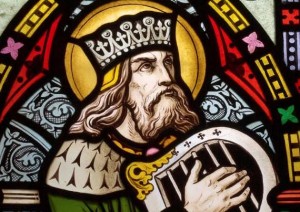
A real life is built upon the firm and sound foundation of the Word of God, and it is anchored to that foundation with God’s love for us.

As we go through life, our experiences and understanding of our faith is like adding rooms to the house, one by one, until our house becomes a great one. Some of those…

View original post 72 more words

Teaching, walking as a disciple of Jesus

For the audio version of this sermon, click on the above link.

We make our beginning in the Name of God the Father and in the Name of God the Son and in the Name of God the Holy Spirit and all those who know it’s about what God does and His Word said … AMEN! We are going to have a little spring training today. The Patriots win the Super Bowl today, the Red Sox report to Florida in a couple of weeks, a few weeks of fundamental baseball in Florida and all is right with the world. The subject is this, what are the fundamentals? What issues do we as Christians need to deal with, what is important for us to remember? There are way too many Christians who make other issues their top priorities; social issues, political issues, how much or how little sin, end times, making worship entertainment the Sabbath and in this case fussing over what kind of food we should/shouldn’t be eating. In today’s epistle lesson Paul is trying to get people to focus on what’s important. What are they focused on? Eating food that was offered to idols? As part of that discussion Paul’s saying; “We can all be smarty pants and get into these secondary issues with people. Try to look like we’re theologians, “oh heavens, we must talk about the seriousness of this vital issue. I saw brother Thomas over at the temple meat market and he was buying a prime rib that was sacrificed to a pagan ‘god’! That’s horrible! We can’t allow that! This must stop. I don’t care if the temple meat market has the best prime rib, if we buy prime rib at all, it better not be from something that was not sacrificed to some pagan ‘god’.” Yea, OK, in this context is that cool? No, it’s not! But on the other hand, for a Christian, is that something that really speaks to our eternal salvation or any other Christian’s eternal salvation? No, it’s not. We have a whole lot better things to discuss and frankly it takes away from those issues that are much more compelling. For example; ‘ok, brother Aurelius, we shouldn’t eat meat sacrificed to a pagan “god”. I’m not going to say right, wrong or indifferent. But Aurelius, when was the last time that you took a pagan or a new Christian and really sat down with them about the real issues of being a Christian? How’s your prayer life? How’s your relationship with Jesus? Do you feel the Holy Spirit moving you to serve someone and you didn’t? Let’s go back to the “Solas”. What are the solas? Sola Fide – by faith alone. It is His faith that God the Father gives Christians that we trust in Him, we trust His will and we follow His will. There are way too many people out there who try to make it out to be all about us, what we want, that God needs to get on our agenda. That’s not going to happen and God will lead us where he wants us and it is far better than anything we can do. Sola Gratia – By grace alone. This gets into the whole issue about how we are saved. Is it about what we do? Maybe even a little? Or is it about what God does? He saves us! It is through His grace that we are saved. We don’t earn it. The Father gives us His grace because in his sovereignty, He chooses those who are saved and they are saved because He brings them into relationship with His Son, our Lord Jesus Christ. We are saved only through Him and His righteousness. Even if we live the “perfect” life, did everything right or avoided the things we shouldn’t do, we’re not saved. It’s not about what we do, it’s what He did! We may have obeyed the Law, but the Law does not save you, we are only saved through the righteousness of Jesus and that becomes our righteousness when he brings us to Him and saves us. Sola Scriptura – Only through Scripture, only through what is in the Bible. We have a lot of “teachers” out there whose attitude is, “well, this isn’t in the Bible, but it should be and ‘my’ God would have put it in the Bible.” No! I am a Lutheran pastor, I am charged with teaching you what is in Scripture and helping you to understand that Scripture is what you need to grow in Jesus and serve Him. It’s not up to me to make up things and today there is way too much that is made up. Moving on, we believe in the virgin birth of Jesus. There are, again, way too many teachers who are teaching to the effect “oh well, that really couldn’t have happened, that’s not rational, and it really doesn’t matter, because we’re saved by our own agenda.” Every Sunday we recite the Apostle’s or Nicene Creed. Jesus was conceived by the Holy Spirit and born of the Virgin Mary. Jesus is God the Son and could only have been born by the will of God. Not by any man. Jesus was born the perfect man and God the Son. Jesus is God! God the Son. There is only one God, and there are three persons who make up the Godhead: God the Father, God the Son, God the Holy Spirit. We cannot become “gods” as some teach. Jesus isn’t some sort of secondary “god” and He wasn’t the brother of Satan. There are no other “gods” and we trust Father, Son and Holy Spirit. Jesus died for our sins. He is the perfect sacrifice and He took on himself the sin of all the world. That doesn’t mean that everyone is saved, because not everyone is baptized and lives in Christ. Most everyone lives in themselves and tries to justify themselves by what they do. We know that isn’t possible because we can never live the life that will save us, only Jesus saves us. Jesus rose, he was resurrected to give us the promise of eternal life. Through His resurrection we have the promise of our resurrection and eternal physical life in the new world that will come when this world is destroyed. We are saved through baptism. Almost the rest of Christianity teaches that baptism doesn’t save us. They teach we are saved because we make a decision to “accept Jesus”. No! Jesus accepts us and saves us through the washing of our sins in the water of baptism. Having said all that, we as Christians have what Dr Luther called “Christian Freedom”. Can we sin and be forgiven and still be saved? Yes! Jesus died for all sins. I’m still waiting for someone to tell me the sin they’ve committed that Jesus didn’t die for. I’m never going to hear it, but there are people who insist they are too sinful to be saved in Jesus. That’s wrong! When they are baptized, when they receive the Body and Blood of Jesus, when they confess their sins in repentance and hear the preached Word of God they are saved! Game, set and match, they have eternal salvation in Jesus. Paul is dealing with a bunch of people, the Corinthians, yea them again, who are way too caught up in other rules. When they did that, when we do that, we forget what really is important. They are all snarked up about people who go to the meat market of a pagan “god” and buy their meat there. Well this goes back to the Old Testament teaching that some animals are innately unclean and can’t be eaten. God said that in Leviticus 11. He listed out animals that He didn’t want His people to eat. OK, fair enough. But then Jesus came and with Him, we are again taught, it’s not about the secondary stuff like right or wrong animals. It is about Him, He died for our sins and our diet doesn’t change that. In Acts 10, God tells Peter, these things are clean, eating these things doesn’t mess up your relationship with Jesus. But now, we get into an issue where we do serve our brothers and sister. There are things that we can do, eat certain things, drink alcohol, smoke tobacco. Some of these things we probably shouldn’t do, but that doesn’t cut us off from God. But weaker brothers and sisters may have a problem with it. They may start to question whether this Christian thing saves them. They might look around and decide “well these people are doing these messed up things so I think they’re wrong and Jesus really doesn’t save us. We, as Christians, do have to be aware of how we affect other people. Can we do certain things? Yes, they might be sinful and we need to confess and repent, but we’re still saved. But if we do these things without any concern of how they affect others, then we are not serving those around us. We are called to be faithful servants and to do, or not to do, things for others so that we can disciple them and help them to grow and mature as a Christian. When we give power to silly things, like eating sacrificed animals to idols, we give that idol power that it just doesn’t have. We make it out to be something when it’s actually nothing. So we don’t get caught up in that. But if we make it tougher for a brother or sister in Jesus, then we aren’t faithfully serving and we should sacrifice for the better of someone else’s conscience. We should follow Jesus’ example, His sacrifice for us. We don’t, as Dr Luther said, want to create discord and contempt. We want to act in a way, in many issues, that others will be built up and strengthened in their relationship with Jesus. For this week, read all of 1 Corinthians 8 and read Romans 13, which is a lot of the same discussion. Are there things that you are doing in your life, that may be making it tough for non-believers or immature Christians? The peace of God which passes all understanding keep your hearts and minds in Christ Jesus. Shalom and Amin