Author Archives: Pastor Jim Driskell, Lutheran Church

Unknown's avatar

About Pastor Jim Driskell, Lutheran Church

I am the pastor of Trinity Lutheran Church in Chestertown, Md. I pray that you will come and worship with us, worship is 10 am Sundays. We are a renewal church and we are lifting God up in classical worship, and being faithful disciples of our Lord Jesus Christ. 101 Greenwood Av, Chestertown. Plenty of parking behind the church.

Relationships, strength, encouragement, shared joy, on and on, only come through the smaller, Bible believing Christian church

Another blogger opined that since the millenials (ages from about 18 years old to 30 years old), don’t go to church and use their computers, almost exclusively, for socializing, that we should have “on-line” church.

I’m not opposed to putting worship on-line. We have plans for doing that here at First St Johns. Sure there are people out there who we should be reaching and need to be included in church and, for whatever reason, cannot attend brick and mortar churches. I get it.

The problem is this, how much do you really encourage this growing dependence on using a computer for “fellowship”. A great deal of being in church is to fellowship, is to show support and be a part of something bigger. We already have way too many people who huddle away in some part of their house, all by themselves and genuinely think they have a lot of “friends”, that is the Face Book, Twitter, Snapchat, type friends. Sorry but this is, in no way, shape or form a healthy trend. How do you baptize someone on line? How do they receive the Body and Blood of Jesus? On-line confession and absolution? No, that’s just a phoney way out. How do you really build relationships on line? You don’t!

Being a part of the Body of Christ is being with a group of people who have shared beliefs and shared doctrine in Jesus. Please don’t hand me the lame line that it’s all about “love”, first off, how do you really “love” on-line? Ya, there are those who do. Look me in the face and tell me that’s healthy.

You need that contact with people, we encourage each other, strengthen each other, learn from each other, often help in material ways. Sorry, but I’m not going to jump through hoops for someone who can’t even schlep down to worship on a regular basis, who could otherwise. I’ve had people try it on me. Ya, no! Go to the big-box churches, if you will settle for the illusion of worship and fellowship. Otherwise drag yourself down to First St Johns.

In some ways it’s like saying that it’s the same as being at Fenway Park, being part of the crowd, having it all in front of you, being able to personally booh the Yankees. You can sit at home and listen on the radio, but who you going to fuss at when Papi grounds out in the shift?

But really, being in, sharing with, showing support of worship has always been what is a fundamental part of being a Christian. It’s not just what you benefit from, but often what you do in order to help others. How about the elderly man or woman in the pew in front of you. Quite often, their only genuine human contact is church. To those of you who are children, young man or woman, the 20 something family with the little boy and girl. I really want you to realize that you give real joy and encouragement to others around you who have very little contact with younger people, who often only see people in their own age group. Are you away from your family, but you’d still like your children to have a whole bunch of spiritual grandparents, aunts, uncles? Take ’em to church, your cup will overfloweth.

The person who is going through some kind of crisis and who comes to church to share, maybe he’s led there by the Holy Spirit in order to be in front of you who can readily help. Seriously where is that in the rest of our society?

It’s tough enough being a Christian in today’s world. For the people who are out in the work force and hardly ever encounter a fellow Christian. For the mom at home who often has little adult contact and also, not often with another Christian. Children who need real contact with other kids their age who are Christians. The world is not a friendly place to Christians. Where are you going to get that contact, that encouragement, that strength to carry on? On-line? No! You’re just not and you know it. It’s truly sad to imagine how many people thought they could see the world through their computer and because they had no one else, no other Christian to be there for them that they lost hope in the Holy Spirit which is only truly efficacious when they share with other Christians.They forgot about the promise of Jesus, because the guy who stands with them at the altar to receive the Lord’s Supper, isn’t beside you, because you’re not there.

The writer of Hebrews directs: “ESV Hebrews 10:24 And let us consider how to stir up one another to love and good works, 25 not neglecting to meet together, as is the habit of some, but encouraging one another, and all the more as you see the Day drawing near.” (Bibleworks) Certainly we see “the Day drawing near.” How can you show brotherly love over the computer, really? How can you show Christian hospitality. All the virtues that are being lived out in Christian worship, will simply not be obvious.

I have this posted on First St Johns FB page: “WORSHIP – Rekindles our hope, reenlists us for service, renews our confidence, restores our perspective, restores our joy, releases our anxieties, reconnects us with God.”  I would add that sitting at home, simply reminds us how sad our life has become and not only does not equip us with those benefits, but reminds us how far away we are. That is not going to give us the hope and promise of Jesus, but sink us into further despair and make us feel even more distant from Jesus.

And since I’m riding this hobby horse, I would also like to point out that the opposite is true. You can sit at home and be isolated, and you can also sit in a big crowd and be isolated. Want to talk to the pastor? Yea, good luck with that. These “big box” pastors have more important things to do than make house calls or hospital calls to give you personal attention. Everybody around you, they’re there for the same reason you are, to hide in the open. They’re not interested in you, they’re only interested in what they want. Jesus did the first two plus years of ministry among groups and very much in the public. He didn’t hide away, he was right there in the middle of people. Not some new-age big screen television, talk about “Big Brother”. In a smaller congregation you build those relationships, I’ve only been a pastor for just less than five years. In my first twenty or so years as a Christian I probably have, at least, a half dozen each spiritual mothers, fathers, brothers, sisters and pastors that I have had the opportunity to grow in Christian love with. Ya, tell me you’re going to get that at home on the computer or at the “big box”. Find a smaller, vibrant, liturgical, Bible believing, truly Christian church. You want growth, encouragement, strength for the journey, joy, service, confidence, connections, being in God’s presence with serious believers. It’s churches like First St Johns that will provide it. The “millenials” are all hung up on authenticity, being genuine and then hide at home instead of being where it’s at? And that goes for more than just the twenty-somethings. Try really being genuine and authentic. Put the phones and ipads etc away and get with real people. Otherwise, you should just put a cork in it, because you have no clue what genuine authenticity it.


Financial Abuse… Takes on Many Forms

secretangel's avatarThe Abuse Expose' with Secret Angel

This is for the many who have been victimized by financial abuse. So many are trapped in their homes as victims who have no money because their abusers control all of it. Then many of us have worked to provide for our families while our abusers stay at home and fail provide for their families… only to be victimized again when we finally leave.  There are more aspects to financial abuse than most realize.

Financial abuse…
takes on many forms.
Though not always recognized…
it’s part of abusive norms.
For many are victimized …
held captive by this abuse…
as abusers control funds…
for their own personal use.

View original post 284 more words

We serve our neighbors in service to God

We’ve been talking about vocation in many ways at our Wednesday Coffee Break Bible study. Certainly our vocation in terms of our job, profession, position. Position can mean many different things in terms of our spouse, children, parents, siblings. Our position in the community. Any responsibility we hold in the church, on and on. Positions God puts us in, in His service, but to serve others. I’m sure we recognize that God doesn’t need our service per se. Jesus has done all that is necessary, and God sustains us in every way. We are in His service for what we do for ourselves and for others.

I serve by working to better myself in every possible way nutrition, exercise, study things that are edifying. We are in His service when we serve our neighbors. Surely God puts us into situations where our service to a neighbor would be pleasing to Him. In fact I would hope that we would do works to glorify Him, that others may know that what I did was a result of what God does to me and through me. So anything I do for another is only a result of the Holy Spirit in me.

Henry and Richard Blackaby “Experiencing God Today”, p 122: “God deserves our love and He demands that we love others in the same way He does.” And yes, I will say it again God’s love is of genuine concern for what is best for another, not this phoney, empty enabling love we think of today. What is in that person’s best interests and not ours. Believe me that is hard to do but that is the goal we need to strive for. Heck, in today’s world, anyone who even approaches that is doing more than anyone expects.

The Blackabys spell this out: “We are to love our spouses, not as they deserve, but as God commands (Eph 5: 22-33). We are to treat our friends, not as they treat us, but as Christ loves us (John 13:14). We are to labor at our jobs, not in proportion to the way our employer treats us, but according to the way God treats us. God is the One we serve (Eph 6:5).”

“Mediocrity and laziness have no place in the Christian’s life. Christians must maintain integrity at home and in the workplace… Our toil then becomes an offering to God. We not only worship God at church on Sunday, but our labor throughout the week is an offering of worship and thanksgiving to the One who has given us everything we have.”

How many times have you seen someone decide that they’re just not treated fairly and they do what amounts to be stupid things to strike back? And we all know how that works out. It bites them, it brings them a bad reputation and if people know they are a Christian, it always puts Christians in a bad light. “Our” work is “our” work. We may be getting what we think is a bad deal, but doing work that doesn’t serve our neighbor and reflects poorly on Christ and Christian brothers and sisters really ends up only hurting the people who you’ve professed to be in fellowship with and the Father. Do we really want people to think we are all about shoddy, half baked service? Sure we aren’t always going to be great, but we should make our best effort to be as good as possible and never be perceived as “tanking the ball”. Someone will call us on it and we’re the one who looks bad in the end. That certainly should be our perspective in our work and no less in our family and our church.

Our efforts should even be thought of as an offering to God, not in the sense of earning anything or buying anything, but certainly in the sense of Thanksgiving.

Even when others fail us, refuse us, treat us poorly, we continue to serve because our service is always given in thanks to God. Take a break during the week, Wednesday mornings, the coffee shop at the corner of W King and Beaver Sts in downtown York, Pa.  10am, park behind the church. I will even buy you your first cup of coffee. No charge, no obligation.

A Celtic Morning Prayer

A great Celtic prayer, a great prayer to remember

Irvin J. Boudreaux's avatarA Pastor's Thoughts

I arise to day
Through God’s strength to pilot me :
God’s might to uphold me,
God’s wisdom to guide me,
God’s eye to look before me,
God’s ear to hear me,
God’s word to speak for me,
God’s hand to guard me,
God’s way to lie before me,
God’s shield to protect me,
God’s host to save me
From snares of devils.
From temptations of vices,
From every one who shall wish me ill,
Afar and anear.
Alone and in a multitude.

(from Selections from Ancient Irish Poetry, Meyer, Kuno)

View original post

Thin Places

This is a great article about the times God takes us out of the day to day and brings us near to the spiritual refreshment and warfare that is all around us.

Irvin J. Boudreaux's avatarA Pastor's Thoughts

Conceptually, I have known of “thin places” for a number of years but never really gave it a whole lot of thought. Thin places, like many other Celtic traditions, hold a certain mystical fascination for me. The Celts developed this sort of thinking long before the long arm of western Christianity invaded their world. Simply put, a thin place was and is just that, a physical location where the separation between the divine and the earth is thin. I believe we can expand that beyond the borders of Ireland and Scotland and say that we have all experienced thin places in our lives – those mystical, unexplainable touches with the divine that both test and strengthen our faith. Contemplative Franciscan Richard Rhor calls this place “the edge “, and suggests we should cultivate being there. “The edge is a holy place, or as the Celts called it, “a thin place”…

View original post 1,554 more words

Porque tanto amó Dios a todos los pueblos, todas las herencias … “Juan 3: 14-21 First St Johns 15 de marzo 2015

translation from Google Translate

Hacemos nuestro comienzo en el Nombre de Dios el Padre y en el nombre de Dios el Hijo y en el nombre de Dios el Espíritu Santo, y todos los que son hermanos y hermanas de Jesús dijo … AMEN !!

Usted puede haber oído me refiero a St Patricks como el “gran día santo”, si usted creció en el que crecí, sería fácil llegar a esa conclusión. Me fui a la misa del Día de San Patricio en Boston, una vez. Se llevó a cabo, por entonces, el cardenal Law. ¿Quieres hablar de “alto día santo”, eso fue todo. El servicio de adoración, por lo que fue durante la semana, fue muy vistoso y bien atendido. Esto fue en el asiento del cardenal en la Iglesia de la Santa Cruz, en Boston. Di lo que quieras acerca de la Iglesia Católica Romana, pero me fui de allí mucho sentimiento como si yo hubiera estado en la adoración.

Se cuenta la historia de alcalde James Michael Curley de Boston. Alcalde Curley era bastante el carácter, una especie de figura de Robin Hood en el momento, que era más o menos durante la depresión. No podía hacer 17 de marzo un día de fiesta para un santo cristiano, trató de encontrar un evento histórico para conmemorar. Golpeó en el hecho de que el 17 de marzo es cuando los británicos evacuaron Boston durante la guerra revolucionaria. Bueno, el hecho de que nuestros antepasados ​​Boston condujeron a los poderosos británicos de Boston no era algo que no sólo los viejos Yankees Boston nos encantaría conmemorar, sino también a la población estadounidense de origen irlandés también compraría en. Llámelo como lo haría, había una fiesta el 17 de marzo y todos sabemos lo que es realmente. Día de evacuación sigue siendo una fiesta reconocida en Middlesex y Suffolk, donde se encuentra en Boston. Y está debidamente celebrado.

El patrimonio es una cosa importante, que debe ser compartida y celebrada. Aquí tenemos al menos cuatro grupos diferentes en First St Johns Iglesia Luterana que son muy serios en la vida y que celebran su herencia y no hay nada malo en ello. En una sociedad que se ha vuelto tan astillada y tan alienados, considero que esas personas que recuerdan su patrimonio, comparten ese patrimonio con otros del mismo grupo, asegúrese de que sus hijos, nietos y otros parientes y recuerde que no se rinden a lo que se ha convertido en una sociedad cada vez más homogeneizado. Por mucho que se promueve la diversidad en la sociedad actual, lo que realmente está poniendo distancia herencias étnicas y religiosas, que quedará vinculado juntos bajo un patrimonio cada vez más secular y humanista. Muchos hablan de un buen juego sobre el patrimonio, la falta de conocimiento de la historia de América y étnica es llegar a ser escandalosa. Son demasiados los jóvenes ni siquiera pueden pensar en términos históricos, como si lo que vino antes que ellos no importa y sin embargo les ha hecho mucho de lo que son. Esta falta de anclaje en nuestra sociedad, a nuestra herencia cristiana y nuestra herencia familiar nos ha dejado con una sociedad que se separa cada vez más y alienada.

Cuando se bautizaron, que se convirtió en una persona nueva. En el bautismo usted ha “nacido de nuevo”, se le da la vida real, en Jesucristo, tú eres ese nuevo hombre o mujer. Debido a que usted ha nacido en un nuevo patrimonio. Usted puede ser de origen étnico alemán o irlandés o español, afroamericano, italiano, pero como dice la canción “… sólo en Cristo …” Compartimos una herencia que se remonta al comienzo en Jesús. Como Pablo escribió a los hermanos de Galacia: “No hay ni Judio ni griego, no hay esclavo ni libre; no hay varón ni mujer, porque todos vosotros sois uno en Cristo Jesús.” (Gálatas 3:28)

Debido a que es el “alto día santo”, menciono esto porque yo trato de hacer de San Patricio un poco especial. Sé que es la mitad de la Cuaresma y debe ser sombrío. Domingos, sin embargo, incluso en la Cuaresma, son aún los días de fiesta en el calendario de la iglesia. Es curioso cómo funciona y si te gustaría que te lo explique, lo haré, pero veo St Patricks como una manera de mantenerse un poco en contacto con la cultura que me crié en e incluso como un luterano fue incluido en . Tengo que admitir que, por ser de etnia / Yankee irlandés, me hace un bicho raro en la Iglesia Luterana. Aunque no es la única cosa que hace, pero no veo St Patricks como una manera de recordar no sólo nuestra identidad étnica, pero mucho más importante es que nuestra identidad en Jesús.

Una de las razones que me he sentido que era tan importante para recitar el Credo Niceno del Apóstol y con la palabra “católico” es poner de relieve que la Iglesia Luterana es en gran medida una iglesia universal. No debemos conceder que a cualquier otra iglesia. Lo universal y la Iglesia Luterana tiene miembros e iglesias en casi todos los países del mundo. Hay países donde el cristianismo es reprimida en serio, así que realmente no saben lo que es la iglesia o no está representado. La población de más rápido crecimiento Luterana en el mundo no está en los Estados Unidos o en Europa, está en …. África, de lejos. “… Hay más de 16 millones de luteranos en África? Para poner esto en perspectiva, eso es más luteranos que en toda América del Norte. A diferencia de la Iglesia en Europa y América del Norte, África, así como de Asia está experimentando un crecimiento fenomenal en la membresía. “Puesto en perspectiva, del Dr. Luther creció las iglesias del protestantismo moderno. Anglicanos, bautistas, metodistas, cristiano genuino protestante, con exclusión de las iglesias anabautistas, las iglesias son el resultado de lo que Martin Luther hizo hace 500 años. Todos somos verdaderamente hermanos y hermanas en Cristo. A menudo, más hermanos y hermanas que las personas que compartimos con los padres físicos.

Puedo usar el día del St Patricks de añadir un pequeño giro en la adoración, trato de hacerlo mejor, pero nunca parece venir alrededor. Pero tenemos un patrimonio compartido que va mucho más allá de lo países nuestros antepasados ​​nacieron en, tenemos un patrimonio que importa para la eternidad. Jesús murió por todos por igual, todos estamos igualmente salvos en Jesús, si usted fue bautizado la semana pasada o hace setenta años. Yo no más soy salvo porque soy de ascendencia irlandesa que usted es de ascendencia alemana o española, afroamericanos. En la resurrección eterna nuestro patrimonio es el único en el que murió para que nosotros pudiéramos ser salvos. Aquel que es el Señor de nuestra vida, en esta vida y en la vida eterna. “Porque tanto amó Dios al mundo que dio a su Hijo unigénito …” Mundo, ko, smoj en griego significa “… los habitantes de la tierra, los hombres, la raza humana” Todos somos hermanos y hermanas en la Católica, Luterana universales iglesia de Jesucristo.

La paz de Dios que sobrepasa todo entendimiento, guardará vuestros corazones y vuestros pensamientos en Cristo Jesús. Shalom y Amin.

For God so loved all peoples, all heritages John 3: 14-21 First St Johns Mar 15, 2015

[For the audio version of this sermon please click on the above link]

We make our beginning in the Name of God the Father and in the Name of God the Son and in the Name of God the Holy Spirit, and all those who are brothers and sisters in Jesus said … AMEN!!

You may have heard me refer to St Patricks as the “high holy day”, if you grew up where I grew up, it would be easy to come to that conclusion. I went to the St Patrick’s Day mass in Boston, once. It was conducted, by then, Cardinal Law. You wanna talk “high holy day”, that was it. The worship service, for what was during the week, was very ornate and well attended. This was at the Cardinal’s seat at Holy Cross Church in Boston. Say what you will about the Roman Catholic Church, but I left there very much feeling as if I had been in worship.

The story is told of Mayor James Michael Curley of Boston. Mayor Curley was quite the character, sort of a Robin Hood figure at the time, which was pretty much during the depression. He couldn’t make March 17 a holiday for a Christian Saint, he tried to find an historical event to commemorate. He hit upon the fact that March 17 is when the British evacuated Boston during the Revolutionary War. Well the fact that our Boston ancestors drove the mighty British out of Boston wasn’t something that not only the old Boston Yankees would happily commemorate, but also the Irish-American population would also buy into. Call it what you would, there was a holiday on March 17 and we all know what it’s really about. Evacuation Day is still a recognized holiday in Middlesex and Suffolk counties where Boston is located in. And it is duly celebrated.

Heritage is an important thing, it should be shared and celebrated. Right here we have at least four different groups in First St Johns Lutheran Church that are very serious in the living and celebrating of their heritage and there is nothing wrong with that. In a society that has become so splintered and so alienated, I submit that those people who remember their heritage, share that heritage with others of the same group, make sure that their children, grandchildren and other relatives remember that and don’t surrender to what has become an increasingly homogenized society. As much as diversity is promoted in today’s society, it really is putting away ethnic and religious heritages, to be bound together under an increasingly secular and humanist heritage. Many talk a good game about heritage, the lack of knowledge of American and ethnic history is getting to be scandalous. Too many young people can’t even think in historical terms, as if what came before them doesn’t matter and yet has very much made them what they are. This lack of anchoring in our society, to our Christian heritage and our family heritage has left us with a society that is increasingly detached and alienated.

When you were baptized, you became a new person. In Baptism you are “born again”, you are given real life, in Jesus Christ, you are that new man or woman. Because of that you are born into a new heritage. You may be of German ethnicity or Irish or Spanish, African-American, Italian, but as the song says “…in Christ alone…” We share a heritage that goes back to the beginning in Jesus. As Paul wrote to the Galatian brothers: “There is neither Jew nor Greek, there is neither slave nor free, there is neither male nor female, for you are all one in Christ Jesus.” (Galatians 3:28)

Because it is the “high holy day”, I bring this up because I do try to make St Patricks a little special. I know it’s the middle of Lent and should be somber. Sundays, though, even in Lent, are still festival days on the church calendar. It’s odd how it works out and if you would like me to explain it, I will, but I see St Patricks as a way to kind of stay in touch with the culture that I was brought up in and even as a Lutheran was included in. I have to admit, being of Irish/Yankee ethnicity, makes me an oddball in the Lutheran Church. Although it’s not the only thing that does, but I see St Patricks as a way to remember not just our ethnic identity, but so much more importantly our identity in Jesus.

One reason that I have felt it was so important to recite the Apostle’s and Nicene Creeds with the word “catholic” is to emphasize that the Lutheran Church is very much a universal church. We should not concede that to any other church. We are universal and the Lutheran Church has members and churches in almost every country in the world. There are countries where Christianity is seriously repressed, so we really don’t know what church is or isn’t represented. The fastest growing Lutheran population in the world is not in the United States or Europe, it’s in …. Africa, by far. “…there are over 16 million Lutherans in Africa?  To put that in perspective, that’s more Lutherans than in all of North America. Unlike the Church in Europe and North America, Africa as well as Asia is seeing phenomenal growth in membership.” Put in perspective, from Dr Luther grew the churches of modern Protestantism. [1] Anglicans, Baptists, Methodists, genuine Protestant Christian, excluding Anabaptist churches, churches are the result of what Martin Luther did 500 years ago. We are all truly brothers and sisters in Christ. Often more brothers and sisters than the people that we share physical parents with.

I may use St Patricks Day to add a little twist into worship, I try to do it better, but it never seems to come about. But we have a shared heritage that far transcends what countries our ancestors were born in, we have a heritage that matters for eternity. Jesus died for all of us equally, we are all equally saved in Jesus, whether you were baptized last week, or seventy years ago. I am no more saved because I’m of Irish descent than you are of German descent, or Spanish, African American. In the eternal resurrection our heritage is solely in He who died so that we could be saved. He who is the Lord of our life, in this life and in the life eternal. “For God so loved the world that He gave His only Son…” World, ko,smoj in Greek means “…the inhabitants of the earth, men, the human race”[2] We are all brothers and sisters in the Holy Catholic, universal Lutheran church of Jesus Christ.

The peace of God which passes all understanding keep your hearts and minds in Christ Jesus. Shalom and Amin.

[1] See more at: http://www.messiahlacrescent.org/2010/09/lutherans-in-africa/#sthash.x7ApeFjD.dpuf

[2] BibleWorks

True disciples in Jesus, not phoney expectations

This is from Henry and Richard Blackaby’s Experiencing God Day by Day p 142: “James and John sought to outmaneuver their fellow disciples in order to gain the places of greater honor next to Jesus (Mark 10:37). Over and over the disciples’ actions showed that they did not truly understand who Jesus was (John 6:7-9; Mark 6:49). Even after three years with Jesus, Peter was afraid to confess Christ before a young servant girl (Matt 26:69-75).

Yea these guy’s definitely failed, but I respectfully disagree being in Jesus does not mean that we all of a sudden become lions for Jesus. As a Lutheran we certainly know that we become a new creation in Jesus. Baptism makes us a new man or woman, we have been born again in the Spirit a new creature. We absolutely do. But Martin Luther always cautioned that the old/worldly person would always be lurking waiting for the chance to jump in and assert itself.

When it’s not about Jesus it’s about me. I have no doubt that the ratio is well over fifty percent weighted to me. Sure they became new men on the day of Pentecost and we praise God for that. We do become spiritual beings in Jesus and the Holy Spirit does keep working on us.  I pray that we do respond to Him when we are called on, that we are raised up far more than we fail.  But the beef I have with Reformed theology falls in to works righteousness theology, that we have to become virtually perfect. This side of heaven we aren’t going to be perfect or even too close. I’ve talked to too many people who have given up, have despaired because some uneducated, self-proclaimed “evangelist”, who doesn’t know what he/she is talking about and makes it up. Who genuinely thinks he/she has reached some state of perfection and thinks everyone else should be. They just don’t know what they’re talking about. The Blackabys certainly are much better educated than me, but all Reformed theology still breaks down in this works righteousness and creates an environment where too many give up because they can’t reach an impossible goal of perfection.

I’m not saying give up and don’t strive. Christians should always be striving for Jesus. But don’t get sucked into this idea that you’re going to be perfect and have it all together. Too many have been spit out the “big box” church because of faulty teaching and faulty people. These are the kinds of Jim Jones/cult kind of thinking that causes serious spiritual dysfunction. The fastest way to truly die is to let your spiritual life be undermined.

Look at ISIS, all the places where Christians are truly persecuted and truly living for Christ. They don’t have the time and resources for big box Christianity, the Joel Osteen, Mark Driscoll, nonsense. We have brothers and sisters in Africa, Asia who have and continue to suffer persecution. While people sit in their non-denominational big boxes being amused and convinced they’re perfect just by virtue of being them, the denominational churches, the ones who live the life and put it on the line are out there truly serving. I wonder when non-denominational churches are going to be sending military chaplains who are right on the front line. Who are going to do the work of Lutheran World Missions, for those who sit in pretty sanctuaries, world pleasing sanctuaries.

The big box phoney churches can try to sell that you need to be perfect, but for those who are living the life by actually serving, who are suffering, who know the real world of Christianity, we aren’t perfect. Dr Luther knew the old man, and I certainly have never known a Christian more real than Martin Luther. We need to quit creating phoney expectations that are not Biblical and are only in the head of some self-important big box player to the crowd. Let’s stand up as true brothers and sisters in Jesus accept that we and those around us are fallible and go out and really live the life in Jesus. Let’s not set people up for failure which the big box churches are doing.

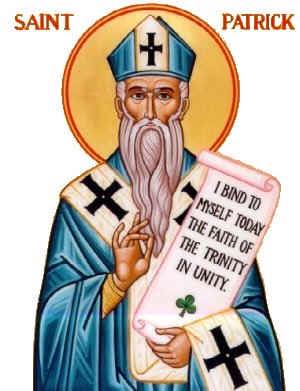
Patrick’s method of evangelizing the Irish reblogged from David Mathis

Remember Saint Patrick

March 17, 2014

Remember Saint Patrick

Saint Paddy’s Day is for the pagans.

You might say it that way, and then carefully wash your Christian hands of all the carousing and empty revelry that makes all things Irish into an excuse for a godless spring party. But you might say the same thing, and mean it not as a call to circle the wagons, but to charge the hill.

Deep beneath much of what the day has become is the inspiring mission of Patrick pioneering the gospel among an unreached people, despite the frowning face of the church establishment. Saint Patrick’s Day, in its truest meaning, is not about avoiding the lost, but bringing them good news. It turns out Saint Paddy’s Day really is for the pagans.

The Gospel to the Irish

The March 17 feast day (first declared in the early 17th century) remembers Patrick as the one who led the fifth-century Christian mission to Ireland. Unlike Britain, the Emerald Isle lay beyond the bounds of the Roman Empire. The Irish were considered uncivilized barbarians, and many thought their illiteracy and volatile emotions put them outside the reach of the gospel.

But Patrick knew better. In a strange and beautiful providence, he had spent six years among them as a captive, learned their language, and developed a heart for them. Like Joseph sold into slavery to one day save Egypt and his brothers, God sent Patrick into slavery to ready Ireland for a coming salvation.

The Surprising Turn

Patrick was born in the late fourth century — many speculate around 385 — in what is now northeast England. He was born among the Celtic “Britons,” to a Romanized family of Christians. His father was a deacon, and his grandfather a priest. But his parents’ faith didn’t find a place in his heart in his rearing. In his youth, according to George Hunter, “he lived toward the wild side” (The Celtic Way of Evangelism, 13).

But God soon arrested him with severe mercy. Kidnapped at age sixteen by Irish raiders, he was taken back to the island, where he served as a slave for six years under a tribal chief, who was also a druid. While in bondage in Ireland, God unshackled his mind and opened his eyes to the gospel of his childhood.

“God sent Patrick into slavery to ready Ireland for a coming salvation.”

And so, as a captive, “he came to understand the Irish Celtic people, and their language and culture, with a kind of intuitive profundity that is usually possible only, as in Patrick’s case, from the ‘underside’” (14). When he eventually escaped from slavery in his early twenties, he was a changed man, now a Christian from the heart. He studied for vocational ministry, and led a parish in Britain for nearly twenty years.

Reclaiming Retirement

That could have been the end of the story. But at age 48 — “already past a man’s life expectancy in the fifth century” (15) — Patrick had a dream, which proved to be his own Macedonian Call (Acts 16:9). An Irish accent pled, “We appeal to you, holy servant boy, to come and walk among us.”

Having known the language and the customs from his captivity, and having long strategized about how the gospel might come to the Irish, he now answered the call to return to the place of his pain with the message of joy. The slave returned to his captors with good news of true freedom.

Back in Saint Patrick’s Day

But this would be no ordinary mission. The Irish Celtics were “barbarians.” They may have had a few Christians among them, but as a people, they were unreached, with no thriving church or gospel movement.

“Patrick, the former slave, returned to his Irish captors with good news of true freedom.”

Patrick would take a different and controversial approach to the prevailing missionary efforts of the fifth-century church. Instead of essentially Romanizing the people, by seeking to “civilize” them with respect to Roman customs, he wanted to see the gospel penetrate to the bottom of the Irish culture and produce an indigenous movement. He didn’t mean to colonize them, but truly evangelize them.

Understanding the People

Hunter tells the story in the first chapter of his book on Celtic evangelism.

The fact that Patrick understood the people and their language, their issues, and their ways, serves as the most strategically significant single insight that was to drive the wider expansion of Celtic Christianity, and stands as perhaps our greatest single learning from this movement. There is no shortcut to understanding the people. When you understand the people, you will often know what to say and do, and how. When the people know that the Christians understand them, they infer that maybe the High God understands them too. (19–20)

Patrick knew the Irish well enough to engage them as they were, and build authentic gospel bridges into their society. He wanted to see the gospel grow in Irish soil, rather than pave it over with a Roman road.

Ministering with a Team

Essential to Patrick’s strategy was that he not fly solo. Just as Jesus sent out his disciples together (Luke 10:1), and Paul and Barnabas went out together (Acts 13:3), so Patrick assembled a close-knit team that would tackle the work together, in the same location, speaking the gospel and making disciples, before moving on together to the next tribe. It was, what Hunter calls, a “group approach to apostolic ministry.”

We have no detailed record of Patrick’s ministry teams and strategies, but according to Hunter, “from a handful of ancient sources, we can piece together [an] outline of a typical approach, which undoubtedly varied from one time and setting to another.”

“Patrick wanted to see the gospel grow in Irish soil, rather than pave it over with a Roman road.”

Patrick’s teams would have about a dozen members. They would approach a tribe’s leadership and seek conversion, or at least their clearance, and set up camp nearby. The team “would meet the people, engage them in conversation and in ministry, and look for people who appeared receptive” (21). In due course, “One band member or another would probably join with each responsive person to reach out to relatives and friends” (22).

They would minister weeks and months among them, eventually pursuing baptisms and the founding of a church. They would leave behind a team member or two to provide leadership for the fledgling church and move, with a convert or two, to the next tribe. With such an approach, the church which grew up among the people would be “astonishingly indigenous” (22).

Priority Time with Pagans

While Patrick’s pioneering approach is increasingly celebrated today — and is a model, in some respects, of the kind of mission needed in our increasingly post-Christian society — most of his contemporaries weren’t impressed. “The British leaders were offended and angered that Patrick was spending priority time with ‘pagans,’ ‘sinners,’ and ‘barbarians’” (24).

But Patrick knew such an approach had good precedent. The one who saved him while a nominal Christian and an Irish captive was once called a “friend of tax collectors and sinners,” and said, “I came not to call the righteous, but sinners” (Mark 2:17). The stakes were high, but he knew it was worth the risk.

Something Worth Remembering

Instead of acquiescing to the religious establishment, Patrick took the gospel to the uncouth, and ventured all for the unreached Irish. Instead of coasting toward a cushy retirement, he gave nearly three decades to the nation-transforming evangelization of Ireland. Patrick truly was for the pagans.

According to tradition, Patrick died March 17. Many think the year was 461, but we don’t know for certain. While today’s trite celebrations may leave much to be forgotten, for those who love Jesus and the advance of his gospel, Patrick has left us some remarkable things to remember. And to learn from.


Related Articles

“Patrick took the gospel to the uncouth, and ventured all for the unreached Irish.”