Author Archives: Pastor Jim Driskell, Lutheran Church

Unknown's avatar

About Pastor Jim Driskell, Lutheran Church

I am the pastor of Trinity Lutheran Church in Chestertown, Md. I pray that you will come and worship with us, worship is 10 am Sundays. We are a renewal church and we are lifting God up in classical worship, and being faithful disciples of our Lord Jesus Christ. 101 Greenwood Av, Chestertown. Plenty of parking behind the church.

It’s God’s will, we are in His will or we are condemned.

What seems to be missed by people is this idea that there are “choices”. When it comes right down to it, there really aren’t. Sure there are choices that you make like, I like the whopper better than I like the Big Mac. I like the Red Sox, I don’t like the Yankees. What house I’m going to buy, yea, maybe. When it comes right down to it, like it or not, the real choices are in God’s hand. We are either in His will or we are separated from His will.

That doesn’t mean we sit and obsess if we really can’t discern God’s will. A lot of times in my life, I can honestly say that I knew what His will was/is, and He made it very plain how I should follow it. At other times, I did the best I could, put it in prayer and trusted Him that what i was doing was the way He wanted. I can’t say that I was always right or that I did it faithfully, that I did it according to His will. Sometimes, frankly, I have to admit I didn’t even take His will into account. Seemed obvious, jumped in and then afterwards realized that I should have given it more time, more work, more consideration. As in anything in humans, we’re just not going to be perfect. We do the best we can to pull it together, to execute the plan and then leave it in His hands. Sometimes it doesn’t work because He wanted us to do it and He used it to His own will, even if it seemed that it wasn’t such a good deal to us. “ESV Romans 8:28 And we know that for those who love God all things work together for good, for those who are called according to his purpose.” [Bible Works]

I am trying to write, that for those who pursue this attitude, that God is somehow unfair, because many go to Hell, Jesus made it very clear that many would chose to ignore Him, that they would chose their own path: ” ESV Matthew 7:13 “Enter by the narrow gate. For the gate is wide and the way is easy that leads to destruction, and those who enter by it are many. 14 For the gate is narrow and the way is hard that leads to life, and those who find it are few.” [Bible Works]
Dr Martin Luther in his book Bondage of the Will addresses the idea that there is “free-will” in terms of our salvation. The idea that we are in some way “free agents”. The only way that works is God’s way in Jesus. Any “free-will” is purely from Satan and puts the individual on the path of destruction.

Luther writes: “You describe the power of ‘free-will’ as small, and wholly ineffective apart from the grace of God [Luther’s NB – As in those who lack grace (special grace, I mean) reason is darkened but not destroyed so it is probable that their power of will is not wholly destroyed, but has become ineffective for upright actions.’] Agreed? Now then, I ask you: if God’s grace is wanting, if it is taken away from that small power, what can it do? It is ineffective, you say, and can do nothing good. So it will not do what God or His grace wills. Why? Because we have now taken God’s grace away from it, and what the grace of God does not do is not good. Hence it follows that ‘free-will’ without God’s grace is not free at all, but is the permanent prisoner and bondslave of evil, since it cannot turn itself to good…it is ineffective apart from God’s grace, straightway you rob it of all its power. What is ineffective power but (in plain language) no power? So to say that ‘free-will’ exists and has power, albeit ineffective power, is, in the Sophists’ phrase, a contradiction in terms. [Luther’s NB – oppositum in adiecto]” p 104

“…that we do everything of necessity, and nothing by ‘free-will’; for the power of ‘free-will’ is nil, and it does no good, nor can do, without grace … The term ‘free-will’ is too grandiose and comprehensive and fulsome. People think it means what the natural force of the phrase would require, namely, a power of freely turning in any direction, yielding to none and subject to none. If they knew that this was not so, [p 105] and that the term signifies only a tiny spark of power, and that utterly ineffective in itself, since it is the devil’s prisoner and slave,…” [p 106]

“…However, with regard to God, and in all that bears on salvation or damnation, he has no ‘free-will’, but is a captive, prisoner and bondslave, either to the will of God, or to the will of Satan.” [p 107]

You have either stopped resisting what God is doing to you and are chosen by Him to be your Lord, or your right where you are because you have resisted the Holy Spirit and simply want to wallow in where you are. If you aren’t in Jesus, you are already condemned. While you continue to assert your own will, to think it’s all about you, that you are the master of your own fate, then it’s just another way for Satan to assert his control over you. If you come to the realization, that God is in control, that it really isn’t about you, that it’s all about what the Holy Spirit is doing in you, then you are saved.

Once we accept that it is about God and His will, that what we do outside His will is separation from God, that separation is Hell, is condemnation. There is no will for salvation other than God’s. Anything is the path to destruction. Separation from God is Hell.

In Revelation 12: 7-17 and 13:5-8 God has removed His hand from earth, Basically He has said that this is the end, that there is no more grace and man is left to his own devices. Honestly, how do you really think that’s going to work out? I know there are times when things look crazy and out of control, but God is still very much in control. The difference will be very obvious when Satan rules and there will then be unrestrained evil. We like to think we are somehow able to conduct ourselves properly, but when God removes His hand, when God simply allows us to do our own will, is there any doubt that the outpouring of evil, of violence, of greed will be absolutely stupefying? Is there really any doubt in anyone’s mind that when God has removed the Holy Spirit, when Satan rules that there will be unrestrained evil? This is what those who reject God will have, what they’ve accepted, there will be survival of the fittest. They don’t want God’s control, His blessing, although they think they’re entitled to the benefits of His blessing. They don’t realize what unrestrained evil is and they’ve shown that they really don’t care. And we’ve all met people that fill that bill, there are those who are obvious and the rest, not so obvious.

God is good, God is perfectly Holy. Being in a downtown church, being in the inner-city, albeit a small city, there are still lots of people who will knock on the church door and expect that I will just hand over money to them. In more subtle ways, there are plenty of people out there who have the same attitude, they expect God to hand over everything, including salvation on their terms. Then they will accuse God of not being “good” because He won’t save them! God is perfectly good, not according to our individual agenda (let’s face it, there’s God’s agenda, then there’s yours. In the end, which one do you really think is going to win out?)

God is perfectly good, perfectly holy, perfectly all knowing, all powerful, transcendant beyond anything that we can understand. Your agenda is just not going to be perfectly good, come on, it’s going to be covered in sin, if not completely submerged. It’s all of us, we are all completely unredeemed sinners and the only way to redemption is through Christ, The Son of God. God certainly does have an agenda, He revealed it, in His revelation, the Bible. We look to God for Him to guide us in how we fit in that agenda. Not our way, but His. Certainly that agenda is different for different people. If you are a great Christian mom, or Christian office worker, or Christian soldier/sailor, or Christian plumber, Christian factory worker, does that not serve God? We are put where we are at to serve God to the best of our ability, to be the best Christian factory worker we can as a witness to those around us to Jesus. We like to think that it’s all about us, it’s all about our control. Let’s face it the more you try to assert control, the more you realize that you just don’t have control. You can keep wrestling with God over it or figure out that it is all about Him and not about you. When we stop resisting the leading of the Holy Spirit and surrender to His will, when we are concerned about God’s agenda and not ours, when you trust His control, His will, and operate our life accordingly, It may not be “easy”, but it will be much easier then struggling against God.

The more you tighten your grip, Satan …

chris's avatarGod in this life and the next

The more you tighten your grip, Tarkin, the more star systems will slip through your fingers.

Just in case you don’t recognize it, the quote above is from Princess Leia in Star Wars.

The title – that’s from me.


Now it may surprise you to learn that in His efforts to get permanent possession of a soul, He relies on the troughs even more than on the peaks; some of His special favourites have gone through longer and deeper troughs than anyone else.

And that line is from C. S. Lewis, in the Screwtape Letters.  If you’re not familiar with it, it’s Screwtape (a devil) talking to his nephew (a devil in training) about how God uses the low points in people’s lives.  And how God’s special people seem to go through longer and deeper troughs than most.


Suffering for Being a Christian

1Pe 4:12 Dear friends, do not be…

View original post 675 more words

Sharing thoughts and music for Easter and Good Friday from Paul Burkhart

thorns

Around the Web: Holy Week Edition

by on March 30, 2015

This week is Holy Week. And though we are in the final days before the highest annual joy of the Christian Calendar–Easter–these days are meant to be marked by the deepest and most difficult times of meditation on suffering and death. The inner tension is to be cranked up high so that when Easter comes, we feel a tangible relief in our worship and adoration. And so, this week, we dive deep into the Darkness and Death that grips the world, to prepare for God’s overcoming in raising Jesus.

First, though, we need a soundtrack for this week. 

To that end, my I suggest my two favorite pieces of music for this time. First, is Mozart’s Requiem. The final piece he wrote before he died–itself a meditation on death. This is the most powerful performance I know of this astonishing piece:

The second is Sergei Rachmaninoff’s Vespers, intended for use in the Russian Orthodox Church on Holy Saturday, the day of silence following the Crucifixion. It’s meant to hold us in that dark, yet shimmering tension between twilight and dawn. Here is my favorite recording I’ve been able to find:

Now for other helps in this time.

Last week, Jesus called Home a church planter and writer whose words have impacted many. Her name was Kara Tippetts, and her blog Mundane Faithfulness became a place in which she walked the world through her process of dying. Her heart was so beautiful. She wrote a powerful letter upon her death that we should all read this week.

Ann Voskamp, one of the most beautiful writers alive today, wrote a stunning tribute to Tippetts. It will move your soul. It so beautifully brings us into this Holy Week, meditating on the lament and beauty of pain, suffering, death, and life, and how Kara reminded us how to die well.

Speaking of dying well, I can’t suggest enough Rob Moll’s book The Art of Dying. It strengthens, encourages, and teaches us how to reclaim this ancient Christian discipline.

Last week, The New York Times posted this beautiful reflection by Jo McElroy Senecal on the process of watching loved ones die. As a counselor herself, she brings an insight into what this does to us and how we grow in a world so full of Death.

As seminarians, we need to feel the depths and woundedness of our humanness, and that even means connecting with and inhabiting the space of non-Christians. The greatest contemporary writer on Death that I know is Julian Barnes, in his memoir Nothing to be Frightened Of. In it, Barnes–not a Christian–gives insight into the fear and pain of facing death without God. And as future ministers, if we have nothing we could say to how he processes this, we should figure it out.

Ben Myers, professor at United Theological College in Sydney, has this brief post on the Cross, that brings us into the heart of its mystery, brokenness, and beauty.

Lastly, I will leave you with this quote by G.K. Chesterton, from Orthodoxy:

When the world shook and the sun was wiped out of heaven, it was not at the crucifixion, but at the cry from the cross: the cry which confessed that God was forsaken of God. And now let the revolutionists choose a creed from all the creeds and a god from all the gods of the world, carefully weighing all the gods of inevitable recurrence and of unalterable power. They will not find another god who has himself been in revolt. Nay (the matter grows too difficult for human speech), but let the atheists themselves choose a god. They will find only one divinity who ever uttered their isolation; only one religion in which God seemed for an instant to be an atheist.

May you all have a fruitful Holy Week.

photo credit

About

Frequenting the coffee shops of Philadelphia while employed in social work and finishing up a Masters of Divinity from the Newbigin House of Studies at Western Theological Seminary. He serves Liberti Church as a deacon and seminary intern. Paul blogs at the long way home and tweets as @PaulBurkhart_.

thorns

Around the Web: Holy Week Edition

by on March 30, 2015

This week is Holy Week. And though we are in the final days before the highest annual joy of the Christian Calendar–Easter–these days are meant to be marked by the deepest and most difficult times of meditation on suffering and death. The inner tension is to be cranked up high so that when Easter comes, we feel a tangible relief in our worship and adoration. And so, this week, we dive deep into the Darkness and Death that grips the world, to prepare for God’s overcoming in raising Jesus.

First, though, we need a soundtrack for this week. 

To that end, my I suggest my two favorite pieces of music for this time. First, is Mozart’s Requiem. The final piece he wrote before he died–itself a meditation on death. This is the most powerful performance I know of this astonishing piece:

The second is Sergei Rachmaninoff’s Vespers, intended for use in the Russian Orthodox Church on Holy Saturday, the day of silence following the Crucifixion. It’s meant to hold us in that dark, yet shimmering tension between twilight and dawn. Here is my favorite recording I’ve been able to find:

thorns

Around the Web: Holy Week Edition

by on March 30, 2015

This week is Holy Week. And though we are in the final days before the highest annual joy of the Christian Calendar–Easter–these days are meant to be marked by the deepest and most difficult times of meditation on suffering and death. The inner tension is to be cranked up high so that when Easter comes, we feel a tangible relief in our worship and adoration. And so, this week, we dive deep into the Darkness and Death that grips the world, to prepare for God’s overcoming in raising Jesus.

First, though, we need a soundtrack for this week. 

To that end, my I suggest my two favorite pieces of music for this time. First, is Mozart’s Requiem. The final piece he wrote before he died–itself a meditation on death. This is the most powerful performance I know of this astonishing piece:

The second is Sergei Rachmaninoff’s Vespers, intended for use in the Russian Orthodox Church on Holy Saturday, the day of silence following the Crucifixion. It’s meant to hold us in that dark, yet shimmering tension between twilight and dawn. Here is my favorite recording I’ve been able to find:

Now for other helps in this time.

Last week, Jesus called Home a church planter and writer whose words have impacted many. Her name was Kara Tippetts, and her blog Mundane Faithfulness became a place in which she walked the world through her process of dying. Her heart was so beautiful. She wrote a powerful letter upon her death that we should all read this week.

Ann Voskamp, one of the most beautiful writers alive today, wrote a stunning tribute to Tippetts. It will move your soul. It so beautifully brings us into this Holy Week, meditating on the lament and beauty of pain, suffering, death, and life, and how Kara reminded us how to die well.

Speaking of dying well, I can’t suggest enough Rob Moll’s book The Art of Dying. It strengthens, encourages, and teaches us how to reclaim this ancient Christian discipline.

Last week, The New York Times posted this beautiful reflection by Jo McElroy Senecal on the process of watching loved ones die. As a counselor herself, she brings an insight into what this does to us and how we grow in a world so full of Death.

As seminarians, we need to feel the depths and woundedness of our humanness, and that even means connecting with and inhabiting the space of non-Christians. The greatest contemporary writer on Death that I know is Julian Barnes, in his memoir Nothing to be Frightened Of. In it, Barnes–not a Christian–gives insight into the fear and pain of facing death without God. And as future ministers, if we have nothing we could say to how he processes this, we should figure it out.

Ben Myers, professor at United Theological College in Sydney, has this brief post on the Cross, that brings us into the heart of its mystery, brokenness, and beauty.

Lastly, I will leave you with this quote by G.K. Chesterton, from Orthodoxy:

When the world shook and the sun was wiped out of heaven, it was not at the crucifixion, but at the cry from the cross: the cry which confessed that God was forsaken of God. And now let the revolutionists choose a creed from all the creeds and a god from all the gods of the world, carefully weighing all the gods of inevitable recurrence and of unalterable power. They will not find another god who has himself been in revolt. Nay (the matter grows too difficult for human speech), but let the atheists themselves choose a god. They will find only one divinity who ever uttered their isolation; only one religion in which God seemed for an instant to be an atheist.

May you all have a fruitful Holy Week.

photo credit

About

Frequenting the coffee shops of Philadelphia while employed in social work and finishing up a Masters of Divinity from the Newbigin House of Studies at Western Theological Seminary. He serves Liberti Church as a deacon and seminary intern. Paul blogs at the long way home and tweets as @PaulBurkhart_.

\

Now for other helps in this time.

Last week, Jesus called Home a church planter and writer whose words have impacted many. Her name was Kara Tippetts, and her blog Mundane Faithfulness became a place in which she walked the world through her process of dying. Her heart was so beautiful. She wrote a powerful letter upon her death that we should all read this week.

Ann Voskamp, one of the most beautiful writers alive today, wrote a stunning tribute to Tippetts. It will move your soul. It so beautifully brings us into this Holy Week, meditating on the lament and beauty of pain, suffering, death, and life, and how Kara reminded us how to die well.

Speaking of dying well, I can’t suggest enough Rob Moll’s book The Art of Dying. It strengthens, encourages, and teaches us how to reclaim this ancient Christian discipline.

Last week, The New York Times posted this beautiful reflection by Jo McElroy Senecal on the process of watching loved ones die. As a counselor herself, she brings an insight into what this does to us and how we grow in a world so full of Death.

As seminarians, we need to feel the depths and woundedness of our humanness, and that even means connecting with and inhabiting the space of non-Christians. The greatest contemporary writer on Death that I know is Julian Barnes, in his memoir Nothing to be Frightened Of. In it, Barnes–not a Christian–gives insight into the fear and pain of facing death without God. And as future ministers, if we have nothing we could say to how he processes this, we should figure it out.

Ben Myers, professor at United Theological College in Sydney, has this brief post on the Cross, that brings us into the heart of its mystery, brokenness, and beauty.

Lastly, I will leave you with this quote by G.K. Chesterton, from Orthodoxy:

When the world shook and the sun was wiped out of heaven, it was not at the crucifixion, but at the cry from the cross: the cry which confessed that God was forsaken of God. And now let the revolutionists choose a creed from all the creeds and a god from all the gods of the world, carefully weighing all the gods of inevitable recurrence and of unalterable power. They will not find another god who has himself been in revolt. Nay (the matter grows too difficult for human speech), but let the atheists themselves choose a god. They will find only one divinity who ever uttered their isolation; only one religion in which God seemed for an instant to be an atheist.

May you all have a fruitful Holy Week.

photo credit

About

Frequenting the coffee shops of Philadelphia while employed in social work and finishing up a Masters of Divinity from the Newbigin House of Studies at Western Theological Seminary. He serves Liberti Church as a deacon and seminary intern. Paul blogs at the long way home and tweets as @PaulBurkhart_.

John the Baptist proclaims the arrival of Jesus John 1 19-34 homily and Bible study on KFUO radio

Pastor Jim Driskell, Lutheran Church's avatarPastor Jim Driskell

The following is the text for my homily message on KFUO radio on February 5, The first link is for the discussion on John the Baptist. The second link is my homily on John 1: 19-34

ESV John 1:19 And this is the testimony of John, when the Jews sent priests and Levites from Jerusalem to ask him, “Who are you?”20 He confessed, and did not deny, but confessed, “I am not the Christ.”

21 And they asked him, “What then? Are you Elijah?” He said, “I am not.” “Are you the Prophet?” And he answered, “No.”

22 So they said to him, “Who are you? We need to give an answer to those who sent us. What do you say about yourself?”

23 He said, “I am the voice of one crying out in the wilderness, ‘Make straight the way of the Lord,’ as the prophet Isaiah said.”

View original post 1,184 more words

Sponsoring children through Christian organizations really works

Pastor Jim Driskell, Lutheran Church's avatarPastor Jim Driskell

My wife and I sponsored a child in Indonesia for a number of years, until he turned 18 and started his life. It was interesting to get mail from him and to write back and to learn about him, his family and life in Indonesia. It would be great to hear back from him. Life kind of got in the way with us, four years of active duty, four years of seminary and over four years getting started in ministry kind of got us off that track. Based on the following we should get back on track. Based on the following from Christianity Today, these sponsorship programs do work. (Bruce Wydick June 2013 pp 22, 23)

The study was done on Compassion International that dates back to the time of the Korean War. The organization started in the United States, was set up to support Korean children during and after…

View original post 467 more words

Just a routine day, almost.

The ocean/sea can go from being calm, beautiful and enjoyable to a tempest, gray and ugly and threatening very quickly. Sure we get storms that come on us quickly on the land, but it’s not like our feet are rocking back and forth and we can’t see where we are or where we’re going.

I’ve had at least two major occasions when we are out cruising in calm, even pleasant weather and then out of no where have dangerous weather just descend on our boat.  Both times there was just no where to go find shelter and we didn’t have that option. If we got caught in sudden bad weather, you can imagine others less trained, experienced and equipped got caught in the same weather and now require help.  It doesn’t take much on the ocean to alter your situation so much that you are facing very real danger or you’ve already been seriously injured, tossed into the sea or even killed.  Ending up in the water off of Massachusetts is a very dangerous situation. You may think you can swim to shore, but I don’t think I’ve ever heard of it happening. The ocean may look inviting but even strong, conditioned, experienced swimmers can quickly end up in life-threatening situations. Often people will go out in vessels that are just not designed or equipped for sea travel and it can often end up killing you.

A buddy of mine and I were assigned to the Group Boston Aids to Navigation Team (ATON). It was an interesting four years. It was good experience and good training and the Boston area is so rich in maritime history we got to be at sites and work on buildings that most people would never see. Certainly the iconic Boston Light House and other lesser known but just as impressive structures. There’s Graves Light, which sounds forbidding and it actually is.  It is almost at the entrance of Boston Harbor almost out of sight of land, but oddly surrounded by rocks, ledges and other low water.  Many Mariners not really aware of the area have not made it home ending up on the dangers around Graves. Many think it’s named Graves because of that, but it’s actually named after a British Admiral named Graves. There’s Minots light which also guards very treacherous water. We had one case, the subject managed to wend their way inside the rocks and ledges and then realized they couldn’t get out. Of course it was the middle of the night and we had to pick our way in to get them and then gently and gingerly pull them out with us.

As I said in this particular occasion we were assigned to the ATON team. Since we both had much experience in the area and driving boats and it was our job rating we would often shuttle people out to different locations by boat to do different kinds of work. Boston Light was the last manned lighthouse and so it required additional attention to accommodate the Coast Guard personnel that had to live out there two weeks at a time.

In respect to that we had just finished a day of work helping electricians do work out on Boston Light and were transporting them back to Boston which is, usually, a rather pleasant boat trip. This one would be challenging.

We were just using a small work boat big enough to transport four Electronic Technicians (ET) and their equipment out and back.  We were just approaching the main channel when the emergency radio frequency just went berserk. As we looked into Boston we could see why. There was this monstrous blue/green cloud cover and from what we could pick out from the babble on the radio it was producing torrential downpours and very dangerous lightning. We really had no time to react and it was on us. We had no special navigation equipment on this boat and in this weather probably wouldn’t have helped anyway. Heavy downpours can just blank out radar and can also cut off satellite GPS. (like when a heavy downpour blanks out your satellite television at home).

So there we are, this is definitely the most intense thunderstorm I’d been in and I think the other guy. I know for sure it was for the ETs cowering in the boat cabin. I was outside with no foul weather gear on because it really wasn’t necessary when we started and it was hardly the first time I’d received a good hose down. I was trying to figure out where we were and where we are going it doesn’t take much for a small boat to get pitched around and going in a direction you don’t want to go. Inside Boston Harbor there are plenty of areas that you don’t want to hit either. We figured it out and were proceeding very carefully. It was mid-summer so getting hosed down was kind of fun.

The lightning was so intense I can only describe it by imagining what it would be like under artillery attack. Although it was so thick I couldn’t see the lightning I could very much hear it hitting and got that ozone smell of lightning disrupting the atmosphere. We may not have been at risk for artillery shrapnel, but even a close hit could have taken us out or at least disrupted the boat’s electronics and shut down the engine.

We made it through and my buddy and I thought it was great fun. That sentiment was not shared by the ETs who were expecting a routine uneventful day. Twenty nine years in the Coast Guard on the water taught me that sure there are routine days, but those days can get dangerous quickly and might just ruin your day.

There is no option to God, Hell is the default setting

I really do get tired of hearing this whiney argument; “How can a “good” God send anyone to Hell?”

Frankly I think you’ve answered your own question. He is not just “good” He is perfect, perfectly holy. Holy means sanctified and also set apart. God is far above anything of man, He is perfectly good and holy.  By its very nature, perfectly holy and good cannot abide sin, will not abide sin. By definition, if we are sinful, we cannot be holy. Sin cannot make itself holy, we do not have the capability to change our nature. Certainly God does. When we are born again in baptism, we become new creatures Paul tells us this. We have been born in the righteousness of Christ and because of that we can be perfect and holy and be in the presence of the Father. Why would God allow you in His presence when you essentially reject Him when you make yourself more important than God? You’re not and you are still very much a sinner, and God will not, cannot allow you in His presence. Why should He tolerate your unrepentant sin?  If you don’t meet His standards He’s not going to allow you into His presence and the only way you can meet His standards is to be in and covered by the righteousness of Jesus. Jesus paid for all of your sins and therefore has enabled you to be saved. The Father offered this as the only way to eternal life. Anything else is just out of man’s imagination and isn’t going to do anything for anyone. You’ve just made it up, how can it be anything else?

If God’s not going to allow you in His presence there is only one alternative.  This isn’t an exact metaphor, but if you don’t buy a ticket for the plane to Hawaii, how can you expect to end up in Hawaii?  As I said there’s only one other place, that is Hell. If you chose to be separated from God this is eternal separation.

Usually it’s the person who is stuck in their sin and just doesn’t want God. But they still expect a perfectly holy God to just accept their sin and allow them to continue to do what they want. That’s just living in denial, that’s just not reality. You need to get over yourself, you are not the final authority. Not everyone is here for your convenience, that especially includes God the Father. If these other things in your life are more important, how do you figure that God is at all concerned about doing it your way?  It’s just not about you, it is entirely about God.

God has given us a way, and that is the way we need to go and put aside our wants, our sin and focus on what God wants. No we are never going to be perfect, but we do need to be in God’s will in Jesus where the Holy Spirit works on us, and not leaving it up to our own whims, as if that’s the most important thing.

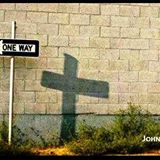
A loving God doesn’t send anyone to Hell. But I get it, it’s a one-way street for you! You expect God to love and fall all over Himself for you, but you just go out and continue to run the life He gave you right into the ground, just doing whatever your little heart desires. Wow they name streets after people like you, ya “one-way”. Please explain to me how that makes any sense.

They have a saying for that in boot camp “mama may have been that way to you, but you’re mama ain’t here. For those of us who are grown ups we realize that it was nice when mama let us have our way, but now we live in a very real world.  We can live according to God’s will and live a life of strength and faith, or a delusional world of our own that ends up in destruction. Time for you to grow up and be an adult, especially you men.  Whether they want to admit it, you have a responsibility to your wife and children to live that example as a man of God. Too many wives and children are lost because of weak men, that means all those guys who think it’s about the world and themselves. Ya, you! Snap out of it and get a grip, it’s only about God, it’s only the weak willed man who thinks it’s about him or anything else.

There is no “choice” the default is to Hell. You only have yourself to blame in that situation. So get over yourself and your prissy attitude “well if God loves me, He’ll do whatever I want…”  You may have had an over indulgent mommy, but now it’s real world.  If you reject God, the default is Hell, you sent yourself.

Intelligent Design the complexity of the cell and how God designed it

More and more, credible scientists, those who are looking for truth and not pursuing an agenda, are coming to terms with the understanding that so much of what they observe from the cell to the universe is fitted together so precisely that it could only be done by a all powerful Creator and Designer, what we Christians would call God.

More and more science is seeing “intelligent Design” as unavoidable. Just the intricate design of the cell, of which the human body consists of millions, could simply not have happened by accident.

The problem is, that the fundamentalists, the biased priests of the faith of “Evolution”, “Darwinism”, live in a state of constant denial. Don’t try to confuse me with  the facts of actual science, my faith dictates that there is no God. Part of that is the result of being hurt, suffering trauma and striking back at God. Another reason is that they have a particular life style, and like a 15 year old adolescent, tenaciously clinging to their sin instead of submitting to a loving, forgiving Father, they simply deny God and try to sell everyone that they should live however they want in order to “be happy”, “be fulfilled”. You know “don’t judge me” whine. Well we’ve certainly seen the results in society, slavery to sin of substance abuse, sexual addiction, worshipping money, things, lifestyles and just refusing to realize the destructive results.

I could certainly go on, I doubt anyone out there would argue with me on that, but I thought I would straight reblog from an actual scientist. Dr Howard Glicksman MD is a Medical Doctor in private practice in Florida. I have taken his blogs off the Discovery Institute in which he writes about the cell. I have also included the link to the “Discovery Institute” which consists of writings from objective scientists on many issues.

http://www.evolutionnews.org/intelligent_design/

How the Body Works: Intelligent Design in Action

Howard Glicksman February 26, 2015 5:00 AM | Permalink

Editor’s note: Engineers and physicians have a special place in the community of thinkers and scholars who have elaborated the argument for intelligent design. Perhaps that’s because, more than evolutionary biologists, they are familiar in very practical ways with the challenges of designing or maintaining a functioning complex system on the order of a jet airplane, or the human body. With that in mind, Evolution News & Views is delighted to introduce a new series, “The Designed Body,” and to welcome Howard Glicksman MD as a contributor. A graduate of the University of Toronto (1978), he presently practices palliative medicine for a hospice organization. Here, Dr. Glicksman explains the rationale behind the series.

Have you ever wondered why it’s so hard to hold your breath, or how your body automatically matches your breathing with your level of activity? Whether you’re running to catch a bus, talking to friends, or just sleeping on the sofa, your body seems to know just how fast and hard you should breathe.

Or have you wondered why even if you go hours or days without eating, your body automatically makes sure it has enough glucose in your blood so you can keep doing what you want to do?

To understand such things you must first know how the laws of nature affect the body and how it must work against them to stay alive.

Everything in the world is made up of matter. All matter consists of many different types of atoms chemically bonded to form different types of molecules. All matter mustfollow the rules of physics and chemistry. Just like our planet where two-thirds is covered by water and one-third by land, our body is roughly two-thirds water and one-third other matter. But, unlike most of the earth, our “water and dust” is organized for life. The body is made up of trillions of cells each of which contains trillions and trillions of atoms and molecules. Since our cells are made up of atoms and molecules, this means that they too must obey the laws of nature.

We each experience these natural forces every day: inertia, friction, momentum, gravity, and heat transfer, to name a few. Experience teaches that, due to the laws of nature, our body has definite physical and chemical limitations. Jump down from a high ledge and you’re likely to break your leg because of the force of gravity and the fact that your leg is made of bone, not rubber. Put your hand into a fire and you’re likely to burn your fingers due to the transfer of heat energy and the fact that your body is mostly made of flesh, not asbestos. Breathing in enough air to match your level of activity, and making sure there’s enough glucose in your blood to provide enough energy to all of your cells, are just two of the ways your body must follow the rules to win in the game of life.

But, like in any game, to follow the rules means that you must first take control. If you’re playing baseball you can’t hit the ball just anywhere or run the bases any which way. By taking control you must try to keep the ball in fair territory and run the bases correctly. So too, your body must be able to take control of many different chemicals and functions.

However, whether the context is baseball or the battle for survival, experience tells us that just following the rules and taking control don’t automatically mean that you’ll win. At the end of the baseball game, if your opponent has scored more runs than you have, then you’ve lost. So too, if the body doesn’t have just the right level of oxygen, or glucose, or water, or salt, or calcium, or red blood cells, or white blood cells, or blood pressure, or temperature, then it can’t stand up to the laws of nature. It loses the game of life, and dies. In other words, real numbers have real consequences.

Death is an inevitable consequence of life and the mechanisms that result in its taking place should be fully understood and incorporated into any theory of how life came about.

If you really want to understand how life came into existence you must first understand how easily it can become non-existent. Just as a mechanic knows that there are many different ways a car can “die,” so too every physician knows that there are many different pathways to death. Theories about life that only describe where the different parts may have come from, or even how they may have come together to perform a specific function, as difficult as that may be, are not good enough. For medical science knows that when the body has allowed the rules of physics and chemistry to take over, having lost control and not being able to maintain the right level of any one chemical or vital function, then the consequence is death.

Some people believe that life came into being by chance and the laws of nature alone. Darwin was an excellent observer of nature but he had no idea how life actually works at the cellular or molecular levels. All clinical experience teaches that trying to explain how human life came into being just by looking at ancient bones, without considering their complicated cellular structure and physiology along with their vital importance in heart, nerve, gland, muscle, and clotting function, is like trying to explain how airplanes came into being just by looking at the fuselage, the wings, the tail section, and the engines without considering, among other things, modern metallurgy, jet propulsion, aerodynamics, and electronics.

In this series, I plan to show how the body works and how the only plausible explanation for its ability to combat the laws of nature and survive in the world are the many physiological innovations that must have come about through intelligent design.

Contrary to what evolutionary biologists would have us believe, medical experience shows that when left to their own devices, chance and the laws of nature cause disability and death, not functional ability and life. Looking at one important chemical and physiological parameter of body function at a time, I propose to explain its vital significance and how the body goes about controlling it to stay alive.

Finally, using clinical experience, I will discuss what happens when things go wrong and organ malfunction takes place.

It is my hope that what I have to say will empower you to defend yourself from what I think is the greatest intellectual and spiritual error in human history: the idea that human life has come about by chance and the laws of nature alone.

Image by yftahp (אני יצרתי) [CC BY-SA 3.0], via Wikimedia Commons.

Each Cell in Your Body Is a Walled City Besieged by Enemies

Howard Glicksman March 2, 2015 3:53 AM | Permalink

Editor’s note: Engineers and physicians have a special place in the community of thinkers and scholars who have elaborated the argument for intelligent design. Perhaps that’s because, more than evolutionary biologists, they are familiar in very practical ways with the challenges of designing or maintaining a functioning complex system on the order of a jet airplane, or the human body. With that in mind, Evolution News & Views is delighted to present this new series, “The Designed Body,” and to welcome Howard Glicksman MD as a contributor. A graduate of the University of Toronto (1978), he presently practices palliative medicine for a hospice organization. Find Dr. Glicksman’s introduction to the series here.

Just as a brick is the basic building block of a wall, the human cell is the basic functioning unit of the human body. Our body has about a hundred trillion of them. And just as with a brick wall, the requirement that it not collapse means being sturdy enough to stand up to the forces of nature, our cells likewise need to stand up to nature. For this reason, and others, the two hundred different types of cells in the body have common features that allow them to follow the rules to live, grow, and work properly.

In Darwin’s day, a cell was considered to be just a bag of chemicals containing within it various structures of unknown function. During the last century it has been shown that the cell is a huge software-driven micro-sized city containing many different nano-sized buildings with programmed pico-sized machines that are able to use energy to build the structures and perform the functions necessary for life. Here is a brief summary of some of the aspects of the human cell which must first be understood to appreciate why it must take control to survive in the world.

A very thin wall, called the plasma membrane, surrounds the cell. The plasma membrane defines the limits of the cell and separates it from other cells and from the outside world. It serves to keep what is needed inside the cell and what is not needed outside the cell. The important chemicals and vital structures of the cell would not be very useful if they were not kept in one place.

The main substance of the cell, which fills up the space within the plasma membrane, is a fluid called the cytosol. The cytosol consists of water with different chemicals dissolved within it. The amount of water inside the cell is its volume and the total number of chemical particles dissolved within each unit volume of water is its concentration. The cytosol is said to be more concentrated when there are more chemical particles per unit volume of water and less concentrated when there are fewer chemical particles per unit volume of water. Also, for a given number of chemical particles in the cytosol, an increase in volume results in a decrease in concentration and a decrease in volume results in an increase in concentration.

Each cell not only consists of water, but is also surrounded by water. The water inside the cell has a high concentration of potassium and protein and a low concentration of sodium. The water outside the cell has a high concentration of sodium and a low concentration of potassium and protein. In other words, the chemical make-up of the water inside the cell is exactly the opposite of the water outside. The plasma membrane serves to separate the two different solutions from each other.

Since the water in the cell takes up space, it applies a certain amount of pressure against the plasma membrane. Think of a bicycle tire. The more it is pumped up, the more air pressure is applied against the tire wall. Since the plasma membrane is made up of matter with a specific structure, like the bicycle tire, it too has physical limits when it comes to remaining intact and functional under pressure.

Suspended within the cell are structures, called organelles, and important proteins which together perform functions that allow for life. These include the nucleus, which contains the genetic information the cell needs to live and reproduce, the mitochondria, where the energy for cell function is obtained, the rough endoplasmic reticulum and the golgi apparatus, which are the factories that produce proteins, the lysosomes, which are the recycling plants where used cellular material is broken down, and the microtubules and microfilaments, which are the supportive cytoskeleton that allows the cell to alter its shape in response to changes in its environment.

Now consider what some of the laws of nature demand for the cell to survive in the world. Real numbers have real consequences. If the cell can’t take control to follow the rules, then life will quickly turn into death.

Whether it’s a mountain, a molehill, or a molecule, all material objects have mass and so energy is needed to change them. Therefore, to produce, move, or control anything requires that the cell have enough energy. Like a light bulb short on electricity or a car short on gas, without enough energy the cell is as good as dead.

The chemical content in the cell must be kept relatively constant for it to live and work properly. This means that the fluid inside the cell must maintain its high level of potassium and protein and its low level of sodium. If the chemical content of the cell isn’t in the right range, then the cell dies a quick death.

Finally, as noted above, the plasma membrane surrounding the cell has definite physical limitations and is therefore sensitive to changes in pressure. Think of blowing up a balloon. There is only so much air pressure the wall of the balloon can handle before it explodes. So too the volume of the cell must be kept within certain limits. If the water pressure against the plasma membrane rises too high, then, as with a balloon, cell death will take place, literally by explosion.

Note, too, that the cell is not self-sufficient. To survive it needs to constantly receive new supplies of chemicals, like glucose, for energy. It must also constantly rid itself of toxic chemicals, like carbon dioxide from the breakdown of glucose. However, to survive, the cell faces a major dilemma. In letting these chemicals pass through its plasma membrane, the cell is exposed to the chemical content of the water just outside its doorstep. And remember, the chemical content of the water outside is totally different from that of the water inside the cell. The cell, remember, must control its chemical content and volume to stay alive.

Think of a walled city besieged by enemies. The residents of the city are slowly running out of food and water and are in desperate need of new supplies to stay alive. They must somehow be able to open the gates wide enough to bring in what they need without at the same time being overrun by the enemy.

In allowing these chemicals to pass through its plasma membrane the cell comes up against a dilemma, a result of the laws of nature that govern chemical and fluid movement. In letting down its guard to allow some chemicals to come in and go out, the cell runs the risk of losing control of its chemical content and volume. If that happens, the cell will perish.

Which laws of nature are involved in the cell’s dilemma and, if not resisted by some ingenious design, how do they bring about the catastrophe that is cell death? Come back next time and we’ll find out.

Image: Turkish Siege of Vienna, Vienna Museum, Tyssil (own work) [CC BY-SA 3.0], via Wikimedia Commons.


Diffusion and Osmosis: Twin Perils in the Life of the Cell

Howard Glicksman March 6, 2015 3:19 AM | Permalink

Editor’s note: Engineers and physicians have a special place in the community of thinkers and scholars who have elaborated the argument for intelligent design. Perhaps that’s because, more than evolutionary biologists, they are familiar in very practical ways with the challenges of designing or maintaining a functioning complex system on the order of a jet airplane, or the human body. With that in mind, Evolution News & Views is delighted to present this new series, “The Designed Body,” and to welcome Howard Glicksman MD as a contributor. A graduate of the University of Toronto (1978), he presently practices palliative medicine for a hospice organization. Find Dr. Glicksman’s introduction to the series here.

Earlier we looked at what the human cell consists of and what it requires to live. Our cells need energy to perform their vital functions, including the ability to control their chemical content and volume. The cell faces a dilemma: it must let certain chemicals pass through its plasma membrane, while at the same time ridding itself of what is harmful. This dynamic exposes the cell to the laws of nature which if not resisted could drastically alter its chemical content and total volume, resulting in death. We turn now to the two main natural forces, diffusion and osmosis, that constantly threaten cell life.

Diffusion refers to the natural law that chemical particles in solution always remain in motion and spread out evenly in their medium. Therefore, when a solute (like salt) is dissolved in a solvent (like water) it forms a mixture that is homogeneous. This means that the salt particles in solution are equidistant from each other, and the chemical make-up of the salt water is the same everywhere. The salt water at the top of the container is chemically identical to the salt water in the middle and the salt water in the middle of the container is identical to the salt water at the bottom.

Moreover, when two solutions with different concentrations of salt are separated by a membrane that is permeable, meaning that it allows both the salt (solute) and the water (solvent) to pass through, diffusion naturally makes the salt from the solution with a higher concentration move into the one with a lower concentration.

This movement, called “diffusing down its concentration gradient,” is like moving down the slope of a hill, from a higher to a lower elevation. Except in this case, the movement of salt from the solution with a higher concentration to a lower concentration is taking place by the power of diffusion rather than the force of gravity. The final result of this movement of salt between the two solutions is they end up having the same concentration, the actual numerical value being somewhere between the original two.

The biological significance to the cell is that the fluid inside of it has a high concentration of potassium and a low concentration of sodium while the fluid outside has a low concentration of potassium and a high concentration of sodium. The plasma membrane of the cell that separates these two fluids is permeable to potassium, sodium, and water. So, if left unchecked, by following the rules, the power of diffusion would make potassium move down its concentration gradient, from the fluid inside the cell to the outside, and sodium move down its concentration gradient, from the fluid outside the cell to the inside.

If there were no mechanism in place to resist this natural movement, by diffusion, of potassium out of the cell and sodium into the cell, then life as we know it would not exist. As noted already, one of the main things the cell has to do to survive is take control and maintain its chemical content. However, diffusion is not the only natural force the cell has to contend with to stay alive. The other one, which affects the cell’s ability to control its volume, is osmosis.

Osmosis takes place when two solutions of different concentration are separated by a semi-permeable membrane in which the solvent can pass through but not the solute. For salt water this would mean that the salt cannot pass through the membrane but water can. Osmosis would naturally make water move from the solution with less concentration of salt to the one with more. This is exactly the opposite of what happens in the diffusion of chemicals, like sodium and potassium, across a permeable membrane.

Since the salt cannot pass through the membrane, but water can, the water moves across in the opposite direction instead so the concentration on both sides will be the same, somewhere between the original two. However, since the semi-permeable membrane only lets water pass through, a change in volume also takes place on both sides. Due to the power of osmosis, the volume of the solution that had a higher concentration of salt, rises, while the volume of the solution that had a lower concentration of salt, falls.

The biological significance of osmosis to the cell is that the fluid inside the cell has a much higher concentration of protein than the fluid outside the cell. Although the plasma membrane is permeable to solutions of sodium and potassium, it is only semi-permeable to ones with protein, i.e., it lets water pass through but not protein. This takes place because sodium and potassium are very small ions that can slip through most biological membranes, but most proteins are very large molecules that can’t. This is important for survival. The cell makes many different proteins that perform vital functions, and if they were able to easily pass through the plasma membrane and leave the cell by diffusion, then the cell wouldn’t be able to work properly and would die.

However, the fact that protein can’t cross the membrane, but water can, makes the cell susceptible to the power of osmosis. As the potassium and sodium ions naturally move, by diffusion, in opposite directions across the plasma membrane, the much higher protein content inside the cell (which can’t leave it) follows the rules and makes water enter the cell by osmosis. If too much water enters the cell, causing its volume to rise and too much pressure to be applied against the plasma membrane, the cell can die by explosion, just like a balloon. As we once again see, one of the main things the cell needs to do to survive is take control and maintain its volume.

Cell death under these circumstances verifies that real numbers have real consequences. When the cell follows the rules, like diffusion and osmosis, it runs the risk of losing control and dying. So by what innovative mechanism do our cells combat the natural forces of diffusion and osmosis? That question must wait till next week.

Image by Adam Jones Adam63 (Own work) [CC BY-SA 3.0], via Wikimedia Commons.


Pumping for Life: What the Sodium-Potassium Pump Accomplishes

Howard Glicksman March 10, 2015 3:04 AM | Permalink

Editor’s note: Engineers and physicians have a special place among the thinkers and scholars who have elaborated the argument for intelligent design. Perhaps that’s because, more than evolutionary biologists, they are familiar in very practical ways with the challenges of designing or maintaining a functioning complex system on the order of a jet airplane, or the human body. With that in mind, Evolution News & Views is delighted to present this series, “The Designed Body.” Dr. Howard Glicksman practices palliative medicine for a hospice organization.

In this series we’ve seen what makes up the human cell and what it needs to do to survive, given the laws of nature. One of the main things the cell must do is control its chemical content and volume. If not combated by some sort of innovation, the natural forces of diffusion and osmosis have the potential to quickly bring about cell death. This is due to the fact that the chemical make-up of the fluid inside the cell is exactly the opposite of the fluid outside the cell, and the cell must let the chemicals it needs to live (like glucose) come in and the toxic ones it produces (like carbon dioxide) go out through the plasma membrane. In having a plasma membrane that is permeable to certain chemicals, but not to others (like most proteins), the cell must follow the rules — entailing that it is affected by the natural forces of diffusion and osmosis.

Diffusion has the potential to drastically alter the cell’s chemical content by naturally causing potassium leave the cell through its plasma membrane while causing sodium to enter. And while diffusion is trying to make potassium and sodium equalize within the fluid inside and outside the cell, osmosis has the potential to drastically alter the cell’s volume by naturally making water enter the cell at the same time because its large amount of protein can’t cross the plasma membrane. Together, the effects of diffusion and osmosis can give the cell a one-two punch, quickly resulting in death. What kind of mechanism could possibly do the job of controlling not only the cell’s chemical content but its volume too?

Consider what you would have to do if you were sitting in a boat that constantly had water leaking into it. Of course, you would have to constantly remove that water, otherwise the boat will sink. But, what if your only option is to keep the boat in the water and you can’t be there to do the work of bailing all the time? Could you place a machine in the boat to do the work for you? That is, a pump. This is precisely the type of micro-machine the cell uses to take control of its chemical content and volume. In fact, the cell has a few million of these sodium-potassium pumps within its plasma membrane.

The sodium-potassium pump acts by pushing sodium out of the cell and pulling potassium back in. Even though the laws of nature make sodium go into, and potassium go out of, the cell as they diffuse down their respective concentration gradients, the millions of sodium-potassium pumps in the plasma membrane immediately reverse most of this movement. In fact for every three ions of sodium that are pumped out of the cell, two ions of potassium are pumped back in.

This is how the cell reverses the natural tendency for the fluid inside and outside to have equal concentrations of sodium and potassium. In so doing, it maintains its chemical content. However, the action of the sodium-potassium pump not only preserves the cell’s chemical content, it also controls its volume by preventing water from entering as. Here is how.

Remember, as chemicals like sodium and potassium move across the permeable plasma membrane and diffuse down their concentration gradient, water rushes into the cell due to the large amount of impermeable protein pulling it in by osmosis. In other words, in biology, a solute exerts an osmotic pull on water across a membrane based on its inability to leave that solution. Again, since protein can’t leave the fluid in the cell, because it can’t go through the plasma membrane, it’s able to apply an osmotic pull on the water outside the cell and bring it inside. Since sodium and potassium freely pass across the plasma membrane, they should not be able to apply an osmotic pull on water in either direction. Or can they?

With the sodium-potassium pumps in the plasma membrane of the cell pushing most of the sodium back out of the cell and bringing most of the potassium back in, although they are still permeable, they now effectively act as if they were impermeable. By forcing sodium and potassium to stay where they are, the sodium-potassium pumps give them the power to move water toward them by osmosis. As noted above, in biology, a solute exerts an osmotic pull on water across a membrane based on its inability to leave that solution. With the sodium-potassium pumps forcing sodium to stay outside the cell and keeping potassium inside, they have effectively made them unable to leave their solution. In doing so, the sodium-potassium pumps have also made sodium and potassium osmotically active chemicals, just like the protein inside the cell.

This means that, not only does protein have a tendency to pull water into the cell from the fluid outside, but so does potassium as well. In addition, since the sodium-potassium pumps push sodium out of the cell, not letting it stay on the other side of the plasma membrane, it also enables sodium to pull water from inside the cell back outside. The osmotic pull of sodium from outside the cell is in the opposite direction to the osmotic pull exerted by the protein and potassium inside it. In fact, the cell is very sensitive to water movement in either direction across its plasma membrane, which directly affects its volume. To take control of its volume the cell always tries to make sure that the osmotic pull of water from the fluid outside the cell evenly matches the pull to bring water back in. It does this by making certain that the concentration of total chemical particles in the cytosol is the same as in the fluid outside the cell. When this is achieved, the fluids are said to be isotonic.

This is what the sodium-potassium pump accomplishes. But there is a price to be paid by the body for thus battling the forces of nature. The job of the sodium-potassium pump is like having to walk against a strong driving wind. The effort, needed for survival, requires tremendous energy. At rest, between one-quarter to one-half of the total energy needs of the body are taken up by the millions of sodium-potassium pumps in each of its trillions of cells. This goes to show that real numbers have real consequences. If the cell doesn’t have enough energy to power its millions of sodium-potassium pumps, it is as good as dead. But where does the cell get the energy it needs? Before you can begin to understand the answer to this question, you must first learn about enzymes and how they work in the body. We’ll look at them next time.

Image by Blausen.com staff. “Blausen gallery 2014”. Wikiversity Journal of Medicine. DOI:10.15347/wjm/2014.010. ISSN 20018762. (Own work) [CC BY 3.0 (http://creativecommons.org/licenses/by/3.0)%5D, via Wikimedia Commons.


Enzymes and Their Dynamic Role in the Cell

Howard Glicksman March 17, 2015 3:35 AM | Permalink

Editor’s note: Engineers and physicians have a special place among the thinkers and scholars who have elaborated the argument for intelligent design. Perhaps that’s because, more than evolutionary biologists, they are familiar in very practical ways with the challenges of designing or maintaining a functioning complex system on the order of a jet airplane, or the human body. With that in mind, Evolution News & Views is delighted to present this series, “The Designed Body.” Dr. Howard Glicksman practices palliative medicine for a hospice organization.

In this series so far, we’ve looked at what makes up the human cell and what it needs to do to stay alive. We learned that, because they constantly threaten to alter the cell’s chemical content and volume, the natural powers of diffusion and osmosis must somehow be combated. The cell has come up with an innovation to do exactly that. It has millions ofsodium-potassium pumps in its plasma membrane that constantly push sodium back out of the cell and bring potassium inside. While thus maintaining its chemical content, the cell is also able to control its volume by preventing water from entering by osmosis. To accomplish this task and all of its other vital functions, the cell must have enough energy.

It’s important to understand that every biochemical process in the body requires enzymes to work properly. So, before you can learn about how the cell gets the energy it needs to live, grow and work properly, you must first learn about enzymes.

Enzymes are special molecules (mostly proteins) that are made in the cell and help other molecules undergo chemical reactions when they come in contact with each other. When these reactions occur, energy is either released or used up, and different molecules are produced. Molecules are made up of atoms joined together by chemical bonds. There are very small molecules, like molecular oxygen (O2), which comprise two oxygen atoms joined together, and water (H2O), which is made up of two hydrogen atoms joined to one oxygen atom. There are also slightly larger molecules, like glucose (C6H12O6), a sugar that is made up of six atoms of carbon and oxygen joined to twelve atoms of hydrogen. And there are very large molecules, like carbohydrates, fats, and proteins, many of which are made up of hundreds or even thousands of atoms joined together.

When molecules meet up with each other they sometimes react. A reaction between molecules simply means that chemical bonds between atoms are created or destroyed. This usually causes some of the atoms in the reacting molecules to change places with each other to form different molecules. Some enzymes help destroy chemical bonds in larger molecules, to form smaller molecules. Other enzymes help create chemical bonds between smaller molecules, to make larger ones.

In this process energy may be released or used up. At the end of the reaction the enzymes are not altered, so they can continue to promote more reactions. Also, the total number of atoms present in the molecules that are produced at the end of the reaction is the same as there were in the molecules that reacted in the first place. In other words, in a chemical reaction no new atoms are created or destroyed, just the bonds between them. This often results in the release or use of energy, and the atoms involved changing partners to form different molecules.

The laws of nature determine how fast specific molecules will react with each other. But the addition of an enzyme makes this reaction take place much faster. By speeding things up enzymes help to produce many more new molecules, usually on the order of thousands or millions of times more, than what would otherwise happen in the same time frame. This is why enzymes are called catalysts. In fact, if our body were left to only the natural laws of chemistry, the thousands of reactions we need to help keep us alive would not take place fast enough and we would die.

There are thousands of different enzymes in the body. Each has a specific effect on a specific molecule. It is the precise shape and chemical nature of the enzyme that determines which molecules it works on and what type of reaction it catalyzes.

The first part of the chemical name of an enzyme usually indicates the molecule or class of molecules for which it speeds up reactions. The last part of its name usually ends in “ase”. For example, lactase is the enzyme that helps to break down lactose, the sugar in milk. A protease is a class of enzymes that helps to break down proteins that are made up of two or more amino acids bonded together.

The body often uses several specific enzymes in a specific order or pathway, like in a chain reaction. The first molecule undergoes a reaction catalyzed by the first enzyme, and one of the products of that reaction becomes the second molecule in the pathway. The second molecule, in turn, undergoes a reaction catalyzed by the second enzyme, and one of the products of that reaction becomes the third molecule in the pathway.

The third molecule undergoes a reaction catalyzed by the third enzyme, and one of the products becomes the fourth molecule in the pathway, and so on. This process continues until the required molecule is produced. If any one of the enzymes in the pathway were to be missing or not working properly, then not enough of the final product would be produced and life could hang in the balance.

It is important to understand that since enzymes themselves are made up of hundreds or thousands of atoms chemically bonded together, the laws of nature can affect their chemical stability and capacity to work properly. Things like temperature and hydrogen ion concentration can affect the chemical structure of enzymes. When any of these parameters falls out of the normal range, the enzymes in our body start to malfunction and so does our body. Serious deviations can even result in death. That is why our body must be able to control these and other vital parameters to allow us to survive within the laws of nature.

Now that you have a basic understanding of what enzymes are, why they’re important for life, and how they work, we can move to see how the cell uses enzymes to get the energy it needs to survive.

Image by Jkaeelwes (Own work) [Public domain], via Wikimedia Commons.

servimos a nuestro gran Dios que nos sirve Marcos 10: 32-45 First St Johns 22 de marzo 2015

Hacemos nuestro comienzo en el Nombre de Dios el Padre y en el nombre de Dios el Hijo y en el nombre de Dios el Espíritu Santo, y todos aquellos que saben que son hijos e hijas del Padre dijo … AMEN !!!

Estimado Ma & Pa,

Estoy bien. Espero que estés. Dile hermano Walt & hermano Elmer el Cuerpo de Marines mejor que trabajar para el hombre viejo Minch por una milla. Dígales a unirse rápido antes tal vez todos los lugares están llenos.

Estaba inquieto al principio porque tienes que permanecer en cama hasta casi las 6 am, pero estoy haciendo lo que me gusta dormir hasta tarde. Dile a Walt & Elmer todo lo que hacen antes del desayuno es suave su cuna y brillar algunas cosas. No hay cerdos a slop, alimentación para lanzar, puré de mezclar, madera para dividir, fuego a sentar. Prácticamente nada.

Los hombres llegaron a afeitarse, pero no es tan malo, que git agua tibia. El desayuno es fuerte en adornos. Al igual que el jugo de fruta, cereales, huevos, bacon, etc …, pero un poco débil en chuletas, patatas, jamón, carne, berenjenas fritas, pastel, y otra comida regular. Pero dicen Walt & Elmer siempre pueden sentarse entre dos muchachos de la ciudad que viven en el café.

Sus alimentos, además de la suya, que sostiene hasta el mediodía, cuando te cansas de nuevo. No es de extrañar que estos muchachos de la ciudad no pueden caminar mucho. Nos vamos de marchas “ruta”, que el sargento de pelotón dice que son largos paseos nos endurecen. Si él cree que sí, no es mi lugar para decirle diferente. Una “marcha de ruta” es lo más lejos que a nuestro buzón en casa. Entonces los chicos City recupera el dolor de pies y todos viajan atrás en camiones. El país está muy bien, pero horrible plana.

Ellos no te molestan ninguno. Este próximo será matar a Walt & Elmer con risa. Sigo recibiendo medallas para el rodaje. Yo no sé por qué. La diana está cerca del tamaño de una ardilla y no se mueven. Y no te dispara, al igual que los chicos Higgett. Todo lo que tienes que hacer es mentir allí todo cómodo y dispara. Ni siquiera cargar sus propios cartuchos.

Asegúrese de decirle a Walt & Elmer apresurarse y unirse antes de que otros taladores entrar en esta configuración y vienen en estampida.

Su hija cariñosa, Gail [1]

Es una especie de una cuestión de perspectiva, aquí se tiene Juan y Santiago, han estado en la presencia del Señor desde hace tres años, que realmente no apreciar lo que tienen, que parecen pensar que es sólo hacia arriba ok ir a Dios el Hijo: “Maestro, queremos que nos concedas lo que te pidamos.” Quiero decir wow, justo al frente bastante desagradable !? Es como si ni siquiera se escuchaban. ¿No dijo Jesús sólo les digo lo que le iba a suceder? Voy a ser entregado para ser asesinados, eso es malo, pero luego me levantaré, eso es genial! ¿Cuál es su respuesta? Hey queremos que hagas esto para nosotros Jesús. Gail aprecia dónde ha estado, incluso en el campo de entrenamiento del Cuerpo de Marines. Ella piensa que su nueva vida es simplemente genial. Santiago y Juan, que parecen olvidar dónde han estado, parece que piensan que tienen derecho a una actualización en la vida. Sí, sé que todos hemos estado allí, todos queremos mejor. Pero muy a menudo es nuestra idea de “mejor” y que simplemente ignorar la idea de Dios.

Juan y Santiago, como el resto de los discípulos, francamente, como muchos de nosotros, todavía no han tenido la idea, no se trata de ellos y lo que reciben, se trata de lo que Dios tiene para nuestras vidas. Como dice en el boletín: “. Nuestros viejos, yo pecador todavía a veces quieren que Jesús es como un genio en una botella que nos dará tres deseos en lugar de un Señor y Salvador que ha perdonado nuestros pecados” Todo se reduce a esto ; como cristianos que están a cargo de nuestras vidas, ¿a quién servimos? ¿Es todo acerca de mí? ¿O es todo acerca de nuestros hermanos y hermanas en Jesús y en última instancia, / lo más importante acerca de Jesús? Acerca de Aquel que se sacrificó y sufrió todo para servirnos? Él realmente hace servirnos, nos dio nuestra relación con el Padre, Él cumple nuestra esperanza de vida – la vida eterna, sabemos todos los que en el mundo que están sin esperanza, tenemos la promesa, sabemos que no tenemos que saltar a través de aros para tener lo que se espera. “Porque por gracia sois salvos por medio de la fe. Y esto no es de vosotros, pues es don de Dios “(Efesios 2: 8). Sola Gratia, sola gracia que nos es dada por lo que Jesús hizo por nosotros. No podíamos hacer nada para ganar que si queríamos. ¿Qué podríamos posiblemente añadir a lo que Jesús hizo por nosotros? Somos bautizados en el nombre del Dios Trino. Jesús nos salvó y nos da la gracia, la fe para saber que hemos sido salvados. Todo esto se hace para nosotros, a través de nada de lo que hemos hecho. Pablo continúa en Efesios 2: 9 “no por obras, para que nadie se gloríe.”

El lema de mi primera universidad del estudiante era “… no para ser servido, sino para servir ..”, esta es una vieja institución universitaria pública, en liberal Massachusetts, yo no sabía lo que era el lema de cuando yo fui allí y yo ” d apostar casi nadie más, estudiante, profesor, personal sabía de dónde era. Jesús prometió a servirnos, lo hizo y él sigue.

Gail privada, que ha de servir, ella está en la Infantería de Marina, mientras que ella sirve, aprecia lo mucho que ella tiene, lo bueno que la vida es. En el mundo en que servimos a Satanás / anciano Minch. Es posible que no vemos, pero que es cruel, despiadado y en algún momento dejará caer el martillo en los que no están en Jesús. Esto podría ser un poco raro, pero los infantes de marina, siendo algo así como Jesús? Puede parecer difícil, pero para nosotros que han vivido en el mundo y conocer la dureza del mundo, Jesús nos dice: “. Porque mi yugo es fácil, y ligera mi carga” (Mateo 11:30) Vamos a apreciar lo que Jesús tiene hecho, vamos a escuchar lo que tiene que decir y no sólo sacar adelante con nuestra agenda. El mundo / viejo Minch, sólo nos servirá a un precio y es un me pagan ahora y me pagan después. Con Jesús vivió, murió, servido, por Juan y Santiago, todo para nosotros, los que son suyos y por toda la eternidad.

La paz de Dios que sobrepasa todo entendimiento, guardará vuestros corazones y vuestros pensamientos en Cristo Jesús. Amin y Shalom

We serve our God who serves us in His will Mark 10: 32-45 First St Johns Mar 22, 2015

We make our beginning in the Name of God the Father and in the Name of God the Son and in the Name of God the Holy Spirit and all those who know they are  sons and daughters of the Father said … AMEN!!!

Dear Ma & Pa,
Am well. Hope you are. Tell brother Walt & brother Elmer the Marine Corps beats working for old man Minch by a mile. Tell them to join up quick before maybe all of the places are filled.
I was restless at first because you got to stay in bed till nearly 6 a.m., but am getting so I like to sleep late. Tell Walt & Elmer all you do before breakfast is smooth your cot and shine some things. No hogs to slop, feed to pitch, mash to mix, wood to split, fire to lay. Practically nothing.
Men got to shave but it is not so bad, they git warm water. Breakfast is strong on trimmings. Like fruit juice, cereal, eggs, bacon, etc…, but kind of weak on chops, potatoes, ham, steak, fried eggplant, pie, and other regular food. But tell Walt & Elmer you can always sit between two city boys that live on coffee.
Their food, plus yours, holds you till noon, when you get fed again. It’s no wonder these city boys can’t walk much. We go on “route” marches, which the Platoon Sergeant says are long walks to harden us. If he thinks so, it is not my place to tell him different. A “route march” is about as far as to our mailbox at home. Then the city guys gets sore feet and we all ride back in trucks. The country is nice, but awful flat.
They don’t bother you none. This next will kill Walt & Elmer with laughing. I keep getting medals for shooting. I don’t know why. The bulls-eye is near as big as a chipmunk and don’t move. And it ain’t shooting at you, like the Higgett boys. All you got to do is lie there all comfortable and hit it. You don’t even load your own cartridges.
Be sure to tell Walt & Elmer to hurry & join before other fellers get into this setup & come stampeding in.

Your loving daughter, Gail[1]

It is kind of a matter of perspective, here you have John and James, they have been in the presence of the Lord for three years now, they really don’t appreciate what they have, they seem to think that it’s just straight up ok to go to God the Son: “Teacher, we want you to do for us whatever we ask of you.” I mean wow, right up front pretty obnoxious!? It’s as if they weren’t even listening. Didn’t Jesus just tell them what would happen to Him? I’m going to be turned over to be killed, that’s bad, but then I will rise, that’s great! What’s their response? Hey we want you to do this for us Jesus. Gail appreciates where she’s been, even in Marine Corps boot camp. She thinks her new life is just terrific. James and John, they seem to forget where they’ve been, they seem to think they’re entitled to an upgrade in life. Yea, I know we’ve all been there, we all want better. But too often it’s our idea of “better” and we just ignore God’s idea.

John and James, like the rest of the disciples, frankly, like too many of us, still have not gotten the idea, it’s not about them and what they get, it’s about what God has for our lives. As it says in your bulletin: “Our old, sinful selves still sometimes want Jesus to be like a genie in a bottle who will give us three wishes rather than a Lord and Savior who has forgiven our sins.” It really comes down to this; as Christians who are in charge of our lives, who do we serve? Is it all about me? Or is it all about our brothers and sisters in Jesus and ultimately/most importantly about Jesus? About Him who sacrificed and suffered everything in order to serve us? He really does serve us, He gave us our relationship with the Father, He fulfills our hope of life – life eternal, we know all those in the world who are without hope, we have the promise, we know we don’t have to jump through hoops to have what we hope for. “For by grace you have been saved through faith. And this is not your own doing; it is the gift of God,” (Eph 2:8). Sola Gratia, grace alone that is given to us because of what Jesus did for us. We couldn’t do anything to earn that if we wanted to. What could we possibly add to what Jesus did for us? We are baptized in the Name of the Triune God. Jesus saved us and He gives us the grace, the faith to know that we’ve been saved. All this is done for us, through nothing that we’ve done. Paul goes on in Eph 2:9 “not a result of works, so that no one may boast.”

The motto of my first undergraduate college was “…not to be served, but to serve..”, This is an old public college, in liberal Massachusetts, I didn’t know what that motto was about when I went there and I’d bet pretty much no one else, student, teacher, staff knew where it was from. Jesus promised to serve us, He did and He continues to.

Private Gail, she’s serving, she’s in the Marines, while she serves, she appreciates how much that she has, how good life is. In the world we serve Satan/old man Minch. We may not see it, but he is cruel, merciless and at some point he will drop the hammer on those who are not in Jesus. This might be a little weird, but the Marines, being kind of like Jesus? May seem hard, but to us who have lived in the world and know the harshness of the world, Jesus tells us: “For my yoke is easy, and my burden is light.” (Matt 11:30) Let’s appreciate what Jesus has done, let’s hear what He has to say and not just push through with our agenda. The world/old man Minch, will only serve us at a price and it’s a pay me now and pay me later. With Jesus He lived, died, served, for John and James, all for we who are His and for all eternity.

The peace of God which surpasses all understanding keep your hearts and minds through Christ Jesus. Amin and Shalom