Tag Archives: Church

Sharing thoughts and music for Easter and Good Friday from Paul Burkhart

thorns

Around the Web: Holy Week Edition

by on March 30, 2015

This week is Holy Week. And though we are in the final days before the highest annual joy of the Christian Calendar–Easter–these days are meant to be marked by the deepest and most difficult times of meditation on suffering and death. The inner tension is to be cranked up high so that when Easter comes, we feel a tangible relief in our worship and adoration. And so, this week, we dive deep into the Darkness and Death that grips the world, to prepare for God’s overcoming in raising Jesus.

First, though, we need a soundtrack for this week. 

To that end, my I suggest my two favorite pieces of music for this time. First, is Mozart’s Requiem. The final piece he wrote before he died–itself a meditation on death. This is the most powerful performance I know of this astonishing piece:

The second is Sergei Rachmaninoff’s Vespers, intended for use in the Russian Orthodox Church on Holy Saturday, the day of silence following the Crucifixion. It’s meant to hold us in that dark, yet shimmering tension between twilight and dawn. Here is my favorite recording I’ve been able to find:

Now for other helps in this time.

Last week, Jesus called Home a church planter and writer whose words have impacted many. Her name was Kara Tippetts, and her blog Mundane Faithfulness became a place in which she walked the world through her process of dying. Her heart was so beautiful. She wrote a powerful letter upon her death that we should all read this week.

Ann Voskamp, one of the most beautiful writers alive today, wrote a stunning tribute to Tippetts. It will move your soul. It so beautifully brings us into this Holy Week, meditating on the lament and beauty of pain, suffering, death, and life, and how Kara reminded us how to die well.

Speaking of dying well, I can’t suggest enough Rob Moll’s book The Art of Dying. It strengthens, encourages, and teaches us how to reclaim this ancient Christian discipline.

Last week, The New York Times posted this beautiful reflection by Jo McElroy Senecal on the process of watching loved ones die. As a counselor herself, she brings an insight into what this does to us and how we grow in a world so full of Death.

As seminarians, we need to feel the depths and woundedness of our humanness, and that even means connecting with and inhabiting the space of non-Christians. The greatest contemporary writer on Death that I know is Julian Barnes, in his memoir Nothing to be Frightened Of. In it, Barnes–not a Christian–gives insight into the fear and pain of facing death without God. And as future ministers, if we have nothing we could say to how he processes this, we should figure it out.

Ben Myers, professor at United Theological College in Sydney, has this brief post on the Cross, that brings us into the heart of its mystery, brokenness, and beauty.

Lastly, I will leave you with this quote by G.K. Chesterton, from Orthodoxy:

When the world shook and the sun was wiped out of heaven, it was not at the crucifixion, but at the cry from the cross: the cry which confessed that God was forsaken of God. And now let the revolutionists choose a creed from all the creeds and a god from all the gods of the world, carefully weighing all the gods of inevitable recurrence and of unalterable power. They will not find another god who has himself been in revolt. Nay (the matter grows too difficult for human speech), but let the atheists themselves choose a god. They will find only one divinity who ever uttered their isolation; only one religion in which God seemed for an instant to be an atheist.

May you all have a fruitful Holy Week.

photo credit

About

Frequenting the coffee shops of Philadelphia while employed in social work and finishing up a Masters of Divinity from the Newbigin House of Studies at Western Theological Seminary. He serves Liberti Church as a deacon and seminary intern. Paul blogs at the long way home and tweets as @PaulBurkhart_.
thorns

Around the Web: Holy Week Edition

by on March 30, 2015

This week is Holy Week. And though we are in the final days before the highest annual joy of the Christian Calendar–Easter–these days are meant to be marked by the deepest and most difficult times of meditation on suffering and death. The inner tension is to be cranked up high so that when Easter comes, we feel a tangible relief in our worship and adoration. And so, this week, we dive deep into the Darkness and Death that grips the world, to prepare for God’s overcoming in raising Jesus.

First, though, we need a soundtrack for this week. 

To that end, my I suggest my two favorite pieces of music for this time. First, is Mozart’s Requiem. The final piece he wrote before he died–itself a meditation on death. This is the most powerful performance I know of this astonishing piece:

The second is Sergei Rachmaninoff’s Vespers, intended for use in the Russian Orthodox Church on Holy Saturday, the day of silence following the Crucifixion. It’s meant to hold us in that dark, yet shimmering tension between twilight and dawn. Here is my favorite recording I’ve been able to find:

thorns

Around the Web: Holy Week Edition

by on March 30, 2015

This week is Holy Week. And though we are in the final days before the highest annual joy of the Christian Calendar–Easter–these days are meant to be marked by the deepest and most difficult times of meditation on suffering and death. The inner tension is to be cranked up high so that when Easter comes, we feel a tangible relief in our worship and adoration. And so, this week, we dive deep into the Darkness and Death that grips the world, to prepare for God’s overcoming in raising Jesus.

First, though, we need a soundtrack for this week. 

To that end, my I suggest my two favorite pieces of music for this time. First, is Mozart’s Requiem. The final piece he wrote before he died–itself a meditation on death. This is the most powerful performance I know of this astonishing piece:

The second is Sergei Rachmaninoff’s Vespers, intended for use in the Russian Orthodox Church on Holy Saturday, the day of silence following the Crucifixion. It’s meant to hold us in that dark, yet shimmering tension between twilight and dawn. Here is my favorite recording I’ve been able to find:

Now for other helps in this time.

Last week, Jesus called Home a church planter and writer whose words have impacted many. Her name was Kara Tippetts, and her blog Mundane Faithfulness became a place in which she walked the world through her process of dying. Her heart was so beautiful. She wrote a powerful letter upon her death that we should all read this week.

Ann Voskamp, one of the most beautiful writers alive today, wrote a stunning tribute to Tippetts. It will move your soul. It so beautifully brings us into this Holy Week, meditating on the lament and beauty of pain, suffering, death, and life, and how Kara reminded us how to die well.

Speaking of dying well, I can’t suggest enough Rob Moll’s book The Art of Dying. It strengthens, encourages, and teaches us how to reclaim this ancient Christian discipline.

Last week, The New York Times posted this beautiful reflection by Jo McElroy Senecal on the process of watching loved ones die. As a counselor herself, she brings an insight into what this does to us and how we grow in a world so full of Death.

As seminarians, we need to feel the depths and woundedness of our humanness, and that even means connecting with and inhabiting the space of non-Christians. The greatest contemporary writer on Death that I know is Julian Barnes, in his memoir Nothing to be Frightened Of. In it, Barnes–not a Christian–gives insight into the fear and pain of facing death without God. And as future ministers, if we have nothing we could say to how he processes this, we should figure it out.

Ben Myers, professor at United Theological College in Sydney, has this brief post on the Cross, that brings us into the heart of its mystery, brokenness, and beauty.

Lastly, I will leave you with this quote by G.K. Chesterton, from Orthodoxy:

When the world shook and the sun was wiped out of heaven, it was not at the crucifixion, but at the cry from the cross: the cry which confessed that God was forsaken of God. And now let the revolutionists choose a creed from all the creeds and a god from all the gods of the world, carefully weighing all the gods of inevitable recurrence and of unalterable power. They will not find another god who has himself been in revolt. Nay (the matter grows too difficult for human speech), but let the atheists themselves choose a god. They will find only one divinity who ever uttered their isolation; only one religion in which God seemed for an instant to be an atheist.

May you all have a fruitful Holy Week.

photo credit

About

Frequenting the coffee shops of Philadelphia while employed in social work and finishing up a Masters of Divinity from the Newbigin House of Studies at Western Theological Seminary. He serves Liberti Church as a deacon and seminary intern. Paul blogs at the long way home and tweets as @PaulBurkhart_.
\

Now for other helps in this time.

Last week, Jesus called Home a church planter and writer whose words have impacted many. Her name was Kara Tippetts, and her blog Mundane Faithfulness became a place in which she walked the world through her process of dying. Her heart was so beautiful. She wrote a powerful letter upon her death that we should all read this week.

Ann Voskamp, one of the most beautiful writers alive today, wrote a stunning tribute to Tippetts. It will move your soul. It so beautifully brings us into this Holy Week, meditating on the lament and beauty of pain, suffering, death, and life, and how Kara reminded us how to die well.

Speaking of dying well, I can’t suggest enough Rob Moll’s book The Art of Dying. It strengthens, encourages, and teaches us how to reclaim this ancient Christian discipline.

Last week, The New York Times posted this beautiful reflection by Jo McElroy Senecal on the process of watching loved ones die. As a counselor herself, she brings an insight into what this does to us and how we grow in a world so full of Death.

As seminarians, we need to feel the depths and woundedness of our humanness, and that even means connecting with and inhabiting the space of non-Christians. The greatest contemporary writer on Death that I know is Julian Barnes, in his memoir Nothing to be Frightened Of. In it, Barnes–not a Christian–gives insight into the fear and pain of facing death without God. And as future ministers, if we have nothing we could say to how he processes this, we should figure it out.

Ben Myers, professor at United Theological College in Sydney, has this brief post on the Cross, that brings us into the heart of its mystery, brokenness, and beauty.

Lastly, I will leave you with this quote by G.K. Chesterton, from Orthodoxy:

When the world shook and the sun was wiped out of heaven, it was not at the crucifixion, but at the cry from the cross: the cry which confessed that God was forsaken of God. And now let the revolutionists choose a creed from all the creeds and a god from all the gods of the world, carefully weighing all the gods of inevitable recurrence and of unalterable power. They will not find another god who has himself been in revolt. Nay (the matter grows too difficult for human speech), but let the atheists themselves choose a god. They will find only one divinity who ever uttered their isolation; only one religion in which God seemed for an instant to be an atheist.

May you all have a fruitful Holy Week.

photo credit

About

Frequenting the coffee shops of Philadelphia while employed in social work and finishing up a Masters of Divinity from the Newbigin House of Studies at Western Theological Seminary. He serves Liberti Church as a deacon and seminary intern. Paul blogs at the long way home and tweets as @PaulBurkhart_.

We serve our God who serves us in His will Mark 10: 32-45 First St Johns Mar 22, 2015

We make our beginning in the Name of God the Father and in the Name of God the Son and in the Name of God the Holy Spirit and all those who know they are  sons and daughters of the Father said … AMEN!!!

Dear Ma & Pa,
Am well. Hope you are. Tell brother Walt & brother Elmer the Marine Corps beats working for old man Minch by a mile. Tell them to join up quick before maybe all of the places are filled.
I was restless at first because you got to stay in bed till nearly 6 a.m., but am getting so I like to sleep late. Tell Walt & Elmer all you do before breakfast is smooth your cot and shine some things. No hogs to slop, feed to pitch, mash to mix, wood to split, fire to lay. Practically nothing.
Men got to shave but it is not so bad, they git warm water. Breakfast is strong on trimmings. Like fruit juice, cereal, eggs, bacon, etc…, but kind of weak on chops, potatoes, ham, steak, fried eggplant, pie, and other regular food. But tell Walt & Elmer you can always sit between two city boys that live on coffee.
Their food, plus yours, holds you till noon, when you get fed again. It’s no wonder these city boys can’t walk much. We go on “route” marches, which the Platoon Sergeant says are long walks to harden us. If he thinks so, it is not my place to tell him different. A “route march” is about as far as to our mailbox at home. Then the city guys gets sore feet and we all ride back in trucks. The country is nice, but awful flat.
They don’t bother you none. This next will kill Walt & Elmer with laughing. I keep getting medals for shooting. I don’t know why. The bulls-eye is near as big as a chipmunk and don’t move. And it ain’t shooting at you, like the Higgett boys. All you got to do is lie there all comfortable and hit it. You don’t even load your own cartridges.
Be sure to tell Walt & Elmer to hurry & join before other fellers get into this setup & come stampeding in.

Your loving daughter, Gail[1]

It is kind of a matter of perspective, here you have John and James, they have been in the presence of the Lord for three years now, they really don’t appreciate what they have, they seem to think that it’s just straight up ok to go to God the Son: “Teacher, we want you to do for us whatever we ask of you.” I mean wow, right up front pretty obnoxious!? It’s as if they weren’t even listening. Didn’t Jesus just tell them what would happen to Him? I’m going to be turned over to be killed, that’s bad, but then I will rise, that’s great! What’s their response? Hey we want you to do this for us Jesus. Gail appreciates where she’s been, even in Marine Corps boot camp. She thinks her new life is just terrific. James and John, they seem to forget where they’ve been, they seem to think they’re entitled to an upgrade in life. Yea, I know we’ve all been there, we all want better. But too often it’s our idea of “better” and we just ignore God’s idea.

John and James, like the rest of the disciples, frankly, like too many of us, still have not gotten the idea, it’s not about them and what they get, it’s about what God has for our lives. As it says in your bulletin: “Our old, sinful selves still sometimes want Jesus to be like a genie in a bottle who will give us three wishes rather than a Lord and Savior who has forgiven our sins.” It really comes down to this; as Christians who are in charge of our lives, who do we serve? Is it all about me? Or is it all about our brothers and sisters in Jesus and ultimately/most importantly about Jesus? About Him who sacrificed and suffered everything in order to serve us? He really does serve us, He gave us our relationship with the Father, He fulfills our hope of life – life eternal, we know all those in the world who are without hope, we have the promise, we know we don’t have to jump through hoops to have what we hope for. “For by grace you have been saved through faith. And this is not your own doing; it is the gift of God,” (Eph 2:8). Sola Gratia, grace alone that is given to us because of what Jesus did for us. We couldn’t do anything to earn that if we wanted to. What could we possibly add to what Jesus did for us? We are baptized in the Name of the Triune God. Jesus saved us and He gives us the grace, the faith to know that we’ve been saved. All this is done for us, through nothing that we’ve done. Paul goes on in Eph 2:9 “not a result of works, so that no one may boast.”

The motto of my first undergraduate college was “…not to be served, but to serve..”, This is an old public college, in liberal Massachusetts, I didn’t know what that motto was about when I went there and I’d bet pretty much no one else, student, teacher, staff knew where it was from. Jesus promised to serve us, He did and He continues to.

Private Gail, she’s serving, she’s in the Marines, while she serves, she appreciates how much that she has, how good life is. In the world we serve Satan/old man Minch. We may not see it, but he is cruel, merciless and at some point he will drop the hammer on those who are not in Jesus. This might be a little weird, but the Marines, being kind of like Jesus? May seem hard, but to us who have lived in the world and know the harshness of the world, Jesus tells us: “For my yoke is easy, and my burden is light.” (Matt 11:30) Let’s appreciate what Jesus has done, let’s hear what He has to say and not just push through with our agenda. The world/old man Minch, will only serve us at a price and it’s a pay me now and pay me later. With Jesus He lived, died, served, for John and James, all for we who are His and for all eternity.

The peace of God which surpasses all understanding keep your hearts and minds through Christ Jesus. Amin and Shalom

Relationships, strength, encouragement, shared joy, on and on, only come through the smaller, Bible believing Christian church

Another blogger opined that since the millenials (ages from about 18 years old to 30 years old), don’t go to church and use their computers, almost exclusively, for socializing, that we should have “on-line” church.

I’m not opposed to putting worship on-line. We have plans for doing that here at First St Johns. Sure there are people out there who we should be reaching and need to be included in church and, for whatever reason, cannot attend brick and mortar churches. I get it.

The problem is this, how much do you really encourage this growing dependence on using a computer for “fellowship”. A great deal of being in church is to fellowship, is to show support and be a part of something bigger. We already have way too many people who huddle away in some part of their house, all by themselves and genuinely think they have a lot of “friends”, that is the Face Book, Twitter, Snapchat, type friends. Sorry but this is, in no way, shape or form a healthy trend. How do you baptize someone on line? How do they receive the Body and Blood of Jesus? On-line confession and absolution? No, that’s just a phoney way out. How do you really build relationships on line? You don’t!

Being a part of the Body of Christ is being with a group of people who have shared beliefs and shared doctrine in Jesus. Please don’t hand me the lame line that it’s all about “love”, first off, how do you really “love” on-line? Ya, there are those who do. Look me in the face and tell me that’s healthy.

You need that contact with people, we encourage each other, strengthen each other, learn from each other, often help in material ways. Sorry, but I’m not going to jump through hoops for someone who can’t even schlep down to worship on a regular basis, who could otherwise. I’ve had people try it on me. Ya, no! Go to the big-box churches, if you will settle for the illusion of worship and fellowship. Otherwise drag yourself down to First St Johns.

In some ways it’s like saying that it’s the same as being at Fenway Park, being part of the crowd, having it all in front of you, being able to personally booh the Yankees. You can sit at home and listen on the radio, but who you going to fuss at when Papi grounds out in the shift?

But really, being in, sharing with, showing support of worship has always been what is a fundamental part of being a Christian. It’s not just what you benefit from, but often what you do in order to help others. How about the elderly man or woman in the pew in front of you. Quite often, their only genuine human contact is church. To those of you who are children, young man or woman, the 20 something family with the little boy and girl. I really want you to realize that you give real joy and encouragement to others around you who have very little contact with younger people, who often only see people in their own age group. Are you away from your family, but you’d still like your children to have a whole bunch of spiritual grandparents, aunts, uncles? Take ’em to church, your cup will overfloweth.

The person who is going through some kind of crisis and who comes to church to share, maybe he’s led there by the Holy Spirit in order to be in front of you who can readily help. Seriously where is that in the rest of our society?

It’s tough enough being a Christian in today’s world. For the people who are out in the work force and hardly ever encounter a fellow Christian. For the mom at home who often has little adult contact and also, not often with another Christian. Children who need real contact with other kids their age who are Christians. The world is not a friendly place to Christians. Where are you going to get that contact, that encouragement, that strength to carry on? On-line? No! You’re just not and you know it. It’s truly sad to imagine how many people thought they could see the world through their computer and because they had no one else, no other Christian to be there for them that they lost hope in the Holy Spirit which is only truly efficacious when they share with other Christians.They forgot about the promise of Jesus, because the guy who stands with them at the altar to receive the Lord’s Supper, isn’t beside you, because you’re not there.

The writer of Hebrews directs: “ESV Hebrews 10:24 And let us consider how to stir up one another to love and good works, 25 not neglecting to meet together, as is the habit of some, but encouraging one another, and all the more as you see the Day drawing near.” (Bibleworks) Certainly we see “the Day drawing near.” How can you show brotherly love over the computer, really? How can you show Christian hospitality. All the virtues that are being lived out in Christian worship, will simply not be obvious.

I have this posted on First St Johns FB page: “WORSHIP – Rekindles our hope, reenlists us for service, renews our confidence, restores our perspective, restores our joy, releases our anxieties, reconnects us with God.”  I would add that sitting at home, simply reminds us how sad our life has become and not only does not equip us with those benefits, but reminds us how far away we are. That is not going to give us the hope and promise of Jesus, but sink us into further despair and make us feel even more distant from Jesus.

And since I’m riding this hobby horse, I would also like to point out that the opposite is true. You can sit at home and be isolated, and you can also sit in a big crowd and be isolated. Want to talk to the pastor? Yea, good luck with that. These “big box” pastors have more important things to do than make house calls or hospital calls to give you personal attention. Everybody around you, they’re there for the same reason you are, to hide in the open. They’re not interested in you, they’re only interested in what they want. Jesus did the first two plus years of ministry among groups and very much in the public. He didn’t hide away, he was right there in the middle of people. Not some new-age big screen television, talk about “Big Brother”. In a smaller congregation you build those relationships, I’ve only been a pastor for just less than five years. In my first twenty or so years as a Christian I probably have, at least, a half dozen each spiritual mothers, fathers, brothers, sisters and pastors that I have had the opportunity to grow in Christian love with. Ya, tell me you’re going to get that at home on the computer or at the “big box”. Find a smaller, vibrant, liturgical, Bible believing, truly Christian church. You want growth, encouragement, strength for the journey, joy, service, confidence, connections, being in God’s presence with serious believers. It’s churches like First St Johns that will provide it. The “millenials” are all hung up on authenticity, being genuine and then hide at home instead of being where it’s at? And that goes for more than just the twenty-somethings. Try really being genuine and authentic. Put the phones and ipads etc away and get with real people. Otherwise, you should just put a cork in it, because you have no clue what genuine authenticity it.

For God so loved all peoples, all heritages John 3: 14-21 First St Johns Mar 15, 2015

[For the audio version of this sermon please click on the above link]

We make our beginning in the Name of God the Father and in the Name of God the Son and in the Name of God the Holy Spirit, and all those who are brothers and sisters in Jesus said … AMEN!!

You may have heard me refer to St Patricks as the “high holy day”, if you grew up where I grew up, it would be easy to come to that conclusion. I went to the St Patrick’s Day mass in Boston, once. It was conducted, by then, Cardinal Law. You wanna talk “high holy day”, that was it. The worship service, for what was during the week, was very ornate and well attended. This was at the Cardinal’s seat at Holy Cross Church in Boston. Say what you will about the Roman Catholic Church, but I left there very much feeling as if I had been in worship.

The story is told of Mayor James Michael Curley of Boston. Mayor Curley was quite the character, sort of a Robin Hood figure at the time, which was pretty much during the depression. He couldn’t make March 17 a holiday for a Christian Saint, he tried to find an historical event to commemorate. He hit upon the fact that March 17 is when the British evacuated Boston during the Revolutionary War. Well the fact that our Boston ancestors drove the mighty British out of Boston wasn’t something that not only the old Boston Yankees would happily commemorate, but also the Irish-American population would also buy into. Call it what you would, there was a holiday on March 17 and we all know what it’s really about. Evacuation Day is still a recognized holiday in Middlesex and Suffolk counties where Boston is located in. And it is duly celebrated.

Heritage is an important thing, it should be shared and celebrated. Right here we have at least four different groups in First St Johns Lutheran Church that are very serious in the living and celebrating of their heritage and there is nothing wrong with that. In a society that has become so splintered and so alienated, I submit that those people who remember their heritage, share that heritage with others of the same group, make sure that their children, grandchildren and other relatives remember that and don’t surrender to what has become an increasingly homogenized society. As much as diversity is promoted in today’s society, it really is putting away ethnic and religious heritages, to be bound together under an increasingly secular and humanist heritage. Many talk a good game about heritage, the lack of knowledge of American and ethnic history is getting to be scandalous. Too many young people can’t even think in historical terms, as if what came before them doesn’t matter and yet has very much made them what they are. This lack of anchoring in our society, to our Christian heritage and our family heritage has left us with a society that is increasingly detached and alienated.

When you were baptized, you became a new person. In Baptism you are “born again”, you are given real life, in Jesus Christ, you are that new man or woman. Because of that you are born into a new heritage. You may be of German ethnicity or Irish or Spanish, African-American, Italian, but as the song says “…in Christ alone…” We share a heritage that goes back to the beginning in Jesus. As Paul wrote to the Galatian brothers: “There is neither Jew nor Greek, there is neither slave nor free, there is neither male nor female, for you are all one in Christ Jesus.” (Galatians 3:28)

Because it is the “high holy day”, I bring this up because I do try to make St Patricks a little special. I know it’s the middle of Lent and should be somber. Sundays, though, even in Lent, are still festival days on the church calendar. It’s odd how it works out and if you would like me to explain it, I will, but I see St Patricks as a way to kind of stay in touch with the culture that I was brought up in and even as a Lutheran was included in. I have to admit, being of Irish/Yankee ethnicity, makes me an oddball in the Lutheran Church. Although it’s not the only thing that does, but I see St Patricks as a way to remember not just our ethnic identity, but so much more importantly our identity in Jesus.

One reason that I have felt it was so important to recite the Apostle’s and Nicene Creeds with the word “catholic” is to emphasize that the Lutheran Church is very much a universal church. We should not concede that to any other church. We are universal and the Lutheran Church has members and churches in almost every country in the world. There are countries where Christianity is seriously repressed, so we really don’t know what church is or isn’t represented. The fastest growing Lutheran population in the world is not in the United States or Europe, it’s in …. Africa, by far. “…there are over 16 million Lutherans in Africa?  To put that in perspective, that’s more Lutherans than in all of North America. Unlike the Church in Europe and North America, Africa as well as Asia is seeing phenomenal growth in membership.” Put in perspective, from Dr Luther grew the churches of modern Protestantism. [1] Anglicans, Baptists, Methodists, genuine Protestant Christian, excluding Anabaptist churches, churches are the result of what Martin Luther did 500 years ago. We are all truly brothers and sisters in Christ. Often more brothers and sisters than the people that we share physical parents with.

I may use St Patricks Day to add a little twist into worship, I try to do it better, but it never seems to come about. But we have a shared heritage that far transcends what countries our ancestors were born in, we have a heritage that matters for eternity. Jesus died for all of us equally, we are all equally saved in Jesus, whether you were baptized last week, or seventy years ago. I am no more saved because I’m of Irish descent than you are of German descent, or Spanish, African American. In the eternal resurrection our heritage is solely in He who died so that we could be saved. He who is the Lord of our life, in this life and in the life eternal. “For God so loved the world that He gave His only Son…” World, ko,smoj in Greek means “…the inhabitants of the earth, men, the human race”[2] We are all brothers and sisters in the Holy Catholic, universal Lutheran church of Jesus Christ.

The peace of God which passes all understanding keep your hearts and minds in Christ Jesus. Shalom and Amin.

[1] See more at: http://www.messiahlacrescent.org/2010/09/lutherans-in-africa/#sthash.x7ApeFjD.dpuf

[2] BibleWorks

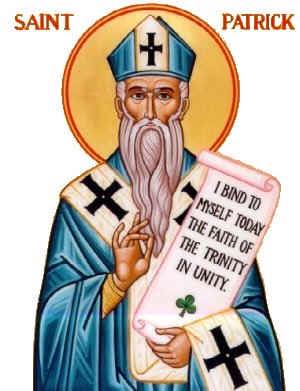
Patrick’s method of evangelizing the Irish reblogged from David Mathis

Remember Saint Patrick

March 17, 2014

Remember Saint Patrick

Saint Paddy’s Day is for the pagans.

You might say it that way, and then carefully wash your Christian hands of all the carousing and empty revelry that makes all things Irish into an excuse for a godless spring party. But you might say the same thing, and mean it not as a call to circle the wagons, but to charge the hill.

Deep beneath much of what the day has become is the inspiring mission of Patrick pioneering the gospel among an unreached people, despite the frowning face of the church establishment. Saint Patrick’s Day, in its truest meaning, is not about avoiding the lost, but bringing them good news. It turns out Saint Paddy’s Day really is for the pagans.

The Gospel to the Irish

The March 17 feast day (first declared in the early 17th century) remembers Patrick as the one who led the fifth-century Christian mission to Ireland. Unlike Britain, the Emerald Isle lay beyond the bounds of the Roman Empire. The Irish were considered uncivilized barbarians, and many thought their illiteracy and volatile emotions put them outside the reach of the gospel.

But Patrick knew better. In a strange and beautiful providence, he had spent six years among them as a captive, learned their language, and developed a heart for them. Like Joseph sold into slavery to one day save Egypt and his brothers, God sent Patrick into slavery to ready Ireland for a coming salvation.

The Surprising Turn

Patrick was born in the late fourth century — many speculate around 385 — in what is now northeast England. He was born among the Celtic “Britons,” to a Romanized family of Christians. His father was a deacon, and his grandfather a priest. But his parents’ faith didn’t find a place in his heart in his rearing. In his youth, according to George Hunter, “he lived toward the wild side” (The Celtic Way of Evangelism, 13).

But God soon arrested him with severe mercy. Kidnapped at age sixteen by Irish raiders, he was taken back to the island, where he served as a slave for six years under a tribal chief, who was also a druid. While in bondage in Ireland, God unshackled his mind and opened his eyes to the gospel of his childhood.

“God sent Patrick into slavery to ready Ireland for a coming salvation.”

And so, as a captive, “he came to understand the Irish Celtic people, and their language and culture, with a kind of intuitive profundity that is usually possible only, as in Patrick’s case, from the ‘underside’” (14). When he eventually escaped from slavery in his early twenties, he was a changed man, now a Christian from the heart. He studied for vocational ministry, and led a parish in Britain for nearly twenty years.

Reclaiming Retirement

That could have been the end of the story. But at age 48 — “already past a man’s life expectancy in the fifth century” (15) — Patrick had a dream, which proved to be his own Macedonian Call (Acts 16:9). An Irish accent pled, “We appeal to you, holy servant boy, to come and walk among us.”

Having known the language and the customs from his captivity, and having long strategized about how the gospel might come to the Irish, he now answered the call to return to the place of his pain with the message of joy. The slave returned to his captors with good news of true freedom.

Back in Saint Patrick’s Day

But this would be no ordinary mission. The Irish Celtics were “barbarians.” They may have had a few Christians among them, but as a people, they were unreached, with no thriving church or gospel movement.

“Patrick, the former slave, returned to his Irish captors with good news of true freedom.”

Patrick would take a different and controversial approach to the prevailing missionary efforts of the fifth-century church. Instead of essentially Romanizing the people, by seeking to “civilize” them with respect to Roman customs, he wanted to see the gospel penetrate to the bottom of the Irish culture and produce an indigenous movement. He didn’t mean to colonize them, but truly evangelize them.

Understanding the People

Hunter tells the story in the first chapter of his book on Celtic evangelism.

The fact that Patrick understood the people and their language, their issues, and their ways, serves as the most strategically significant single insight that was to drive the wider expansion of Celtic Christianity, and stands as perhaps our greatest single learning from this movement. There is no shortcut to understanding the people. When you understand the people, you will often know what to say and do, and how. When the people know that the Christians understand them, they infer that maybe the High God understands them too. (19–20)

Patrick knew the Irish well enough to engage them as they were, and build authentic gospel bridges into their society. He wanted to see the gospel grow in Irish soil, rather than pave it over with a Roman road.

Ministering with a Team

Essential to Patrick’s strategy was that he not fly solo. Just as Jesus sent out his disciples together (Luke 10:1), and Paul and Barnabas went out together (Acts 13:3), so Patrick assembled a close-knit team that would tackle the work together, in the same location, speaking the gospel and making disciples, before moving on together to the next tribe. It was, what Hunter calls, a “group approach to apostolic ministry.”

We have no detailed record of Patrick’s ministry teams and strategies, but according to Hunter, “from a handful of ancient sources, we can piece together [an] outline of a typical approach, which undoubtedly varied from one time and setting to another.”

“Patrick wanted to see the gospel grow in Irish soil, rather than pave it over with a Roman road.”

Patrick’s teams would have about a dozen members. They would approach a tribe’s leadership and seek conversion, or at least their clearance, and set up camp nearby. The team “would meet the people, engage them in conversation and in ministry, and look for people who appeared receptive” (21). In due course, “One band member or another would probably join with each responsive person to reach out to relatives and friends” (22).

They would minister weeks and months among them, eventually pursuing baptisms and the founding of a church. They would leave behind a team member or two to provide leadership for the fledgling church and move, with a convert or two, to the next tribe. With such an approach, the church which grew up among the people would be “astonishingly indigenous” (22).

Priority Time with Pagans

While Patrick’s pioneering approach is increasingly celebrated today — and is a model, in some respects, of the kind of mission needed in our increasingly post-Christian society — most of his contemporaries weren’t impressed. “The British leaders were offended and angered that Patrick was spending priority time with ‘pagans,’ ‘sinners,’ and ‘barbarians’” (24).

But Patrick knew such an approach had good precedent. The one who saved him while a nominal Christian and an Irish captive was once called a “friend of tax collectors and sinners,” and said, “I came not to call the righteous, but sinners” (Mark 2:17). The stakes were high, but he knew it was worth the risk.

Something Worth Remembering

Instead of acquiescing to the religious establishment, Patrick took the gospel to the uncouth, and ventured all for the unreached Irish. Instead of coasting toward a cushy retirement, he gave nearly three decades to the nation-transforming evangelization of Ireland. Patrick truly was for the pagans.

According to tradition, Patrick died March 17. Many think the year was 461, but we don’t know for certain. While today’s trite celebrations may leave much to be forgotten, for those who love Jesus and the advance of his gospel, Patrick has left us some remarkable things to remember. And to learn from.


Related Articles

“Patrick took the gospel to the uncouth, and ventured all for the unreached Irish.”

Prayer, prayer, prayer da, de, da

Da, de, da, love, love, love, the Beatles tune. How about Prayer, Prayer, prayer da,de, da?

Is there a greater way to show love then through prayer? No… Yet we in the church, given the opportunity to prayer for others often just pass, or make a perfunctory attempt. I’m not saying you have to wax eloquence, not at all, simple sincere prayer is much more effective. Just make it sincere.

That prayer is the the greatest weapon of the church is quite plain and I can speak to that from personal experience, as well as from what is taught, what we know from the Bible, and learned others who have written profoundly about prayer.

I’ve seen some crazy answers to prayer and often did not know how to deal with those answers. Often it took prayer to understand what I was dealing with.

Why do we as a church and faithful individuals give such short shrift, a nod to prayer? “Sure prayer is important, but then we have to do something “real”, afterwards!” Yea, there’s some genuine faith for you. The important part is done, the next important part, God’s answer and action, usually requires that you wait, for the real important part.

There is corporate prayer, the whole church body, a small group, two or three, more than one person raising their prayer concerns and the concerns of each other. Their is individual prayer, what we do in our prayer closets. Often the time we struggle over the deepest concerns in our souls.

I had really been pouring over a problem that I just did not know how to deal with. My inaction could have been perceived as procrastination. But while being in personal prayer, it was as if the Holy Spirit just knocked me across the head and said: ‘OK, pay attention this is what you’re going to do, bang, bang, bang, bullet point, bullet point. As things resulted, I have no doubt it was in His time and in His way.

I do wonder if some of the people who just like to carry on, how they really quench another’s spirit. I get it, sometimes there are issues where someone really does need some space and to let it out. I’m not criticizing that, I have a problem with the person that often just carries on and doesn’t realize how much another person’s spirit is being doused.

Those kind of people usually don’t offer any kind of encouragement, nothing uplifting, mostly just pointless, not creative, but often heartlessly critical. They always find the negative, never the upside.

It’s as if they are saying: “I know this is important to you, but I really don’t care. All I care is that I carry on about it and everyone knows where I am at. I am going to discourage you, not do anything constructive and actually feel like I’ve done something and that it’s really you who are clueless.”

Hmmmm, how about, “you know what? We really need to hit our knees and pray together and you’re going to do it without thoughtless comments, or just trying to indulge me. We are going to pray in genuine faith, put all the negative blah-blah behind us and trust God’s will.” How do you think prayer would help the person who needs encouragement? How would it help the person whose critical spirit maybe needs to be quenched?

Prayer is powerful in so many ways. Jesus told us to pray to the Father “…Our Father who art in heaven…” He wants us to lift our prayers to Him, He wants us to help and encourage others. Let’s pray a lot, let’s spend meaningful time in our own prayer closet, time with others and time in worship for real prayer. Prayer! Got it?!

Death Cafes Mark 8: 27 – 38 First St Johns, York, Pa March 1, 2015

For the audio version please click on the link above.

We make our beginning in the Name of God the Father and in the Name of God the Son and in the Name of God the Holy Spirit and all those who know that death in this world is only the beginning of life in the Resurrection said … AMEN!!

I’ve got news for youse, in case you didn’t know it, the world just keeps getting weirder. Shawn Kumm writes about nice little dinner parties that are becoming popular. There’s all the trappings china, linen, small sandwiches, pastries, comfortable coffee house setting, these are known as “Death Cafes”. These started in 2011 by an Englishman named Jon Underwood. “The stated objective is ‘to increase awareness of death to help people make the most of their (finite) lives”. I’d say to check it out, they of course have a website deathcafe.com. “Groups gather together to discuss death over refreshing drinks and nourishing food – and cake -.” Hey we’re all going to die, we might as well eat cake. Pastor Kumm goes on to say “but, ‘with no intention of leading people to any conclusion … or course of action.”[1] Well of course, because heavens, it’s the post-modern age, whatever we say goes, and we’re just going to have our nice little designer eternity, fit to our specifications. Folks, people really live these kind of deluded lives. We have a world that really is out of control. We can’t even stop the radicals in the Middle East who continue to burn alive, decapitate, bury alive, brother and sister Christians. Yet we have those who live deluded, self-obsessed, degenerate lives, sitting around and having little coffee parties, talking about death and coming to no conclusion, but being sure that things after death will be just fine.

In today’s reading Jesus tells His disciples, for the third time: “…the Son of Man must suffer many things and be rejected by the elders and the chief priests and the scribes and be killed…” It’s as if the disciples, like those in their delusional little coffee klatches, simply remain in denial. To the extent that Peter, and yes I really do love that guy, he is a stand up guy and then drops the ball again. A few lines earlier, Peter is confessing exactly who Jesus is, “You are the Christ.” In Matthew’s Gospel Peter goes on to say: “…the Son of the Living God.” Everyone of those disciples that heard Peter’s confession, knew exactly what he was saying. This is Messiah, Mesheach, this is He who has been promised since the beginning of God’s revelation. He’s not another prophet, who were all men. This is God the Son, the Son of the Living God, David’s Son, David’s Lord, He who is the salvation of the world. Jesus has told them twice already, that He would die. Granted, He didn’t exactly fill in the blanks of what His death and resurrection meant to them, but regardless, their reaction was a sort of, … yea OK, but is it possible you might be overreacting just a little.

There’s Peter and he has stepped right up, inspired by the Holy Spirit, but let’s face it, many people have been inspired by the Holy Spirit and have fumbled the ball. Not Peter! I’d like to think that he knew where the inspiration came from and was not going to be denied. Jesus tells Peter in Matthew, “yup you got it, you have been blessed to know exactly who I AM.” But then Jesus, the Son of God, the Messiah, adds, for the third time, having said that and being recognized as the promised Messiah, men are going to take me, beat me, torture me and then kill me. Well Peter likes the Messiah idea, but ya … no, the killing thing, well that just doesn’t fit into his, still, worldly paradigm. The Messiah is going to physically lead all his followers, as His father David would, and drive out the hated Romans and establish God’s kingdom here on earth. Peter is just not at the point where he can understand anything but that Israel needs to be delivered in the here and now. He cannot grasp Jesus’ eternal perspective. Oh yes, the Kingdom of God is here, Jesus is saying I AM here, but the plan is that the Kingdom of God is not yet recognized.

While Peter gets who Jesus is, that He is the Son of God, Peter takes it upon himself to let Jesus know the being killed part just doesn’t work for him. That Jesus is going to stay alive and be the conqueror king. Jesus certainly will conquer. But not according to Peter’s agenda and drive out the Romans. Jesus will conquer death! He will overcome the true enemy of man, He will be the agent of God’s plan to reconcile man to Himself. He will be the propitiation, the payment, the Redeemer of all our sins. Those who are in Jesus will still be in the world, but now we will be saved from the world. We will now be delivered from the world of death, disease, suffering, evil and in our baptism in the Triune God, be adopted into the family of God, reborn into the Spirit. Still in this world, but now new creations in relationship with God the Father, redeemed by God the Son and guided in this world by God the Holy Spirit.

Jesus has to drive these things home. According to Mark’s Gospel, in chapter 10, they were on the road going up to Jerusalem. In just a few days will be the triumphant entry. Jesus will enter into Jerusalem riding on a donkey. This is no small thing, he will be hailed by the crowd, cheered welcoming the Messiah, but not in the sense that Peter expects. They are welcoming Him who will deliver them from the Romans. In today’s reading Peter takes Jesus aside to set Him straight; He’s not going to be killed, Peter doesn’t say it, but when Peter criticizes Jesus, it’s to tell Him, “no, you’ve got it wrong, this is going to be the Kingdom where we all rule with you.” The Concordia Self-study Bible’s reads: “Peter’s attempt to dissuade Jesus from going to the cross held the same temptation Satan gave at the outset of Jesus’ ministry (Matt 4: 8-10).”[2] Jesus’ 40 days in the desert, being tempted by Satan: “All this I will give you, he [Satan] said, ‘if you will bow down to me.’” Peter is saying as much as Satan said: “Forget all that dying stuff Jesus, we can do what’s really important, rule the whole world. Don’t worry about salvation for all those people. What’s dying going to do? What’s important is ruling and running Your own agenda.” Of course what would that mean to them, to us, to people all down through history? Jesus didn’t die for us, He didn’t redeem us, He didn’t pay for our sins? The only thing affected is this part of the world and we are not saved in Jesus’ death. Jesus came to redeem us from death, from all the evil of the world, to redeem our sins and give us the promise of eternal salvation. He made that very clear to Satan in the beginning of His ministry and now as that ministry comes to an end Jesus makes it very clear to Peter and by extension us. Certainly Satan was not happy being stripped of his authority and surely Peter wasn’t happy that his vision of Jesus’ ministry wasn’t going to occur. Of course Peter, all the disciples, would be filled with the Holy Spirit and they would come to know how they were saved and they, like us, would know the promise and hope of Jesus in eternal salvation in the resurrection.

Sad, isn’t it? Those people at the coffee houses, who subscribe to deathcafe.com. They don’t have that hope and promise. They think they can talk death to death and they will have their very own designer eternity, probably sitting around a coffee house in their superficial, phoney, non-existent, little eternity.

Sorry to say, they will be lost and condemned. They refuse to be guided by the Holy Spirit to true life in the resurrection and think it’s all about them. So take out that journal this week. Really pray over what Jesus has said, remember that He is summing up His earthly ministry and preparing for His death. He doesn’t want to endure this, but through His love for us, that agape, sacrificial love He has for us, that His Body and Blood will suffer and be spilled as the sacrifice that will conquer all and give us the hope and promise of eternal life in the resurrected world. Write about what that hope means to you and how you can give hope to those you know through Jesus Christ.

The peace of God which passes all understanding keep your hearts and minds in Christ Jesus. Shalom and Amin.

[1] Shawn L. Kumm  “Concordia Pulpit Resources” Vol 25, Part 2, Series B, p 6

[2] Concordia Self Study Bible p 1518

Church renewal suggestions

I’m still, kind of, a new pastor. As part of my seminary education I was vetted as a “church planter”, then the district president whose district I was called to thought that I should apply those skills in an effort to conduct a renewal program. I was called to an ancient/stately church in York, Pa. that just cried out for a renewal effort and so here I am.

Now that I’m approaching five years here, I have a few lessons that I thought I should share. As a disclaimer this is not a shot at anyone or any group, simply observations things that I would recommend to anyone else who might be starting a renewal.

This is in no particular order, unedited, but should be sufficiently readable for anyone interested:

One thing I would do if I was to do another Renewal is to sit everyone down together, right at the beginning, employees, leaders, EVERYONE and make it very clear. If I’m being called here to do a renewal, you need to understand right here, right now, this is not about you. It is about you supporting what is going to happen, it’s about you (no matter what you are) making sacrifices, putting in extra time, going the extra mile, supporting efforts that you may not “like”, making an extra effort for new people. Agreeing that there needs to be small groups and you need to lead them. If you don’t feel “qualified” then agreeing to put in the time to learn about discipling and actively discipling. Making the extra effort to invite people and to do “faith sharing moments”. If you are not going to do this, right here/right now, then say so and the “Renewal” will stop right here. This will be, at least, a three year commitment [I would give them the slips that I gave to the Discipling Group.] Sign them and commit to doing what you’re supposed to be doing. If these things don’t happen, then it ends right there.

No fussing because you have to push a little harder, you might be inconvenienced, you might have to adjust to different things. If you do not understand at the outset that this is not about you and is about team, it is about the Body of Christ, then own up to it now and forget it. It’s not about you, it’s never been about you, but you seem to think it is. It is about the Body of Christ, it is about making the church an effective witness to Jesus and effective discipling group of Christian disciples.

You also understand that you are there to be cheerleaders, for the pastor, for new members, for those who have stepped out to do new things, those who are about making Christian disciples. Yes there are other things that are necessary, but the celebration is for those who are going out and saving the dying, reaching out to those in a dying world who would otherwise be lost for eternity. Those who have a conscience and truly understand that they will be used by God to reach those who are lost, who cannot stand the idea that someone may be lost because of what they did not do. Those who understand that God is never going to have a problem with those who make a good faith effort to reach the lost, but will hold them accountable who refuse to make the effort because they don’t think they’re ready or capable or yada-yada. Those who understand that when God calls us we are to respond, not when we think we’re ready. Those who understand that their procrastination, they’re phoney perfectionism is just an excuse. It’s not a virtue, it’s a sinful, straight from the pit of Hell cop-out.

That they will ask and have an open minded conversation about things they “don’t like or bothers them”. Sure if things are being done arbitrarily or capriciously then it’s certainly acceptable to question, but if there’s a lot of thought and research, then accept it, do what is necessary to adjust, but don’t sit there and refuse to make necessary adjustments in order to make the church more effective and more welcoming.

If you don’t have something positive to say, don’t say it, forget about it. Seems that the MO is that no one does anything, because if someone does do something, it’s open season for people to pick apart the other person’s efforts. If you haven’t done something about it and it’s been hanging for too long and someone has done something, then you are to say how wonderful it is that person is doing, that you are so pleased that something’s being done that should have been done a long time ago.

There has to be an understanding that we are not here to celebrate the same old/same old. I am only interested in celebrating those who have stepped out in faith, have taken up the gauntlet, have taken a chance. I’m going to be much faster to celebrate someone who took the chance, even if it might be sloppy, and I’m not going to celebrate the person who just criticizes and doesn’t have a better idea. A spirit of criticism of gossiping is sin, it’s not acceptable. If you’re not going to find a way to do it better, then you need to keep your mouth shut about anyone else who is actually doing.

So, that’s it, so far. Again these are various lessons not meant to impugn anyone or whine and complain, but I think that lessons that I’ve learned that should be shared with others. I will continue to blog on this, infrequently and probably incompletely. If anyone is interested and wants to set up a dialogue on it, I would welcome the opportunity.

Temptation Eyes James 1: 12-18 First St Johns Feb 22, 2015

We make our beginning in the Name of God the Father and in the Name of God the Son and in the Name of God the Holy Spirit and all those who have remained steadfast under trial said … AMEN!

In the early 1970’s, one of the first songs that I remember as a teen, ironically, was by a group called the Grass Roots, titled “Temptation Eyes”. It was a hard driving rock song, which, really characterizes temptation. For me, temptation is sort of this hard driving, almost drilling into you this desire, you just have to have it. The lyrics, for a secular song, really do give you a sense of temptation. “She’s got something that moves my soul…”[1] A secular song talking about something that reaches right down into the soul. This temptation that is so compelling is moving this singer with a hard rock rhythm.

Have no doubt that when Jesus was being tempted by Satan, Jesus was feeling temptation that was drilling down into Him. The desert is not a welcoming place, it’s hot, it’s dry (unless of course it’s snowing and freezing rain in York, then it’s almost inviting.) temptation for shelter from the sun, for cool, refreshing water, for food, is compelling in the desert. But as the writer of Hebrews tells us: “For because he himself has suffered when tempted, he is able to help those who are being tempted. This passage assures us that Jesus did suffer. He felt temptation deep down. He knows that we are tempted and He knows that temptation can steer us to things that aren’t good for us, that take our eyes off of Him who is our hope and promise. But also because of this we know that we can trust Him.

Too often we deal with things in our lives that reach down into our soul. Others will try to give us comfort and assurance, “oh it’s nothing”, we can stay strong and cope. It’s a big difference between men and women. There are things women contend with, that they are tempted by, that as men we just don’t get. We just cannot empathize with the compulsion they feel. And certainly vice versa. We can tell each other nice things, and think that we are helping, but too often we really aren’t and may be aggravating the situation. However, with Jesus, based on James’ words and of the writer of Hebrews, we are assured that Jesus understands. Too often we get an image of God as angry and vengeful, just waiting to strike us down when we are even so much as tempted. That is God to many, to those who are not saved in Jesus. But we, who are saved in Jesus, who are born again as new men and women, saved in Christ, we have a Savior who understands, who wants to help us push back against temptation before we are overwhelmed and give in. Temptation is not a sin, Mark tells us that Jesus was tempted (Mark 1:13), we certainly know that Jesus did not sin. But for us, who are weak in ourselves, it is much too easy for that temptation to push us into something that is sin. James writes: “…each person is tempted when he is lured and enticed by his own desire. Then desire when it has conceived gives birth to sin and sin when it is fully grown brings forth death.” (Jas 1:14-15) Temptation is all around us, the Ben and Jerry’s you know is in the freezer, anger, vengeance, doing things that hurt you and someone else. Turn on the television, computer, books, magazines, its everywhere. When we give in to sin, we come up with excuses and rationalizations that push Jesus away and make that sin an idol, and then we cross the line and commit sin.

Our Savior understands that, He’s not standing over us just waiting for us to make that wrong move, that gotcha. He has been there, in this time of Lent we remember His time in the desert. From that Jesus can relate to those who are His, because, as the writer of Hebrews pens: “For we do not have a high priest who is unable to sympathize with our weaknesses, but one who in every respect has been tempted as we are,…” (Heb 4:15), but then goes on to say, “yet without sin.”

Jesus knows what confronts us, He does relate to us. Even more, if we let Him, the Holy Spirit will reach down and strengthen us. We often think of that sin as a treat, we pooh-pooh things like over indulging in food. It’s not healthy for us, it’s weakening our body, it makes us less able to serve Jesus and our brothers and sisters in Jesus. Sure in moderation, but in this day and age? We are not a moderate people. Have you seen Ben and Jerry’s concoction, formulated by Jimmy Fallon, it puts me into a diabetic coma just looking at it.

It does make you wonder, why Satan would even try with Jesus. Satan knows as well as anyone how this is going to end up. But he wants us to fail. He wants us to quit. Clearly Jesus had come into the world to mess up Satan’s plans and schemes. You can’t expect Satan to just twiddle his thumbs while Jesus undoes all the evil and sin of the world. You can’t expect him to give up, he wants to unravel the world, he’s condemned, he wants everyone condemned. So he had to push back against Jesus. But Satan isn’t normally over the top, he’s not usually in your face. He is usually subtle, continually trying to undermine us. He’s putting temptation in front of you so that you will quit and give in. You will stop caring about what Jesus wants and only focus on the object of your desire.

Writing about our vocations in life; work, family, church, community; “Wingren says that ‘Temptation in vocation is the devil’s attempt to get man out of his vocation” (121) Dr Gene Veith goes on to write: The devil wants you to quit. He wants you to quit your job. He wants you to get a divorce. He wants you to stop doing things for that ungrateful bunch at church. He wants you to tell your kids to ‘Do whatever you want to do. I give up.’ He wants you to leave that congregation because it’s nothing but trouble.”[2] Is that not the world we see today? Left and right we see this giving into temptation. Not just the obvious temptations, lust, gluttony, greed, anger etc. The more subtle temptation of giving up. Why try? The government will provide for you, some relative will provide for you, the church, should, provide for you. Why try at work? People are just mean to you there. Why try in your marriage? If someone doesn’t make you happy, dump ‘em. Why try with your kids, they’re just going to do what they want. Why try with your church? The pastor is hopeless, nothing good is happening and of course, we know that the church is just full of hypocrites anyway.

Yea, the quitter mentality we see in the world today. You can give into the world, you can let Satan lead you away and give into the temptation that he waves in front of you to quit, to give up. Jesus could have quit out in the desert, just packed it in, “hey, not my problem, they’re going to have to deal with this temptation stuff themselves.” He didn’t! He was faithful to you, to make sure you had that hope and promise that you have a Savior who will not quit on you. He gives us the faith to continue to trust in Him, but we just go ahead and chuck it? Then what? Revelation chapters 2 and 3, Jesus is telling the readers that they will face terrible tribulation. Jesus promises the one who overcomes: “The one who conquers and keeps my works until the end, to him I will give authority over the nations… He will be clothed in white garments and I will never blot out his name out of the book of life. I will confess his name before my Father and before his angels…Hold fast so that no one will seize your crown… I will make him a pillar in the temple of my God…” Read chapters 2 and 3 in the Book of Revelation. He warns us, but the promises He makes to those who are faithful, are eternal and overwhelming.

The great thing is, Jesus doesn’t leave us to our own strength to overcome temptation and sin. We know we have His promise to defend us, to protect us, to give us the faith we need. But how sad is it, when He is standing there protecting us and we just run away, concerned only about ourself? Mandisa is a great Christian rock singer, these lyrics are from a recent song:

“Everybody’s been down Hit the bottom, hit the ground, Ooh, you’re not alone
Just take a breath, don’t forget, Hang on to His promises, He wants You to know

You’re an overcomer, Stay in the fight ‘til the final round, You’re not going under
‘Cause God is holding you right now[3]

Be an overcomer, don’t give into temptation. The lyrics of the Grass Roots song are instructive: “But she lets me down everytime, can’t make her mind she’s no one’s lover…” Temptation will always let you down, will fail you. But Christ will always strengthen you and save you. You can continue to deal with temptation or be an overcomer.

The peace of God which passes all understanding keep your hearts and minds in Christ Jesus. Shalom and Amin.

[1] Grass Roots  “Temptation Eyes”

[2] Gene Veith “God at Work” quoting Wingren “Luther on Vocation”

[3] Mandisa “Overcomer”

Do all to the glory of God

This is a subject that is near and dear to my heart. I have not always been a Christian. So when I discuss this, it’s not from the perspective, “well that’s what Christians do their whole lives”. I’ve been involved in athletics pretty much all my life. I was on and off swim teams since I was about 8 years old. I played football from when I was eleven years old until I was seventeen. I worked at the local YMCA where I played basketball, racquetball, weights, and other stuff here and there. I’ve stayed active for the last 40 odd years mostly training and participating in triathlons, also kickboxing and a little basketball mixed in. If anyone can get me into to a racquetball regular game, I’d love it if someone could hook me up with a regular racquetball game again.

Having said all that, yes, it’s been a regular part of my life. And frankly, while I do try, I’ve never been good at anything. It was necessary, serving in the Coast Guard Reserve, my job was operational. I had to stay in condition, because I could be called on at any time to be involved in very physically strenuous situations. So yes, I’ve had a reason to stay active for a long time and it’s been an important part of my life. It really drags me down when I don’t keep up a regular routine. So who knows, maybe I need those endorphins, dopamine etc in order to feel good. But as I grew as a Christian and have become a pastor, I’ve realized that we do have a responsibility to maintain the body God gave us and to especially not abuse it. Now believe me, I’m not any “George Gorgeous”, if you saw me I look pretty much of a dumpy old guy. But… a year ago, I did get a stress test done because of a minor issue. The technician asked me if I worked out because she could see it on the results I was producing and when the doctor looked at my results, he pretty much told me to “get outta here, you’re wasting my time”.

Having said all this, in no way shape or manner am I saying that to be a “good Christian” you need to be in great shape. It’s not a works thing, but in my continual discussion about our “relationship” with Jesus, He gave us our body, mind, everything we have. Don’t most of us want to be in good shape and look good for our spouse, SO? Don’t we want to feel good, have energy, all the benefits of good health? The better we maintain ourselves, the better we serve our Savior, our family, our brothers and sisters in Jesus, the church etc. So don’t we serve and relate better to everyone involved when we do the best we can to maintain ourselves?

Now, IN NO WAY SHAPE FORM OR MANNER, am I saying that you can only be a good Christian if you’re in good physical condition, you’re all pretty and photogenic and all that stuff. Too many “churches” have some need to be all pretty and everyone associated all pretty, that is straight out phoney, hollow and misguided. It’s sort of in the sense of the “cool kids” table in high school. No that’s unacceptable in a Christian church. We need churches that are authentic, phoniness in the church is killing the church and is leaving too many others to die without Jesus. I’ve known plenty of great saints who could barely lift themselves, no less a dumbbell. And believe me I have my own issues that need to be dealt with, I’m not trying to sell that I’m perfect. What I am trying to say is that we still strive to be the best we can with what God gives us. There is way too much mediocrity, and excuses out there. We are called to be perfect as our Father is perfect. Let’s do what we can to strive for that goal, but accepting that no matter what, all of us will fall short and most (like me), miserably so.

An article in Christianity Today (June 2013 pp 39-43) discussing this very subject and I think is a really good perspective. One beef I do have with many Christians is their ability to phoney themselves, their church, their lives in general up. Which certainly does not enhance our witness in the world and refers back to my “cool kids table”. If you’re a Christian and concerned about being part of the “cool kids”, you are already way off track. The world is phoney beyond all question. Why do we keep trying to emulate the world? The church has to be authentic, warts, chubby pastors (like me), lack of talent, but authentic, faithful disciples of Jesus Christ.

Leslie Leyland Fields makes some great points and does sternly caution against a wrongheaded approach to encouraging all that God’s given us. We should be strong in mind, body and spirit. Doesn’t always work out that way, sometimes due to circumstances beyond our control But we should work on what is in our control, not because it makes us better, but frankly makes us a better witness to Christ. Ms Fields quotes Charlie Shedd: “…if our bodies are to be [or already are] temples of the Holy Spirit, we had best get them down to the size God intended.” Fair enough.

“PraiseMoves cites 1 Corinthians 6: 19-20 as its foundational verses: ‘Do you not know that your bodies are temples of the Holy Spirit, who is in you, whom you have received from God? You are not your own; you were bought at a price. Therefore honor God with your bodies.’ … Many in the faith and wellness movement cite the apostle Paul: ‘Whether you eat or drink, do all to the glory of God.”

I really like Ms Fields point: “…outside the church, it challenges the prevailing notion that our bodies belong to us alone – either as machines to be hacked and fueled, or as ‘plastic’ to be reshaped, starved, pierced and used for pleasure or vanity. and inside the church, it challenges the dualistic worldview that God cares only about ‘spiritual’ matters.”

To be sure, as Ms Fields points out, we do not become stupid, obsessive and phoney over the subject of physical fitness and conditioning. We do it with intelligence, planning, something that we will benefit from on many levels. With the mind-set of serving God, that we want to build our relationship with Him, that we want to serve our family, fellow Christians, our church to the best of our ability and this is one way to do it. Realizing that regardless of our physical condition we are to always serve the Lord and the Body of Christ. But to quote Nike “just do it”. How about a church filled with people who do strive, who do want to bless each other, who are spiritually, mentally and physically doing their best in order to disciple others to strive to be their best for Christ who gave us His best.