Author Archives: Pastor Jim Driskell, Lutheran Church

Unknown's avatar

About Pastor Jim Driskell, Lutheran Church

I am the pastor of Trinity Lutheran Church in Chestertown, Md. I pray that you will come and worship with us, worship is 10 am Sundays. We are a renewal church and we are lifting God up in classical worship, and being faithful disciples of our Lord Jesus Christ. 101 Greenwood Av, Chestertown. Plenty of parking behind the church.

On Our Knees

Pray without ceasing. Lift all things up to God

Don Merritt's avatarLife Project Blog

IL714 017-LR

Abraham Lincoln one said that there are times when he found himself falling to his knees before God, for there was no other place for him to go during the darkest days of Civil War.  I think there are times like that for all of us.

We don’t even need to be enduring bad times to respond in this way, in fact there are times to jump for joy to the Lord, and there are times to fall on our knees in thanksgiving as well.

The most important thing, whether we are living in good times or bad, is to remember that we need to be near to God…

Come, let us bow down in worship, 
   let us kneel before the LORD our Maker; 
 for he is our God 
   and we are the people of his pasture, 
   the flock under his care.

Psalm 95:6-7

God is my joy and my…

View original post 18 more words

Liturgical worship, music, chanting, does stir the emotions, the right ones.

Once in awhile God blesses me with a “eureka” moment and you, dear reader, are about to share that with me, or well at least I’m about to lay it on you. Groovey, huh baby?

The hit on liturgical music/worship is that there is no depth of emotion, it doesn’t lift the spirit, the emotion.

Ya, well there’s a technical term, that’s “bupkus” or as Charles Dickens wrote, “bah humbug”.

The truth of the matter is that it  most certainly does! The problem is that the past few generations are so superficial, so motivated by “eros” love, that it’s all about me, give me, give me. Liturgical worship is much deeper, it gives to God who gives back to me. Yea, well we want to cut out the middle-man and, as always, gimme, gimme. If we would really shut-up and listen we might realize how much more comforting and strengthening liturgy is, how it reaches down to your soul, because it’s the Holy Spirit who is reaching. We can stay with the shallow/superficial or we can really build that relationship with God the way that man has been doing it, which would date back to at least the time of King David, King Solomon and Solomon’s Temple.

Now, I will concede this. Because liturgical worship is difficult, and for those who lead worship and really don’t get it, they will do a lousy job. Sure there are many young pastors who can do it, but they really don’t get it and after awhile it does seem to be going through the motions. For me, who is much less talented, but who has gotten it and is better able to articulate it, but still no talent, you know what, have a little patience with me and my lack of talent won’t matter. What will matter is the depth of emotion and love that we convey to the Father in the liturgy. If you just go through the motions meaning will not come out and again, there are too many who should do it well, but just don’t get it. Sorry, but seems there are far too many of the following mindsets: “Here I am going through the motions, I don’t really know what I’m doing or how I’m doing it or why and, frankly, don’t really care. Right, wrong or indifferent and, frankly, I don’t even think there’s a “right”.”

Well yea, there is a “right” and let’s talk about it.

I have opined before, that the difference between “happy-clappy” and real worship is the emotional content. God the Holy Spirit has finally helped me to articulate the case for the liturgy much better.

We have become an “eros” society. Everything has to appeal to the superficial, emotional, put on a big show – please me, it’s all about me, feed me, sex me, give me this superficial comfort, love me in this adolescent, it’s all about me, wah, wah!!!

Liturgical worship is about agape love. I give to You (God), I lift You up, I know it’s all about You (Father, Son and Holy Spirit). It’s only through You and because of You that I even exist, no less have any meaning at all. I is all about You, when I acknowledge that and praise You, You make it all about me. You make me something I could never be, Your child! You give me something that I could never get – everlasting eternal life in the resurrection. Real worship is always about completing that connection. Not me just sitting back and just taking, again that adolescent attitude.

Of course another reason we like the “eros”, is because it’s easier. It does just go to our base instincts and we don’t have to work at it. One hit that I’ve taken about being more liturgical is that in some way it’s not pleasing, doesn’t resonate well. Yea, well, get over it. Does everything have to be The Gaither Family? No in fact, that’s just another generation’s superficial “please me-please me” with no more depth of true worship. One of my past pastors, United Methodist, but definitely not of the wishy-washy liberal. If anything much more Father Flannagan. He was a military chaplain in Italy during World War II. The man couldn’t carry a tune in a bucket, but didn’t matter. If he had to belt it out a little louder to prod us to sing louder, he had no compunction about that and we frankly loved him for it. He was actually kind of a little prickly, nothing prissy sentimental about him, and when he started singing we’d just smile. Not a mocking smile, but a “there’s our pastor and we really do love him.” An attitude of pride, of it really doesn’t matter how we sing, just sing and lift up God in worship. That’s the way it should be done. For those prissy little perfectionists, get over yourselves and focus on worshiping God in the hymn and what the hymn is teaching and don’t worry your self about the quality. You ain’t no Pavarotti either. I have a much bigger problem with the guy who has much more talent and goes through the motions then the guy (me) who has no talent, but truly wants to lift up God in worship. I mean really, doesn’t that make sense? (I’m sitting here listening to Bob Seger and going on about hymns and liturgical worship, go figure. God surely does mix it up on you!)

The impetus that God used for what is going to be awhile longer (strap in) is an article in Christianity Today by Steven R. Guthrie Love the Lord with All your Voice (June 2013 pp 44- 47)

CT is not a high liturgy kind of publication and yet Mr Guthrie uses as the focus of his article Athanasius who lived from 293-376. Definitely not happy-clappy. “In the fourth century, the church father Athanasius articulated a different understanding of singing . It includes self-expression, but Athanasius believed singing is centrally a spiritual discipline – an important practice in Christian spiritual formation and a means of growing in the life of faith.” Now that would be for everyone, the Don Paiges, the Gaithers, Martin Luther, Me. Those who are great to listen to and those who, let’s just say can be challenging to listen to.

“In a letter to his friend Marcellinus, Athanasius enthusiastically commends the Book of Psalms and provides guidance for reading the Psalms devotionally, (B N – We are pretty sure that most, if not all, the Psalms were set to some kind of musical scoring. We don’t know how, but the Roman Catholic, Anglican and Lutheran Churches have all taken a run at putting the Psalms to melody and most of these are what we chant during worship.) … The Book of Psalms, however, has a unique place in Christian devotions, somethiat the was true in Athanasius’ time and remained so across centuries of monastic practice and worship. Athanasius suggests that the Psalms are so spiritually significant precisely because they are not simply read or spoken but sung…

Now I am going to quote the article at length, because it is just so right on. So I may be breaking rules and I’m sorry and will happily do what I can to make up for it, but this just has to be repeated.

“…In singing, the truth of the Psalms is drawn into the depths of one’s being rather than out of the depths of one’s being…” [this is in contrast to where music today is drawn to, which is much more on the surface, definitely not the soul. This is the difference between agape and eros. Agape reaches down to give you strength, being, connection that you could never do on your own vs. Eros which is entirely about your superficial appetites, more personal titillation than truly moving your soul.- JD].

What Guthrie talks about next applies to Scripture readings also. When we read Scripture with some genuine human emotion, versus the flat/rote manner most people read it, Scripture does come alive. It gives us a sense of what is really going on in the real world. So much of other beliefs are sort of unreal, pretension, than genuine “this is the human condition” ideas. Christianity can be very mystical, it is very deep, it is right where we live because God the Son, Jesus, did live among us and did experience everything we did. So it is real versus this phoney Eastern stuff or gnosticism, that tries to deny the reality of the world.

“We might ask again why we could not simply speak the words of Scripture as if they were our own. What is gained by singing them? Just this: In song, we learn not just the content of the spiritual life but something of its posture, inflection and emotional disposition.”

“When we sing, we learn not simply what to say but how and why to say it. What Athanasius recognizes (and what we might forget) is that inflection, rhythm, and tone of voice matter deeply. They are not aural decoration. For example, after someone offends us we might say, ‘It’s not so much what he said, it’s the way he said it.'”

Chanting is difficult, I keep trying to do better, make it more aesthetically pleasing. But it drives in me the opportunity to express the ideas in a deeper more meaningful way, an expression of the different emotions instead of it being some kind of rote incantation. Because of that, I hope that the hearer hears, the depth of what the writer was expressing 3,000 years ago. That the human condition has not changed a bit since the time of Solomon until now. When we get over ourselves and understand this connection that the church has had going back to the beginning, we can start to live genuine lives instead of this goofy idea that we are somehow so much smarter now than ever before. It’s not true and in some ways it should reassure you that you’re not the first one and won’t be the last. Shut-up and listen, instead of trying to convince us how brilliant you are. If you do, you might find some true comfort and connection to those who have been connected and inspired by God to live their lives in Him. The claim is that the liturgy, chanting has no depth of emotion. That is, as we say in the Greek, baloney. Most chanting is based on the Psalms, mostly written by King David. You do not know anyone who has gone through the range of emotions that David has. Shepherd, then king, great man, great sinner, hunted, hunter. This was a man after God’s own heart. When he loused up, he loused up big-time. But he took it back to God, he took the consequences, he dealt with the rubble, then came back and lived for God. He was a brilliant man, brilliant composer, brilliant king, brilliant soldier, diplomat, builder, on and on. To you guys who think that anything in the Bible is sort of silly and prissy, you need to snap out of it. David is more “man”, than any man I can think of before or since. He truly lived (omitting the really bad stuff), the way men should live. That is why the Psalms are so important, especially to guys.

“Music, Athanasius believes, is a sounding image of a soul that is no longer at odds with itself, nor at odds with itself, nor at odds with the Holy Spirit. Melody models an inner life in which the many different elements and impulses of the person are drawn together in a pleasing chorus.”

“Athanasius goes even further. Not only is this singing of Psalms an image of the well-ordered soul; it is also a means by which God brings about this order. As the Christian goes about ‘beautifully singing praises, he brings rhythm to his soul and leads it, so to speak, from disproportion to proportion.’ This proportioned, harmonized self is not our normal state of being. Apart from Christ, the ordinary state of affairs is for the various members and impulses of our person to jostle for control, battling with one another (Rom 7: 22-23). But when one sings, body, reason, emotion, physical sense and desire come alongside one another, each enlisted together in the praise of God. As we sing, we become a harmony.”

“…Athanasius’ point, however, is that specifically by singing our praises, all the diverse elements our our humanity are drawn together and then together lifted to God in worship.”

“Athanasius portrays the Christian life as a sort of richly broadened harmony, ringing out in praise of God…”

Part of what this means? Quit the non-sense about well you can’t sing, I don’t like hearing that. If you were focused on your singing and what it truly means in respect to the guy next to you and to God, you’d realize it doesn’t matter how good/bad the other person is. What matters is how the Holy Spirit is bringing what you are doing, what he’s doing, what every Christian who is at worship at that moment anywhere in the world is doing, making it a “richly broadened harmony”. Just saying, but I get the feeling you’re going to feel pretty petty in heaven, when you truly understand how the Holy Spirit does bring all that together. And yes that includes my still in much need of improvement chanting.

I am probably not doing Mr Guthrie’s article justice, but I think that I’ve made the point. God has been using liturgical music for at least 3,000 years. It does bring us together, it does reach down to our soul in a sacrificial, it’s all about the other person, it’s all about Jesus way. Can we do it better? Absolutely. But you want genuine emotion and content in your worship? All due respect to the David Crowder Band and all Christian music going back to who knows when, but the eros emotion that music evokes, is OK, believe me, I’ve got all the albums. But when it comes to what is truly from the soul, what reaches back through three millineium, what God uses to tie together Christians around the world, is the liturgy, based on, mostly, Psalms, but also the Gospels. When we truly take this form and truly lift up God in worship and make it all about Him, then He does respond and make it truly about us. In stark contrast to eros, which is all about me and what appeals to my senses and doesn’t go deep enough to impact our soul. Only God does when we truly lift Him up in worship that’s about Him and not about us. And if Athanasius is right and singing is a spiritual discipline, then it doesn’t matter if you do it well or not so well. We worship, we take the Body and Blood of Jesus, we hear the preached word, we’re baptized, we study Scripture, we journal, we confess and absolve, and yes we should sing, in a way that is truly a spiritual discipline and not another worldly indulgence.

Do all to the glory of God

This is a subject that is near and dear to my heart. I have not always been a Christian. So when I discuss this, it’s not from the perspective, “well that’s what Christians do their whole lives”. I’ve been involved in athletics pretty much all my life. I was on and off swim teams since I was about 8 years old. I played football from when I was eleven years old until I was seventeen. I worked at the local YMCA where I played basketball, racquetball, weights, and other stuff here and there. I’ve stayed active for the last 40 odd years mostly training and participating in triathlons, also kickboxing and a little basketball mixed in. If anyone can get me into to a racquetball regular game, I’d love it if someone could hook me up with a regular racquetball game again.

Having said all that, yes, it’s been a regular part of my life. And frankly, while I do try, I’ve never been good at anything. It was necessary, serving in the Coast Guard Reserve, my job was operational. I had to stay in condition, because I could be called on at any time to be involved in very physically strenuous situations. So yes, I’ve had a reason to stay active for a long time and it’s been an important part of my life. It really drags me down when I don’t keep up a regular routine. So who knows, maybe I need those endorphins, dopamine etc in order to feel good. But as I grew as a Christian and have become a pastor, I’ve realized that we do have a responsibility to maintain the body God gave us and to especially not abuse it. Now believe me, I’m not any “George Gorgeous”, if you saw me I look pretty much of a dumpy old guy. But… a year ago, I did get a stress test done because of a minor issue. The technician asked me if I worked out because she could see it on the results I was producing and when the doctor looked at my results, he pretty much told me to “get outta here, you’re wasting my time”.

Having said all this, in no way shape or manner am I saying that to be a “good Christian” you need to be in great shape. It’s not a works thing, but in my continual discussion about our “relationship” with Jesus, He gave us our body, mind, everything we have. Don’t most of us want to be in good shape and look good for our spouse, SO? Don’t we want to feel good, have energy, all the benefits of good health? The better we maintain ourselves, the better we serve our Savior, our family, our brothers and sisters in Jesus, the church etc. So don’t we serve and relate better to everyone involved when we do the best we can to maintain ourselves?

Now, IN NO WAY SHAPE FORM OR MANNER, am I saying that you can only be a good Christian if you’re in good physical condition, you’re all pretty and photogenic and all that stuff. Too many “churches” have some need to be all pretty and everyone associated all pretty, that is straight out phoney, hollow and misguided. It’s sort of in the sense of the “cool kids” table in high school. No that’s unacceptable in a Christian church. We need churches that are authentic, phoniness in the church is killing the church and is leaving too many others to die without Jesus. I’ve known plenty of great saints who could barely lift themselves, no less a dumbbell. And believe me I have my own issues that need to be dealt with, I’m not trying to sell that I’m perfect. What I am trying to say is that we still strive to be the best we can with what God gives us. There is way too much mediocrity, and excuses out there. We are called to be perfect as our Father is perfect. Let’s do what we can to strive for that goal, but accepting that no matter what, all of us will fall short and most (like me), miserably so.

An article in Christianity Today (June 2013 pp 39-43) discussing this very subject and I think is a really good perspective. One beef I do have with many Christians is their ability to phoney themselves, their church, their lives in general up. Which certainly does not enhance our witness in the world and refers back to my “cool kids table”. If you’re a Christian and concerned about being part of the “cool kids”, you are already way off track. The world is phoney beyond all question. Why do we keep trying to emulate the world? The church has to be authentic, warts, chubby pastors (like me), lack of talent, but authentic, faithful disciples of Jesus Christ.

Leslie Leyland Fields makes some great points and does sternly caution against a wrongheaded approach to encouraging all that God’s given us. We should be strong in mind, body and spirit. Doesn’t always work out that way, sometimes due to circumstances beyond our control But we should work on what is in our control, not because it makes us better, but frankly makes us a better witness to Christ. Ms Fields quotes Charlie Shedd: “…if our bodies are to be [or already are] temples of the Holy Spirit, we had best get them down to the size God intended.” Fair enough.

“PraiseMoves cites 1 Corinthians 6: 19-20 as its foundational verses: ‘Do you not know that your bodies are temples of the Holy Spirit, who is in you, whom you have received from God? You are not your own; you were bought at a price. Therefore honor God with your bodies.’ … Many in the faith and wellness movement cite the apostle Paul: ‘Whether you eat or drink, do all to the glory of God.”

I really like Ms Fields point: “…outside the church, it challenges the prevailing notion that our bodies belong to us alone – either as machines to be hacked and fueled, or as ‘plastic’ to be reshaped, starved, pierced and used for pleasure or vanity. and inside the church, it challenges the dualistic worldview that God cares only about ‘spiritual’ matters.”

To be sure, as Ms Fields points out, we do not become stupid, obsessive and phoney over the subject of physical fitness and conditioning. We do it with intelligence, planning, something that we will benefit from on many levels. With the mind-set of serving God, that we want to build our relationship with Him, that we want to serve our family, fellow Christians, our church to the best of our ability and this is one way to do it. Realizing that regardless of our physical condition we are to always serve the Lord and the Body of Christ. But to quote Nike “just do it”. How about a church filled with people who do strive, who do want to bless each other, who are spiritually, mentally and physically doing their best in order to disciple others to strive to be their best for Christ who gave us His best.

When Churches Want a Pastor Who Can “Bring In Young Families” . . .

Posted on | 45 Comments

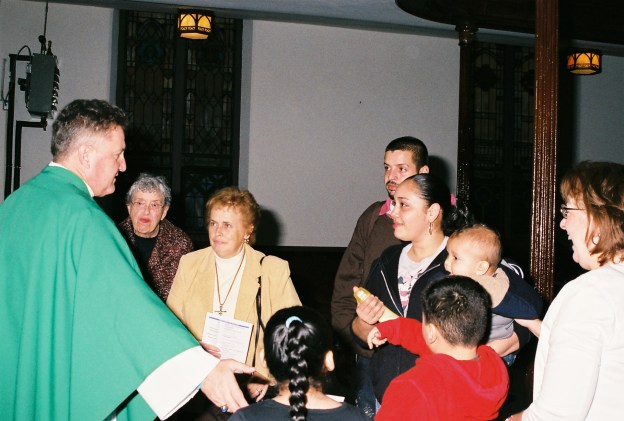
. . . please consider sharing this post.Children in church 1

Almost every church I’ve ever known has wanted to Attract Young Families.  The reasoning behind this includes the following:

  • If we don’t regenerate, everyone will eventually get old and die.
  • It’s energizing to have young people around.
  • Younger members can do the work that older members can’t/won’t do anymore.
  • Older members tend to be on fixed incomes and younger working members are needed for their pledges.
  • Young families (i.e. mom, dad, and kids) remind us of church when we were (or wish we were) part of young families.

There are a few things wrong with this reasoning, including the fact that “attracting” people in general feels manipulative – as if people are “targets” to be used for our own purposes.  Yuck.

Let’s be honest about the “why.  Are we saying that we want these rare and valuable Young Families for what they can give to us?

What if  – instead – the “why” of this demographic quest was about feeding souls and sharing authentic community?  I always hoped – as a young mom – that church would provide adults that could help me nurture my children.  I always wanted to know that – if my kids couldn’t come to me or HH with a problem – they would have other trustworthy adults to whom they could go (and they did.)

Young families are great.  Old families are great.  Families made up of child-free couples are great.  Families of single people are great.  Imagine if every church simply wanted A Pastor Who Could Bring In Broken People.  Now that’sa church.

Also, the days are gone when Young Families were present in worship every Sunday.  The statistics are in about how the definition of “regular worship” has changed since the 1950s.  (“Regular” used to mean weekly.  Now it means once or twice a month.)

Instead of seeking a Pastor who can bring in those vaunted Young Families, we need to call a Pastor who knows how to shift congregational culture.  The culture in which we live and move and have our being has changed, but we are killing ourselves trying to maintain a dated congregational culture.

News flash:  Most pastors will fail at “Bringing in Young Families.” Families of every kind are drawn to communities that are in touch with real life.  For example, check out Carey Nieuwhof’s recent post about why even committed Christians do not worship as regularly as they did in previous decades.  At least two of his “10 Reasons” specifically impact cultural changes connected to Young Families.

So how can we be the kind of congregation that welcomes Young Families for more than their energy and wallets?  We can:

  1. Be real.  Deal with real issues in sermons, classes, retreats, conversations, prayers.
  2. Listen to parents’ concerns.  Listen to children’s concerns.
  3. Ask how we can pray for them.  And then pray for them.
  4. Allow/encourage messiness.  Noses will run and squirming will ensue.  There might be running.  There will definitely be noise.
  5. Check our personal Stink Eye Quotient.  Do we grimace when a baby cries?  Do we frown when the kids are wearing soccer uniforms?
  6. Refrain from expecting everyone to be the church like we have always been the church.
  7. Help parents, grandparents, and all adults become equipped to minister to children and youth.  How can we learn to offer such loving hospitality to the younger people in our midst that they will always experience church as home?
  8. Do not use children as cute props.  Yes they say the darndest things during children’s stories, but they are not there to entertain us.
  9. Give parents a break.  Really.  Help struggling parents get coats and hats on their kids.  Hold an umbrella.  Assist in wiping spills.
  10. Give parents a break administratively.  Make it easy to participate. Minimize the unnecessary.

It’s also okay not to have Young Families in our congregations depending on the context.  Some neighborhoods have very few young ones living nearby.  But there are still people who crave some Good News.

I want a Pastor who can minister to whomever lives in the neighborhood in the thick of these cruel and beautiful times.

Image is a popular one that shows up in lots of random blog posts.

El velo se levanta de Jesús First St Johns 15 de febrero 2015

Hacemos nuestro comienzo en el Nombre de Dios el Padre y en el nombre de Dios el Hijo y en el nombre de Dios el Espíritu Santo y todos los que se les ha permitido una visión de Jesús como Dios como hijos suyos en el bautismo dijo … AMEN

Feliz día tras día ST de San Valentín! “Una hagiografía común describe San Valentín, ya que el ex obispo de Terni, Narnia y Amelia, una ciudad de la Umbría, en Italia central. Mientras que bajo arresto domiciliario de la jueza Asterio, y discutir su fe con él, Valentino (la versión latina de su nombre) estaba discutiendo la validez de Jesús. El juez puso Valentín a la prueba y le trajo hija ciega adoptado del juez. Si Valentino logró restaurar la vista de la niña, Asterio haría cualquier cosa, preguntó. Valentino puso las manos sobre los ojos y la visión del niño fue restaurada. El juez obedeció y, como resultado, liberó a todos los presos cristianos bajo su autoridad. El juez, su familia y su cuarenta y cuatro hogares miembro fueron bautizados. [20] Valentín fue más tarde arrestaron de nuevo para continuar con el proselitismo y fue enviado al prefecto de Roma, al emperador Claudio Gótico (Claudio II) a sí mismo. Claudio condenó Valentín a la muerte, al mando de que Valentino renunciar ni a su fe o que sería golpeado con palos, y decapitado. Valentino se negó. [21] Otra narración dice que fue detenido y encarcelado tras ser capturado casarse con parejas cristianas y de otra manera ayudar a los cristianos que se encontraban en el momento de ser perseguido por Claudio en Roma. Ayudar a los cristianos en este momento era considerado un crimen. Fue golpeado con palos y piedras; cuando esto falló matarlo, fue decapitado fuera de la Puerta Flaminia. [23] Los arqueólogos desenterraron una catacumba romana y una antigua iglesia dedicada a San Valentín. En 496 dC el Papa Gelasio marcó 14 de febrero como una celebración en honor de su martirio “.

San Valentín también parece ser otro de esos festivales que el mundo ha cooptado y francamente corruptos. Sí, hay un elemento de amor romántico, de Eros, en la historia de San Valentín, es mucho más sobre el amor ágape, lo que Valentine hizo con el fin de dar testimonio de Cristo. No hay duda en mi mente que Valentine sería avergonzado indescriptible para nosotros y para él mismo que se asocia con una fiesta que el mundo realmente ha corrompido.

De mucha más importancia, mucho más, al igual que más de infinitamente más importante, nos recuerda la Transfiguración de Jesús hoy. Festivales de diferentes santos son una gran cosa, especialmente cuando es alguien que como San Nicolás, San Valentín, Patrick que son fácilmente reconocidos por el mundo secular, y no hacemos hincapié en la importancia de estos santos, no para las vacaciones, pero a causa de cómo vivieron y murieron por Jesús. Pero también recordamos, que en Jesús todos somos santos, Nicholas, Patricio, San Valentín, grandes hombres, y se les debe recordar como ejemplos de una vida fiel y tal vez deberíamos ser más pro-activo sobre la observación de sus fiestas y festivales. Buscamos a los hombres por su ejemplo, oramos por la fuerza de Dios para emular sus vidas, pero nosotros también somos santos y todos somos sacerdotes y todo lo que se espera que entre en la presencia del Padre sobre la base de nuestra salvación en Jesús .

Jesús mismo ha mostrado durante la encarnación como un hombre, la Biblia dice que un hombre de aspecto más bien mediocre, no pensaría mucho sobre él en absoluto si usted caminó por él en la calle. Aquellos discípulos privilegiados y, por extensión, ahora, nosotros, la oportunidad de ver a Jesús como realmente es. Él es Dios, Él está apareciendo a sus discípulos, en, sin duda, una forma mucho más moderada. No podíamos soportar su esplendor como el Hijo de Dios, pero en la Transfiguración no hay duda de que Él está muy por encima de todo lo que somos y el Padre llega y confirma, este es mi Hijo! El velo se ha levantado. Hay un par de veces en la Biblia donde personas se han quedado con el fin de que se ha nubló encima, si no obstruido por completo. Moisés estuvo en la presencia real de Dios y tuvo que usar un velo entre la gente, ya que no fueron capaces de soportar incluso una especie de vista reflejada de Shekinah gloria de Dios. María Magdalena tenía un velo sobre sus ojos en la tumba. Los dos discípulos no vieron a Jesús en el camino a Emaús.

Dr. David Lewis observa: “Pablo discute la causa de la incredulidad con la imagen de” el velo Ciertamente sabemos aquellos que simplemente no va a ver a Jesús como Señor “, una imagen donde la fe se asemeja a ver y por lo que la incredulidad es la ceguera.”. No tengo ninguna duda, el Espíritu Santo ha presentado a Jesús, ha tratado de mover algunas personas y ellos no sólo se movieron, les gusta la ceguera.

Sin duda me resuenan con lo que el Dr. Lewis dice en términos de ministerio y el ministerio de hoy de Pablo. Ministerio cristiano, la proclamación del señorío de Jesús no es para la reducción de las violetas y la iglesia ha sido culpable de que por décadas y se está convirtiendo incluso menos de un testigo en la actualidad. Estamos más preocupados por otros infractores, mientras que para citar a Billy Graham, estamos ofendiendo a Dios.

Dr. Lewis señala: “Debido a esto [la incapacidad de ver bajo el velo] Pablo insiste en la importancia de llevar a cabo su ministerio con apertura / audacia. Lo que se proclamó abiertamente es que Jesús es el Señor. “¿Por qué le proclaman? “La esperanza [griega Elpida] en la gloria perdurable / restante … el nuevo pacto … Esta esperanza motiva Paul comportarse con audacia / francamente / abiertamente (marresia) en su ministerio …” A medida que deberíamos hacer.

Jesús ha ahora inequívocamente revelado a sí mismo en esa montaña y el Padre ha confirmado quién es Jesús: “Este es mi Hijo amado.” Nosotros somos hijos de Dios, somos nacidos de nuevo en el bautismo, somos de Él y somos fortalecidos a través de Su Palabra en la predicación y en la Escritura y somos salvos por el Cuerpo y la sangre de Jesús. Somos salvos por medio de su sacrificio, el pago de su vida perfecta como compensación, el pago justo por nuestros pecados. Esta es nuestra esperanza, esta es la única esperanza de la humanidad, el Señor Jesús! Y es por eso que debemos proclamar con valentía la esperanza y la promesa de Él, como lo hizo Pablo. Jerónimo escribe: “Ellos [Moisés, Elías, los discípulos, nos], también, de hecho, son queridos por Mí, sino que Él es mi amado; escucharlo, por lo tanto. Proclaman y le enseñan, sino que, lo oyen; Él es el Señor y el Maestro, que son compañeros de viaje en la servidumbre. Moisés y Elías hablan de Cristo; que son sus compañeros de servicio; Él es el Señor; escucharlo. No hacer el mismo honor a consiervos como para el Señor y Maestro. Escuchar sólo el Hijo de Dios “.

Para esta semana pasar algún tiempo en oración pidiendo orientación para ayudar a levantar el velo de las personas que conoces. ¿Cómo puede funcionar el Espíritu Santo a través de ti? ¿Quién quiere Él que usted ayude a levantar el velo de sus ojos para ver la única esperanza y promesa en el mundo? Jesucristo, el Hijo de Dios y nuestro Salvador. El Espíritu Santo ha levantado el velo de la que hemos sido bautizados y nacer de nuevo en Jesús.

La paz de Dios que sobrepasa todo entendimiento, guardará vuestros corazones y vuestros pensamientos en Cristo Jesús. Shalom y Amin.

The Veil is lifted from Jesus First St Johns February 15, 2015

We Make Our beginning in the Name of God the Father and in the Name of God the Son and in the Name of God the Holy Spirit and all those who have been allowed a glimpse of Jesus as God as His children in baptism said … AMEN

Happy day after ST Valentine’s day! “A common hagiography describes Saint Valentine, as the former Bishop of TerniNarnia and Amelia, a town of Umbria, in central Italy. While under house arrest of Judge Asterius, and discussing his faith with him, Valentinus (the Latin version of his name) was discussing the validity of Jesus. The judge put Valentinus to the test and brought to him the judge’s adopted blind daughter. If Valentinus succeeded in restoring the girl’s sight, Asterius would do anything he asked. Valentinus laid his hands on her eyes and the child’s vision was restored. The judge obeyed and as a result, freed all the Christian inmates under his authority. The judge, his family and his forty-four member household were baptized.[20] Valentinus was later arrested again for continuing to proselytize and was sent to the prefect of Rome, to the emperor Claudius Gothicus (Claudius II) himself. Claudius condemned Valentinus to death, commanding that Valentinus either renounce his faith or he would be beaten with clubs, and beheaded. Valentinus refused.[21] Another narrative says he was arrested and imprisoned upon being caught marrying Christian couples and otherwise aiding Christians who were at the time being persecuted by Claudius in Rome. Helping Christians at this time was considered a crime. He was beaten with clubs and stones; when that failed to kill him, he was beheaded outside the Flaminian Gate. [23] Archaeologists unearthed a Roman catacomb and an ancient church dedicated to Saint Valentine. In 496 AD Pope Gelasius marked February 14th as a celebration in honor of his martyrdom.”[1]

Valentines also seems to be another of those festivals that the world has co-opted and frankly corrupted. Yes, there is an element of romantic love, of Eros, in the Valentine story, it is much more about the agape love, what Valentine did in order to witness to Christ. There is little doubt in my mind that Valentine would be embarrassed beyond description for us and for himself to be associated with a Feast that the world has really corrupted.

   Of much more importance, much more, like more than infinitely more important, we remember the Transfiguration of Jesus today. Festivals of different saints are a great thing, especially when it’s one who like St Nicholas, Valentine, Patrick who are readily recognized by the secular world, and we don’t emphasize enough the importance of these saints, not for holidays, but because of how they lived and died for Jesus. But we also remember, that in Jesus we are all saints, Nicholas, Patrick, Valentine, great men, and they should be remember as examples of faithful living and maybe we should be more pro-active about observing their feasts and festivals. We look to those men for their example, we pray for God’s strength to emulate their lives, but we too are saints and we all are priests and we are all expected to come into the presence of the Father on the basis of our salvation in Jesus.

Jesus has shown Himself during the incarnation as a man, the Bible says a rather unremarkable looking man, you wouldn’t think much about Him at all if you walked by Him on the street. Those privileged disciples and by extension, now, us, get to see Jesus as He truly is. He is God, He is appearing to His disciples, in, no doubt, a much more muted form. We could not endure His splendor as God the Son, but in the Transfiguration there is no doubt that He is far above anything we are and the Father comes along and confirms, this is My Son! The veil has been lifted. There are a few times in the Bible where people have been left with a view that’s been hazed over, if not outright obstructed. Moses was in the actual presence of God and had to wear a veil among the people because they weren’t able to bear even a sort of reflected view of God’s Shekinah glory. Mary Magdalene had a veil over her eyes at the tomb. The two disciples didn’t see Jesus on the road to Emmaus.

Dr David Lewis observes: “Paul discusses the cause of unbelief with the image of “the veil” an image where faith is likened to seeing and so unbelief is blindness.” We certainly know those who just will not see Jesus as Lord. I have no doubt, the Holy Spirit has presented Jesus, has tried to move some people and they will just not be budged, they like the blindness.

I certainly resonate with what Dr Lewis says in terms of Paul’s ministry and ministry today. Christian ministry, proclaiming the Lordship of Jesus is not for shrinking violets and the church has been guilty of that for decades and is becoming even less of a witness today. We are more concerned about offending others, while to quote Billy Graham, we’re offending God.

Dr Lewis notes: “Because of this [inability to see under the veil] Paul stresses the importance of conducting his ministry with openness/boldness. What is openly proclaimed is that Jesus is Lord.” Why proclaim Him? “The hope [Greek elpida] in the enduring/remaining glory…the new covenant … This hope motivates Paul to behave boldly/frankly/openly (marresia) in his ministry …”[2] As we should do.

Jesus has now unambiguously revealed Himself on that mountain and the Father has confirmed who Jesus is: “This is my beloved Son.” We are God’s children, we are born again in baptism, we are His and we are strengthened through His Word in preaching and in Scripture and we are saved through the Body and Blood of Jesus. We are saved through His sacrifice, the payment of His perfect life as compensation, the just payment for our sins. This is our hope, this is the only hope of mankind, the Lord Jesus! And that is why we must boldly proclaim the hope and promise of Him, as Paul did. Jerome writes: “They [Moses, Elijah, the disciples, us], too, indeed are dear to Me, but He is My beloved; hear Him, therefore. They proclaim and teach Him, but you, hear Him; He is the Lord and Master, they are companions in servitude. Moses and Elias speak of Christ; they are your fellow servants; He is the Lord; hear Him. Do not render the same honor to fellow servants as to the Lord and Master. Hear only the Son of God.”

For this week spend some time in prayer asking for guidance to help you lift the veil from those you know. How can the Holy Spirit work through you? Who does He want you to help to lift the veil from their eyes to see the only hope and promise in the world? Jesus Christ, God the Son and our Savior. The Holy Spirit has lifted the veil from we who are baptized and born again in Jesus.

The peace of God which passes all understanding keep your hearts and minds in Christ Jesus. Shalom and Amin.

[1] http://www.catholic.org/saints/saint.php?saint_id=159

[2] Dr David Lewis  “Concordia Journal/Winter 2015) pp 60-61

Is the Gap Between Pulpit and Pew Narrowing? Latest Research from LeTourneau University

Is the Gap Between Pulpit & Pew Narrowing? Read about the Latest Research

Dallas TX: New research conducted by the Barna Group for the Center for Faith & Work at​ LeTourneau University shows a substantial uptick in the number of pastors who say they preach on work. However, most church-goers still doubt the significance of their work to God.

“While American church-goers hear more sermons on work these days, there’s still a gap between what’s preached from the pulpit and what’s grasped by those in the pew,” says Bill Peel, Executive Director.

The research revealed that 70 percent of Christians do not see how their work serves God’s purposes, and 78 percent see their work as less important than the work of a pastor or priest.

Jim Mullins is a pastor who’s been pondering this breakdown of communication between the pulpit and the pew. In an insightful article, Mullins tells how one of his parishioners—a biomedical engineer who developed devices to help doctors detect early-stage cancer—was considering a career change to become a pastor or missionary. He told Mullins, “I don’t want to waste my life. I want to do something that has real significance, where I can glorify God and actually love people.”

Mullins says this faulty perspective was not for lack of hearing sermons on God’s view of work. He writes,

At our church, we preach the lordship of Christ over all aspects of life, offer classes about the theology of work, and repeat our favorite phrase every Sunday: “All of life is all for Jesus.”

After mulling why the message about the broad scope of the gospel and its implications for work wasn’t getting through to the engineer, Mullins had a revelation.

I realized that the issue wasn’t with what he heard, but with what he saw. He frequently heard teaching about the importance of vocation and all-of-life discipleship, but he never saw anyone’s work—apart from pastoral, missionary, and nonprofit work—publicly celebrated.

Pastors are awakening to the importance of helping people integrate faith and work. But it’s going to take more than sermons and classes to inculcate a biblical theology of work. Like the engineer, most of us need not only to hear that our work is important to God, we need to see it honored and celebrated as well.

Over the past four years, Barna Group research commissioned by LeTourneau University’s Center for Faith & Work has uncovered some important trends.

In 2011 our research …

  • Nearly all (93 percent) of pastors said that helping people integrate faith into daily work is “very important.”
  • Two-thirds (68 percent) of those pastors questioned their understanding of workplace issues.
  • Only half (49 percent) of churchgoing, employed Christians “strongly agreed” that their church provided information, guidance, and support to live out faith at work.
  • One in four (26 percent) of pastors said their sermons addressed faith at work.
  • Fewer than one in ten (8 percent) of pastors said they provided prayer support for workplace issues.
  • Only a fraction (3 percent) of pastors reported visiting their members at work.

Fast forward three years and note increases our new research reveals.

In 2014 …

  • Over one-third (36 percent) of senior Protestant pastors say they preached a sermon on what the Bible says about God’s view of work within the past month.
  • An additional 36 percent say they have preached on work in the past six months.
  • In all, 86 percent of pastors have preached a sermon within the last year that focused on what the Bible says about God’s view of work, and specifically on how one’s faith should impact one’s work.

According to Peel, “These findings indicate a significant surge in the attention pastors are giving to the importance of faith and work—an encouraging trend indeed! However, there’s a still a gap between what parishioners are hearing about the importance of their work to God, and they are seeing.”

The new research shows that, apart from pastoral and missionary work, little attention has been paid to publicly celebrating the work most parishioners do between Sundays.

  • During the last year, fewer than one in five (18 percent) of churches publicly dedicated or commissioned their members to serve God in the places where they work.

“I believe that this gap between what is preached and what is celebrated continues to cloud how people assess the value of their work to God,” says Peel.

  • Over two-thirds (70 percent) of Christians still cannot envision how the work they do serves God.
  • Almost four out of five church-goers (78 percent) doubt that the work they do is equal in importance to the work of a pastor or priest.

“Clearly, increased preaching and teaching about faith and work is a positive, praiseworthy step, but much more is needed. Churches must become fully engaged in shaping people spiritually for the workplace. A powerful next step is to schedule time in worship services to publicly celebrate all kinds of work that advance God’s creation,” advises Peel. “This simple action can help people connect God’s truth with their work in life-changing ways.”

Find ideas for conducting a commissioning service by clicking here.

ABOUT THE RESEARCH

The 2014 data about pastors originated through research conducted by Barna Group of Ventura, California. The questions were commissioned by the Center for Faith & Work at LeTourneau University. The PastorPollSM included 602 telephone interviews conducted among a representative sample of senior pastors of Protestant churches from within the continental U.S. The telephone interviews were conducted from June 3 through June 13, 2014. The sampling error for PastorPollSM is +/-4 percentage points, at the 95% confidence level. The cooperation rate in the PastorPollSM was 96%.

The 2014 data about church-goers originated through research conducted by Barna Group of Ventura, California. The questions were commissioned by the Center for Faith & Work at LeTourneau University. The OmniPollSM included 1,036 online surveys conducted among a representative, nationwide sample of adults ages 18 and older.  The online interviews were conducted from September 2 through September 10, 2014. The sampling error for OmniPollSM is +/-3.1 percentage points at the 95% confidence level. The participation rate in the Fall 2014 OmniPollSM was 95%.

The 2011 data about pastors originated through research conducted by Barna Group of Ventura, California. The questions were commissioned by the Center for Faith & Work at LeTourneau University. The PastorPollSM included 646 telephone interviews conducted among a representative sample of senior pastors of Protestant and Catholic churches from within the 48 continental United States. The survey was conducted from May 26, 2011 through June 20, 2011. The sampling error for this PastorPollSM is +/-4% at the 95% confidence level.

The 2011 data about church-goers originated through research conducted by Barna Group of Ventura, California. The questions were commissioned by the Center for Faith & Work at LeTourneau University. The OmniPollSM included 1,007 telephone interviews conducted among a representative sample of adults over the age of 18 within the 48 continental states. The survey was conducted from August 1, 2011 through August 14, 2011. Only those adults who self-identified as Christian or Catholic, who attended church in the past six months, and who were employed full-time or part-time qualified to participate in the module of questions for LeTourneau University. In this study, a total of 350 adults qualified to participate. The sampling error for a sample of this size (n=350) is plus or minus 5.2 percentage points, at the 95% confidence level.

– See more at: http://www.centerforfaithandwork.com/node/804#sthash.ndE6cXFa.dpuf

Sure, how about a Big Bang wedding???

As I’ve pointed out before, Lutherans treat a wedding as a matter of worship.

First yea, it really gets under my skin having five comedians (the Big Bang Wedding between Howard and Bernadette) claiming that they’re “ordained” ministers. The state designates those who can marry, such as county clerks, judges etc, they’re certainly not “ordained”, the state sets the requirements. In the Commonwealth of Pennsylvania, it’s not enough to be ordained, you have to be the pastor of an active church.

Yes, people can be designated by the state to perform a one-time marriage ceremony and I think there are states that can license you to regularly perform weddings. That does not mean by any stretch of the imagination that you’re “ordained”. The United States military requires chaplains to have a Masters of Divinity Degree, that chaplains are properly examined and ordained by a recognized religious organization and also requires further training. I would say that this is the best description of being “ordained”, you sure as heck don’t do it on line for one wedding ceremony.

Now that I’ve gotten that off of my chest, what I’m really twisted about is the trivial, sentimental, “it’s all about me” wedding ceremony. As I said, Lutherans hold weddings to be a worship service. It is a serious, albeit joyous, occasion, and needs to be treated seriously. Why on earth would you want to start something as serious and sacred as marriage with something as trivial as what was on television?

We don’t treat marriage very seriously, it’s a convenience, it’s social convention, it’s a reason to have fun time. But it’s really not a commitment. Sorry ladies, but for too many of you it’s just a time where you’re the center of attention, and the fun and the party is all about you. Afterwards, well… I’ve had my own experiences. I try and I am going to be redoubling that effort, to insist that anyone I marry has a significant amount of counseling. I went to some time and expense to get trained in a comprehensive program to let people analyse a lot of their interpersonal relationships and to deal with them as we do counseling. I want them to start out in their marriage with as much as possible on the table between the two. I don’t want to hear 2, 3, 5 however many years down the road: “well we just couldn’t work it out…” I want it to get worked out before the marriage. My goal is to marry a man and a woman who go into marriage with their eyes wide open and to have that marriage last a life time. I’m going to do all that I can to make sure it doesn’t end in divorce.

ESV Mark 10:8 and they shall become one flesh.’ So they are no longer two but one flesh. 9 What therefore God has joined together, let not man separate.” … 11 And he said to them, “Whoever divorces his wife and marries another commits adultery against her,”
Divorce is not acceptable to God. Yes it happens and He certainly provides in the cases when an unbelieving spouse wants a divorce or simply walks away. And divorce is not the unforgivable sin. But as a Christian pastor who only wants to marry two people who are in Christ, who are married in Christian worship, who take solemn vows before God to stay married “…so long as you both shall live?” You just made a solemn vow, for those who want to get married, you should seriously consider what you are doing when you are taking that vow before God.

Save all the sentimental, dancing around, food, decorations, trivial stuff etc for the reception. I promise I will, probably, show up. But I won’t stay long so you can do some of the crazy stuff. But in that sanctuary, before that altar and a minister of the Gospel, your family and friends, it is serious business. It is done in formal dress, in a formal environment, before God in order to emphasize the solemnity of the occasion. We all need to treat it that way and understand what we say and do. I’m sure the Big Bang stuff is all cute and fun, but marriage, from the start, should be about that relationship that Jesus lives before us. Jesus’ example is about His being the bridegroom and the church being the bride. He has sacrificed all for His bride and protected and served her, how could the bride, the church, not do as much as it can. We take that relationship of Christ and His Church as our example as husband and wife and live that in the strength and faith that the Holy Spirit gives us to live as one-flesh.

I know someone’s going to fuss, “oh it’s just television”, yea but. This is what people take seriously the absolute trivializing of marriage, and be honest, that’s where too many people are today. So let’s knock off the stupid stuff about being a “Reverend”, it’s a lot of hard work, time and education. Believe me. As much as you trivialize the Ministry of Christ’s Church and the institution of marriage, what really should we take seriously anymore?