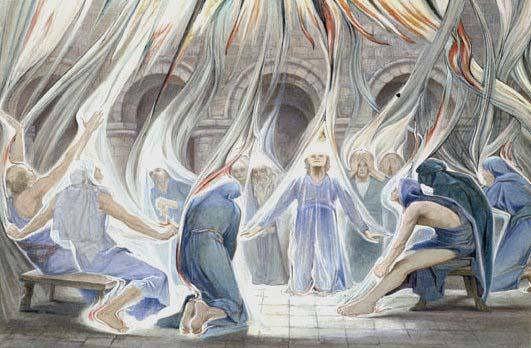
Sabbath rest, we are called to rest

Pastor Jim Driskell
First St Johns
Sabbath Sermon March 30, 2014 He told us to rest in Him

We make our beginning in the Name of God the Father … And all those who know rest and peace in the Lord of the Sabbath said … AMEN

(Juggling my date book,) I’ll do the reading for Exodus, but then I have to keep practicing my sermon, I’m getting sick of hearing my own voice,(sorry I’ll be right with you) but if I do that in the morning, I’m going to have to be up by 5:30, so that I can get my workout in, do devotions, and then work for a couple of hours before I leave, or I’m going to have to stay up later…..)
We keep trying to find that magic wand to make more time, to try to be more efficient with the time we have. When I worked for Motorola, they were big on stuff like this, they paid for people to take Time Management Classes, during work time. Have to be more efficient, which meant your work days were about (holding hands straight out to the side) this much bigger than when you started. So how about family, nuclear and extended, the kids’ swim meets, music lessons, trips, shared times, quiet moments. How about those other goals in your life; sports, civic, academic, your spouse’s pursuits, and yes once in awhile actually watch a Red Sox game? It’s been estimated that if we did everything that we should do in a day, Red Sox extra, we would need a 36 hour day, mercifully that also includes sleep.
The Sabbath is the 4th commandment, Gene Veith notes, “one of the ten commandments, up there with killing, stealing, not committing adultery… the Sabbath’s holiness is to be recognized by not working on that day.”
So how does a Christian manage his time, I have to tell you, not a whole lot differently. We live in the world too. We put too much trust in our own judgment, we have to do this, we have to do that, can’t let my child get behind, got to put more time in at work, do an Olympic distance triathlon under 2 hours before I’m 60, I want more degrees, on and on, when do we stop and wait on God?
Well, if I shift this around, if I stay up later on Saturday night, I can go to one service, no Bible study, no fellowship interaction, but I can do a zip in pray, sermon, sing, zip out and I’m done. Is that an A priority or a B, Covey says it’s an A, all right, but I’m only budgeting two hours, no more. Make no mistake about it, clergy are pretty much the same, different motivation but…, have to get that new book, titled The Two Minute Pastor.
Rabbi Heschel talks about athletes having to take a breathing spell in order to collect their strength. I’ve been doing triathlons for twenty years, part of race preparation is tapering, for the week prior to your race you rest and let your body repair. Last year I decided to do an racquetball tournament match 2 days before a race. I might as well have not shown up for the race. Rabbi Heschel notes the Sabbath, is time God gives us to taper.
What does God say about this? “In returning and rest you shall be saved; in quietness and in trust shall be your strength.” But you were unwilling, (Is. 30:15). This is our Father who is telling us what would be best for us to do. God is not telling us that we will be saved if we become couch potatoes, the third commandment clearly states that “Six days you shall labor and do all your work,” (Ex 20:9). And we are certainly saved in our Lord Jesus Christ, but the Father is concerned that we become so absorbed in our work, our achievement, things that build our pride that we forget our Lord, we make an idol of the things we do. On the Sabbath, we all can stop and turn back to Jesus. Because the Christian Sabbath means more than the commandment, we observe the Sabbath on Sunday because that is the day that Jesus was resurrected to show us that we have life eternal in Him. Every Sabbath we are not only refreshed, God’s Law tell us to rest, we are rejuvenated with the promise of His Gospel the forgiveness of our sins and our life everlasting in Him. So mark it in your day timer now, Sabbath day of rest. Come to me, all who labor and are heavy laden, and I will give you rest. (Matt 11:28)
Having said all that, we see that Jesus violated the Sabbath in today’s reading, well at least according to Pharisees. According to the Law, and at the point in time the Law was determined by the Pharisees, it was a violation of the Sabbath for Jesus to spit on the ground to make a little mud to anoint the blind man’s eyes. Jesus chose to do His “work” in this way in order to heal the man. We could imagine that He was trying to provoke a reaction by “working” and He got one. They accused Him saying “This man is not of God…” for, according to them, not keeping the Sabbath.
The truth is as Jesus points out, He is the Lord of the Sabbath (Matt 12:8), He can do what He wants. But it also raises an issue too, that there are those who feel they have a ministry of quibbling, as if it is somehow a legitimate pursuit to overlook good work, to find the one flaw, the blemish on an otherwise good face and try to deface the entire effort.
If we are called to do good works, we should do good works, if it’s on the Sabbath it’s no doubt within God’s will, let’s not quibble with someone if they’ve just done a good work. Jesus tells us that the Sabbath was made for man, not man for the Sabbath. The Sabbath is always intended to be a time of rest, of rejuvenation, and Dr Veith also points out: “the Sabbath speaks to us of Christ. That God wants us to honor Him by not working is a reminder that we are not saved by our works,…” But maintain some perspective and don’t lose sight of what God is doing, as the Pharisees did when they were in the presence of God, Jesus the Son of God.
It is interesting to note that in our readings today, Jesus saying He is the light of the world, God telling Isaiah: “I will turn the darkness before them into light”, Paul telling us that we are children of light and that we worship on “Sunday”. We are children of light, we do need to remember the Lord in a day of rest and worship, we do need to do good works and not to tear down another’s good efforts, but help them and encourage them in their work. But the Sabbath is also a time that God gives us in order to separate from the world, the day in and day out, the things that hound us and turns us to Him in worship. We need to detach from the world on a regular basis and come to Him for rest, relief, hope, promise, restoration. You do not get this anywhere else but in the church. When we trust in God to turn to Him on a regular basis, once every seven days seems to be a minimum, He gives us what we need to return to the world truly renewed, restored in Him and ready to deal with what the world dishes out.
When we don’t do that, when we trust in what we want, what the world pushes us to do, after awhile we find that the world has ground us down and convinced us that there is no hope. We find that we have been detached from the Sabbath, which is detachment from the church and then detached from the hope and promise in Jesus. It is a commandment that we are not good about honoring, take some time this week, do it with the rest of the family, how can you make the Sabbath more family honoring and therefore more God honoring.
The peace of God which surpasses all understanding keep your hearts and minds through Christ Jesus. Amin and Shalom


Discipling leadership, not management

That heavy breathing you’re hearing is me putting down my Kindle and rushing back to my laptop keyboard to share these notes from Mike Breen.

Yea, these are observations that I have intuitively felt since I became a pastor. My Bachelor’s degree is in Business Management, I worked in corporate finance for twenty years. I’m certainly not averse to applying management principles, but every time it came up in discussions in church, I resisted 5-year plans, church-growth, mission statements. These have their place but as Breen observes:

“The Church is crying out for leaders who model a life worth imitating. Dan Kimball puts it this way: “Leadership in the emerging church is no longer about focusing on strategies, core values, mission statements, or church-growth principles. It is about leaders first becoming disciples of Jesus with prayerful, missional hearts that are broken for the emerging culture. All the rest will flow from this, not the other way around.” (Mike Breen Building a Discipling Culture on Kindle) Ya! Amen and Amen. As a pastor I have learned you do not “manage” church. Sure there are times when you have to apply the principles, but if you are busy “managing” and not open to the moving of the Holy Spirit, well frankly, you are in the wrong “business”.

“We need leaders who will step out of “managing church” and make discipling others their primary objective. The time has come to humbly acknowledge before God that we have failed to train men and women to lead in the style of Jesus. Whether through ignorance or fear, we have taken the safe option, training pastors to be theologically sound and effective managers of institutions rather than equipping them with the tools they need to disciple others.”

Yea, as Breen points out, we are being “managed” to death. I haven’t seen anyone in any sector of society who would disagree. No doubt we have different reasons, but we need leadership and we certainly need it in the church, which for too long has been a spiritual enabler versus, a spiritual leader. A  working understanding of discipleship will make any church a place that will be used by the Holy Spirit.

A further amen to the following: “the Church is the best place to offer a genuine model of leadership. We have Jesus’ example to learn from and to share with the rest of the world. When we take on the lifestyle of Jesus as a leader, those outside the Church will see and respond. This is not just a message to senior pastors— Jesus calls us all to be leaders. The commission to go and make disciples is a call for leaders—you are leading when you are making a disciple.” Yea, I know Jesus ain’t a Type A Wall St type. I think we would all agree that is a good thing. Why would we then “lead” His church, by those kind of principles and the answer is of course, NO.

Our “business” is to be “fishers of men” and then to go and make disciples. Anything that interferes with that is not of God and is not about helping us to live under the Lordship of Jesus Christ and salvation in Him.

Humbleness in the workplace

As Christians whether we are the “boss”, in any kind of prominent position ya like a pastor, or just known as a Christian where you work, or part of group, in the community, there is a kind of attitude and humility that is generally part of being a Christian. I like C.S. Lewis’ quote: “Humility is not thinking less of yourself, it’s thinking of yourself less.” To be sure, we are more Christlike when we are more concerned with the interests of others then our own concerns, our own agenda. Believe me it is a struggle for me.

What’s that fine line between who is in charge and how that looks and thinking of others. To be sure Father Frederick Nkwasibwe’s observation that: “Humility occasions commitment to conquer all conditioning’s and biases within oneself. In addition, it occasions combat of individual, institutional and structural discrimination and prejudice.” (Business Courage p 397) Too be sure we need to be aware of our prejudices in many areas of our makeup. Jesus certainly modeled that. Certainly 1st century Israel was a very provincial and prideful people. They were God’s chosen and everyone else wasn’t. There was particular acrimony between them and Samaritans, in Jesus’ interactions with Samaritans He showed as much charity to them and other non-Israelites as He did to anyone. He also dealt with those who were prideful in no uncertain terms. In terms of humility, it is being focused on what is important, are we truly acting in a way that brings glory to God. Sometimes you have to hold people accountable and Jesus did that with His own followers and with those in the Jewish leadership. But He did not let another’s ethnicity or as it were “paganism” be a barrier. Jesus treated the Roman centurion with respect, the Syro-Phoenician woman, and the Samaritans. He served them all even though they were very far from knowing who Jesus was and what He was all about.

“Demonstrating humility in leading, interpersonal communication, developing human skills, learning, implementing corrective action and giving feedback among others constitute a big advantage of practicing and living healthy mature-faith-focus workplace spirituality. This highly impacts productivity. For example, a humble and contrite heart of the boss does not accept to live luxuriously at the expense of the staff and endeavors to bridge the disparity in top-up allowances of benefits that exists between himself and the staff. The courage of leadership typified by the virtue of temperance is, for example, required by the highly paid CEOs or MDs at an S&P 500 company or other organizations making over 100 times more than a typical worker receives. Similarly, a humble and contrite heart of the follower is always cautious and prudent yet tight-lipped when it lacks evidence to speak… Humility makes leaders unashamed to behave in a manner that is not a popular workplace fashion yet a righteous one….Humility makes it easy for leadership to establish credible and altruistic workplace structures that can effectively and ethically moderate tempers and mediate between competing workplace discords.” (pp 397-398)

This is a genuine concern of mine, in my own experience I’ve seen too many “leaders” make decisions that were based on pride and/or popularity. It is certainly instructive to me. As a still, relatively, new pastor, I’ve had to learn the hard way about leadership decisions, that might have been more about perception, then an actual act of pridefulness. How to assert authority, but still do it in a way that isn’t prideful, abrasive, or at least even perceived that way? Jesus could certainly do it and impact even His enemies. We watched Mel Gibson’s The Passion of the Christ again last night. Doing this blog and the movie being fresh in my mind, at least in the movie, even in defeat/crucifixion, Jesus left a discernible mark on those who witnessed His “defeat”. Certainly the Roman centurion’s witness at the crucifixion: “Truly this man was the Son of God”. (Mark 15:39) Even in the degradation and torture of crucifixion, Jesus was still perceived having strength and dignity. Was it Jesus’ true concern for those who were there, for all humanity, that showed through and influenced their perception? As a Christian leader we balance the good of the organization, our authority and need to do our job with genuine concern for those stakeholders we serve. We know stakeholders are management, shareholders, peers, employees. Yea, it’s a lot, we trust in Christ to guide us through these situations too.

We meet at the coffeehouse at the corner of W King and Beaver Sts, no cost (yea, I’ll even buy your first cup of coffee), no obligation, come on down, break up the day and join in some good discussion about being Christian in the workplace. Wednesdays 10am, parking is open right behind the church 140 W King.

Athiest’s world view

J. Warner Wallace is a Christian apologist, his blog site is “Cold Case Christianity” and I am putting this link to his website. This is a really good website about Christian apologetics, I encourage you to check it out. The link is

http://coldcasechristianity.com/2014/the-inevitable-consequence-of-an-atheistic-worldview/

This particular discussion is from an atheist who responded to one of Mr Wallace’s blogs and it really illustrates the world view that says that there is no God, that if we really are sincere in believing that, we are only responsible to ourselves, then this would probably be your world view:

“[To] all my Atheist friends.
Let us stop sugar coating it. I know, it’s hard to come out and be blunt with the friendly Theists who frequent sites like this. However in your efforts to “play nice” and “be civil” you actually do them a great disservice.
We are Atheists. We believe that the Universe is a great uncaused, random accident. All life in the Universe past and future are the results of random chance acting on itself. While we acknowledge concepts like morality, politeness, civility seem to exist, we know they do not. Our highly evolved brains imagine that these things have a cause or a use, and they have in the past, they’ve allowed life to continue on this planet for a short blip of time. But make no mistake: all our dreams, loves, opinions, and desires are figments of our primordial imagination. They are fleeting electrical signals that fire across our synapses for a moment in time. They served some purpose in the past. They got us here. That’s it. All human achievement and plans for the future are the result of some ancient, evolved brain and accompanying chemical reactions that once served a survival purpose. Ex: I’ll marry and nurture children because my genes demand reproduction, I’ll create because creativity served a survival advantage to my ancient ape ancestors, I’ll build cities and laws because this allowed my ape grandfather time and peace to reproduce and protect his genes. My only directive is to obey my genes. Eat, sleep, reproduce, die. That is our bible.
We deride the Theists for having created myths and holy books. We imagine ourselves superior. But we too imagine there are reasons to obey laws, be polite, protect the weak etc. Rubbish. We are nurturing a new religion, one where we imagine that such conventions have any basis in reality. Have they allowed life to exist? Absolutely. But who cares? Outside of my greedy little gene’s need to reproduce, there is nothing in my world that stops me from killing you and reproducing with your wife. Only the fear that I might be incarcerated and thus be deprived of the opportunity to do the same with the next guy’s wife stops me. Some of my Atheist friends have fooled themselves into acting like the general population. They live in suburban homes, drive Toyota Camrys, attend school plays. But underneath they know the truth. They are a bag of DNA whose only purpose is to make more of themselves. So be nice if you want. Be involved, have polite conversations, be a model citizen. Just be aware that while technically an Atheist, you are an inferior one. You’re just a little bit less evolved, that’s all. When you are ready to join me, let me know, I’ll be reproducing with your wife.
I know it’s not PC to speak so bluntly about the ramifications of our beliefs, but in our discussions with Theists we sometimes tip toe around what we really know to be factual. Maybe it’s time we Atheists were a little more truthful and let the chips fall where they may. At least that’s what my genes are telling me to say.”
– See more at: http://coldcasechristianity.com/2014/the-inevitable-consequence-of-an-atheistic-worldview/#sthash.kuGEkvUb.dpuf


Come on let’s be honest, if we look at the world today and yes that includes way too many Christians, this is the outlook of those in the world today. It’s all about me, it’s all about my desires, there is nothing else, everything’s an accident, we are just DNA, strictly driven by our chemical composition. He refers to others who are “fooling” themselves by living the suburban life, but hey, what he’s described is pretty much suburban life. They may not call themselves “atheists”, but as is always the case, what you say is muted, or at least hard to hear over your life and your actions. Regardless of where you, the actions are of what this writer describes, that there is no God, there is no one that we are responsible to except our own chemicals and genes, the only thing that keeps us from devolving into anarchy are laws and societal mores/sanctions, that’s pretty much the outlook of the majority of people in the world today.

Why is there such hopelessness, such loss, such anger, antagonism in the world? Because of this worldview. We do not take our relationship with Jesus seriously, we let the rest of the world decide that it’s not important. We, as Christians, don’t care that we have the truth and we could be helping a lot of people with the truth and we simply watch the continued damage. Why? Well it’s wrong to impose my views. Really? We see the damage, the lack of hope, of promise, of turning to God and His Word, His guidance and what it could do in the world and say: “I just don’t want to impose my views.”? If God put you here to be part of the rescue effort and you’re not serving in your part, is that responsible? As the pastor of a downtown church I see so many who just live hand to mouth, they are the extreme example of what this writer has described. They have lived according to their own desires, they have been dumped into the street because their passions have been their master and they have no hope, no promise and they expect me and the government to simply hand them things and let them sink deeper into the muck of a lost, hopeless world. Really where do you think this writer’s attitude will get him? Detached from the world, from family, from society, from the world and even though it may seem he’s got it altogether, the end is not going to be good. I’ve been peripherally involved in two suicides in the last three months. Two people who gave up, who simply did not trust what God was doing and decided they didn’t want to cope. They fatally damaged themselves, they caused those around them profound grief, feelings of failure and yes even feeling more estranged from God i.e. “God, how could you let this happen.” The damage is intense and widespread, the collateral damage is extensive and probably cannot be imagined. I know the response is going to be… Just because of the worldview this one writer articulate? Yes! How can the outcome be any different, even to the extreme of suicide. How can someone have a world view like this and not be completely hopeless and feeling lost, out of control and without any sense that we are in a universe that is completely without redemption or promise.

I just included the raw reply the writer sent to Mr Wallace. You will find the Mr Wallace’s comments very interesting. Please feel free to weigh in and let’s discuss.

Please really consider the discussion and the only logical outcome of the two worldviews. I get the sense from people that they resist because “you’re just trying to impose your worldview, trying to recruit me, trying to deprive me, trying to be smarter than me”. Yes that is where Christian humility comes in and in my position as a pastor I guess that the perception could be “come be a customer of mine”. I genuinely do want what is best for people, the only best is in Christ, plain and simple. If they need to be part of a different style of worship and they genuinely feel led and connected by the Holy Spirit, well via con dios. I see so much hopelessness, so much loss, so much anger and floundering all around me and I can look anyone in the eye and say I sincerely want them to know freedom, peace, hope in Christ. My selfish reason? Because I do want the world to be a place that is more compassionate and loving, where we can become more, instead of just spiraling down. The only way that’s going to happen is through Jesus, to know salvation and lordship through Him. There is just no other alternative and when people come to realize that, well maybe for another selfish purpose, I won’t have to deal with another suicide, or someone else coming to me expecting me to hand them something, we will want what’s truly best for each other.

“[To] all my Atheist friends. 

Let us stop sugar coating it. I know, it’s hard to come out and be blunt with the friendly Theists who frequent sites like this.  However in your efforts to “play nice” and “be civil” you actually do them a great disservice.  

We are Atheists.  We believe that the Universe is a great uncaused, random accident. All life in the Universe past and future are the results of random chance acting on itself.  While we acknowledge concepts like morality, politeness, civility seem to exist, we know they do not.  Our highly evolved brains imagine that these things have a cause or a use, and they have in the past, they’ve allowed life to continue on this planet for a short blip of time.  But make no mistake: all our dreams, loves, opinions, and desires are figments of our primordial imagination. They are fleeting electrical signals that fire across our synapses for a moment in time. They served some purpose in the past.  They got us here. That’s it.  All human achievement and plans for the future are the result of some ancient, evolved brain and accompanying chemical reactions that once served a survival purpose.  Ex: I’ll marry and nurture children because my genes demand reproduction, I’ll create because creativity served a survival advantage to my ancient ape ancestors, I’ll build cities and laws because this allowed my ape grandfather time and peace to reproduce and protect his genes. My only directive is to obey my genes. Eat, sleep, reproduce, die.  That is our bible.

We deride the Theists for having created myths and holy books.  We imagine ourselves superior.  But we too imagine there are reasons to obey laws, be polite, protect the weak etc.  Rubbish. We are nurturing a new religion, one where we imagine that such conventions have any basis in reality.  Have they allowed life to exist?  Absolutely.  But who cares?  Outside of my greedy little gene’s need to reproduce, there is nothing in my world that stops me from killing you and reproducing with your wife.  Only the fear that I might be incarcerated and thus be deprived of the opportunity to do the same with the next guy’s wife stops me.  Some of my Atheist friends have fooled themselves into acting like the general population.  They live in suburban homes, drive Toyota Camrys, attend school plays.  But underneath they know the truth.  They are a bag of DNA whose only purpose is to make more of themselves. So be nice if you want. Be involved, have polite conversations, be a model citizen.  Just be aware that while technically an Atheist, you are an inferior one.  You’re just a little bit less evolved, that’s all.  When you are ready to join me, let me know, I’ll be reproducing with your wife.

I know it’s not PC to speak so bluntly about the ramifications of our beliefs, but in our discussions with Theists we sometimes tip toe around what we really know to be factual. Maybe it’s time we Atheists were a little more truthful and let the chips fall where they may.  At least that’s what my genes are telling me to say.”

– See more at: http://coldcasechristianity.com/2014/the-inevitable-consequence-of-an-atheistic-worldview/#sthash.kuGEkvUb.dpuf

“[To] all my Atheist friends. 

Let us stop sugar coating it. I know, it’s hard to come out and be blunt with the friendly Theists who frequent sites like this.  However in your efforts to “play nice” and “be civil” you actually do them a great disservice.  

We are Atheists.  We believe that the Universe is a great uncaused, random accident. All life in the Universe past and future are the results of random chance acting on itself.  While we acknowledge concepts like morality, politeness, civility seem to exist, we know they do not.  Our highly evolved brains imagine that these things have a cause or a use, and they have in the past, they’ve allowed life to continue on this planet for a short blip of time.  But make no mistake: all our dreams, loves, opinions, and desires are figments of our primordial imagination. They are fleeting electrical signals that fire across our synapses for a moment in time. They served some purpose in the past.  They got us here. That’s it.  All human achievement and plans for the future are the result of some ancient, evolved brain and accompanying chemical reactions that once served a survival purpose.  Ex: I’ll marry and nurture children because my genes demand reproduction, I’ll create because creativity served a survival advantage to my ancient ape ancestors, I’ll build cities and laws because this allowed my ape grandfather time and peace to reproduce and protect his genes. My only directive is to obey my genes. Eat, sleep, reproduce, die.  That is our bible.

We deride the Theists for having created myths and holy books.  We imagine ourselves superior.  But we too imagine there are reasons to obey laws, be polite, protect the weak etc.  Rubbish. We are nurturing a new religion, one where we imagine that such conventions have any basis in reality.  Have they allowed life to exist?  Absolutely.  But who cares?  Outside of my greedy little gene’s need to reproduce, there is nothing in my world that stops me from killing you and reproducing with your wife.  Only the fear that I might be incarcerated and thus be deprived of the opportunity to do the same with the next guy’s wife stops me.  Some of my Atheist friends have fooled themselves into acting like the general population.  They live in suburban homes, drive Toyota Camrys, attend school plays.  But underneath they know the truth.  They are a bag of DNA whose only purpose is to make more of themselves. So be nice if you want. Be involved, have polite conversations, be a model citizen.  Just be aware that while technically an Atheist, you are an inferior one.  You’re just a little bit less evolved, that’s all.  When you are ready to join me, let me know, I’ll be reproducing with your wife.

I know it’s not PC to speak so bluntly about the ramifications of our beliefs, but in our discussions with Theists we sometimes tip toe around what we really know to be factual. Maybe it’s time we Atheists were a little more truthful and let the chips fall where they may.  At least that’s what my genes are telling me to say.”

– See more at: http://coldcasechristianity.com/2014/the-inevitable-consequence-of-an-atheistic-worldview/#sthash.kuGEkvUb.dpuf

“[To] all my Atheist friends. 

Let us stop sugar coating it. I know, it’s hard to come out and be blunt with the friendly Theists who frequent sites like this.  However in your efforts to “play nice” and “be civil” you actually do them a great disservice.  

We are Atheists.  We believe that the Universe is a great uncaused, random accident. All life in the Universe past and future are the results of random chance acting on itself.  While we acknowledge concepts like morality, politeness, civility seem to exist, we know they do not.  Our highly evolved brains imagine that these things have a cause or a use, and they have in the past, they’ve allowed life to continue on this planet for a short blip of time.  But make no mistake: all our dreams, loves, opinions, and desires are figments of our primordial imagination. They are fleeting electrical signals that fire across our synapses for a moment in time. They served some purpose in the past.  They got us here. That’s it.  All human achievement and plans for the future are the result of some ancient, evolved brain and accompanying chemical reactions that once served a survival purpose.  Ex: I’ll marry and nurture children because my genes demand reproduction, I’ll create because creativity served a survival advantage to my ancient ape ancestors, I’ll build cities and laws because this allowed my ape grandfather time and peace to reproduce and protect his genes. My only directive is to obey my genes. Eat, sleep, reproduce, die.  That is our bible.

We deride the Theists for having created myths and holy books.  We imagine ourselves superior.  But we too imagine there are reasons to obey laws, be polite, protect the weak etc.  Rubbish. We are nurturing a new religion, one where we imagine that such conventions have any basis in reality.  Have they allowed life to exist?  Absolutely.  But who cares?  Outside of my greedy little gene’s need to reproduce, there is nothing in my world that stops me from killing you and reproducing with your wife.  Only the fear that I might be incarcerated and thus be deprived of the opportunity to do the same with the next guy’s wife stops me.  Some of my Atheist friends have fooled themselves into acting like the general population.  They live in suburban homes, drive Toyota Camrys, attend school plays.  But underneath they know the truth.  They are a bag of DNA whose only purpose is to make more of themselves. So be nice if you want. Be involved, have polite conversations, be a model citizen.  Just be aware that while technically an Atheist, you are an inferior one.  You’re just a little bit less evolved, that’s all.  When you are ready to join me, let me know, I’ll be reproducing with your wife.

I know it’s not PC to speak so bluntly about the ramifications of our beliefs, but in our discussions with Theists we sometimes tip toe around what we really know to be factual. Maybe it’s time we Atheists were a little more truthful and let the chips fall where they may.  At least that’s what my genes are telling me to say.”

– See more at: http://coldcasechristianity.com/2014/the-inevitable-consequence-of-an-atheistic-worldview/#sthash.kuGEkvUb.dpuf

“[To] all my Atheist friends. 

Let us stop sugar coating it. I know, it’s hard to come out and be blunt with the friendly Theists who frequent sites like this.  However in your efforts to “play nice” and “be civil” you actually do them a great disservice.  

We are Atheists.  We believe that the Universe is a great uncaused, random accident. All life in the Universe past and future are the results of random chance acting on itself.  While we acknowledge concepts like morality, politeness, civility seem to exist, we know they do not.  Our highly evolved brains imagine that these things have a cause or a use, and they have in the past, they’ve allowed life to continue on this planet for a short blip of time.  But make no mistake: all our dreams, loves, opinions, and desires are figments of our primordial imagination. They are fleeting electrical signals that fire across our synapses for a moment in time. They served some purpose in the past.  They got us here. That’s it.  All human achievement and plans for the future are the result of some ancient, evolved brain and accompanying chemical reactions that once served a survival purpose.  Ex: I’ll marry and nurture children because my genes demand reproduction, I’ll create because creativity served a survival advantage to my ancient ape ancestors, I’ll build cities and laws because this allowed my ape grandfather time and peace to reproduce and protect his genes. My only directive is to obey my genes. Eat, sleep, reproduce, die.  That is our bible.

We deride the Theists for having created myths and holy books.  We imagine ourselves superior.  But we too imagine there are reasons to obey laws, be polite, protect the weak etc.  Rubbish. We are nurturing a new religion, one where we imagine that such conventions have any basis in reality.  Have they allowed life to exist?  Absolutely.  But who cares?  Outside of my greedy little gene’s need to reproduce, there is nothing in my world that stops me from killing you and reproducing with your wife.  Only the fear that I might be incarcerated and thus be deprived of the opportunity to do the same with the next guy’s wife stops me.  Some of my Atheist friends have fooled themselves into acting like the general population.  They live in suburban homes, drive Toyota Camrys, attend school plays.  But underneath they know the truth.  They are a bag of DNA whose only purpose is to make more of themselves. So be nice if you want. Be involved, have polite conversations, be a model citizen.  Just be aware that while technically an Atheist, you are an inferior one.  You’re just a little bit less evolved, that’s all.  When you are ready to join me, let me know, I’ll be reproducing with your wife.

I know it’s not PC to speak so bluntly about the ramifications of our beliefs, but in our discussions with Theists we sometimes tip toe around what we really know to be factual. Maybe it’s time we Atheists were a little more truthful and let the chips fall where they may.  At least that’s what my genes are telling me to say.”

– See more at: http://coldcasechristianity.com/2014/the-inevitable-consequence-of-an-atheistic-worldview/#sthash.kuGEkvUb.dpuf

“[To] all my Atheist friends. 

Let us stop sugar coating it. I know, it’s hard to come out and be blunt with the friendly Theists who frequent sites like this.  However in your efforts to “play nice” and “be civil” you actually do them a great disservice.  

We are Atheists.  We believe that the Universe is a great uncaused, random accident. All life in the Universe past and future are the results of random chance acting on itself.  While we acknowledge concepts like morality, politeness, civility seem to exist, we know they do not.  Our highly evolved brains imagine that these things have a cause or a use, and they have in the past, they’ve allowed life to continue on this planet for a short blip of time.  But make no mistake: all our dreams, loves, opinions, and desires are figments of our primordial imagination. They are fleeting electrical signals that fire across our synapses for a moment in time. They served some purpose in the past.  They got us here. That’s it.  All human achievement and plans for the future are the result of some ancient, evolved brain and accompanying chemical reactions that once served a survival purpose.  Ex: I’ll marry and nurture children because my genes demand reproduction, I’ll create because creativity served a survival advantage to my ancient ape ancestors, I’ll build cities and laws because this allowed my ape grandfather time and peace to reproduce and protect his genes. My only directive is to obey my genes. Eat, sleep, reproduce, die.  That is our bible.

We deride the Theists for having created myths and holy books.  We imagine ourselves superior.  But we too imagine there are reasons to obey laws, be polite, protect the weak etc.  Rubbish. We are nurturing a new religion, one where we imagine that such conventions have any basis in reality.  Have they allowed life to exist?  Absolutely.  But who cares?  Outside of my greedy little gene’s need to reproduce, there is nothing in my world that stops me from killing you and reproducing with your wife.  Only the fear that I might be incarcerated and thus be deprived of the opportunity to do the same with the next guy’s wife stops me.  Some of my Atheist friends have fooled themselves into acting like the general population.  They live in suburban homes, drive Toyota Camrys, attend school plays.  But underneath they know the truth.  They are a bag of DNA whose only purpose is to make more of themselves. So be nice if you want. Be involved, have polite conversations, be a model citizen.  Just be aware that while technically an Atheist, you are an inferior one.  You’re just a little bit less evolved, that’s all.  When you are ready to join me, let me know, I’ll be reproducing with your wife.

I know it’s not PC to speak so bluntly about the ramifications of our beliefs, but in our discussions with Theists we sometimes tip toe around what we really know to be factual. Maybe it’s time we Atheists were a little more truthful and let the chips fall where they may.  At least that’s what my genes are telling me to say.”

– See more at: http://coldcasechristianity.com/2014/the-inevitable-consequence-of-an-atheistic-worldview/#sthash.kuGEkvUb.dpuf
Failure, not the final frontier, often just the beginning.

There is such a sensitivity to failure. People today are almost hypervigilant about being “safe”, playing it “safe”. Frankly I hear the word safe/safety so abused I just want to cringe from embarrassment, because there are so many who cringe in fear. Do the reading, in Christian history, any kind of history. Say what you will, but there is a lot of courage in the business world. Reading an article in Forbes, Warren Buffets children said that he expect them to fail, if they weren’t failing at some point then they weren’t really doing what needed to be done.

Where would we be if people like Columbus, Edison (I’m sure you’ve heard it took 500 attempts for him to get the incandescent light right), the American Founding Fathers. There have been a lot of people who’ve tried but failed, but who should probably be recognized just because they made the effort to make it better for someone else.

In secular terms,  I certainly can’t say I’ve been any kind of success, but I have been faithful. Is there any doubt that God is not always about success in our life, but He is about our being faithful, taking the chances, not cowering in fear.

You’ve no doubt heard of Corning Glass, in Corning, NY. It’s been around for 162 years, that alone should tell you it’s got to have something going for it. Connie Guglielmo writes in an interview with Matt Dejneka: “There are no accidents.” “Those four words could sum up Corning’s 162-year history of continuous reinvention. No concoction is ever deemed an accident or true failure since Corning believes in ‘patient capital,’ the idea of investing in unproven technologies even if there’s no quick profit. The firm is rife with stories of inventions that sat on the shelves for decades until the right opportunity came along. The weather-resistant borosilicate glass designed for railroad lanterns gave rise to Pyrex cookware…” (Forbes Mag Sept 23, 2013 p 90)

Not failure, so much as the right opportunity. Those who stayed “safe” weren’t remembered. We remember Moses, Abraham, David, Paul, Matthew, Peter on and on. We don’t remember those who were “smart”, and played it “safe”. The world calls us to be “safe”, and I still can not understand what that means, safe into a mediocre twilight of existence, simply fading away. There is no hope and promise in what the world offers, and it certainly doesn’t offer anything that doesn’t rot, die and decay. Centuries of Christians have been called to stand up and challenge the world, in whatever God guides us to do, in the church, in education, in business in the government. Christians have been playing it “safe” for too long and yes that certainly includes the church. Even as the church we believe the world’s story and not Christ’s, we cringe and cower just to tell those around us about Him. We are put into these places for a reason, not to be obnoxious and loud, but to be faithful, the reason for our strength, our faith, our existence is in Christ the Lord.

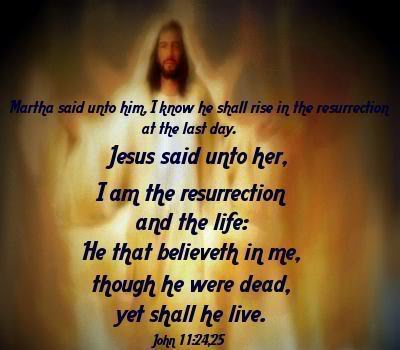
The resurrection, Christ’s promise to us

The resurrection is the bedrock of the Christian faith. The most consistent event of Christianity is remembering the Resurrection, come on now… What am I talking about? … Christians worship on Sunday in remembrance of the resurrection, of the promise of Christ of eternal life. There is more to life, in Christ this life really is a brief season. Regardless of how difficult this life it, life in the resurrection will be life and life more abundant, as Jesus promised. The hope and promise in Jesus, in the Resurrection gives meaning to our life, our true life is eternal in our Resurrection, in life in Christ, in the New Jerusalem.

Now this is of course pooh-poohed in the world. The world will either give us some vague idea of being part of the universe, being a drop in the eternal sea. Or that our life really has no meaning, once and out, rotting in the ground, or eternal birth, death and rebirth. These are not of a gracious God, these are of a sadist, who wants to take away any hope or meaning. In the resurrection, I will still be Jim, I will be in a very physical body, I was made to be physical and while there will be a time in the spiritual, assuming the Lord returns before I’m called home. But the resurrection will be life that God had originally intended, the ideal world of the Garden. In the resurrection, the world that we have will be familiar, but it will be a perfect world.

So as you can see the resurrection isn’t just a quaint notion, some esoteric bizarre promise, but it is that which through Christ’s death we are made holy/righteous/just through Him. That we are saved to eternity to be resurrected in a perfect body, a perfect world that will not deteriorate, where there will be no sicknessImagethere will be life eternal, no death. Our lives will be challenging, rewarding, enriching, always something new, there will be love, compassion, encouragement. It will be life on an upward slope. certainly challenges, but always a way to achieve, learning and ultimately over coming, because we will be in the presence of Him who “These shall make war with the Lamb, and the Lamb shall overcome them: for he is Lord of lords, and King of kings: and they that are with him are called, and chosen, and faithful.”
So when we listen to the world, a world sunk in sin, death, no hope, no promise, that it will result in death and destruction just like the death Satan will suffer, you are listening to a world that does not know what it’s talking about and is lost in death, destruction. When we know the resurrection by faith, when the Holy Spirit has put that promise on our heart, we really don’t need “proofs”, but when we witness to others, we can point them to the facts and away from the fantasy and hopelessness of the world.

Tim Chaffey in “Answers Magazine” (April – June 2014 pp 34-37) discusses what the world proposes as “answers” to the resurrection. That it was a case of mistaken identity. Really? On its face its pretty weak, why would the people involved buy into something they knew to be false? Would the Romans execute the wrong person? No! The disciples were good, strong, intelligent men, would they willingly teach something they knew to be nonsense? To what end, at what price? ‘

There’s the “swoon theory” as if a Roman soldier wouldn’t know when someone was dead and would allow him to be taken before he was. That is just ignoring historical fact.

The body was moved. Again ignoring fact, if the Romans, Jews, anyone involved knew where the body was they would have revealed it. Why would people afterward go out and perpetrate an obvious lie?

Visions, that is, the disciples pretty much imagined this whole thing. The premise of a lot of these theories is that the disciples were just kind of stupid country bumpkins, they don’t say so explicitly, but the inference is clear. Jesus’ appearances were attested to by a number of people, one person who was completely antagonistic to Him, Saul of Tarsus, who Jesus renamed Paul when He gave Paul the charge to witness to Him among the Gentiles. There are others, that there was a family tomb. Which is just weak, what difference does it make? If Jesus was dead, where He was buried would be common knowledge. Seance? Really, come on, now we’re just kind of projecting our current culture on to a people who just wouldn’t go there. Annihilation, some unexplained reason the body was destroyed and no one’s discussed it since, that it’s some kind of coverup. Again, that would just be a serious ignorance of history. Wrong tomb?

Chaffey lists out the following: Jesus testified to His resurrection before and after the fact. Luke writes in Acts 1:3, that “Jesus presented Himself alive after His suffering by many infallible proofs. There are at least ten “post-resurrection” appearances of Jesus. He appeared to Paul, Peter, James, individually, the rest of the apostles and over five hundred at once. “Most of these people were still alive when Paul wrote these words, implying that his readers would check with these witnesses if they didn’t take his word for it.”

James, Jesus’ half-brother, in fact all of His siblings, thought that Jesus “was out of His mind”. After the resurrection, James becomes, essentially, the first Christian bishop of Jerusalem. He continued to be an important Christian leader until he was martyred, dying for the truth of the life, deity and resurrection of his half-brother.

When Jesus was arrested the disciples ran away, after Pentecost, these men willingly went out into the world to proclaim Jesus and were martyred as a result. The resurrection was preached by the disciples from the beginning, the resurrection was the center piece of their teaching, it was what the Christian church was built on. These people weren’t in a position of power to force these teachings on anyone, and yet they were believed, and the church grew, even through martyrdom, persecution and deprivation. Chaffey points out that they did not help their cause by reporting that the first witness to the resurrection was a woman. Like it or not, in that time, the testimony of a woman and one who, may or may not, have been a prostitute, but attested that she had seven demons cast out of her. This would not be a well received testimony, certainly would not have improved the case of ordinary men, making an extraordinary claim.

There is no plausible argument to deny the resurrection, many have been tried, but these arguments deny and/or contradict the historical facts. The resurrection is fact, not just to prove a point, to make a case. But it is fact according the the life and promises of God incarnate, Jesus the Lord, but it is also to give hope to a hopeless world. The world is lost in sin and death, there is no other possible outcome, except for the resurrection promised to us by God the Son 2,000 years ago, by His resurrection from the dead.

Sandwiches: A grinder or a hero?

An article in Inc Magazine talks about how leaders are perceived. This was a study done by Maia Young, an associate professor of human resources and organizational behavior at UCLA with Michael Morris and Vicki Scherwin who are also business professors. Participants were, basically, asked whether the best leaders are gifted, charismatic or hardworking. I think there is something to the fact that there are people who can sort of light things up, versus the person who sort of grinds things out. There is an upside and downside to both. If one can generate excitement, get people stimulated, then he/she may have that certain je ne sais crois. I’ve seen that kind of person and good for them. The downside being is that person can also be kind of an empty suit (or collar if you’re talking about pastors). The guy who genuinely does the hard work, can kind of be overlooked, taken for granted. Some research has shown that the “perfectionist” is more of a procrastinator and less a hard-worker. My radar has always gone up when I heard someone try to show me how much they care because they are a “perfectionist”, even before the research I kind of had the feeling this was someone who was more concerned about making a mistake that might cause them embarrassment, then being concerned with getting the job done. I’ve seen plenty of hard-working done by someone who wasn’t terribly concerned about looking pretty, but getting the job done.

“The findings seem to suggest that leaders should keep the nitty-gritty details of their jobs under wraps.” (J.J. McCorvey Inc Magazine  Oct 2011 p 28). I would agree with that, an old Coast Guard axiom “the world doesn’t care about the labor pains, they just want to see the baby.” Lots of times we had to “gerry-rig” things in order to make something work, do the rescue, effect the arrest. It took extra time, work and creativity, and was often something that wasn’t pretty, but it worked. It might have been just enough to get to someone in time or prevent violence. I think a lot can be said about that in terms of ministry. There are people in ministry, who seem to be more concerned about the looking pretty, versus the actual content (ok, I guess this is my way of saying “look at me”). Yea, this is another shot at the Joel Osteen sort, put in a lot of work on the aesthetics, not so much on the content. Osteen was a salesperson (nothing against salespeople, been there/done that, myself). But I also got the education, did the work, spent the time,  and money to get a degree, did as much as I could to learn to be a seel sorger a “soul healer”. Is it really about making God so user friendly? Or is it about doing what God leads you to do to be a true disciple, someone who is genuinely looking to be led and grow in Christ?

Yea, there is hard work in doing the glitzy and I shouldn’t use this as an excuse to not try to up the pizzazz in what I do. Having said that, and yes, I guess I am stacking the deck a little, but is it about someone who is interested in your spiritual health, or someone who is perceived to be more charismatic, puts on a better show? Other than “it puts butts in the pews, (or actually theater seats which is more the case for most of those ministries), can anyone really make the case for how the “charismatic/showmanship” really makes us more fit for the Kingdom?

Jesus said: “Jesus said to him, “No one who puts his hand to the plow and looks back is fit for the kingdom of God.” (Luke 9:62 ESV). Putting the hand to the plow seems to mean “doing the hard work”, “looking back” seems to mean relying more on the superficiality of the world. As for me, I’m putting my hand to the plow. But at the same time, will work harder to make it more fun. So let me know.

Our “Coffee Break Bible Study” is on Wednesdays, 10am, corner of W King and Beaver Sts in downtown York. Park behind the church. And by the way, I know this may be kind of an odd hour, always looking for input, if there is a better time/place for doing these kind of studies, (we’re doing Gene Veith’s book on taking Jesus into the workplace), please let me know, I’m really looking for input and how I can better fill people’s schedules.

Like it or not, God put me here to be a spiritual father.

I’ve been struggling with the issue that Kevin Miller raises in a Leadership Journal article (From Relevant Dude to Spiritual Father Summer 2011 pp 45 – 49) whether I am supposed to be somehow “secularly relevant”, your buddy, someone who is cool. Or, am I supposed to be the seel sorger the “soul healer” or “soul doctor”. It doesn’t mean I have to be stuffy or have to put on some kind of superior airs. But to be sure, to be solidly in Christ and not driven by the current fads or worried about my popularity. It’s an issue that I’ve had with a lot of what the church has been in the past few decades, at least dating back to the 1960’s. That somehow I’m supposed to be everyone’s pal, just the cool pastor guy.

First, I have had a lot of experience in the secular in my past life and I am doing things now, such as “Christian in the Workplace”, our employment support group, our pro-life efforts, helping to organize a community radio station here at the church and other areas where I am doing things that are very relevant, as it were, to the individual’s life in the world. I’ve done the politics thing and the government thing, and that’s fine. Martin Luther’s church isn’t opposed to or ignorant of the secular. Luther was very straight forward in terms of his teaching about the two kingdoms. There is the kingdom of the left (the secular, government, commerce, etc) and the kingdom of the right (the church). Luther talked a lot about vocation and how we relate to our neighbor whether he/she is Christian or otherwise. In respect to those teachings, I am responsible for the furtherance of the church in the world. It seems that I am expected to be somehow cool, to somehow be a bud, sometimes even an enabler. Does God love you? Yes? “For God so loved the world, that He sent His only begotten Son.” Somehow though, many see that as the promise of the “Great Enabler”. “God wants me to be happy.” “God wouldn’t want me to “suffer”” (that is without alcohol, or drugs, or sex or fill in what you want). That one’s bizarre, I want to ask them “you have no idea what suffering is do you?” Many attribute this to a growing disrespect of authority. Perhaps, but it seems more like a selective attitude towards authority. It’s not about what is truly good and edifying for me, it’s all about tell me what I want to hear. Is it better to be popular or is it better to be faithful? Am I a minister of the people, or of God (Richard Foster’s question).

I’m not here to enable, to let you have guilt free indulgence. I’m here for you to grow in your relationship with Jesus, to become spiritually mature, and in doing this, to help you to serve others, to become a meaningful member of the Body of Christ. Where you are helping others to grow and mature in Christ, not to constantly take and require attention, but to contribute and serve others who are in legitimate need, to help others know true life and salvation in Jesus. But today it’s all about me, what’s in it for me. Rector Miller relates the following: “Chris, a young guy in my church …explained to me: ‘The highly relevant pastor is bro’. There’s certainly a place for pastors to be in tune with culture and to be relatable. But where do i find a man of God who will nurture my spiritual life? That’s what I need. Relevance is easy to find. But when I stumble in that same old sin that I keep slipping in, I need someone with wisdom and maturity to go to. It’s fine if that person also happens to know about some great new indie bands, but in those moments, I need something else. I need depth.'” Yea, sounds like he’s on his way. But too many aren’t and frankly just don’t care.

Miller also observes: “…though people resent church discipline and push back against it, usually deep down they know they need it. And even if they don’t like it (or me), to be a spiritual father means I must take the risk and plunge into bringing guidance and living discipline to my spiritual children…When people sense that your correction comes because you know them and you love them, the majority of people accept discipline and grow through it.

Sometimes I shake my head and wonder, Why do they stay? My theory: They’ve never known a world without internet porn and access to strong, compulsive powers. Deep down, they are saying, ‘Protect me from the forces in my life that are raging out of control and threaten to consume me.’ Discipline, caringly administered, makes them feel loved and secure.”

That has to be the focus, dealing with the forces of evil that are pressing in around us. It’s not just the obvious sources, but there are things that seem so benign and we get taken in and trapped. We all need help with that. I’ve had spiritual mentoring from the start and it is important to be dedicated and consistent. It takes a long time, it takes patience, it’s understanding that it’s about you digging deep and being guided to the things that are in you. You don’t sit and take notes, you get into deep discussion, helped along and making the decisions that truly bring you into that relationship with the Father and with your pastor and with your brothers and sisters in Jesus.

So this is what Rector Miller suggested and what I will be working on. (I will need someone to work with me, you are most welcome to take me up on this). “…’Transformation Conversations’, extended times of listening to another man helping him form a spiritual-growth plan for the coming year… It generally takes two 90-minute conversations before I feel I know the shape of someone’s soul well enough to offer a few ‘pastoral invitations.'”

“At times I look at how much time these conversations take, and I think, This is painfully slow and inefficient. The raw truth is that spiritual fathering is something you can’t accelerate, microwave, chart, whiteboard, measure or scale.

But there is no substitute for being known by another. This is parenting, meaningful spiritual intimacy. People say these conversations are changing them, but even if they weren’t, I know they are changing me: as I listen deeply to someone , I care more deeply for him and I can’t help but pray for him.”(p 47) Growth in anything is very uneven, very time consuming and also very emotionally draining. But as in anything, it’s worth it and when it’s worth it there is a price.

We all have things to deal with, that we struggle with. We have a pastor who is there to serve, by truly helping you in your relationship with God. As I’ve written before, the church is a unique place, there’s a pastor there who in an emergency can be there pretty much 24/7, but is available to meet with on a regular basis. Hmmm, tell me another place where you can call someone and they will take time to talk to you and setup a time to meet in person. Who knows you, who’s been there to provide guidance, maybe married you or even baptized you? Who wants to spiritually guide you and raise you up to be a leader in your home, in your church and in your community? To be spiritually grounded and to grow into a person that others will look to for discipling.


My God why have You forsaken Me

From Words of Life from the Cross  – The Faithful Word

From Concordia Publishing House Wednesday Night Lenten worship

Sermon: The Faithful Word (Matthew 27:45–46)

 The third word of the cross is an entirely different word. It is a word directed to the Father, a cry of abandonment in the God-forsakenness of our sin. “My God, My God, why have You forsaken Me?” spoken in Jesus’ native tongue, Aramaic. This emanates from the very depths of His soul.

Onlookers would have recognized the opening verses of Psalm 22, the desperate cries of King David in his time of trial. “My God, my God, why have You forsaken me? Why are You so far from saving me, from the words of my groaning?” (v. 1). If they had the psalm committed to memory, and many did, they would have remembered David’s vividly prophetic portrayal of a crucifixion long before crucifixions were even invented. “For dogs encompass me; a company of evildoers encircles me; they have pierced my hands and feet—I can count all my bones—they stare and gloat over me; they divide my garments among them, and for my clothing they cast lots” (vv. 16–18). Jesus is living and dying this psalm.

With His cry of dereliction, Jesus underscores the prophetic nature of His death. This is no accident, no simple miscarriage of justice, no quirk of history. His death in the darkness between noon and three is written large into every page of the Old Testament. It is the thread that connects the Torah and the Prophets and the Psalms into a unified whole. David’s sufferings are a picture, a type, of the Davidic King in His time of trial, of Jesus on the cross. The sentences are no coincidences; they are the plan of God from all eternity that the world should find its redemption in the death of the Son of David, the Son of God.

This is an easily misunderstood cry. Those who heard Jesus misheard Him and thought He was calling out for Elijah to save Him. They offer Jesus a drink of sour wine and wait to see if Elijah comes.

But Jesus has no need for Elijah’s services. He has come to fulfill Elijah and all of the prophets. His cry is not a call for help, but a cry out of the depths of our fallen humanity, out of our own death and despair. This is your abandonment, your darkness, your sin, your death that Jesus is experiencing in His own flesh.

He became the Sinner, damned under God’s wrath, cursed on the tree. He is the adulterer, the thief, the murderer, the idolater. He is you. He willingly, knowingly, freely offers Himself on the altar of God’s justice, taking on Adam’s sin and rebellion and yours and making it His own. “For our sake He made Him to be sin who knew no sin, so that in Him we might become the righteousness of God” (2 Corinthians 5:21).

Sin is alienating. It drives a wedge between God and us and between each of us. Because of sin, Adam and Eve were driven from the garden and barred from the tree of life. Because of sin, we are driven into the isolation of self, the solitary confinement of our own selves curved inward. Sin would shut us from God and from one another, leaving us permanently warped inward in a prison locked from the inside. In our time of darkness and despair, we cry out, “My God, my God, why have You forsaken me?” but the truth of the matter is we have forsaken God. We have turned from Him. We like sheep have gone astray, each in his or her own way. We have turned from God; God has not turned from us.

Jesus, as the perfect Substitute, takes our place. He puts Himself where we are, and in so doing, experiences the silence and darkness and despair, the “dark night” of our collective human soul. He places Himself into our killing fields, our death camps, our concentration camps, our abortion clinics, our prisons and gulags. He enters into all the God-forsaken places where we cry out in despair, “Where are You, God? Why have You forsaken us?” Jesus utters the “why” question on behalf of all of us. Why does God permit this to happen? Why do the innocent suffer? Why does a just God permit suffering and a merciful God not prevent it?

There is paradox in this cry. Jesus prays to a Father who appears to have abandoned Him in His time of need; the God who is absent and silent. He cries out into the darkness from His cross, and His cries trail off into the silence of space. And still, like David who prayed these words before Him, He prays. Here is the paradox of faith. Faith prays to the God who is silent, who appears to have withdrawn, whose hand of blessing has shut tightly, who appears not to be there. Faith calls out “my God” and will not let God off the hook. This is faith that clings to the promise of God, when all that you have is the promise of God. Like the centurion who said to Jesus, “Only say the word, and my servant will be healed” (Matthew 8:8), faith trusts that the word of Jesus is sufficient.

This is the faith of Jesus that is at the heart of our faith. He trusts for us. He prays for us. He cries out for us. He suffers for us. He dies for us. He embraces us so that we will never be forsaken in our time of need; we will never be alone in the hour of our death; we will not be abandoned in the Day of Judgment. Jesus is there, joined to us and we to Him in baptismal faith. He is with us, always, promising never to leave or forsake us.

Remember this faithful word when God seems to have forsaken you, on your dark Good Friday afternoon. Remember this cry of the Son of God calling out to heaven in your place, “My God, My God, why have You forsaken Me?”, and know that God has vindicated Jesus in His death, and He vindicates you in Jesus. “There is therefore now no condemnation for those who are in Christ Jesus” (Romans 8:1). You are reconciled to God in Jesus. You are justified in Jesus. You are safe in Jesus. And you are never forsaken.


For Your suffering in the darkness, for Your cry of abandonment, for Your becoming our sin so that we in You might become the righteousness of God, for Your taking upon Yourself our alienation, our division, our estrangement, our death, we give You thanks, most holy Jesus. Amen.

How the Irish were born again, an example for us


How the Irish were born again

March 16, 2014 First St Johns Church, York, Pa

A Celtic Benediction: “The vitality of God be mine this day, the vitality of the God of life. The passion of Christ be mine this day, the passion of the Christ of love. The wakefulness of the Spirit be mine this day, the wakefulness of the Spirit of new birth. The vitality and passion and new birth of God be mine that I may be fully alive this day.”1 We make our beginning in the Name of God the Father…who have a new vitality, a new passion and have been born into new life in Christ said … AMEN.

Cead Mille Failte a hundred thousand welcomes, it is truly right and salutary that we should remember the Saints, and of course today who else but St Brendan? ah mean St Bridgett? ahhh ok St Patrick, there got it. So many of the saints we know and don’t know were led to dedicate their lives to bring God, the Father of our Lord Jesus Christ into places that were spiritually dark. Our Old Testament lesson today is about Father Abraham, Yahweh tells Abraham, “Go from your country and your kindred and your father’s “house”, the Hebrew word tyIB; meaning not just a house, our world today is so transient, I’ve lived in 14 different houses in my life, they were buildings to live in. In the Hebrew it usually has the meaning of the paternal household, probably a place that’s been lived in by the same family for generations. A place that could almost be a family museum, a place where there would be many nuclear families, all dependent on each other, a very familiar place. Unlike us today, we need a bigger place, we need a smaller place, most people would live, raise their families, be with generations of the same family and die at this place. Yahweh, picked Abraham up and moved him out of his family home to start a long journey, that would take him many places and finally put him in the land that Yahweh had promised. This was a land that was unknown to Abraham, a land where they had many different “gods” and practices and Abraham is bringing a new God to them that he himself is new to. York was a new place to Margie and me, still relatively Christian, certainly American, but a place where I was driving by GPS for at least the first year we were here. Much more welcoming a place then Abraham or Patrick encountered.

Greg Tobin writes: “The Apostle of Ireland was not a native of that land, but a Roman Briton, born and educated in the westernmost sector of Britain and Wales. His great-grandfather was Odissus, a deacon; his grandfather, Potitus, was a presbyter, or priest; his father, Calpornius, was a deacon, as well as a decurion, or local magistrate responsible for the collection of taxes. Patrick’s mother … was Concessa, possibly a niece of St Martin of Tours. The family was well-enough off by any standard, for they lived at a villa, or estate… He says in the Letter that in later life, whether figuratively or literally, ‘[I] traded my noble birthright.’”2 Tobin points out also that this was one of the greatest periods of the Christian church, since this was about the same era of Pope Celestine, Pope Leo the Great, St Augustine and St Jerome, also one of the most challenging, because Pelagius who raised many heretical teachings lived at this time. Like Abraham, Patrick claims to have received a divine call. Patrick was kidnapped as a result of an Irish raid in Britain and after years in slavery escaped and returned to his home. He claims his escape was facilitated by angelic direction. From there though he studied at Auxerre in Gaul where he was ordained a deacon, with “…the goal of being appointed bishop to the Irish Christians”. He returned to Britain and had another dream, some have claimed it was an angelic vision: “…whose name was Victoricus, coming it seemed from Ireland, with countless letters. ..I read the first words of the letter, which were: “The Voice of the Irish”. And as I read aloud the beginning of the letter I imagined that at the same moment I heard their voices – … and thus did they cry out as one: ‘We ask you, holy boy, come back and walk among us once more.”3

There was probably a small number of Christians in Ireland, but Ireland was dominated by pagan worship, mostly Druidic and it seems that worship included human sacrifice. It was an evil form of worship. Tobin writes: “Patrick was appointed to succeed Palladius as bishop to the Christians in Ireland in 432. In Ireland he eventually converted the High King, the Ard Righ, … and triumphed in many confrontations with druidic priests.”4 Like Elijah’s confrontation with the priests of Baal another confrontation of the remnant of God against the pervasiveness of paganism.

Perhaps you haven’t noticed, but we are the remnant in what is becoming a very pagan society. I don’t say that to insult, that is what it is and a lot of people who are involved in that will tell you they are pagans. You may have lived in this area all your life, you may not have had any vivid kind of guidance such as a dream or an angel, but in your lifetime, society has moved from being very Christian. So even though you might never have moved, the local culture has and as strange as Philistine to Abraham or Ireland to Patrick, your contemporary society could be as alien to you. Too often though we approach the contemporary culture as if it were like York of years past. Our expectations are that everyone knows and everyone acts he same. We expect everyone to be a certain way for them to be part of the church. George Hunter writes: “The perspective of the ancient Roman Christian leaders (and that would have included Patrick) can be baldly stated in two sentences: (1) Roman Christian leaders assumed that a population had to be civilized “enough” already to be Christianized, that is, that some degree of civilization was a prerequisite to Christianization. (2) Once a sufficiently civilized population became Christian, they were expected in time to read and speak Latin, to adopt other Roman customs, and to do church ‘the Roman way.’” How about if I insisted everyone read Greek in order to be a good Lutheran. The problem is this, because we’ve had a particular understanding through our lives, we think everyone has that same perspective. I can tell you I had to change my life when I became a Christian, it was a challenge, and as the husband and father, I had to disciple my wife and children, as all Christian men should. We live too safely, remember the movie Jaws, the grizzled old sailor, when he realized what kind of shark they were dealing with? He said: “Looks like we’re going to need a bigger boat.” That seems to be our solution, we need a bigger boat/whatever that may be. The boat may be going down, but we feel that we have enough of a life preserver to feel safe and if other people can’t get with our life preserver, too bad for them. We have to put the best face on what other people do. What a new person in church does/doesn’t do is hardly ever disrespect, just unfamiliarity, no one wants to upset anyone, but if there’s no reason to do what they’ve always done differently they will continue to act the same way. Much the same thing can be said about long time Christians. Hunter notes that our idea of evangelism/discipling is one on one, often kind of confrontational, “this is why you need to be a Christian what’s wrong with you?”. I find myself doing a milder version of that a lot. “…Celtic Christians usually evangelized as a team – by relating to the people of a settlement; identifying with the people; engaging in friendship, conversation, ministry and witness… the Celts believed in the importance of the team. A group of people can pray and think together. They inspire and encourage each other. The single entrepreneur, the Lone Ranger is too easily prey to self doubt and loss of vision.”5This is something that we have had to relearn and return to in contemporary Christianity. It is all about the group, the Body of Christ. Jesus is our primary example, using every opportunity as they traveled around Israel to teach His disciples what He expected them to teach their disciples, what it is to be in the presence of Jesus.

When a woman gives birth, it’s a process, a baby takes time to development, so it is with the Holy Spirit, Jesus tells Nicodemus that he must be born of the Spirit, Jesus refers to “the wind blows where it may”, the Greek word pneu/ma which means wind and spirit. We refer to the study of the Holy Spirit as pneumatology, and so Jesus is referring to the Holy Spirit with Nicodemus. Jesus is saying that it is what Jesus will do, He will be the atonement, the sacrifice for the sins of the world, and that it will be the Holy Spirit who will chose those who will be born again, that they will be born again in the Spirit and because of that we know that we are born into the Kingdom, sons and daughters of the Father. You probably notice that this is in terms of a small group, not just the acts of Jesus sacrifice, but the acts of the Spirit to bring rebirth and the acts of the Father who adopts us as His children through His Son Jesus.

We can chose then to continue to follow the failed model that dates back to the Roman Church which expected people to change and adapt on their own, or we can chose the model that St Patrick established, being in relationship, being part of a group, helping to show people Christ instead of trying to hound them into the Kingdom. Something I have to work on, but I can’t do that as an individual, it requires a group and that is what we are establishing here as Christ’s disciples. It’s not just me that people interact with, it’s not just those who are “supposed” to … It’s everyone, and you, and I, have no idea how the Holy Spirit will use what we do for someone to be born in the Spirit. So we do the ordinary things of life with those we meet, as a disciple of Christ, with those the Spirit brings here or another area of your life and you model to them what a Christian disciple is, don’t get upset with what they do or don’t do, just as Patrick did for the pagans of 5th century Ireland. Take some time now and think about who you can include in what group to disciple someone in Christ, pray study and journal over it.

The peace of God which passes all understanding keep your hearts and minds in Christ Jesus. Shalom and Amin.

1J Philip Newell Celtic Benediction p 53

2Greg Tobin The Wisdom of St Patrick pp 21-22

3George G Hunter III The Celtic Way of Evangelism p 17

4Tobin p 25

5George Hunter p 47