Category Archives: Uncategorized

The Holy Spirit brings us to Jesus, we don’t “chose” Jesus, He choses us

American Christianity has introduced seriously incorrect concepts into Christianity. One of the most pretentious is how “I accepted Jesus into my heart”. This idea that in the super-mart of beliefs, I was a really great guy and decided to throw one to Jesus. I often wonder if people really understand how prideful and pretentious that sounds and is.

The Holy Spirit chose me, He gave me the understanding of who/what Jesus is and how He saved me. There was nothing left for me to mess up, other than of course I could just reject Jesus, but surely the Holy Spirit would make me realize how stupid that would be.

CFW Walther took orthodox Lutheranism from Europe and brought it to the United States, established the church apart from American Christianity and enabled it to be established in the US so that it could continue to teach and preach true Christianity. In a sermon, Walther asserts the understanding of how we are chosen and don’t chose. I do appreciate his point that while there are many who are “interested” in Jesus/God, they’re not interested to the extent that it runs their life, they’re still in charge and that’s that. If Jesus is not the Lord of your life and you’re not indwelt by the Holy Spirit, you are not a Christian. It’s all about God and what He does and nothing about what we do.

“By nature, no person is capable of receiving the Word in his heart. He must be brought to it by the Holy Ghost. As often as an unconverted person hears, reads or examines the Word of God, the Holy Ghost seeks to convince him that he is a great sinner, that he does not stand in grace with God, and that God’s wrath rests upon him. If, through this divine working, the person does not resist the Holy Ghost, his heart is filled with a deep sadness and his awakened conscience provokes anxiety and even terror in him. Then, through the Gospel, a heartfelt longing for grace, help and mercy arises in the person. Oh, blessed is he who experiences this, for this longing for grace is the beginning of the true, saving faith. It begins as soon as the sinner reaches out with longing to Christ, the propitiation of all sins. If such a person remains under the cultivation of the Holy Ghost through the Word of the Gospel, he finally, in faith and confidence, embraces Christ so he can cry out with divine certainty: ‘Praise the Lord, O my soul! For I, a sinner, have found grace. I, a miserable person have found mercy.’ The person who has had such an experience has received the Gospel and come to true faith.”

Essentially, that we as evil, sinful people have no capacity to even know how to truly come to Jesus. Those who pridefully announce it, are sinning in their presumption. Do we “accept” Jesus in our pride and power? No, of course not, we are making it into a sinful effort on our part.

“…whoever has never groaned from the depths of his distressed heart for Christ’s grace and whoever still fails to recognize that a person cannot believe in Christ by his own powers but alone by the working of the Holy Ghost is certainly still without faith. The birth of faith in the soul of a sinner cannot leave him unmoved. Indeed, it is a work that transforms the whole person – from darkness to light, from spiritual death to spiritual life – and brings him out of powerlessness into divine strength.” [I think it is better that in our humility and weakness we are endowed with the power God gives us to truly know him and live our lives in our new birth, in our baptism, in Him. How could we be anything but humble and weak in order to be endowed with God’s strength?] “Luther gloriously speaks about this in the preface to his commentary on the Epistle to the Romans: ‘This is the reason that, when they hear the Gospel, they fall-to and make for themselves, by their own powers, an idea in their hearts, which says, ‘I believe.’ This they hold for true faith. But it is a human imagination and idea that never reaches the depths of the heart, and so nothing comes of it and no betterment follows it. Faith, however, is a divine work in us. It changes us and makes us to be born anew of God’ (John 1); it kills the old Adam and makes altogether different men, in heart and spirit and mind and powers, and it brings with it the Holy Ghost … Pray God to work faith in you; else you will remain forever without faith, whatever you think or do’ (xvi, xvii).” (translated by Gerhard P. Grabenhofer God Grant it Daily Devotions from C.F.W. Walther pp 662-663)

Knowing that it is all about what God does in us gives us the assurance of knowing that we are truly in Christ, that it’s been done effectively, correctly and for eternity. Can we decide we just don’t want this? Sure, reject God and decide to do it our way. How do you think that’s going to end up? I always find it interesting when people in such indignation complain “how could a good God send people to hell?” As you can see here, it’s about what people are doing by rejecting God. That than begs the question, who’s sending who where? Obviously people are rejecting God and choosing eternal separation and outside of God that means torment. When it’s all about their “choice”, it’s always bad, when it’s about God choosing, obviously, it’s always good and that’s what we want to go with, God’s choice, not mine.


USA Triathlon Olympic Distance Age Group National Championships

If you watch a large national sports tournament, oh let’s take the NCAA’s Men’s Basketball championships, often referred to as “March Madness”. You will see, teams there that haven’t got a snowball’s chance in hell of doing anything more but playing in the first round, then watching the rest of the tournament.

In 2018 the Long Island University Blackbirds were unceremoniously eliminated from the first round, what’s actually a kind of you’re the last two seeds and only one can proceed round. LIU comes from a small conference won a championship, got to the NCAAs. No problem, just to say I’m sure they were thrilled to be there, played as hard as they could, and just didn’t have the firepower of bigger schools with a higher level of programs.

I just recently had my own comparable experience in triathlon. USA Triathlon has Olympic distance (.9mile swim, 25 miles bike, 6.1 mile run) national championships and this year it was held in Cleveland, Oh. I managed to place in a group category in a race in Rock Hall, Md, Waterman Triathlon and thereby received an invitation to the National Championships. I placed last year in a race in Wheeling, WV “Faith in Action Triathlon” and that earned me a place in the championships in Omaha, Ne. that year, which I couldn’t go to.

I’m sure much like the LIU team to be on college basketballs biggest stage, I know I was thrilled to be on, one of at least, USA Triathlon’s, ok, we’ll say bigger stages. But it was the biggest one that I will probably ever be on, at least in terms of sports. National Championships run Cleveland I

This was my principle race, my target race for the year, without any pretense that it would be anymore than get there, do the best you can, be happy with the results. But it was still stressful, especially the closer I got to the date. The “what are you doing?, what makes you think you can do this?, Don’t you know this is going to be a lot of trouble which nothing good will come of?” You know, those kinds of thoughts. Trying to be conscious of what I ate, how I worked out. Still over weight from last year by about 5 pounds, stressing out over how that is going to affect my race. We’ve moved from the hills of York, Pennsylvania. Is the terrain here in Maryland going to help or not be enough of a challenge to be in good condition? And of course the ever present, why? you’re not going to make it, you won’t finish, … On and on.

If the trip there was any indication, I should have listened to “thoughts” and stayed at my son’s house. We left the eastern shore of Maryland at 8am, with no doubt that there was plenty of time to get to Cleveland by 5pm, 9 hours, no problem. Yeah, well, there were a few problems. About 3 hours sitting in traffic, which I, frankly am shaking my head even as I write this. And it rained, so hard, that again, just had to slow down. So what should have taken less than 6 hours, well it resulted in taking 10 hours. So could not get all my stuff for the race the next day. Wasn’t even sure I’d be able to get it and be in the race the next day.

Saturday, my son and I get up at zero dark thirty and I was able. My son dropped me off at about 5:30 and I, somehow, found my way in the dark to the right place, got my bag, Timothy showed right back up to help me get organized the rest of the way and I found myself on the beach on Lake Erie with time to spare and much relieved. USA Triath championships Swim start on Lake ErieMy wetsuit got left in the car, and no one was going back for it at this point, but as it turned out, that might have been a good thing. The water temp was at about 78, it was a mildly hot day. The more I think about it, it seems that being in the wetsuit would have left me over heated for the rest of the race and while my swim time was, to put it mildly, horrible, I’m not sure, based on some other issues, that it really would have made any difference.
The bike part was mostly through downtown Cleveland. This was my 60th race, which I completed just before I turned 60 years old, and I had never really done a race in a straight up urban environment. It was great and I’m glad I had the experience. I’m not sure a lot of the people in the downtown area we went through saw it that way, those who were trying to otherwise live their life, but I appreciated it.

I was ok, stronger than I thought I’d be on the run. Don’t misunderstand, doesn’t mean I was strong, just better than I thought.

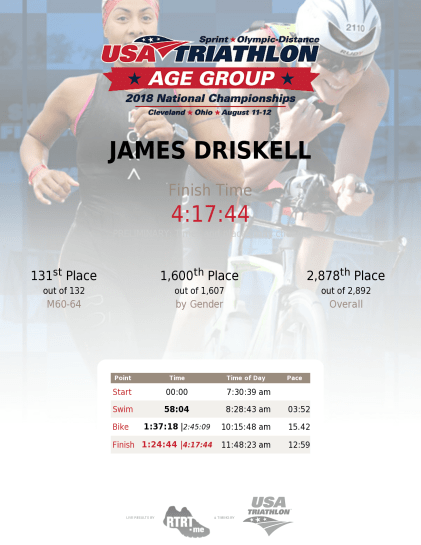
Finally finished and I only put this on here as a matter of record, ‘cuz it sure weren’t anything to brag about

usa-triathlon-age-group-national-championships-ryuxn9ze (1).png  hey, I still maintained my “I haven’t finished last record”, and I did finish. Got the medal, got the t-shirt.

It is to say that despite all the tension, anxiety, it still happened. Believe me, it is all glory to God! Certainly not for the actual performance, because that was mine to louse up. But that I did get there, I did start on time, I did do the swim,  National Championships swim exit Cleveland the bikeNational Championships bike Clevelandthe runNational Championships run Cleveland and  to the glory of God, did acceptably and had a great experience in a different environment, did my first race in a city setting, my first race on a Great Lake (Lake Erie) and certainly the first time I’ve done a “National championship” of anything. I’m going with I may have finished very near the bottom, but it was near the bottom of the best in the country. So I’m going with that and again, giving all glory to God and thanking Him for giving me such a tremendous experience. I do want to thank USA Triathlon too, they did a great job organizing this. They provided the atmosphere for a “championship event” that I was eligible to be a part of, albeit circumstantially. But I’ll take it.
Confession of sin is good for you

Confession is an important part of Lutheran worship, there are two sacraments in the church, baptism and the Lord’s Supper. But there is a kinda third one and that is confession, followed closely by the preached word. The last two might not be “full” sacraments, but, they are an important part of the Lutheran, the genuine Christian’s life in Christ.

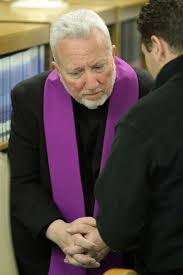
Dr Martin Luther fully encouraged the practice of confession and absolution. There is corporate confession, which is what we normally do at the beginning of worship. There is also individual, or private confession which a pastor will sit with a individual and that person will present to the pastor the things that he wants to confess and to get absolution for all of their sins.

Dr Luther emphasizes the importance of confession and absolution:

“…Openly acknowledging sin decreases the immediate danger and lessens our anxiety. The heart must be helped first. Confession of sin makes it light and allows it to breathe. After this, it’s easier to help the rest of the person. Only after our conscience has been released from its heavy load and is able to breathe freely can we find relief for other areas of distress.

When God’s anger is poured out, we immediately become aware of our sin and become afraid. Foolish people cope with this situation in the wrong way. They ignore their sin and only try to get rid of their fear. That doesn’t work, so they eventually fall into despair. This is the way human reason always tries to handle the problem in the absence of God’s kindness and the Spirit. Wise people, however, try to ignore their fear and focus instead on their sin. They acknowledge their sin and try to get rid of it, even if it means that their fear will remain with them forever. They willingly accept their punishment, as Jonah did in this story (Jonah 1: 9-10).

But godless people do just the opposite. They pay attention to the punishment and are afraid of it, but they aren’t concerned about their sin . If there were no punishment, they would never stop sinning. But this isn’t what happens because punishment consistently follows sin. In contrast, godly people pay attention to their sin and are afraid of it. They aren’t as concerned about the punishment. In fact, it’s almost as if they would rather endure the punishment without sinning than commit the sin without facing any punishment.” (Through Faith Alone Devotional Readings from Martin Luther August 22)

Holding on to your sin, trying to out run it, live it down, work your way out of it, just is not going to achieve the end of relieving your stress, it’s just not. Sure penance is good, and many times is part of confession, but it doesn’t give you complete peace of mind. The only way to achieve complete assurance of forgiveness is through confession. Someone who is a genuine minister of Christ, who understands biblical forgiveness in Christ, who has take vows to protect the integrity of the confessional, to never discuss, even with the confessor your confession. If you want to talk about it swell! But if I see you the next day, I can’t even discuss that I saw you the previous day. Your confession to me is completely in Christ and in Christ I give you complete absolution of your sin. You walk out of that confessional knowing that you are completely forgiven in Christ.

Confession is important to a Christian, it strengthens that bond we have to our pastor and more importantly to our Lord who gives us the complete assurance of forgiveness and eternal salvation in Him. Lift it up to Him through His under-shepherd, your pastor, receive forgiveness/absolution than move on in your life, in Jesus’ Name. Amen!

Resurrection

We Christians talk about heaven as if that’s the ultimate goals. Many non-Christians, certainly the “nones”, use that as their cop out, because wow is that generation, ah heck the whole culture today, all about excuses. Doesn’t matter, what happens, happens, I’m entitled anyway, it’s all about me, yada-yada!

Well no, sorry, but your ticket is punched for hell. What you thought was reality, i.e. it’s all about me, well you will find out that it’s not true and that is tragically and eternally.

On to the actual, ultimate reality. It’s not heaven. Many will never be in heaven. They are saved, but if Jesus returns tomorrow, and you and I are around, we will never be in heaven, we go right to the eternal resurrection. For the non-Christian reading this, sorry, doesn’t apply to you, you will be eternally condemned in hell and that’s just the way it is. I sincerely do hope that the Holy Spirit uses this to save the reader who is not a Christian, but as a Christian minister, I’m required to live in the actual real world, and the ultimate reality in that world for me is the resurrection. For the non- believer, the ultimate reality is eternal condemnation and torment in hell.

Kind of separate, but interesting how our Christian holidays have become more about who we are in Jesus. The world is all about Christmas because it’s me-me-me, all about me, and that’s what the world is about. As Christians we know the deeper meaning and can still celebrate and observe Christmas in a genuine way. For genuine Christians (by that I don’t mean the people who call themselves that, because they grew up in that culture, went through the motions, but really have no clue, and live very much in the world. Too many of those people are in churches, don’t get it and don’t care. Like those in the world, they’re entitled, and well God has to come through for them.) Moving along, Easter is where it’s at if you are genuinely in Jesus. Easter Sunday and every Sunday we remember the resurrection, that is what being a Christian is all about. The new-perfect-eternal life in the new world. The world will look very familiar, but it will be perfect, no evil, no sin, no death, no illness, full of genuine life, of infinite potential. We will have the whole picture, understand completely what God did in creation, in history, in salvation and will understand that it was and is completely perfect and understandable. We will see what a truly evil, debased world the world around us was. We will see the spiritual warfare that went on around us, the constant attempts to undermine our relationship with Jesus and tear us away from Him to eternal  condemnation. The Holy Spirit and all the spiritual warriors all around us fought hard to keep us focused on Christ and fit for eternal salvation in the resurrection.

Certainly one way we resist in this spiritual warfare that is going on around us is through prayer. Continual prayer on our part keeps us connected to the spiritual, to God’s guidance to the beings around us that are protecting us. We are tuned into God’s direction, guidance, what He is doing in our life. Failing in prayer is to cut yourself off from God, to be tuned in only to the world and its direction. The world is condemned, and if that’s where you are tuned, you very much risk being condemned. Prayer doesn’t save you, that’s not the point. None of our works save us, we are only saved in what Jesus did and does for us. But if we are not connected to what God is doing in, for, through and around us through our prayer, we lose that connection, we eventually just buy into the constant blah-blah from everything around us in the world, decide that it’s the world’s message that’s most important and fade off into eternal separation from God.

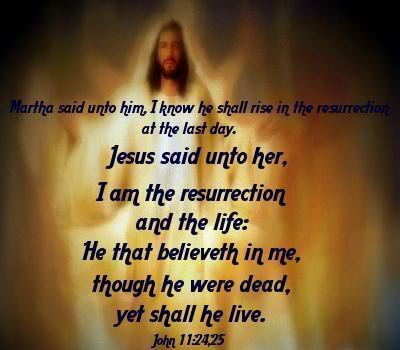
The resurrection is the ultimate destination, the Holy Spirit guides us there, Jesus makes us fit to be there by His righteousness imputed to us and the Father assures us of that eternal life in the resurrected, perfect, eternal new world, New Jerusalem.

Confession and Absolution July 25, 2018 by Gene Veith

Get newsletters and updates
7/25/2018 Confession and Absolution
http://www.patheos.com/blogs/geneveith/2018/07/confession-and-absolution/?utm_medium=email&utm_source=BRSS&utm_campaign=Evangelical… 5/17
2 Comments
41
The Lutheran Church Missouri Synod has just issued a major study of the doctrine and practice of confession and absolution. The report by the
Commission on Theology and Church Relations establishes the Biblical and theological basis for confessing your sins to a pastor and receiving
forgiveness from his words of absolution.
This may sound strange to you Protestants who are not Lutherans. What do you do with John 20:21-22? “Jesus said to them again, ‘Peace be with
you. As the Father has sent me, even so I am sending you.’ And when he had said this, he breathed on them and said to them, ‘Receive the Holy
Spirit. If you forgive the sins of any, they are forgiven them; if you withhold forgiveness from any, it is withheld.’”
Lutherans are like Catholics, Orthodox, and Anglicans in retaining confession and absolution. While the Lutheran practice looks like what Catholics
do, like other seeming similarities, it is quite different. Confessing your sins to a pastor is strictly voluntary, not necessary for forgiveness as it is for
Rome, and it is not necessary to enumerate every sin specifically before it can be forgiven. And Lutheran pastors require no “satisfaction”–that is,
works to atone for your sin–as required by the Catholic rite of penance. The forgiveness applied by Lutheran pastors is simply the good news of the
Gospel, that Jesus has atoned for your sins on the Cross, giving you forgiveness in His name.
Most Lutherans do their confession and receive their absolution corporately, at the beginning of the Divine Service. After a time of reflection on our
sins and a corporate prayer in which we admit that we deserve God’s “temporal and eternal punishment,” we hear these words from the pastor:
Upon this your confession, I, by virtue of my office, as a called and ordained servant of the Word, announce the grace of God unto all of
you, and in the stead and by the command of my Lord Jesus Christ I forgive you all your sins in the name of the Father and of the + Son
and of the Holy Spirit.
But only Christ can forgive sins! Right. And He does so by means of vocation. That is to say, “calling.” Just as God gives daily bread by means of
the farmer and creates new life by means of parents, Christ gives His Word of forgiveness by means of pastors. According to the Lutheran doctrine of
vocation, God is present in and works through ordinary human beings whom He has called into various realms of service to their neighbors. This
“calling” is at the heart of what pastors do. (“As a called and ordained servant of the Word. . . .and in the stead and by the command of my Lord
Jesus Christ. . . .”)
This happens every Sunday, but private confession and absolution has fallen into disuse. It is, however, a powerful weapon in the arsenal of pastoral
care, allowing pastors to cut deeply into the heart of a sinner, eliciting repentance and a sense of great personal comfort from the Gospel. Currently,
there are efforts to bring back the practice of individual confession and absolution.
Here are some excerpts from the CTCR document, Confession and Absolution. To download the entire report, go here.
The two words “confession and absolution” are worthy of some clarification. “Confession” occurs in more than one setting or context.
The root word from the New Testament is ὁμoς, [homos] “one and the same.” The basic meaning of the related Greek compound noun
ὁμoλoγἰα is “an agreement” by which two parties say the same thing, and the compound verb ὁμoλoγέω is similarly used as “to agree.”
Thus, “if we confess our sins” (1 John 1:9), we are saying the same thing that God is saying about our sin. We are agreeing with what
God reveals about us and our sin. We are admitting (acknowledging) that the Lord’s judgment upon our sin is right and true.2 The second
word, “absolution,” is a synonym for forgiveness. Lutheran theology dictates that in any discussion of “confession and absolution,” it is
this second word that requires emphasis. . . .
7/25/2018 Confession and Absolution
http://www.patheos.com/blogs/geneveith/2018/07/confession-and-absolution/?utm_medium=email&utm_source=BRSS&utm_campaign=Evangelical… 6/17
Luther speaks of confession of sins in three settings: 1) private confession to a pastor; 2) confession to God alone (as we find it in the
Lord’s Prayer, Matt. 6:12); and 3) confession made to a fellow Christian (James 5:16). . . .
First, no one should assume that a different kind or quality of forgiveness from Christ our Lord is given in the context of individual
confession. All of the Means of Grace — Baptism, the Lord’s Supper, preaching — convey the same forgiving Gospel. In this respect,
there is no difference between private confession and absolution and that which is conducted on Sunday mornings in public worship. One
Lutheran theologian put it succinctly: “Private absolution is neither more nor less than the absolution the whole congregation receives in
the gospel. Rather, it is nothing other than the gospel the whole congregation receives, specifically applied to the circumstances of the
individual sinner.”
It is our goal to explain why, even though the same Gospel is given through the various Means of Grace, private confession and
absolution may be a considerable aid to all Christians, and especially useful to pastors, who share in the burdens of their people and who
are susceptible to unique temptation and discouragement. It is first of all necessary, however, to clearly establish the biblical foundation
for confession and absolution. . . .
Along with these developments came the threefold understanding of “penance” in the Roman tradition. Penance had three parts:
confession, absolution, satisfaction (or four parts if contrition is included before confession). The absolution pronounced in the indicative
was still conditioned on the works of satisfaction outlined by the priest — your sins are forgiven, but you must still do the works
demanded of you to avoid penalties in purgatory. This served as the launching pad for confession and absolution to be viewed as
something related to making amends. In the period leading up to the Reformation, Rome officially formulated its position at the Council
of Florence in 1439 that established what poenitentia (penance) consisted of: contritio (contrition/ sorrow over sin), confessio (confession
necessarily made to a priest) and satisfactio (the satisfaction or works of penance adjudicated by the priest).
Luther believed this was a fundamental misunderstanding of the gift of absolution and strove to bring it back to its biblical foundations.
For Luther and the other confessors, the keys convey the Gospel (in the broad sense as both Law and Gospel), by condemning, in God’s
name, self-assured people of their sin and by assuring the contrite of their forgiveness. The binding key, however, is for Luther only a
means to an end. The ultimate aim of the keys is the forgiveness of sins. . . .
The preceding material indicates that the authentically Lutheran view of individual confession and absolution is largely unique,
occupying a middle ground between Rome and evangelical Protestantism.44 Unlike most Evangelicals or other Protestants, Lutherans do
not repudiate private confession before a minister and steadfastly uphold the propriety and efficacy of the pastor’s absolution in the name
of Christ.45 Unlike Rome, however, Lutheran teaching and practice makes private confession entirely voluntary, rejects the notion that
one must (or even can) enumerate all one’s sins before a confessor, and rejects the addition of satisfaction as confession’s third element.
Lutheran teaching upholds the absolution above all else and affirms its great comfort for the individual penitent.
Illustration: A woodcut to Article XI of the Augsburg Confession by Wenceslas Hollar (1607-1677) [Public domain], via Wikimedia Commons

via The Replication Crisis in Science

Yes, I’m reblogging Dr Veith, yes that is PhD, spent his professional life in academia, retiring as the provost of Patrick Henry College in Virginia. For all of those who love to bellow “I only believe in science, hard facts”, more and more that’s not the case. Instead you believe in a faith system that more and more is becoming more doctrinal, like evolution (real scientists really don’t believe in Darwinian evolution anymore), and just want an impersonal universe that is completely material with no consideration allowed for the spiritual. Just not going to work and is in no way “scientific” or objective. Scientism is more about doing the study the way you want it to come out and less about scientific objectivity, hence the faith system “scientism”. Just more people trying to create their own reality. It’s God’s reality, He created it and He sustains it through Jesus Christ.

The Imminent Decline of Contemporary Worship Music: Eight Reasons OCTOBER 27, 2014 BY T. DAVID GORDON

By imminent decline of contemporary worship music, I do not mean imminent disappearance. Commercial forces have too substantial an interest to permit contemporary worship music to disappear entirely; and human beings are creatures of habit who do not adapt to change quickly. I do not predict, therefore, a disappearance of contemporary worship music, sooner or later. Already, however, I observe its decline. Several years ago (2011) Mark Moring interviewed me for Christianity Today, and in our follow-up communications, he indicated that he thought the zenith of contemporary worship music had already happened, and that the movement was already in the direction of traditional hymnody. He did not make any claims about the ratio of contemporary worship music to traditional hymns; he merely observed that whatever the ratio was, the see-saw was now moving, albeit slowly, towards traditional hymnody. If the ratio of contemporary-to-traditional was rising twenty years ago, it is falling now; the ratio is now in decline, and I suspect that decline will continue for the foreseeable future. What follows is a painfully abbreviated list of eight reasons why I think this change is happening.

  1. Contemporary worship music hymns not only were/are comparatively poor; they had to be. One generation cannot successfully “compete” with 50 generations of hymn-writers; such a generation would need to be fifty times as talented as all previous generations to do so. If only one-half of one percent (42 out of over 6,500) of Charles Wesley’s hymns made it even into the Methodist hymnal, it would be hubristic/arrogant to think that any contemporary hymnist is substantially better than he. Most hymnals are constituted of hymns written by people with Wesley’s unusual talent; the editors had the “pick of the litter” of almost two thousand years of hymn-writing. In English hymnals, for instance, we rarely find even ten of Paul Gerhardt’s 140 hymns, even though many musicologists regard him as one of Germany’s finest hymnwriters. Good hymnals contain, essentially, “the best of the best,” the best hymns of the best hymnwriters of all time; how could any single generation compete with that?

Just speaking arithmetically, one would expect that, at best, each generation could represent itself as well as other generations, permitting hymnal editors to continue to select “the best of the best” from each generation. Were this the case, then one of every fifty hymns we sing should be from one of the fifty generations since the apostles, and, therefore, one of every fifty should be contemporary, the best of the current generation of hymnwriters. Perhaps this is what John Frame meant when, in the second paragraph of his book on CWM, he indicated that he had two goals for his book: to explain some aspects of CWM and to defend its “limited use” in public worship. Perhaps Prof. Frame thought one out of fifty constituted “limited use,” or perhaps he might have permitted as much as one out of ten, I don’t know. But our generation of hymnwriters, while talented and devout, are not more talented or more devout than all other generations, and are surely not so by a ratio of fifty-to-one.

  1. Early on in the contemporary worship music movement, many groups began setting traditional hymn-lyrics to contemporary melodies and/or instrumentation. Sovereign Grace Music, Indelible Grace, Red Mountain Music, Reformed Praise all recognized how difficult/demanding it is to write lyrics that are not only theologically sound, but significant, profound, appropriate, memorable, and edifying (not to mention metrical). If the canonical Psalms are our model, few hymn-writers could hope to write with such remarkable insight (into God and His creatures, who are only dust) and remarkable craftsmanship (e.g. the first three words of the first Psalm begin with the first letter of the Hebrew alphabet, aleph (א), each also has a shin (ש), and two of the three also have a resh (ר), even though each is only a 3-letter word. Even those unfamiliar with Hebrew cannot miss the remarkable assonance and alliteration in those opening three words: “ashre ha-ish asher”).
  2. As a result, the better contemporary hymns (e.g. “How Deep the Father’s Love,” “In Christ Alone”) have been over-used to the point that we have become weary of them. These two of the better contemporary worship music hymns are sung a half-dozen times or a even a dozen times annually in many contemporary worship music churches; whereas “A Mighty Fortress” may get sung once or twice (if at all); but neither of the two is as good as Luther’s hymn. What is “intrinsically good” (to employ Luther’s expression about music) will always last; what is merely novel will not. Beethoven will outlast 50 Cent, The Black Eyed Peas, and Christina Aguilera. His music will be enjoyed three hundred years from now; theirs will be gone inside of fifty years.
  3. It is no longer a competitive advantage to have part or all of a service in a contemporary idiom; probably well over half the churches now do so, so we have reached what Malcolm Gladwell calls the “Tipping Point.” Contemporary worship music no longer marks a church as emerging, hip, edgy, or forward-looking, because many/most churches now do it. Churches that do not do other aspects of church-life well can no longer compensate via contemporary worship music; they must compete with other churches that employ contemporary worship music. Once a thing is commonplace, it is no longer a draw. And contemporary worship music is now so commonplace that it is no longer a competitive advantage; to the contrary, smaller churches with smaller budgets have difficulty competing with the larger-budgeted churches in this area.
  4. As with all novelties, once the novelty wears off, what is left often seems somewhat empty. In a culture that celebrates what is new (and commercial culture always does so in order to sell what is new), most people will pine for what is new. But what is new does not remain so forever; and once it is no longer novel, it must compete by the ordinary canons of musical and lyrical art, and very little contemporary worship music can do so (again, because its authors face a fifty-to-one ratio of competition from other generations). Even promoters of contemporary worship music prefer some of it to the rest of it; indicating that they, too, recognize aesthetic criteria beyond mere novelty. Even those who regard novelty as a virtue, in other words, do not regard it as the onlyvirtue. And some, such as myself, regard novelty as a liturgical vice, not a virtue because of its tendency to dis-associate us from the rest of our common race, heritage, and liturgy.
  5. Thankfully, my own generation is beginning to die. While ostensibly created “for the young people,” the driving force behind contemporary worship music was always my own Sixties generation of anti-adult, anti-establishment, rebellious Woodstockers and Jesus freaks. Once my generation became elders and deacons (and therefore those who ran the churches), we could not escape our sense of being part of the “My Generation” that The Who’s Pete Townsend had sung about when we were young; so we (not the young people) wanted a brand of Christianity that did not look like our parents’ brand. Fortunately for the human race, we are dying off now, and much of the impetus for contemporary worship music will die with us (though the commercial interests will “not go gentle into that good night,” and fulfill Dylan Thomas’s wish).
  6. Contemporary worship music is ordinarily accompanied by Praise Teams, and these have frequently (but by no means always) been problematic. It has been difficult to provide direction to them, due to the inherent confusion between whether they are participants in the congregation or performers for the congregation. In most circumstances, the members of the Praise Team do the kinds of things performers do: they vary the instrumental or harmonious parts between stanzas, they rehearse, etc. In fact, if one were to watch a video of the typical Praise Team without any audio, they ordinarily look like performers; their bodily actions and contrived emotional expressions mimic those of the entertainment industry.

Theologically and liturgically, however, it is the congregation that is to sing God’s praise, and what we call the Praise Team is merely an accompanist. But there is a frequent and ongoing tension in many contemporary worship music churches between the performers feeling as though they are being held back from performing for the congregation, and the liturgists thinking they’ve already gone too far in distinguishing themselves from the congregation. Many pastors have told me privately that they have no principial disagreements with contemporary worship music, but that they wish the whole Praise Team thing “would go away,” because it is a frequent source of tension. I have elsewhere suggested that the Praise Team is not biblical, that it actually obscures or obliterates what the Scriptures command. I won’t repeat any of those concerns here; here I merely acknowledge that many of those who disagree with my understanding of Scripure agree with my observation that the Praise Team is an ongoing source of difficulty in the church.

  1. We cannot evade or avoid the “holy catholic church” of the Apostles’ Creed forever. Even people who are untrained theologically have some intuitive sense that a local contemporary church is part of a global and many-generational (indeed eschatological and endless) assembly of followers of Christ; cutting ourselves off from that broader catholic body may appear cool for a while, but we ultimately wish to commune with the rest of the global/catholic church. Indeed, for many mature Christians, this wish grows as we age; we become aware that this particular moment, and our own personal life therein, will pass away soon, and what is timeless will nonetheless continue. Our affection for and interest in the timeless trumps our interest in the recent and fading. We intuitively identify with Henry F. Lyte, whose hymn said, “Change and decay in all around I see; O Thou who changest not, abide with me.” We instinctively wish to “join the everlasting song, and crown Him Lord of all” (to use Edward Perronet’s language). Note, in fact, the opening lines alone of each stanza of Perronet’s hymn, and observe how, as the stanzas move, our worship is connected to both earthly and heavenly worship, past and future worship:

All hail the power of Jesus’ Name! Let angels prostrate fall;…
Let highborn seraphs tune the lyre, and as they tune it, fall…
Crown Him, ye morning stars of light, who fixed this floating ball;…

Crown Him, ye martyrs of your God, who from His altar call;…
Ye seed of Israel’s chosen race, ye ransomed from the fall,…
Hail Him, ye heirs of David’s line, whom David Lord did call,…
Sinners, whose love can ne’er forget the wormwood and the gall,…
Let every tribe and every tongue before Him prostrate fall…

O that, with yonder sacred throng, we at His feet may fall,
Join in the everlasting song, and crown Him Lord of all!

It is not merely that some churches do not sing Perronet’s hymn; they can not do so, without a little dissonance. Everything that they do intentionally cuts themselves off from the past and future; liturgically, if not theologically, they know nothing of martyrs, of Israel’s chosen race, of David’s lineage. Liturgically, if not theologically, everything is here-and-now, without much room for angels or seraphs, nor every tribe and tongue (just those who share our particular cultural moment). To sing Perronet’s hymn in such a setting would fit about as well as reading Dr. King’s “I Have a Dream” speech at a Ku Klux Klan gathering.

“Contemporary worship” to me is an oxymoron. Biblically, worship is what angels and morning stars did before creation; what Abraham, Moses and the Levites, and the many-tongued Jewish diaspora at Pentecost did. It is what the martyrs, now ascended, do, and what all believers since the apostles have done. More importantly, it is what we will do eternally; worship is essentially (not accidentally) eschatological. And nothing could celebrate the eschatological forever less than something that celebrates the contemporary now. So ultimately, I think the Apostles’ Creed will stick its camel’s nose into the liturgical tent, and assert again our celebration of the “holy catholic church, the communion of the saints.” The sooner the better.

(Photo credit: Aikawa Ke/ Flickr)

Other articles

SUPPORT SECOND NATURE

Second Nature depends on the generous donations of readers like you.

Second Nature is published by the International Institute for the Study of Technology and Christianity (IISTC), a 501(c)3 non-profit dedicated to studying technology in light of the Christian tradition.

Your generous contributions make this work possible. Please consider donating today to help us continue this important work.

MAKE A ONE-TIME DONATION

MAKE A RECURRING DONATION

ABOUT THE CONTRIBUTOR

T. David Gordon

T. David Gordon

T. David Gordon is Professor of Religion and Greek at Grove City College, where since 1999 he has taught courses in Religion, Greek, Humanities, and Media Ecology. He is an ordained minister in the Presbyterian Church in America. He is the author of Why Johnny Can’t Preach: The Media Have Shaped the Messengers and Why Johnny Can’t Sing Hymns: How Pop Culture Re-Wrote the Hymnal. His personal website is www.tdgordon.net. He lives in Grove City, PA, with his wife Dianne, and daughters Grace and Dabney (and innumerable cats). 

via Embracing Religious Identity while Rejecting the Religion’s Teachings

Another great blog from Dr Gene Veith, one of those authors whose grocery list I would read if he published it.

Ah no, how can the women (in the picture in Dr Veith’s blog) either keep a straight face, or genuinely believe their little signs? They can’t! They either don’t know what they’re talking about and think that stomping their legs in an adolescent hissy fit like they did with daddy, is going to get them their way, or it’s a cynical attempt at something they don’t really get.

I would certainly stipulate that the Christian church, no less the Roman Church, has never been a monolith. There have certainly been liberal elements in flatline…. uhmmmm I mean main-line protestantism for always and the Roman church certainly has its liberal element. But the liberal element in the Christian church is just not relevant. No one takes liberal protestantism seriously and for Jesuits in the Roman church they create an interesting liberal element, but they are just not relevant to Christianity in the mainstream.

But it’s certainly great that the culture seems to be finding it’s way back to the church. I would certainly see that as a move by the Holy Spirit. And you can’t expect them to come back in some pristine Christian manner. They’ve been tainted by the world for years, you can’t expect them to completely grasp genuinely Christian doctrine. I grew up outside the church, it took me awhile.

Now is the time to go to them, and I’ve done this pretty regularly and gently correct. No abortion is not a Catholic value, (how can you say that with a straight face) or any of the other frivolous, adolescent assertions. Put on your big boy/girl pants and sit and listen instead of playing. Stop being a phoney, trying to convince us you know what you’re talking about and put on your critical thinking hat. Let’s get genuine, try to understand what it really is about and stop being a phoney hypocrite. We want you to genuinely understand God- Father, Son and Holy Spirit and not the drivel you’ve been listening to from the world for years. We want you to know the genuine truth, the logos of God (I’ll explain what that means if you want to genuinely sit down and talk. Genuine, that’s a value you folks take seriously? Yet you never seem to practice it.)

Anyway, you need to get real and get rid of your hypocritical attitudes and attempts to try and force your phoney political agenda, on the timeless doctrine of Christ’s church. You say you believe in Him, he did establish the church, “I will build my church on this rock…”, “I give the keys to heaven and hell to the church”. Your phoney attempts can’t work and will reveal you as phonies.

The attempts by the liberal agenda to dictate to the church, the Churches that gave into the world, the liberal agenda, have been prattling nonsense for decades, prattle which no one takes seriously and has turned the flat-line, uhmmmm I mean main-line protestant churches into groups of contempt and ridicule.

But now there’s those who are coming back, who seem to want to genuinely talk. I’ve talked to some of those people already. I want to hear them, to understand them, to also guide them. That’s the job of the church, and if someone genuinely wants to talk, I’m more than ready. Don’t care about their sexual orientation, abortion attitude, 2nd amendment whatever, really whatever. Give me the chance to present the Gospel to you and then we can go from there.

As wrongheaded as many of those who seem to want to return to the true church of Jesus Christ, at least they are genuinely, I hope, searching. I want to give them every opportunity to sit and talk and come together. That’s what I’m suppose to do as a Christian and a clergyman. I’m eager to do so, let’s sit and talk. As always thank you Dr Veith, I’m a big fan. God richly bless you.

Are we going back to the bad old days of gang warfare and that’s ok for some people?

There was a top 40 song from my bubble-gum music days, 1974, that even at the time I thought was kind of hokey, kind of fanciful. The name of the groups was “Paper Lace” which sort of made it’s seriousness even more marginal. It started, “My daddy was a cop, on the east side of Chicago, back in the U.S.A. back in the bad old days” Interestingly the song was about Chicago where 104 people were shot over the past 4th of July week 2018, not 1925!!??

So ya, I knew who Al Capone, Bonnie and Clyde, John Dillinger, all those people were, but they had been 40 years earlier, way outside of my experience in Boston, where ya, there was gang warfare, but no where near the scale of Chicago, and people who weren’t involved didn’t get hurt.

Law Enforcement

These are the lyrics:  This is the UTube link: https://www.youtube.com/watch?v=p-L0NpaErkk

Lyrics
My daddy was a cop on the east side of Chicago
Back in the U.S.A. back in the bad old days
In the heat of a summer night
In the land of the dollar bill
When the town of Chicago died
And they talk about it still
When a man named Al Capone
Tried to make that town his own
And he called his gang to war
With the forces of the law
I heard my mama cry
I heard her pray the night Chicago died
Brother what a night it really was
Brother what a fight it really was
Glory be!
I heard my mama cry
I heard her pray the night Chicago died
Brother what a night the people saw
Brother what a fight the people saw
Yes indeed!
And the sound of the battle rang
Through the streets of the old east side
‘Til the last of the hoodlum gang
Had surrendered up or died
There was shouting in the street
And the sound of running feet
And I asked someone who said
“‘Bout a hundred cops are dead!”
I heard my mama cry
I heard her pray the night Chicago died
Brother what a night it really was
Brother what a fight it really was
Glory be!
I heard my mama cry
I heard her pray the night Chicago died
Brother what a night the people saw
Brother what a fight the people saw
Yes indeed!
And ther was no sound at all
But the clock upon the wall
Then the door burst open wide
And my daddy stepped inside
And he kissed my mama’s face
And he brushed her tears away
The night Chicago died
Na-na na, na-na-na, na-na-na-na-na
The night Chicago died
Brother what a night the people saw
Brother what a fight the people saw
Yes indeed!
The night Chicago died
Na-na na, na-na-na, na-na-na-na-na
The night Chicago died
Brother what a night it really was
Brother what a fight it really was
Glory be!
The night Chicago died
Na-na na, na-na-na, na-na-na-na-na
The night Chicago died
Brother what a night the people saw
Brother what a fight the people saw
Yes indeed!
Songwriters: Mitch Murray / Peter Callander
The Night Chicago Died lyrics © Universal Music Publishing Group
I don’t know, did Al Capone really think he could take over Chicago? I’m not even sure I know what the allusion means in the song. But doesn’t that seem to be the case today?
On the other hand the violence of these few people led to the completely unwarranted death of, if you believe the song, “…’bout a hundred cops are dead…” Certainly over the course of the 1920s and 30s hundreds of law enforcement, Chicago city cops, FBI, remember this is where Elliot Ness became famous he was an ATF (Alcohol, Tobacco and Firearms) agent. Many law enforcement were killed by the evil of those who were completely motivated by greed and power. Did law enforcement have issues today and then? Yup they do. Does that justify conducting war against law enforcement in this day and age? No, absolutely not, deal with the issues as they arise, work hard to weed out the people who shouldn’t be carrying a badge and gun. I was a Coast Guard Law enforcement officer. My brother is a State Police officer, because of my service I came to know many civilian local police and federal law enforcement. In my interactions I saw all of these people as very honest, high integrity, wanting to do a dangerous job to serve the people of this country. The vast majority of people of people in law enforcement are genuinely doing their best to serve and protect.


If someone wants to slap me down about copyright, I will take it down, I’m not trying to steal, I’m trying to create some genuine empathy and awareness that something is going on today that sure isn’t unprecedented maybe. When I first saw this post, ahhh I thought, maybe even a little creepy, but the more I thought about it and this song came to mind, why does the loved one of anyone who puts on a badge have to worry, have to cry, have to miss their wedding day because someone else just decides to take their pique out on someone else? The post I’m referring to follows:

Murdered Officer’s Fiance Takes Solo Wedding Photos

Police Officers bide

byHollyMatkin

Nov 24, 2017-edited

Nikki Salgot’s photos honor the memory of her fiance, Sgt. Collin Rose, who was murdered a year before their wedding.

In the fall of 2016, Nikki Salgot was an excited bride-to-be. She and her fiancé, Wayne State University Police Sergeant Collin Rose, had just less than one year to go before their Oct. 14, 2017 wedding date.

She never expected she would be alone in her wedding photos.

While on patrol on the night of Nov. 22, 2016, Sgt. Rose, 29, checked out with a suspicious man in an area where numerous thefts from vehicles had recently taken place. When he attempted to detain the suspect, the man shot Sgt. Rose in the head, killing him.

“It’s been almost a year, and it still feels like yesterday he walked out the door for work, and never came home,” Salgot, 29, posted on her Facebook page on Oct. 14 – the day that would have been her wedding day. “I loved a hero and paid the price. Given the chance, knowing the outcome, I’d do it all over again.


Despite her grief, Salgot looked for a way to honor her fiance and their pending nuptials. “I needed that day to not be ignored and forgotten,” she told Women’s Health.

She decided to ask her former classmate, wedding photographer Rachel Smaller, if she would photograph Salgot in her wedding dress, as a memorial shoot.


“I remember being in tears on the way there, thinking, ‘How am I going to do this? How am I going to find a way to take photos that will do this justice, not just for her but for him?'” Smaller, 28, told Today.

According to Women’s Health, Salgot bought a wedding dress while Sgt. Rose was still alive, but admitted to him that it wasn’t her first choice. She said the dress she truly loved was unlike anything anyone would expect her to wear, and that it was too expensive.

“He told me, ‘If it’s what you want and what will make you happy, go get it. We’ll figure it out,’’ Salgot recounted to Women’s Health. “So, I went back and I bought the dress after Collin died.”

Salgot wore that dress to Sgt. Rose’s memorial shoot.


“She was the picture of grief and resilience and strength and vulnerability and authenticity, all at once,” Smaller told Today. “She had an ease about her….She was very empowered.”

Despite their solemn purpose, the women also found themselves enjoying the day.

“There were moments when Nikki would shift her dress around, or step on it and start laughing. I wanted to capture those moments, too, to show that she can still laugh,” Smaller explained. “I needed to tell the story of this woman who’s lost the love of her life, but is still going to have closure, and still going to be his wife one way or another.”


Inside, however, the year’s struggles still weighed heavily for Salgot throughout the shoot. “I was angry that I was standing alone in a wedding dress and utterly lost in life,” she told Women’s Health. “I had lost my rock, my other half.”

When Smaller gave her the photos from the session, however, Salgot was faced with a new realization.

“She captured images that still vividly show the pain left behind; images that show I am still able to laugh, smile and be me; images that show this loss has not and will not destroy me; and my favorite, images that show I am still just as fierce as ever and refuse to let this define me,” she said in an Oct. 16 Facebookpost.


“She managed to capture more than I could have ever hoped for; things I wasn’t entirely sure existed within me anymore,” Salgot wrote.

Salgot said Sgt. Rose continues to inspire her, and that she is still working on the education he encouraged her to obtain.

“I am learning to accept my new normal and everything that it brings to me, good and bad,” Salgot told Women’s Health.


Smaller has nothing but confidence in Salgot’s ability to persevere.

“This is a woman who is not broken. This did not break her,” Smaller told Today. “To me, she is an inspiration.”

Sgt. Rose was a five-and-one-half year veteran of the Wayne State University Police Department. He was also a K9 officer, and had previously served with the Richland Police Department. He was promoted to the rank of Sergeant after his death.

He was just one credit shy of a Master’s degree in Dispute Resolution when he was killed, WZZM reported. In December, 2016, Wayne State University conferred Sgt. Rose’s degree posthumously, and Salgot accepted the diploma on his behalf.

Raymond Durham, 61, has been charged with first-degree murder, murder of a peace officer, possession of a firearm by a felon, and two counts of possession of a firearm during the commission of a felony in relationship to Sgt. Rose’s murder.

After Officer Rose’s murder, two Detroit officers were shot by Durham before he was apprehended.”

Yea, initially I thought a little creepy, but then I felt the poignancy. Carrying the flag that was presented at his funeral, his hat. A 29 year old police officer, finishing his masters degree, getting married, every indication of someone who would be a fine police officer and man, his life ahead of him. Then shot by a  61 year old, over stealing from cars. We seem to have so much compassion for the people who commit the crimes, who have no compunction about physically harming or taking something important to another, there are people out there who would question why the police were bothering him “he’s just stealing from cars” they would say. You doubt that? I’ve heard those people say things like that. The vast majority of people today, living in a big city or anywhere, are tired of the crime, the threats to their safety and poverty. Yet we have a few people who want to make it about how someone is some how driven to crime, that we should simply forgive and move on. We’ve seen these times before, in the wild west days, in the gang days, to some extent in the 1960s. There has been a return to sanity and a marginalizing of those who would either commit the actual crimes, or those who would make excuses for those people and ignore the needs for safety and protection of the vast majority of those who want to live in peace, secure in their homes and their possessions. We will have a return to that sanity when people have heard enough excuses and refuse to accept the nonsense and platitudes of those trying to justify the violence.

No child should have to sit at home all night hearing his mother crying, gun shots going off and wondering if his parent police officer is coming home. No woman should be deprived of her wedding day, because a man decides to kill over stealing from vehicles. We need to hold our law enforcement accountable and the vast majority of those in law enforcement expect and appreciate that. But we also have to support them, help them to know that the majority of us out here appreciate all they do and we are ready to be there for them. There has to be a return to sanity, hold those who would cause this harm accountable. Stop with the phoney excuses and lame compassion, because the vast majority of people out there don’t commit crimes and want it to stop so they can go on and live safe, productive lives. I don’t think that’s too much to ask and I cannot understand how someone else can justify otherwise.