Category Archives: Uncategorized

People need to wake up and realize they make themselves God’s enemy John 3:20

As much as I read people from the past, I see it repeated over and over today. The failing is that if it’s already happened, and people are trying to run the same game as people 500 years ago, the people today are simply, let’s be charitable, and say not very perceptive, or they think people today are not very bright and can be played into their game. How about the nonsense being played against law enforcement today? One of the stated purposes of the United States constitution for government is to “provide for the common defense.” When you are sworn in as a law enforcement, military or some officer of government, you swear to protect against all enemies “foreign and domestic”. Whether they are Americans or not, anyone who does something that is an attempt to undermine the civil authority is an “enemy”. We need to be open to correction, not abuse, not overreaching authority on the part of government, people trying to abuse their power and authority, but we do need to accept when we have stepped out of bounds and offended the law and our neighbors. Jesus told us to love our neighbors as ourselves, doing things that offend and deprive our neighbors rights is obviously not loving.

Martin Luther had a great, if not obvious observation; “The world doesn’t want to be punished. It wants to remain in darkness. It doesn’t want to be told that what it believes is false.” (365 Devotional Readings from Martin Luther “Through Faith Alone” Concordia Publishing House July 2) Oh, wow! We’re seeing that not just in terms of the Christian church, but also the authority of what Dr Luther called the “left-hand kingdom”, the civil authority. Dr Luther asserts that God placed the “right-hand kingdom” in the world to assert the authority of the church, those who want to benefit from being in the church. He also asserts that God placed the left-hand kingdom in the world also. Those who are law- enforcement officers, government officials, mayor, governor, president, district attorney, attorney general etc. All placed by God to maintain public order. As much as we see attacks against that order now, Luther saw in his day. As Americans, in the tradition of the Declaration of Independence and the writings of the Founding Fathers, we certainly have a right to push back against government that becomes abusive of its authority. That is the whole reason for American Revolution. You can certainly make the case that government in many ways has become abusive of its authority. While it may be being dialed back a little with recent Supreme Court decisions, more and more government has been discriminatory against Christians, depriving people of their First Amendment rights to practice their religious beliefs without government interference. But in the way that those who want to somehow eliminate local law-enforcement, Luther’s observation is as prescient today as it was 500 years ago. Make no mistake, those who want try to usurp local law-enforcement do so in an attempt to intimidate government into creating a de-facto local government in many city neighborhoods. That distinct minority of people are making a play to establish their own system which would be established solely to their benefit and increase their wealth and power. In terms of third-world countries, Somalia would be a great example of a place ruled by local, I don’t know how to put it nicely, that run their fiefdom under their own authority, chose who will survive/thrive under their rule and starve those who resist. That is the vision of those who would presume to some how create autonomous zones in our cities.

This is the extreme example of what Luther writes about, but there are many enemies, to the church and civil authorities, foreign and domestic who would run roughshod on the rest of us given the opportunity. The church’s authority has certainly been undermined, now other authority, certainly the left-hand kingdom is being challenged.

Luther addresses the issue in the church: “If you also don’t want to be corrected, then you might as well leave the church and spend your time at the bar and brothel. But if you want to be saved – and remember that there’s another life after this one – you must accept correction.” It is pretty amazing how many people outside and inside the church (foreign and domestic) continue to undermine the church. The Bible addresses many issues which state that in order to be a Christian you must conform to the stated teachings of what is in the Bible. Of course the mantra today is “well my God, would / wouldn’t…” and in their petty dictator way, ignore the reality of what is written, but continue to insist that God would approve of their way, in complete contradiction to any kind of reality or documentation. Luther goes on to write: “If you don’t want to be saved, what’s the use of me being concerned about it? If you aren’t sure you believe in hell, the devil, death, eternal condemnation, and the wrath of God, then just ask your neighbor about it…”. We see this all-around us today, don’t trust in what God’s minister says, or elected official, or police officer. Instead go have a chat with your uninformed neighbor, and you can both share your ignorance and then wonder why your life is as messed up as it is. Trust everyone else but the people who God has put in place to serve the public good. I have seen it acted out over and over in many settings, it’s bizarre! Suffice to say, you can create your fantasy world, what you say is right or wrong, but if it is in conflict with the revealed Word of God in Scripture, then you are condemned, you are an enemy of God.

“In short, if the church and secular government are to exist, they must shed light on evil. The civil authorities must punish the obvious deeds of darkness of public vices and the offensive ways of people, while we preachers in the church must bring to light the subtle darkness of false teachers and false belief. We must confront those who teach and think that they have God’s approval because of what they do.” As a pastor it’s not up to me to punt when I know someone who is playing around with God’s word, anymore than a police officer can just walk by someone who stabbed another person. We both have the duty to enforce what we’ve sworn to do (and Christian ministers certainly take vows in their ordination on what they are supposed to do to serve). With the civil law it’s usually pretty obvious. There’s a body with stab wounds in it, the person has ceased to have a heart rate and respiration, people have stepped forward and credibly accused a person of the stabbing/murder, and the police have the duty to arrest, imprison and attest in court to what the person did. A Christian minister’s duty is often a little more subtle, but nonetheless, usually obvious, and frankly profoundly more destructive if he does not address those issues. Issues of sexuality today have had a profound effect on undermining the church and the civil authority. “I will do what I want, when I want”, when God has said “thou shalt not”, calls into question the authority of the church. Since western government was established under biblical principles, leads people to wonder why it’s anymore important than church authority. The answer is that the civil authority can still put you in jail and even execute you. Church authority can’t, but whether or not you believe in hell, the punishment of God is profoundly more effective than civil. You can put someone in prison for a season, hell is eternal and would make an American prison look like Wallyworld.

“If the church and government stopped admonishing people, the whole world would collapse in a heap. If you want to be saved and be a Christian, then stay open to correction. A preacher has to rebuke, or he should leave his position. The Christian who won’t accept correction is only pretending to be a Christian.” I’ve been a Christian pastor for 8 years now, I’ve certainly seen it. Those who are convinced their authority in the church is more necessary than the pastor’s, despite having no training, education, real experience, or any other credential, and yet actively work to undermine the man appointed to be the pastor. That person is living in their own fantasy, they are undermining God’s authority as much as any pretender to civil authority in a neighborhood, foreign country, and just as much an enemy of God and certainly a domestic enemy of the church.

Certainly the world and the church, both under God’s direction, have ways of reasserting the authority God has given them to maintain order and not “collapse into a heap.” But it requires people who will stand up under the scrutiny and the pressure of those who are in active rebellion, enemies foreign and domestic and do God’s will in either realm. The church needs to be much more pro-active in supporting those people on the front lines, maintaining the order, and taking the shots. The people need to stop listening to the non- sense of those who would readily suppress them and take from them if they succeed in ascending to authority. Instead in today’s world, it’s easier for the majority of people to side with those who take the side of those trying to usurp God, His enemies, and then wonder why the world has collapsed into a heap and why no one’s doing anything about it. Oh yeah, it’s bizarre! Try being in the position of those who support God’s servants and not the way of the world, the world’s way will end up as an incredibly evil and destructive way to live.
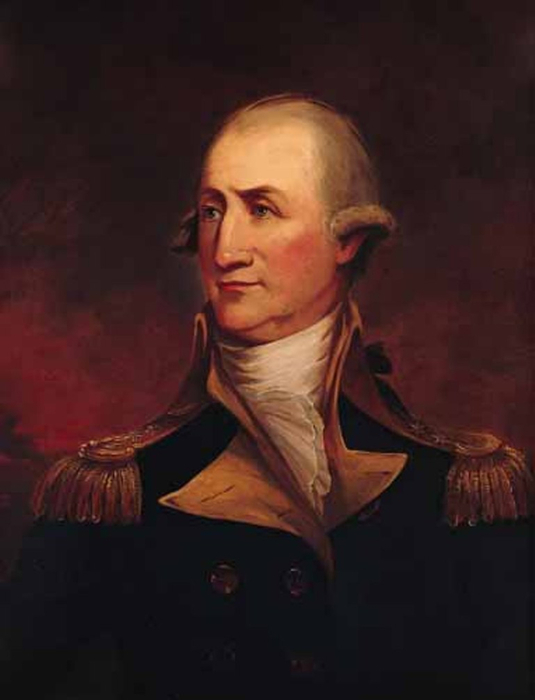
The Lutheran Hero of the American Revolution  JULY 4, 2018 BY GENE VEITH

Among the heroes of the American Revolution, which we celebrate on this fourth of July, was a Lutheran pastor, Peter Muhlenberg.  An article in The Federalist tells his story.  And there was more to his career than his famous disvesting in the pulpit.

He became George Washington’s aide, was a military hero, and after independence became a statesman in the new republic.  Read about him, and then I have some questions.

From Ellie Bufkin, Meet A Friend Of George Washington And Patrick Henry Who Fought Boldly For American Independence:

In January 1776, a small church in rural Virginia burst at the seams with parishioners eagerly awaiting the arrival of their pastor. Members of the congregation, who had even spilled out into the cemetery, were alive with excitement.

Over the last few months, with tensions between the colonies and England ever increasing, the members of the Lutheran church had heard from their pastor that a revolution was imminent. He told them the time to take up arms in defense of their nation was now.

This particular Sunday was to be the pastor’s last sermon, and the large gathering represented far more citizens than those who inhabited the small town of Woodstock where the church stood.

Rev. Peter Muhlenberg entered the church dressed in his robe, with a sense of purpose that appeared to make him stand taller than usual. He ascended to the pulpit and delivered his sermon, acutely aware of the importance of what he would say.

As the sermon began its conclusion, Muhlenberg referenced Ecclesiastes chapter three: “In the language of Holy writ, there was a time for all things, a time to preach and time to pray, but those times had passed away.” He faced his congregation for the last time, and in words that he knew meant the end of life in the once- peaceful Virginia countryside, he continued, “There was a time to fight, and that time has now come!”

Muhlenberg removed his robe, revealing his colonel’s uniform, and descended from the pulpit to the sounds of drummers by the church door, drumming for recruits. Three hundred recruits signed that day at the church, and Muhlenberg’s was the first of the Virginia regiments ready for combat service just two months later.[Keep reading. . .]

So what are we Lutherans to make of Rev. Muhlenberg?  Was he violating the Two Kingdoms in preaching the American revolution from the pulpit?  Was he violating his vocation as a pastor, or just moving to a new calling as a soldier?  At any rate, does he not deserve our nation’s honor, along with Washington, Jefferson, Patrick Henry, and the others who brought our nation into being?

There was a whole family of Muhlenbergs who were important in the early days of American Lutheranism. The key figure is Henry Melchoir Muhlenberg, known as “the father of American Lutheranism,” who was Peter’s father.

Can anyone tell us more about the Muhlenbergs and their legacy in both the church and the state?


Illustration:  Portrait of Peter Muhlenberg, Public Domain, via Wikipedia

Make the sign of the cross show all the world how our true life was won

I make the sign of the cross while saying, “In the Name of God the Father and in the Name of God the Son and in the Name of God the Holy Spirit, Amen!” There are people who will think, if not even say “that’s Catholic!” In a way indicating that it’s not appropriate for a Lutheran pastor. Well nothing could be further from the truth! ”

In the morning, when you rise, you shall make the sign of the holy cross, and you shall say: In the name of the Father, and of the Son, and of the Holy Spirit. Amen. Then, kneeling or standing, you shall say the Apostles’ Creed and the Lord’s Prayer. (“Prayers for Daily Use,” The Small Catechism, An Explanation of Dr. Martin Luther’s Small Catechism [Mankato, Minnesota: Evangelical Lutheran Synod, 2001], p. 26)

In the evening, when you go to bed, you shall make the sign of the holy cross, and you shall

say: In the name of the Father, and of the Son, and of the Holy Spirit. Amen. Then, kneeling or standing, you shall say the Apostles’ Creed and the Lord’s Prayer. (“Prayers for Daily Use,” The Small Catechism, An Explanation of Dr. Martin Luther’s Small Catechism [Mankato, Minnesota: Evangelical Lutheran Synod, 2001], p. 26)

To defy the devil, I say, we should always keep the holy name upon our lips so that he may not be able to harm us as he would like to do. For this purpose it also helps to form the habit of commending ourselves each day to God – our soul and body, spouse, children, servants, and all that we have – for his protection against every conceivable need. This is why the Benedicite, the Gratias, and other evening and morning blessings were also introduced and have continued among us. From the same source comes the custom learned in childhood of making the sign of the cross when something dreadful or frightening is seen or heard, and saying, “Lord God, save me!” or, “Help, dear Lord Christ!” and the like. (Large Catechism I:72-74, The Book of Concord, edited by Robert Kolb and Timothy J. Wengert [Minneapolis: Fortress Press, 2000], pp. 395-96) (http://www.angelfire.com/ny4/djw/lutherantheology.signofthecross.html)

Making the sign of the cross is entirely appropriate for a Christian, any Christian, reminding us of what the Cross is about and Who it is about. I do get it, for many making the sign of the cross is simply a superstitious act “…just let me get a hit…”, “I don’t know, but whatever it takes right now…” Yet Luther was entirely about constant reminding of the cross and what it’s about.

Todd Hains, writing in Bible Study Magazine (June 2018 p 11) this is his link in “LinkedIn” ( https://www.linkedin.com/in/toddrhains/) I am going to quote the article extensively, because it is really good, just as it should be explained.

“With the sign of the cross we trample death.” The church fathers loved to point this out  – especially the fourth-century Egyptian bishop Athanasius. In On the Incarnation he mentions the might of this sign eight times.”

“Athanasius and the fathers were riffing on Colossians 2:15: “And having disarmed the powers and authorities, he made a public spectacle of them, triumphing over them by the cross.” (NIV)

“Here Paul depicts Christ’s victory over Satan and his minions with the imagery of a Roman military parade called ‘the triumph’. During these parades, soldiers would march the spoils of their victory through the streets of Rome. By triumphing over his enemies with his cross., Christ mocks them with the very weapon they tried to murder him with…”

“God’s enemies thought they were merely killing a man. But as God, Jesus is Life itself. “Since he was not able to die”, Athanasius wrote, ‘he took to himself a body able to die,’ But Jesus was no mere man. In trying to swallow Life, death destroyed itself.”

“Athanasius vividly describes the brawl between Jesus and his enemies. Like a courageous fighter, Jesus stands in the ring and invites his enemies to choose their champion who will challenge him. They choose crucifixion at the hands of the Romans – but they don’t know what they’re getting into”

“On the cross Jesus reversed his enemies’ assault. As Athanasius puts it, ‘that ignominious death which they thought to inflict, this was the trophy of his victory over death.’ According to the eyes of reason, Jesus was bound, mocked, spat on and nailed to a tree under a humiliating sign: ‘King of the Jews” But according to the eyes of faith, Jesus had bound, mocked, spat on, and nailed death to a tree under a humiliating verse: ‘Death also having been conquered and placarded by the Savior on the cross, and bound hand and foot, all those in Christ who pass by trample on [death], and witnessing to Christ they mock death, jeering at him and saying what was written above, ‘O death, where is your victory? O hell, where your sting?'”…

“… The cross is the trophy of Jesus’ victory – a trophy reminding Christians that death, the devil and sin are powerless against them. And so, when ancient Christians made the sign of the cross, they proclaimed Christ’s victory and mastery over death. They proclaimed that they were free.”

I’ve actually collected a few trophies in may life, very few, (two have gotten wrecked in boxes in moves), but I have them to show that yes in a few instances I could proclaim victory, that victory was acknowledged with those awards. But the greatest victory that we can all claim, because it was won for each one of us, individually and collectively as the Body of Christ, is the Cross. That Cross, which is grim, it is a horrible death, but through it Jesus made the payment for the sin of all of us. It is that trophy of eternal victory, for our eternal life in Jesus. Why on earth would we not make the sign of the cross at every opportunity? As a Lutheran pastor it is all about being a “theologian of the Cross”. As Dr Hains points out; it reminds us of whose we are, who made that propitiatory act in order to pay for the sins we committed and to assure us that those sins are as far away as east is from west, never to be held against us. Why wouldn’t we remember that once and for all eternal act of Jesus on that Cross? Take every opportunity to show brothers and sisters in Jesus and also those in the world what is truly important.

The word “catholic” means “universal, authoritative” it is not just the name of a particular church. We Lutherans are certainly “catholic” in that respect. No less that we make the sign of the cross, that it’s not just “catholic”. It is often abused, and instead of us avoiding it so that no one things we are being weirdly superstitious, it’s up to us to point out to others what the sign of the cross is about. Why would we give up the ultimate point of our lives in Jesus, in His church, because others have slapped a label on it? It is what it is, the trophy that Jesus has given us to assure us of eternal life in Him in the New World of our resurrection.

INI  (In Nomine Jesu) amen!

Montage of pictures I took in Israel

14_16

Atrium at hotel in Caeserea

13_15 (2)

Entrance to hotel in Caeserea

Hotel in Caeserea

Priest at holy place in Israel Greek Orthodox priest at the church located at Jacob’s well.

Shepherds field in Bethlehem The traditional location where the shepherds were watching their sheep, then were directed by angels to Mary, Joseph and the baby Jesus.

Israel picture

In Jerusalem

Israel picture IV

Dead Sea area

Israel picture III

Elijah statue on Mt Carmel where he confronted the priests of Baal

Sheep tending and pasturing


From the Church of the Nativity in Bethlehem. The picture that looks kind of like a fireplace with lanterns, this marks where the manger was that held the baby Jesus.


Baptism now saves you

1 Peter 3:20-21 English Standard Version (ESV)


20 because[a] they formerly did not obey, when God’s patience waited in the days of Noah, while the ark was being prepared, in which a few, that is, eight persons, were brought safely through water.

Baptism, which corresponds to this, now saves you, not as a removal of dirt from the body but as an appeal to God for a good conscience, through the resurrection of Jesus Christ,
 Make this statement on line; “Baptism saves you”, the response will be immediate, “no it doesn’t”. The respondent never really says what does. Of course those who make their “decision” to “accept” Christ. Well just how magnanimous and smurfy of them. Because of course Jesus is waiting there just begging them to accept them, just hoping that they will be so kind as to accept Him so that He can then be their gini in a bottle.
Baptism saves you. You are led to church to be baptized. It is your sign that God has accepted you, that you are now born again in Jesus Christ, that you are now the temple of the Holy Spirit. Jesus has become the Lord of your life through baptism, in His church, through His chosen minister. Not the concierge of your life.
For those self-appointed arbiters, who are basically taking direction from others that are more cheer-leaders and entertainers than Bible scholars, back up and really understand what you’re saying. You want to be baptized, as soon as possible. You want to be given that new life in Christ. You want that it is entirely God’s call and not yours. Why? Because when it’s God’s call, God’s action, God’s result, you know that it’s completely true and will not fail. When you presume to “decide”, “accept”, “make”, you look back after awhile and begin to think “did that really happen?” “did I do it right, right time, right way…” You don’t have any assurance, you just have continued doubt.
When someone comes to the altar at a, real, Lutheran Church, be they 8 hours, 8 days, 18 or 80 years old and are presented for baptism and baptized by a Christian minister, they know it was nothing about them and all about God. They are saved! Can they mess it up, can they reject and lose that salvation? Sure. But then they know it’s all about them and nothing about Jesus. Jesus did all that was necessary to save them. If they reject that, or presume on that, then it’s entirely on them.

Spiritual? Cut it out! Isn’t it time to get serious about Jesus?!

“If you live in me and what I say lives in you, then ask for anything you want, and it will be yours.” John 15: 7

Why do we study history? There is such great wisdom, people who’ve confronted the same issues we’re confronting today and have given us such deep thought. Dr Martin Luther wrote voluminously is his time. He has created such incredible wisdom, he really did conflate the left and right hand kingdoms (the left is the government/society, the right is the church) in that both are in God, and both need to be focused on God’s will and not man’s. He gave us so much guidance in how we should deal with trials, he spent a good deal of his life being a marked man by the Roman Catholic church which wanted Luther burned at the stake. He certainly knew how to deal with the trials in his life. He gave us so much on how we as Christians should see those who are lost in the world.

I refer you to Dr Luther in a particular writing on prayer. I would stipulate that many people who pray and who are not Christians, and what Dr Luther points out as the profound difference between the two types of people:

“This is a miserable world for unbelievers. They work so hard, yet accomplish nothing. They may even pray a lot, search all over and knock at the door. Yet nothing is gained, found, or achieved, for they’ve knocking on the wrong door. They do all this without any faith. That’s why they can’t really pray.”

“Prayer is the work of faith alone. No one, except a believer, can truly pray. Believers don’t pray on their own merits, but in the name of the Son of God, in whom they were baptized. They’re certain that their prayers please God because he commanded them to pray in the name of Christ and promised he would listen to them. But the others don’t know this. Instead, they pray in their own name and believe they can prepare themselves. They think they can read enough to make themselves worthy and smart enough to make prayer into an acceptable work. And when we ask them whether their prayers have been heard, they reply, ‘I prayed, but if my prayers were heard only God knows.’ If you don’t know what you are doing or whether God is listening, what kind of a prayer is that?”

“But Christians don’t approach prayer this way. We pray in response to God’s command and promise. We offer our prayers to God in the name of Christ, and we know that what we ask for will be given to us. We experience God’s help in all kinds of needy situations. And if relief doesn’t come soon, we still know that our prayers are pleasing to God. We know that God has answered us because he gives us the strength to endure.” ( Martin Luther quoted in “Through Faith Alone” Concordia Publishing House 1999 Jun 11 page)

I’ve seen many genuine Christians pray, and yes I understand we all know to where/whom, they are praying. But I would certainly encourage Christians to end all their prayers “In the Name of Jesus Christ, I pray, Amen”. Then there’s no doubt what you are doing, that our prayers are only in the Holy Spirit to our Lord Jesus Christ. Any other prayer just doesn’t matter, so why even pray it? I was asked to open sessions of county commissioners meeting. The only caveat was not to pray in Jesus’ name. I respectfully refused. Why would I do that? What’s the point? I’m a Christian pastor, there’s only one way I’m going to pray. I understand in today’s world of American Christianity (which is at best nominally “Christian”), we have accepted this civic sort of “To whom it may concern” prayer. Again what’s the point? I’m frankly a little afraid of what/who we’re praying to if not in Jesus’ Name. Which of the many idols we see in America are we actually offering prayer? Jesus tells His disciples in John 14:13 that we should pray in His Name. There’s only one, God Father, Son and Holy Spirit, and it is in the all powerful Name of Jesus Christ our Lord that I offer any prayer.

Apologetics, 1 Peter 3: 15

Christian apologetics has become a pretty hot area in the last few years. Seems to me that Christians are starting to get serious about their faith, especially Christian men. The Lutheran Hour Men’s Network that I was part of starting a few years ago and very  ably led by a layman Geoff Abendschoen, became very involved in group studies of Christian apologetics.

The word apologetics, apologist, not someone who’s worried about past failings. You’re not saying you’re sorry about something. It is from the Greek word ἀπολογία apologia. To defend: “Christian apologetics (Greek: ἀπολογία, “verbal defence, speech in defence”) is a branch of Christian theology that aims to present historical, reasoned, and evidential bases for Christianity, defending it against objections.” (Wikipedia https://en.wikipedia.org/wiki/Christian_apologetics) In his epistle Peter writes ”

1 Peter 3: 15; “but in your hearts honor Christ the Lord as holy, always being prepared to make a defense to anyone who asks you for a reason for the hope that is in you; yet do it with gentleness and respect,”

Peter uses the word  ἀπολογία in his epistle. We have to have a good reason why we believe what we believe. We have to be able to understand it well enough in order to articulate it to someone who is either a non-Christian (and they are a lot more common today, I was one). Or to defend against those who are actively antagonistic towards the Christian faith. I will stipulate that it usually doesn’t work against those who are antagonistic. Frankly they are very set in their belief, they are not interested in changing their beliefs and if anything, have chosen to oppose your Christian belief. They are not interested in other points of view and really never make critical examinations or understanding of their own points of view. I know Christians are often accused of that mind set, but I’ve seen it a lot more in secularists. They really don’t have a good understanding of theology, of philosophy, of science, etc, and they really don’t care. “It’s all about what I can see, touch, quantify and everything else is fantasy…” Something to that effect. Well, there’s a whole lot in the world that we know is there, but we really can’t explain it. Try explaining electricity or gravity to start with.

When I was in seminary (Concordia Seminary, St Louis, Mo, Lutheran Church – Missouri Synod), apologetics was actively discouraged. I certainly understand why, being a Christian is based in faith, the faith that God gives us to believe. We don’t need to have a hard and fast reason. God gives us the faith we need, one of the “solas”, Sola Fide, by faith alone. God gives it to us and we aren’t going to talk someone else into faith through apologetics.

Yes, I get it, and we should never expect that analysis of history, philosophy, theology etc, will make us Christians, it won’t, only the Holy Spirit will. However, we still have Peter’s urging and there are still people out there weak in their faith and knowledgeable clergy and lay people have a responsibility to articulate their faith. Interestingly, the LC-MS’s Commission on Theology and Church Relations (CTCR), has published a report buttressing the need for apologetics. The CTCR’s concern is particularly in the area of “scientism”, this is a belief system that has arisen in the last few decades where “believers”, the “faithful”, trust entirely in whatever they can quantify in science. Needless to say this is a stand that is very tenuous. Science certainly doesn’t have the answer to everything, in fact, many times, scientific answers aggravate a situation. Look at medical science, it has made incredible strides, but, first, we are all going to die. Second, remember the last time you heard a television ad for a medication? Wanna stay healthy? Stay away from taking medications. The world is in desperate need of hope and promise and Jesus gave that 2,000 years ago and based on His resurrection, I know what my ultimate reality will be, the New World of the resurrection.

As I said apologetics was kind of discouraged when I was in seminary (for the record that was actually this century, I graduated in 2010). The CTCR, came out with its report in 2015 saying:

“There is something of a renaissance of apologetics both inside and outside the Lutheran Church – Missouri Synod (LCMS), and this is a great opportunity to forge alliances between theologians, scientists, philosophers, and professional apologists in our church for the sake of defending the faith. While the Word of God has its own authority independent of reason, scientific apologetics can play an important role in creating the intellectual and cultural space that allows the Gospel a fair hearing. To be sure, reason cannot produce faith. But it can clear away misconceptions and refute erroneous worldviews that lead people to reject the Christian claim out of hand. Christian scientists and philosophers can help here by marshaling evidence that this is a created world and that human beings are a special part of it. This task has become more important because of the rise of the New Atheism, which seeks to use materialistic science to discredit revealed religion.”

“This report will provide guidance and encouragement to a number of constituencies who seek to combat scientism (italics mine) and recover the sense of science as a vocation which glorifies God and provides beneficial services to the neighbor. These constituencies include:

  1. Students, teachers and investigators in the sciences;
  2. Pastors and other church workers who minister to those involved in the sciences n regular congregations and in campus ministry.
  3. Administrators and teachers at Christian high schools and universities who would like input to help them think through the hard task of integrating the Christian faith with science education;
  4. Non-scientific Christian laity whose faith is being attacked as an unscientific relic of the past.

(In Christ All Things Hold Together The Intersection of Science and Christian Theology A Report of the Commission on Theology and Church Relations The Lutheran Church Missouri Synod February 2015 p 12)

It kind of stuns me to talk to a lay-person who is telling me how Christians are just talking myths and it’s all about science, and the person obviously has no understanding of genuine science. Most genuine scientists today will agree that there has to have been some kind of Intelligent Design of the universe, down to the very basics of the universe. Take the cell, DNA. There is no way that either could have come about accidentally. Anyone who tells you otherwise is making it up. In fact most genuine scientists will stipulate that DNA is an incredibly sophisticated code. If there’s a code, then there has to be a Coder. The same can be said in terms of our environment on earth, our position in the solar system, even the galaxy. Yet people who have no idea of any of these concepts will look me in the faith and tell me Christianity is just myth. Jesus is the most studied man in the entire history of mankind, there is no doubt that He lived and no reason to discard what the Bible says He did. If you did that you would have to reject the entire all of antiquity. Jesus has been studied more than anyone, if you can’t accept His life and what He did, you can’t accept anything prior to modern history (14th century, give or take). Frankly I just don’t have enough faith to be an atheist, or believe in Scientism, (sounds a little too close to Scientology for me).

God created an incredible universe, the only way that creation could have come about is by a Creator. To believe in anything else is to either be in complete denial, or simply ignorant of the facts. We have way too many people today who create their own reality and deny, well, reality! Our society today has become not just less intellectual, but if anything anti-intellectual, mostly brought about by those who presume to be intellectual and are simply not. The lack of critical thinking in today’s society is stunning. Deny Christianity? Sure, and for no good reason. Believe what you see on the Internet or CNN? Sure, because that’s based on science. I had a person tell me once that Einstein proved that everything is relative, his theory of relativity. There’s a lot of people reading this right now who will say “sure, that’s right”. His theory of relativity was about how light travels, how time slows down the closer we travel to the speed of light. Nothing about how your belief system is just as valid as another. Sorry, as I said, I can’t have scientific knowledge and believe that there’s no Creator. That’s a psychotic mindset.

Based on this, we Christians do need to become much more sophisticated in all the basic subjects. We need to be much more critical in our thinking and ready to assert that. We are in the midst of an ignorant and lazy society that expects us to believe non-sense and reject Christ. That’s ridiculous and we have a duty, 1 Peter 3:15 to defend the faith, present it to those around us, especially those who are weak in the faith and might fall from salvation believing the world’s ignorance.

And This Amazing Blue Seeing the Creator through Landscape Photography Paul Sanders

When I joined the London Times in 2002, it was my dream job. Soon, however, the pressures of heading up a department with a million-pounds-per-year budget and a staff of thirty-three were overwhelming. Every day I looked at between seventeen and twenty-five thousand photos. I soon went from a ten-hour day to a twelve-hour day, to a fourteen-hour day, to a sixteen-hour day. I stopped eating and sleeping properly and my marriage fell apart. I ended up having a nervous breakdown. In 2011 I decided to leave. Looking back, I don’t regret it at all.

It came to me when I attended a friend’s wedding, and they introduced me, not as their friend Paul, but as the “picture editor of the Times.” I suddenly realized that the job completely defined me. I was no longer a Christian; I was no longer a father; I was no longer a friend: I was just the job. I had been so frightened of losing that job because I would lose the salary, which would mean losing the house and then losing my family. I lost my family anyway as, sadly, my wife and I separated.

aerial view of patchwork fields by sea

For the first three or four years of my son’s life, I wasn’t a dad; I was just a person in the house who occasionally ate with the family. I was always busy: talking on the phone, answering emails, watching the news, and reading the newspaper. I spent all day rushing and trying to sort things out. As soon as anything newsworthy happened, that was it. Now my son is the most important thing in my life and we spend a lot of time together.

When I first started taking landscape pictures I tried to emulate photographers I admired. I bought similar equipment to what they used, and drove around a lot, but I didn’t take many pictures and it only made my depression worse. I got to a place where I just wanted to end it all.

One day I went down to Beachy Head on the South Downs to take pictures. The camera was a big, square thing that takes plate film. I had a light meter and put it on the ground beneath the tripod. When I moved I kicked it and it went over the edge of the five-hundred-foot cliff. I reached to grab it and I suddenly had the heart-stopping moment of – “What are you doing? There is so much more to life than what you’re stressing over. You’re going about it all the wrong way.”

photograph of sea

I’d been a Christian on and off since the mid-nineties. More off than on if I’m honest; the media world doesn’t really gel with being Christian. So I picked and chose when I believed in God, usually when I wanted to ask for something, but never when I had done something that I needed forgiveness for. I didn’t expect to feel anything when I was sitting up there on the cliff because I felt so alone. But then I felt as if there really was somebody next to me, telling me to find a different path. It was as if someone was saying: “You have got more to give. You’ve put your values in all the wrong places. There are people around you who love you if you let them love you. You need to just open your eyes.” I went away feeling completely different.

I started going to church again, but told the minister that I didn’t come very often because I have a little boy on alternate weekends. He told me that God isn’t just in church, and that if I find God when I am out taking pictures then I should do that. That was when I started shooting purely from the heart, and stopped worrying about the technical side of things. Now I go to places and I wait to feel moved. I try to show the emotional and spiritual moment I am in. Sometimes I pray that the light will improve. It is a matter of connecting with what I’m photographing: the world that God has created.

pebbles and pier on shore

Even in taking pictures, which is such a small part of life, you’ve got to have a faith, something that holds it all together. My faith
in God centers and grounds me. I used to think I was the most important thing in the world. Now I see myself as a small part of something enormous.

And I think God looks after me. Wherever I go, my eyes are open to different things. It might be just a curve in a river, light through a tree, or even shadows. I’m in awe of all the beauty I see. I have been guided to it, and I concentrate on that.

Leaving my job flipped my life on its head. Getting rid of everything I had valued made me realize the value I placed in things. Why do we run through life blinkered on the money? Life is so much more than that. By photographing ordinary things – a pole in the sea, some trees on a mound – I can show people that there is so much beauty around. I used to drive to work at eighty or ninety miles an hour. Now I don’t drive over fifty, partly because it is more economical, but more because I look around. If I come to a corner and see something that surprises me, I stop for a minute and admire it. It doesn’t have to be as pretty as a field of poppies. It can just be the light through trees.

I always come away from a shoot smiling. It might be an inside smile because most people think you’re mad if you walk around smiling all the time. But it’s the sheer joy I get from seeing the waves breaking on the beach and the shape they make when they curl, or from watching clouds move and how, when the light in them changes, the shadows become menacing. And from the way the colors change from blue during the day to purples, oranges, reds, and this amazing blue after the sun sets.

tiny lighthouse by huge sea and sky