Tag Archives: Solomon

Thought for the Day February 24-28, 2025

Monday February 24, 2025

Hi this is Pastor Jim Driskell of Christ Lutheran Church with the NCTV 45 thought for the Day.

I’ve talked about Dietrich Bonhoeffer before, there was a full length feature movie in theatres about him a few months ago. He moved back from the United States to his home country of Germany during the second world war, became involved in a plot to assassinate Hitler which failed and he was executed. He was a very well known writer, Pastor and commentator one his books is “Life Together”.  Carla Barnhill quotes from it in her book “A year with Dietrich Bonhoeffer” and I am quoting her: “The fact that we are brothers and sisters only through Jesus Christ is of immeasurable significance… My brother or sister is instead that other person who has been redeemed by Christ, absolved from sin and called to faith and eternal life. Our community consists solely in what Jesus has done to both of us. That not only is true at the beginning as if in the course of time something else were to be added to our community, but also remains so for all the future and into all eternity … The more genuine and the deeper our community becomes, the more everything else between us will recede, and the more clearly and purely will Jesus Christ and his work become the one and only thing that is alive between us. We have one another through Christ, but through Christ we really do have one another. We have one another completely and for all eternity.”

By “community” Dr Bonhoeffer refered to the Christian community which always means Jesus’ church, where we who are in Christ are together. Now that doesn’t mean we are all lumped together. Christians are the most heterogenous people in human history. But we are all family in Jesus, much more meaningful and eternal family than anything in our life. I have had four brothers, they are my physical siblings and also brothers in Jesus I am blessed. Our true siblings for eternity will be the ones in Jesus.

 I’m Jim Driskell the pastor of Christ Lutheran Church 1302 E Washington St, New Castle, Pa check us on the web Christlutheran-new castle.org questions comments contact me on the website. For a transcript of today’s Thought go to: wordpress.com/view/revjamesdriskellmdiv.com Sunday worship is at 10:30am, with the NCTV 45 thought for the day, God bless your day

Tuesday Feb 25, 2025

Hi this is Pastor Jim Driskell of Christ Lutheran Church with the NCTV 45 thought for the Day.

David Rosage in his book “Rejoice in Me” quoting Psalm 103:10 p. 77: “Not according to our sins does he deal with us, nor does he requite according to our crimes”. God’s mercy does not depend upon our deserving it, only on our willingness to receive his loving forgiveness.

The paradox is: God’s grace is greater than man’s sin.

St Paul reminds us also: “Despite the increase of sin, grace has far surpassed it, so that, as sin reigned through death, grace may reign by way of justice leading to eternal life, through Jesus Christ our Lord.” (Rom 5: 20-21) This is something that we need to be continually reminded of. Unless our sins are egregious and there is no repentance, than yes, God lets us go on in our way. He doesn’t give up on us. By the same token you aren’t saved either. You have rejected the forgiveness of Jesus. For those of us who are repentant, who are trying to work out their sinful situation, who are turning to Jesus for His forgiveness, yes, the sin does not matter, we are forgiven. God’s grace is always greater than any of our sin. We do need to be repentant, maybe even sorrowful over our sin, but trust that no matter the magnitude of our sin and we are all sinful, that God will forgive us in Jesus.

I’m Jim Driskell the pastor of Christ Lutheran Church 1302 E Washington St, New Castle, Pa check us on the web Christlutheran-new castle.org questions comments contact me on the website. For a transcript of today’s Thought go to: wordpress.com/view/revjamesdriskellmdiv.com Sunday worship is at 10:30am, with the NCTV 45 thought for the day, God bless your day

Wednesday Feb 26, 2025

Hi this is Pastor Jim Driskell of Christ Lutheran Church with the NCTV 45 thought for the Day.

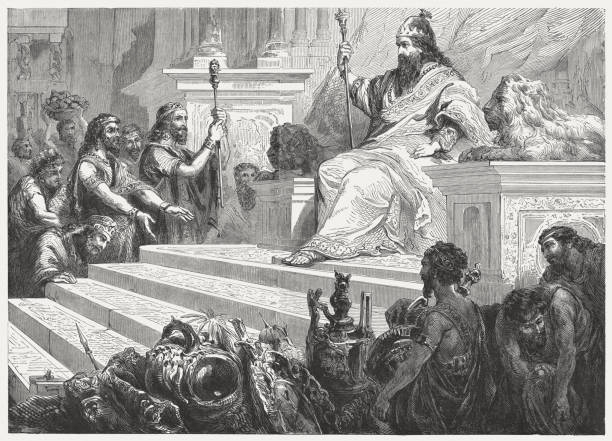
King Solomon the wisest man in the world, ever, excepting Jesus obviously. He wrote three books in the Bible, as you might expect the wisest man in history to contribute to God’s Word. The books Solomon wrote are very earthy, very real world. Solomon had the advantage of seeing life in many ways compared to us who have been in comparably humble lives. Solomon seems to have certainly lived in the lives of his subjects, but he was also the greatest king, along with his father David, in the history of Israel, and I would make the case that he was one of the greatest in the world. In his book Ecclesiastes, he seems to have come to the end of his life and was looking back at how he conducted his life. He was the most fabulously wealthy and powerful king, yet many would say that his wisdom in terms of God was not what it should be. He was responsible for the division of the kingdom, between Israel and Judah. It didn’t happen during his reign, but God promised it would happen and it did shortly after Solomon died. Israel went from one of the most fabulously wealthy, powerful nations in the world, on a downhill slide that left it wiped out in about 500 years. He probably would have been really wise if he had really followed his comment in Ecclesiates 12: 13: “The conclusion, when all has been heard, is: fear God and keep His commandments, because this applies to every person.” He forgot, Solomon got involved in foreign “gods”, he had almost 1,000 wives and concubines, about 999 too many. And instead of making God his highest principle, goal, he sort of forgot. Take Solomon’s advice. Fear God and keep His commandments. Fear in this sense is more about respecting God, that He is the most important part of our life. When you think you want to do something that will offend God, decide that you should fear Him rather than offend Him.

I’m Jim Driskell the pastor of Christ Lutheran Church 1302 E Washington St, New Castle, Pa check us on the web Christlutheran-new castle.org questions comments contact me on the website. For a transcript of today’s Thought go to: wordpress.com/view/revjamesdriskellmdiv.com Sunday worship is at 10:30am, with the NCTV 45 thought for the day, God bless your day

Thursday Feb 27, 2025

Hi this is Pastor Jim Driskell of Christ Lutheran Church with the NCTV 45 thought for the Day.

We were talking about King Solomon yesterday. Solomon wrote three books of the Bible. Proverbs, Song of Solomon and Ecclesiastes. If you are a fan of the Byrds, the who you ask? No that was another 60’s band. The Byrds hit song Turn, Turn, Turn, was ripping off Solomon, Ecclsiastes 3:3-8. Wow! Lucky there were no copyright laws in Israel 1,000 BC. Anyway I was talking to my lady friend about “two are better than one”, that it’s always better to be with someone, have someone in your life. Certainly one should be a romantic partner, the other should be a same-gender besty friend. I’m blessed to have many stand up guy friends and through the years I can see so many people romantic or guys who fit Solomon’s words in Ecclessiastes 4: 9-12: “Two are better than one because they have a good return for their labor. For if either of them falls, the one will lift up his companion. But woe to the one who falls when there is not another to lift him up. Furthermore, if two lie down together they keep warm, but how can one be warm alone? And if one can overpower him who is alone, two can resist him. A cord of three strands is not quickly torn apart.” We have become so physically isolated, we think we have real friends in cyberspace. No! Think about the weather we’ve been having your computer won’t keep you warm like a real human being will and your computer won’t pull you out of a hole or help you fight off someone who is attacking you, etc, etc. God had always intended us to live in community. I don’t care who you are or who you think you are but you always need someone else in your life. That is part of what Christ’s church is all about, people who reach out to show people Jesus so that they will be led to eternal life by the Holy Spirit and to be there when you are cold, or trapped or attacked.
The church is a cord of three strands where we are strongest, able to stand against the attacks of Satan and the world when we pull together in the church of Christ. Otherwise we are vulnerable to so much of the hatred of the world. Find someone to be there for you and for you to be there for them.

I’m Jim Driskell the pastor of Christ Lutheran Church 1302 E Washington St, New Castle, Pa check us on the web Christlutheran-new castle.org questions comments contact me on the website. For a transcript of today’s Thought go to: wordpress.com/view/revjamesdriskellmdiv.com Sunday worship is at 10:30am, with the NCTV 45 thought for the day, God bless your day

Friday February 28, 2025

Hi this is Pastor Jim Driskell of Christ Lutheran Church with the NCTV 45 thought for the Day.

Dr Heath Curtis in his book “Telling people what to think”, reminds us that we Christians are “People of the Book”, that is the Bible, Scripture. There are 40 men who wrote one of the 66 books of the Bible. We can certainly make the case that while these people wrote about what they saw, what they knew, that God, Father, Son and Holy Spirit guided what they wrote. Dr Curtis writes: Having heard the Words of Christ in the Gospel we now speak back to Him what has been spoken to us. He has told us who He is, so we now confess that we believe His Word. We do so in the Creed of Nicaea. This is the great confession of the New Testament faith given in defiance of all the enemies of the Gospel, the statement draws a line between what is Christian and what is not.” I can hear the petty fussers now: “none of the creeds are in the Bible, they were made by man”. You have to wonder what their motivation is to talk such smack.

These are people who think they can deny the historic Word of God’s church and recombobulate it into their little happy place, where they can think and believe only nice things. More and more people are convinced that they are living in a world that they can make their little private place and dictate how it’s all going to end up. No, no, no. I know we have our happy clappy, big box churches that tell you it’s all about you. But people stood and died for the church so you can have your big house, car, trophy spouse, 2.8 perfect children. No on all counts. The Creeds; Apostle’s, Nicaean, Athanasian, were written by people who stood up for Christ in a world of great danger and animosity toward God. Despite what some silly little shoe salesman tells you it’s not about “Your Best Life Ever”, it’s about standing against the evil of Satan and the world in order for us to stay focused on Christ and the promise we have of an eternal life that will be magnificent beyond all imagination. Don’t listen to the phonys who aren’t Christian and just trying to separate you from your money. Trust that we know the genuine Words of God, Father, Son and Holy Spirit and those have been brought together by the universal Christian Church to say we believe in the Words of Scripture and will stand by them and defend them against all the attacks of the world and Satan.

Oh by the way, today is the last day of February!!! Yay to that!!! It has been a miserable month and sayanara baby to you, not soon enough. The only thing good about February, no not the Super Bowl, yikes! Baseball’s spring training started in Florida and Arizona, the much better promise of the return of spring than the bluebirds.

I’m Jim Driskell the pastor of Christ Lutheran Church 1302 E Washington St, New Castle, Pa check us on the web Christlutheran-new castle.org questions comments contact me on the website. For a transcript of today’s Thought go to: wordpress.com/view/revjamesdriskellmdiv.com Sunday worship is at 10:30am, with the NCTV 45 thought for the day, God bless your day

Thanksgiving vs vanities Psalm 100 Aug 4, 2019

[for the audio of this sermon click on the above sermon]

We make our beginning in the Name of God the Father and in the Name of God the Son and in the Name of God the Holy Spirit and all those who give thanks said … AMEN!

God certainly is in the Old Testament but it seems that for the most part He left the Old Testament for us to understand who we are, get snapshots of ourselves. Sometimes those snapshots are good, positive, uplifting. Today’s Psalm is very uplifting and positive. The Psalms have been categorized into different “types”, there are 37 psalms that are considered to be “praise and thanksgiving”. Martin Luther writes: “the 100th psalm is a prophecy of Christ. It calls on the entire world to be joyful to praise and to give thanks, that is, to worship God and come to His throne and His courts, and to call on Him with all confidence. His grace is an eternal kingdom, which truly remains forever and ever.”[1] Luther is right, what is more deserving of praise in knowing that He is coming, that He is coming again and from Him we have the promise of eternal life in Jesus in the resurrection.

Psalm 100 is not attributed to a writer, it could be the writer of our Old Testament passage, King Solomon. Doubtful. Solomon in his other writings does not seem to be the yippy-skippy type. The readings certainly contrast each other. There are passages from the Old Testament that speak of great nobility, but there are plenty of places that lack nobility. Our Bible is the only “holy book” that is not reluctant to describe the dark side of the people in the Bible. While Solomon was brilliant, things did not end up well for him.

The Queen of Sheba, of Solomon’s time, was incredibly wealthy and accomplished in her own right. ESV 1 Kings 10:2 She came to Jerusalem with a very great retinue, with camels bearing spices and very much gold and precious stones. And when she came to Solomon, she told him all that was on her mind. 3 And Solomon answered all her questions; there was nothing hidden from the king that he could not explain to her… 5 the food of his table, the seating of his officials, and the attendance of his servants, their clothing, his cupbearers, and his burnt offerings that he offered at the house of the LORD, there was no more breath in her.” Solomon’s splendor had to have been staggering in order to wow someone like the Queen of Sheba. Under Solomon Israel was at its pinnacle. The temple he built was brilliant, encased in so much gold. It’s said there was so much gold in Israel that no one even bothered with silver, it was considered too common.

Solomon talks about “vanity” in Ecclesiastes. Vanity to us often denotes “wow look at me, aren’t I all that and a bag of chips! But it also means that no matter what we do, all we do, the world is usually going to pass us by, just ain’t no thing! I’m sure we’ve all had the experience of cleaning out the garage, basement, attic/ all of the above, of an elderly relative. Everything they did in life, collected, all that they had hoped and planned. To those of us who were doing the hauling most of it had little meaning. We owned our home in Massachusetts for twenty years, our children were raised there. From 1985-2005, what I accumulated there, eventually had to be packed and moved; it could be seen as vanity to keep much of that stuff, and also that I kept it in vain, to what end? My wife often asked me that. While we indulge our vanities and so much is in vain our Psalm reading tells us about giving praise and thanksgiving to the Lord.

Recent studies have shown that even into old age our brains are very plastic, that we really have a choice in letting our brains settle and harden into a rigid plasticity of the same old, same old. Too many people become bitter and complacent: I’m too old to learn, I’m too old to change, yada, yada. This is just not true, but in our “hey let’s find an excuse so we don’t have to push ourselves” world, it works for most people. So when we enter this hum-drum, gray existence where nothing ever changes, which is how Ecclesiastes reads, our brain gets wired that way. Nothing new, nothing to be thankful for, just grouchy, grumbly misery, which is rather stunning for us who are the most blessed of those living in the world today and in history! Yet what do we mostly see and often among Christians. There was a cartoon character when my children were children, Gulliver’s Travels” every episode was always: “Gulliver, we’ll never make it, we’re all doomed.” In spite of having everything we could begin to imagine, that might as well be the creed of Americans today.

There is thanksgiving in all that we do. We may have the vanity in our life, the things that we left behind, but I have no doubt that each of you has had times and places where we did make a difference. Where we did serve with strength, honor, conviction of what we knew would serve Christ and His Church. We honor Christ in what we are thankful for by keeping those times, those people in our heart. But we also need to move on from those things, there is no such thing as settling on your laurels in the church of Christ. I know how much of a nice, warm, cocoon we have in our memories, and those memories aren’t in vain, they were delightful times that God has given us. In those times we often forget about the struggle to achieve what God gave us to realize, that we need to persevere, the uncertainty, tragedy. We might let it interfere with the plans Jesus has for us now. We get caught up in the way things were, we tend to ignore the great things going on around us now and don’t do those things that the Holy Spirit is moving us to. In that sense our past becomes vanity and keeps us from moving into the future God has for us. The parable Jesus tells compares our vanity to our lack of thanksgiving. The farmer is patting himself on the back, how deserving he is of all his crop. Food was much more valuable then, people often went without, this guy knows he’s in for a big payday. We see tremendous vanity and complete lack of thanksgiving. He knows Psalm 100; “Enter His gates with thanksgiving and His courts with praise! Give thanks to Him; bless His name!” He’s in his counting house like Ebenezer Scrooge, or Scrooge McDuck, rubbing his hands “Soul, you have ample goods laid up for many years; relax, eat, drink and be merry.” We’ve had those times cashing in. We didn’t enter God’s grace with thanksgiving and praise, too often we’re worried what tax bracket it’s going to put us in.

Ron Wessel has given me a great education in agriculture and I’ve heard this from him and other farmers: with crops and livestock you have to put in the work, but God gives the blessing and the return on our labor. While the farmer in the parable is patting himself on the shoulder, God steps in and I don’t think to punish this guy but he had reached the end God had planned, God lets him know; okay superstar! You think it’s all about you? You could work harder and longer and it wouldn’t make a difference, it would be in vain. Talk about vanity, in vain, you’re at the end tough guy, you’re not going to get to do any of those things you had planned. You could have given thanks, go to the temple to share some of what you have, take time in prayer. But instead of making it about me and all that I did for you, you made it about yourself and that never ends up well for you.

In Jesus we don’t get into the petty fussing and nonsense we see with the two brothers in the Gospel reading. We don’t let the monetary issues, the things that we might have received, but didn’t. We remember who it is that has given us the hope and promise of the eternal. That Jesus has put us back in relationship with God. God is completely holy, pure, just, who loves us greatly, but in His justice, He will not abide sin and evil. God the Father gave us His Son to reconcile us, to be the price for our sinful acts to make us perfect and save us from God’s justice. Jesus takes us and delivers us to His eternal hope and promise, the eternal life of the resurrection in Him. For that and so much that He’s given us we should be constantly entering His gates and going to His courts in Thanksgiving! Dr Luther writes: “…we’re showered with blessings every day and we’re always using what God gives us…we accept his gifts as if they simply appeared out of nowhere or as if we had earned them through our own efforts, diligence or wisdom. We think that God somehow owes us these things, and therefore we don’t need to thank him…”[2]

We can continue to live in vanity, take the joy out of a joyful life God has given us and intended for us, we should be doing all we can to enter His gates and go to His courts in Thanksgiving.

The peace of God that surpasses all understanding keep your hearts and minds through Christ Jesus. Amin and Shalom  Christ is risen! He has risen indeed Hallelujah

[1] Reading the Psalms with Luther p 235

[2] Edited by James Glavin 365 devotional readings from Martin Luther  Through faith Alone  April 27

Liturgical worship, music, chanting, does stir the emotions, the right ones.

Once in awhile God blesses me with a “eureka” moment and you, dear reader, are about to share that with me, or well at least I’m about to lay it on you. Groovey, huh baby?

The hit on liturgical music/worship is that there is no depth of emotion, it doesn’t lift the spirit, the emotion.

Ya, well there’s a technical term, that’s “bupkus” or as Charles Dickens wrote, “bah humbug”.

The truth of the matter is that it  most certainly does! The problem is that the past few generations are so superficial, so motivated by “eros” love, that it’s all about me, give me, give me. Liturgical worship is much deeper, it gives to God who gives back to me. Yea, well we want to cut out the middle-man and, as always, gimme, gimme. If we would really shut-up and listen we might realize how much more comforting and strengthening liturgy is, how it reaches down to your soul, because it’s the Holy Spirit who is reaching. We can stay with the shallow/superficial or we can really build that relationship with God the way that man has been doing it, which would date back to at least the time of King David, King Solomon and Solomon’s Temple.

Now, I will concede this. Because liturgical worship is difficult, and for those who lead worship and really don’t get it, they will do a lousy job. Sure there are many young pastors who can do it, but they really don’t get it and after awhile it does seem to be going through the motions. For me, who is much less talented, but who has gotten it and is better able to articulate it, but still no talent, you know what, have a little patience with me and my lack of talent won’t matter. What will matter is the depth of emotion and love that we convey to the Father in the liturgy. If you just go through the motions meaning will not come out and again, there are too many who should do it well, but just don’t get it. Sorry, but seems there are far too many of the following mindsets: “Here I am going through the motions, I don’t really know what I’m doing or how I’m doing it or why and, frankly, don’t really care. Right, wrong or indifferent and, frankly, I don’t even think there’s a “right”.”

Well yea, there is a “right” and let’s talk about it.

I have opined before, that the difference between “happy-clappy” and real worship is the emotional content. God the Holy Spirit has finally helped me to articulate the case for the liturgy much better.

We have become an “eros” society. Everything has to appeal to the superficial, emotional, put on a big show – please me, it’s all about me, feed me, sex me, give me this superficial comfort, love me in this adolescent, it’s all about me, wah, wah!!!

Liturgical worship is about agape love. I give to You (God), I lift You up, I know it’s all about You (Father, Son and Holy Spirit). It’s only through You and because of You that I even exist, no less have any meaning at all. I is all about You, when I acknowledge that and praise You, You make it all about me. You make me something I could never be, Your child! You give me something that I could never get – everlasting eternal life in the resurrection. Real worship is always about completing that connection. Not me just sitting back and just taking, again that adolescent attitude.

Of course another reason we like the “eros”, is because it’s easier. It does just go to our base instincts and we don’t have to work at it. One hit that I’ve taken about being more liturgical is that in some way it’s not pleasing, doesn’t resonate well. Yea, well, get over it. Does everything have to be The Gaither Family? No in fact, that’s just another generation’s superficial “please me-please me” with no more depth of true worship. One of my past pastors, United Methodist, but definitely not of the wishy-washy liberal. If anything much more Father Flannagan. He was a military chaplain in Italy during World War II. The man couldn’t carry a tune in a bucket, but didn’t matter. If he had to belt it out a little louder to prod us to sing louder, he had no compunction about that and we frankly loved him for it. He was actually kind of a little prickly, nothing prissy sentimental about him, and when he started singing we’d just smile. Not a mocking smile, but a “there’s our pastor and we really do love him.” An attitude of pride, of it really doesn’t matter how we sing, just sing and lift up God in worship. That’s the way it should be done. For those prissy little perfectionists, get over yourselves and focus on worshiping God in the hymn and what the hymn is teaching and don’t worry your self about the quality. You ain’t no Pavarotti either. I have a much bigger problem with the guy who has much more talent and goes through the motions then the guy (me) who has no talent, but truly wants to lift up God in worship. I mean really, doesn’t that make sense? (I’m sitting here listening to Bob Seger and going on about hymns and liturgical worship, go figure. God surely does mix it up on you!)

The impetus that God used for what is going to be awhile longer (strap in) is an article in Christianity Today by Steven R. Guthrie Love the Lord with All your Voice (June 2013 pp 44- 47)

CT is not a high liturgy kind of publication and yet Mr Guthrie uses as the focus of his article Athanasius who lived from 293-376. Definitely not happy-clappy. “In the fourth century, the church father Athanasius articulated a different understanding of singing . It includes self-expression, but Athanasius believed singing is centrally a spiritual discipline – an important practice in Christian spiritual formation and a means of growing in the life of faith.” Now that would be for everyone, the Don Paiges, the Gaithers, Martin Luther, Me. Those who are great to listen to and those who, let’s just say can be challenging to listen to.

“In a letter to his friend Marcellinus, Athanasius enthusiastically commends the Book of Psalms and provides guidance for reading the Psalms devotionally, (B N – We are pretty sure that most, if not all, the Psalms were set to some kind of musical scoring. We don’t know how, but the Roman Catholic, Anglican and Lutheran Churches have all taken a run at putting the Psalms to melody and most of these are what we chant during worship.) … The Book of Psalms, however, has a unique place in Christian devotions, somethiat the was true in Athanasius’ time and remained so across centuries of monastic practice and worship. Athanasius suggests that the Psalms are so spiritually significant precisely because they are not simply read or spoken but sung…

Now I am going to quote the article at length, because it is just so right on. So I may be breaking rules and I’m sorry and will happily do what I can to make up for it, but this just has to be repeated.

“…In singing, the truth of the Psalms is drawn into the depths of one’s being rather than out of the depths of one’s being…” [this is in contrast to where music today is drawn to, which is much more on the surface, definitely not the soul. This is the difference between agape and eros. Agape reaches down to give you strength, being, connection that you could never do on your own vs. Eros which is entirely about your superficial appetites, more personal titillation than truly moving your soul.- JD].

What Guthrie talks about next applies to Scripture readings also. When we read Scripture with some genuine human emotion, versus the flat/rote manner most people read it, Scripture does come alive. It gives us a sense of what is really going on in the real world. So much of other beliefs are sort of unreal, pretension, than genuine “this is the human condition” ideas. Christianity can be very mystical, it is very deep, it is right where we live because God the Son, Jesus, did live among us and did experience everything we did. So it is real versus this phoney Eastern stuff or gnosticism, that tries to deny the reality of the world.

“We might ask again why we could not simply speak the words of Scripture as if they were our own. What is gained by singing them? Just this: In song, we learn not just the content of the spiritual life but something of its posture, inflection and emotional disposition.”

“When we sing, we learn not simply what to say but how and why to say it. What Athanasius recognizes (and what we might forget) is that inflection, rhythm, and tone of voice matter deeply. They are not aural decoration. For example, after someone offends us we might say, ‘It’s not so much what he said, it’s the way he said it.'”

Chanting is difficult, I keep trying to do better, make it more aesthetically pleasing. But it drives in me the opportunity to express the ideas in a deeper more meaningful way, an expression of the different emotions instead of it being some kind of rote incantation. Because of that, I hope that the hearer hears, the depth of what the writer was expressing 3,000 years ago. That the human condition has not changed a bit since the time of Solomon until now. When we get over ourselves and understand this connection that the church has had going back to the beginning, we can start to live genuine lives instead of this goofy idea that we are somehow so much smarter now than ever before. It’s not true and in some ways it should reassure you that you’re not the first one and won’t be the last. Shut-up and listen, instead of trying to convince us how brilliant you are. If you do, you might find some true comfort and connection to those who have been connected and inspired by God to live their lives in Him. The claim is that the liturgy, chanting has no depth of emotion. That is, as we say in the Greek, baloney. Most chanting is based on the Psalms, mostly written by King David. You do not know anyone who has gone through the range of emotions that David has. Shepherd, then king, great man, great sinner, hunted, hunter. This was a man after God’s own heart. When he loused up, he loused up big-time. But he took it back to God, he took the consequences, he dealt with the rubble, then came back and lived for God. He was a brilliant man, brilliant composer, brilliant king, brilliant soldier, diplomat, builder, on and on. To you guys who think that anything in the Bible is sort of silly and prissy, you need to snap out of it. David is more “man”, than any man I can think of before or since. He truly lived (omitting the really bad stuff), the way men should live. That is why the Psalms are so important, especially to guys.

“Music, Athanasius believes, is a sounding image of a soul that is no longer at odds with itself, nor at odds with itself, nor at odds with the Holy Spirit. Melody models an inner life in which the many different elements and impulses of the person are drawn together in a pleasing chorus.”

“Athanasius goes even further. Not only is this singing of Psalms an image of the well-ordered soul; it is also a means by which God brings about this order. As the Christian goes about ‘beautifully singing praises, he brings rhythm to his soul and leads it, so to speak, from disproportion to proportion.’ This proportioned, harmonized self is not our normal state of being. Apart from Christ, the ordinary state of affairs is for the various members and impulses of our person to jostle for control, battling with one another (Rom 7: 22-23). But when one sings, body, reason, emotion, physical sense and desire come alongside one another, each enlisted together in the praise of God. As we sing, we become a harmony.”

“…Athanasius’ point, however, is that specifically by singing our praises, all the diverse elements our our humanity are drawn together and then together lifted to God in worship.”

“Athanasius portrays the Christian life as a sort of richly broadened harmony, ringing out in praise of God…”

Part of what this means? Quit the non-sense about well you can’t sing, I don’t like hearing that. If you were focused on your singing and what it truly means in respect to the guy next to you and to God, you’d realize it doesn’t matter how good/bad the other person is. What matters is how the Holy Spirit is bringing what you are doing, what he’s doing, what every Christian who is at worship at that moment anywhere in the world is doing, making it a “richly broadened harmony”. Just saying, but I get the feeling you’re going to feel pretty petty in heaven, when you truly understand how the Holy Spirit does bring all that together. And yes that includes my still in much need of improvement chanting.

I am probably not doing Mr Guthrie’s article justice, but I think that I’ve made the point. God has been using liturgical music for at least 3,000 years. It does bring us together, it does reach down to our soul in a sacrificial, it’s all about the other person, it’s all about Jesus way. Can we do it better? Absolutely. But you want genuine emotion and content in your worship? All due respect to the David Crowder Band and all Christian music going back to who knows when, but the eros emotion that music evokes, is OK, believe me, I’ve got all the albums. But when it comes to what is truly from the soul, what reaches back through three millineium, what God uses to tie together Christians around the world, is the liturgy, based on, mostly, Psalms, but also the Gospels. When we truly take this form and truly lift up God in worship and make it all about Him, then He does respond and make it truly about us. In stark contrast to eros, which is all about me and what appeals to my senses and doesn’t go deep enough to impact our soul. Only God does when we truly lift Him up in worship that’s about Him and not about us. And if Athanasius is right and singing is a spiritual discipline, then it doesn’t matter if you do it well or not so well. We worship, we take the Body and Blood of Jesus, we hear the preached word, we’re baptized, we study Scripture, we journal, we confess and absolve, and yes we should sing, in a way that is truly a spiritual discipline and not another worldly indulgence.

Wisdom in a world of pragmatism, the world’s “wisdom” 1 Kings 3 Luke 2: 47 First St Johns

Please click on the above link to hear the audio of this sermon or copy and paste into your browser.

This is my 300th post, so Yaaaay, appropriately enough it’s my sermon from last week.

We make our beginning in the Name of God the Father and in the Name of God the Son and in the Name of God the Holy Spirit and all those who who want to be strong in God’s wisdom said … AMEN!

We don’t know much about Jesus’ childhood, our reading today is about the only record we have of His childhood at all. But today’s readings are certainly a contrast in wisdom. In our Old Testament reading we see, what at least appears to be, a sort of altruistic act on the part of Solomon. The text says “Solomon loved the Lord, walking in the statutes of David his father; only,…” But we also see Solomon getting a little too caught up in the ways of world politics. He married a daughter of Pharoah. Now this was contrary to the Law that Yahweh gave back in the Pentateuch, the first five books of the Bible. Eliezer Shemtov writes: “The primary source upon which the prohibition for a Jew to marry a non-Jew is to be found in (Deut. 7:3): “You shall not marry them (the gentiles), you shall not give your daughter to their son and you shall not take his daughter for your son.”

The reason for this prohibition is clearly spelled out in the following verse: “Because he will lead your son astray from Me and they will serve strange gods…” (“Strange gods” can also be interpreted to mean those ideals and ‘isms’ that do not conform to the dictates of Torah,… )1 We see Solomon getting a little caught up in the ways of the world and forgetting what Yahweh had told them to do. The Chronological Study Bible writes: “Marriage was an effective means for creating alliances among ancient nations. The hope was that one would deal more kindly with kin than with strangers. No greater evidence of Solomon’s importance among the nearby countries would be than to record his marriage to an an Egyptian pharaoh’s daughter. As policy, Egypt’s pharaohs did not give their daughters in marriage to foreign kings.”2 The passage in 1 Kings 3: 1 tells us: “Solomon made a marriage alliance with Pharaoh king of Egypt. He took Pharaoh’s daughter and brought her into the city of David…” (ESV) In addition the passage tells us that “…the king went to Gibeon to sacrifice there, for that was the great high place. Solomon used to offer a thousand burnt offerings on that altar.” (1 Kings 3:4) That’s quite an impressive sacrifice! But why would Solomon make an offering there? The ark of the Covenant, the tabernacle was in Jerusalem. Why not make your sacrifices there? The tradition of the pagan religions was to make sacrifices on “high places”. Later in 2 Kings, the writer notes: “ And the people of Israel did secretly against the LORD their God things that were not right. They built for themselves high places in all their towns,…” (2 Kings 17:9) There are 75 verses in the Old Testament about “high places” and all of them condemn the fact that Israel worshiped on “high places”. As early as Leviticus Yahweh says: “And I will destroy your high places and cut down your incense altars and cast your dead bodies upon the dead bodies of your idols, and my soul will abhor you.” (Lev 26:30) Doesn’t seem to be any doubt there! It is clear that Israel is not to use “high places” for the worship of Yahweh. Yet it’s at Gibeon that Yahweh comes to Solomon in a dream and says “Ask what I shall give you.” Solomon certainly says the right things. He talks about how Yahweh faithfully loved Solomon’s father David and David loved Yahweh. Solomon acknowledges that Yahweh has now made him king of Israel and so it appears that Solomon really understands why he is where he is. His words are right on message: “Give your servant therefore an understanding mind to govern your people, that I may discern between good and evil, for who is able to govern this your great people?” Solomon knows that Israel is Yahweh’s people, that only God can capably rule and Solomon seems to understand that he has been put there to faithfully rule as Yahweh has placed him there.

Solomon was definitely brilliant, Israel rose to the height of its power under Solomon. It became the most powerful kingdom in the region, was wealthy beyond imagination. It’s said that Solomon didn’t use silver to decorate any of his buildings because gold was so common. The Queen of Sheba traveled from her African kingdom to take in the wisdom of Solomon. But with all the wisdom, power and material blessing of the world, Solomon became too in love with his worldly power and did whatever was necessary in order to maintain his power and wealth. He no longer trusted in Yahweh’s wisdom to rule Israel, but trusted the wisdom of the world. He built his worldly power by marrying women from many different kingdoms: “Now King Solomon loved many foreign women, along with the daughter of Pharaoh: Moabite, Ammonite, Edomite, Sidonian, and Hittite women,…He had 700 wives, princesses, and 300 concubines. And his wives turned away his heart.” ( 1Kings 11: 1, 3) The writer of Kings points out: “the LORD had said to the people of Israel, “You shall not enter into marriage with them, neither shall they with you, for surely they will turn away your heart after their gods.” Solomon clung to these in love.” More unsettling Isho’dad writes: “The reason for that prohibition was lest [their daughters] might make your sons also prostitute themselves to their gods.”3 All these wives from different parts of the world, these made Solomon a big man in the neighborhood. All the nations around him understood his power because of all his wives and alliances. They saw his power as a result of these alliances and not as a result of what Yahweh had intended for him and did through him. Because Solomon trusted in the world’s power, he began to ignore Yahweh and trust in the “gods” of his wives. That would result in disaster for Israel, it would go from being the 800 pound gorilla, to divided, poor, constant in-fighting and eventually it would be overrun and it’s people killed or deported to foreign countries. We can only imagine what Israel would have been like if Solomon and subsequent kings had faithfully followed Yahweh.

While Solomon seemed to come apart because of his wisdom, we see that Jesus too started out as wise. Solomon was young when he was granted great wisdom by God and certainly, since Jesus is God, He had great wisdom from the start. He demonstrated that wisdom from the beginning. The teachers of the temple, men who spent their entire lives studying Torah “were amazed at his understanding and his answers.” This would be like a twelve year old today going to a meeting at the Harvard Law School and “amazing” all the professors there. It just wouldn’t happen, the teachers of the temple probably had a more profound knowledge of Torah then Harvard professors have of the law.

The difference is this. While Solomon came apart at the seams as he wrote in the Book of Ecclesiastes: “Vanity of vanities, says the Preacher, vanity of vanities! All is vanity.” It’s all pointless when we follow the world’s wisdom, it all just breaks down. But with Jesus: “And Jesus increased in wisdom and in stature and in favor with God and man.” (Luke 2: 52 ESV)

We see it all around us. People get full of themselves because of their power or wisdom or wealth. They no longer trust God’s leading, they trust what is around them. They trust in the world and their own understanding and in the end, like Solomon, they find that it was all pointless, it doesn’t do anyone any good, if anything it causes harm and destruction. On the other hand, Jesus certainly didn’t become wealthy or powerful, nor did any of His disciples. Yet what they left was a church that continues to serve, build up and encourage the people of Jesus. Jesus’ life ended at the Cross and it might appear in loss and defeat, but He defeated death. Jesus rose from the dead to give us the promise of eternal life. There can be no greater contrast, the worldliness and defeat of Solomon, so full of promise. The holiness and victory of Jesus, who came into the world with nothing, lived a life that the world would say had nothing and yet gives us the promise and hope of being His in this world and also in eternity.

Solomon failed, trusting in the world. Jesus triumphed trusting in the hope and promise of God. Since we are at the beginning of a New Year, let’s take a different twist on our New Year’s resolutions and really think about how much we have fallen away from God’s plan for our life and trusted way too much in the world’s promises.

What can we do in our lives to rededicate ourselves to God and His will for us and to start to look at the things in our life that are too much about wealth, power, comfort and too little about life in Christ, for us and for all those who the Holy Spirit guides us to witness to.

The peace of God which passes all understanding keep your hearts and minds in Christ Jesus. Shalom and Amin.

2Chronological Study Bible p 454

3Marco Conti Ancient Christian Commentary on Scripture OT V p 13 quoting Isho’dad of Merv quoting Ex 34:16