Yes Father, I did live my life in Christ out in the workplace.

I’m getting to the end of Fr Nkwasibwe’s book (Business Courage), so this is time to sum up and in summary, he points out something that I need constant reminding of. Reminding us as Christians how much we need patience, compassion, humility, yea, straight out love, for those we work with. It’s often hard to remember, but we are told to love our neighbors, it’s hard to think of fellow employees, bosses, subordinates, peers as “neighbors”, but you probably spend more time with them in a week, then you do with the people who live in the house next door to your house.
I don’t think for an instant that patience, compassion, humility, love are easy, they sure aren’t for me, especially when I think that someone should know better. I am not patient, or compassionate and sure not humble. I ask forgiveness from God everyday for my failings there, and quite often from those around me. Sometimes these qualities aren’t bad, sometimes, you need to push on people, expect more from the, stop giving them more chances. Jesus did not hesitate to push on the people he encountered who should have known better. Of course he’s Jesus and I’m not, but still, there does come a time.
But I certainly have to sign on to Nkwasibwe’s comments: “…leadership and followership may promise utomost commitment to promoting workplace inclusiveness, cultural and spiritual sensitivity, practical compassion, and respectful pluralism. However, without mature faith that is able to open the eyes of their hearts to a sparkling comprehension of the realities leading to salvation and to those realities of those characteristics in other people and to truthfully respond to them,…” (p 430)
I hasten to remind the reader that this book is the result of Nkwasibwe’s MBA thesis from Eastern University. I think it is great that someone would do his thesis work on a subject that has to be a hard sell in the business world, but is certainly deserving of this kind of attention. Main point I take, you encounter a lot of different people, they are in need of salvation in Christ. Regardless of what they are now, how they act, how they treat you, we are still responsible to reach them as mature Christians. We pray, we trust in God’s leading His strength and in patience, maturity, humility and love we do our best to reach them for Christ.
In the business world, we are all leaders and all followers, living our Christian lives in the workplace in all of our capacities is imperative and it is difficult. But as Nkwasibwe points out, the reality is this, those you work with have to confront their salvation as much as anyone. We have simply gone to far as a society in terms of our spiritual blindness or acting as if our eternal salvation was a matter of joining the right group, doing the “Ten ways to …”, or jumping through the right hoops, but once we get into the office, shop, car, site, etc. well it’s time to concentrate on what’s important and that’s not usually living our life to the glory of our Lord Jesus.
Luther called vocation “God’s mask”, in the sense that God sort of hides Himself in terms of the things we do (remembering that vocation is not just our job, but are we Christian spouses, parents, neighbors, community members, church members, business associates etc), it’s in terms of these roles that we actually live our Christian lives out in. Do you really think that at the end of time, when we all stand before the judgment seat, all by ourself, no title, no possessions, no wealth, no nothing and you really think that God’s not going to review your life in all these roles? How do you really think it works? “Ah, you showed up for church here and there, gave a little more than the average, volunteered here and there, didn’t do anything really criminal, ok, you’re good.”? Granted, we are saved in Christ and that is what we will ultimately be judged on. But if you are reading this and you really think that all the “good” things you’ve done will save you, COME ON! REALLY? You are going to stand before a perfect, holy God with your, at best, mediocre achievements, and expect, ahh, good enough. No, it won’t get you anywhere, you are saved in Christ and nothing else. Having said that, there will be a judgment, you will still have to fess up and do you really want to stand there and say, “yes Father, your Son, your Kingdom are important, but they weren’t important enough in my life to live out and share with those I spent a huge chunk of my life with.
So let’s talk more, we are still reading and discussing Dr Gene Veith’s book, Wednesday mornings 10am, First St Johns 140 W King St limited parking in rear of church. Again, if you have any suggestions as to building on this, anything else we might be doing, please let me know. I feel strongly about this group, I benefited greatly from a similar group back in Boston during my corporate days. I assure you we can make this something that will be of huge benefit to all of us who want to live our lives out as Christians in our vocations and that is pretty much all of us.

SOWING THE SEED OF THE GOSPEL First St Johns July 13, 2014 5

https://soundcloud.com/jim-driskell/what-kind-of-ground-are-youwma


Help us Lord to trust you and plant according to your guidance, help us to know that it’s Your will that is important, that You will decide what the fertile soil is and will save who You will save and help us to trust in Your will. We make our beginning in the Name of God the Father and in the Name of God the Son and in the Name of God the Holy Spirit and all those who sow the Word of God in faith in Him said AMEN …
Clearly in today’s readings Jesus is telling us that it is up to us to spread the Gospel, in verse 19 he plainly states that; “When anyone hears the word of the kingdom…” while he tells the crowds about a “sower”, He is talking about evangelizing. Matthew Henry explains: “There are eight parables recorded in this chapter, which are designed to represent the kingdom of heaven, the method of planting the gospel kingdom in the world, and of its growth and success.”
So, who are sowers here?… Yeah, everyone, we are all planters, we are all called to sowing God’s word. That doesn’t have to mean quoting chapter and verse of Scripture, but it does mean, we are all to be a sowers. I know a few of you were raised on farms, I’m sure more than a few others have gone out and actually planted. So I’ve got a lot of veterans here to tell me how “sowing” should go. Jesus is talking about the fact that we are called to sow the seed. Yes, in this day and age a farmer is going to “spread seed” in a more systematic way. He uses big machines to plow up soil and then another big machine to put those seeds into places that he expects will be fertile soil. Does that mean over hundreds of acres that all the seed is going to be in fertile soil?… Probably not, even in a well plowed field there are still going to be places that just don’t work. Does that mean that his efforts are useless? No… John MacArthur points out in his commentary on Isaiah; “Moisture from heaven invariably accomplishes its intended purpose in helping meet human physical needs. The word of God will likewise produce its intended results in fulfilling God’s spiritual purposes…”1 We expect that every seed we sow, as God’s farmer, is going to fall on fertile soil, produce a nice big crop. Matthew reminds us in 5:45: “ESV For he makes his sun rise on the evil and on the good, and sends rain on the just and on the unjust.” Sure we may be getting the seed of the gospel and God may be providing the rain, but if for His reasons, He has not chosen to make you fertile soil, that seed will not take root. John MacArthur asserts: “…He [Jesus] does not speak to the multitudes except in parables (v 34). Jesus’ veiling the truth from unbelievers this way was both an act of judgment and an act of mercy: judgment because it kept them in the darkness they loved (cf John 3:19); but mercy because they had already rejected the light, so any exposure to more truth would only increase their condemnation.”2Jesus is telling His disciples, which would include … us; despite what you think, it’s not in My plan that everyone will know salvation. There are going to be people who are going to resist God to the end: “And this is the judgment: the light has come into the world, and people loved the darkness rather than the light because their deeds were evil.” (Jn 3:19) We’ve talked about those people before, those who are condemned because they’ve chosen to do it their way. Jesus is quoted 6 different times saying, “they will be cast into darkness and there will be weeping and gnashing of teeth.” Jesus is telling us, that no matter what we say and do, there are going to be those who are not going to respond to the Gospel, they are so sunk in their sin, no matter how we cast the seed of the Gospel, we will be throwing that seed onto ground that is a path, it’s made so that we can walk on it and not slog around in plowed ground, the seed that hits the ground is only going to lay on the ground, the birds are just going to swoop in after the farmer and eat it. Or will be thrown onto rocks or into thorns and there won’t be a crop.
Jesus finishes this by saying: “He who has ears, let him hear.” Well, we all have ears, is that what Jesus means?… No. Spiritually speaking, none of us has ears. None of us has hearing that is really tuned to what the Holy Spirit says to us. How do we receive ears that are on the proper frequency? How do we get this fancy equipment, that the rest of the world doesn’t have? It has nothing to do with what we do, it has to do with what the Holy Spirit chooses to do. None of us deserves, none of us is smart enough or holy enough or anything enough, but when the Holy Spirit gives us “ears”, puts us on the right frequency, when He makes sure that we are hit with the Word/the seeds of the Gospel, then we grow in that good soil. How are we made into “good” soil? By what Christ did for us. Our soil is hard, we can think of it as our soul, all of ours. Our soul is made hard at birth, nothing that we necessarily did, but in terms of being born into our sinful condition. We are all born that way, our nature is not to be perfect, even at birth, our parents weren’t perfect, how could they produce anything that is perfect? As Paul tells us in our epistle reading; “If you live by the flesh, you will die…” We are born in the flesh. What does it take for us to be reborn into the Spirit?… Baptism. What does it take for us to be renewed in the Spirit? The Body and Blood of Jesus, His preached word. There is no middle ground. We are born in the flesh and the Spirit does not put to death the deeds of the body, what are those deeds? Just being the body that has not been baptized and has not received the Body and Blood of Jesus. When we are baptized, we are led by the Spirit of God, we are sons and daughters of God, our sins are forgiven.
In verse 11, Jesus answers His disciples who are asking, “why does He speak to the “them”, not the disciples, but everyone else, in parables?” We understand they’re talking about everyone other then Jesus and the disciples and Jesus says it’s not for them to know the secrets or mysteries. Strong describes this as: “the secret counsels which govern God in dealing with the righteous, which are hidden from ungodly and wicked men but plain to the godly” God has chosen His people, He is obviously going to talk to them in a way that is unique to that relationship. We understand and accept what He tells us in His Word. We may not always agree with it, we may not always feel comfortable with it, but we understand it. This is the seed that is thrown on to fertile soil. We are the fertile ground, we have been plowed up by baptism, by the Body and Blood, by Jesus’ sacrifice for our sins when He was crucified on the Cross. That has been some hard plowing, but it’s been done in us, who know our Savior Jesus. When we throw out the seeds the Holy Spirit leads us to throw out we have to remember this. We expect success otherwise, why should we waste our time. Therein lies the essence of faith. In faith we do what we are led to do, to sow the seed of the Gospel, it’s not up to us to decide who will, who won’t be saved. That is judging, we are told to discern sin and rebuke those who sin, but we aren’t to judge. He is the one who has prepared the soil. Maybe the soil hasn’t been plowed, maybe it will be and the Holy Spirit is using you to begin the preparation process, or maybe we should in love sow the Gospel and maybe that person just won’t and never will understand. But in faith, we did what we were led to do and whether it was plowed or not, whether it was good soil or not we leave it up to God to decide.
So be a sower this week, throw some Gospel seed out there. Get out your handy/dandy journal and write about how that went. Pray over your planting, because you planted, because you prayed, God may use that to bring someone to Him, to know salvation in Christ. But either way you acted in the way God gave you the faith to act and you can be at peace knowing that God has used and moved you and you faithfully acted according to His will and not yours.
The peace of God which passes all understanding keep your hearts and minds in Christ Jesus. Shalom and Amin.


The Gates of hell shall not prevail against it

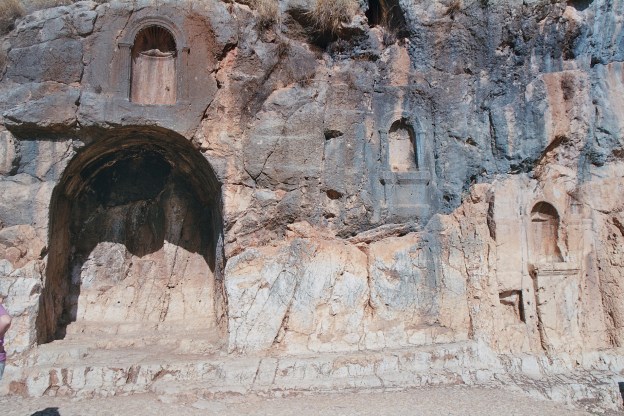
This is a unique site, it’s not very well preserved and for a lot of people they could well just walk by it. But for Christians this is, at least according to tradition, a very important site.
This is a pagan temple it’s thought that it was built by Philip the Tetrarch who was the son of Herod the Great. This makes him, nominally, Jewish, but his political position, all of Herod’s children’s political position was pretty tenuous and making nice with the Romans was always a good idea. The temple is thought to have been dedicated to Zeus and/or Bacchus.
Yea I know, “snore, thanks for the history lesson yada, yada”. But wait, there’s more, and this is the cool part. It is getting towards the end of Jesus’ incarnational ministry (that is just before He is crucified). They decide to camp in front of this temple and this is where Jesus asks: “Who do men say that I am.” After a little discussion, Peter makes his great confession: ” “You are the Christ, the Son of the living God.” (ESV) Peter is saying that you are the promised one, the anointed one, the one sent by God, you are God the Son. This is where Jesus replies that the Father has revealed this to Jesus and, according to tradition, pointing back to this big rock that the temple has been carved into, “on this rock I will build my church.” That is first, there is a church, it is Jesus’ church, He expects His disciples to come together and meet as a church (this is in response to the lame comment I get a lot “ahhh..I go sit on a mountain/at the beach and worship Jesus, I don’t need no church.” Yea well Jesus thinks you do need one and He established one, so quit with the lame excuses and go to a real Bible believing church. Anyway, Jesus goes on to say: “and the gates of hell shall not prevail against it.” That is, against His church.
Essentially Jesus is saying that this temple is demonic, pagans say it is set up to worship “god(s)”, Jesus is saying “oh no, it is demonic and my church will be built upon this blasphemy. Further more this is a gate to hell and this will never prevail against My church.
So, the take away is this. Many Christians will make the case that any other “god” is a demon who has convinced people that he is “god”. One way you can make this case is by considering the one major difference between Christianity and every other religion and that is “grace”. You are saved totally through what God has done for you. We are saved because of Jesus’ sacrifice on the cross, we have assurance of salvation, as believers, from that one fact. Jesus died to pay for our sins. By virtue of that we are saved and there is nothing else that can save us. This is grace because it is totally the gracious gift of Jesus to us. There is nothing at all that we can do to earn this, it is a gift that Jesus gives to all those whom He chooses to be saved. Every other religion is entirely about you, that is all about what you do. You jump through this hoop, you do this, you do that, yada, yada and maybe, maybe you will be saved. There are some locks, if you are a martyr in Islam by killing infidels, you get a straight passage. Otherwise, everyone is on a string and all they can do is hope that they did enough.
I don’t have that problem, I have the promises of Jesus, He died for me, He baptizes me to wash away sin and to give me new life, He gives me His Body and Blood for forgiveness, restoral, renewal and refreshment for my soul. My hope is entirely in Him and His promises, nothing else, NOTHING ELSE, will save me. The Gates of Hell that you see in this picture will never, ever prevail against His promises for me.
Ya, I’m making the case here that any other “god” is a demon, is someone who has simply lied and deceived in order to gain worship, which Satan is always looking for and to basically convince people that if you get on this treadmill and keep doing and doing, well maybe you might get saved. There’s no promise there, no hope, simply a way to destroy a human soul and condemn them forever. You can talk about any other belief you want, but they are all designed to grind you down, strip you of any hope and then leave you condemned and dead.

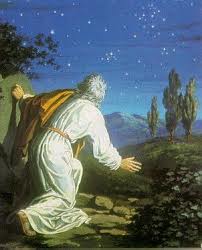
I do by the grace of God

This is how you respond when you are taking vows in the church. You may be making vows at your baptism, the baptism of your child, your confirmation or being received by a profession of faith, being married.
Since I don’t do it all the time, and I’ve only been a pastor four years, I am still a little taken aback when I review these vows with people and then stand before them as they make these solemn vows before a congregation. For example I may be confirming a teenager, to an adult of any age. Often when I go over these vows with them, I really lean on these on these questions. “I want to make sure you really understand what this is.” I will say. The response is always a sort of glib, ‘yeah what’s the big deal’ response, ‘oh yeah I understand’. When I stand up in front of the congregation with them I really lean on those words. Because I want them to really understand what is going on, I don’t want someone having some kind of an excuse later; “I didn’t know, nobody told me.” Who yea “they” did.
I know I’m hitting a nerve for some people, and I’m not really pinging on those who have been divorced, I’m sure that most who have been divorced have come to terms with that, with themselves and their pastor. But for those who haven’t been married, or are still married and maybe thinking about giving up, think of your vows. For the guy the vows are even more compelling. Are you going to give up, forget about the vows you made before God and your brothers and sisters in Christ? Or is this time to stand up? Yea, the world will back you up, “hey he/she, they weren’t happy, they ‘deserve’ to be happy, fulfilled, have someone else, whatever the excuse. Those things are more important than some simplistic promise you made and anyway God’s supposed to forgive, right?” Yea, OK, so much for integrity, so much for your Christian witness, after all it’s all about you and not what Christ did for you. Right?
As I said the guy has an even greater responsibility, because part of the vows you made were to do for your wife, what Jesus did for His bride, the church. To sacrifice yourself for her.
Yea, I know, nothing’s ever going to happen, no one’s going to kill you because of your being a Christian… Right? Sure, being a Christian is just another membership, you know like Jackie Gleason and Art Carney were members of the Loyal Order of Moose, like the Masons. Yet, there are many thousands who have lost their life, it is happening right now. In Iraq, China, India, Southeast Asia, Nigeria, Kenya, many other places. There were more Christian martyrs in the 20th century then all the previous centuries, combined. Sure, if you ever confront the situation, you can just recant, disavow Jesus and you’ll live. But what do you think that means in eternity. Sure you lived, but what does that mean in terms of your day to day relationship with Jesus, with your church? Do you pray, how do you think that’s going to go now that you’ve disavowed Jesus? Is it possible that you may not have verbally done so, by your acts, by your lifestyle, you really have all but said, “I’m not really interested in living as a Christian, it’s not important, doesn’t really mean anything, it won’t matter.”
If that’s how you really feel why even bother taking vows, or is it just some simple “pro forma”? Go through the motions and things are just hunky, don’t you worry your pretty little head, right? Yea, tough decision, really stand-up kind of guy. What do you think it will be like at the final judgment, and there will be one. God won’t be interested in your excuses, you will be there entirely by yourself, don’t try to blame someone else, it’s you and you alone. How do you think that’s going to go … for eternity. I’d seriously think about those vows, maybe you aren’t/never will be a Christian. OK, that’s bad enough, but why make it worse by rejecting your integrity and your word to God? Or maybe you just don’t want to deal with being persecuted. Is anything you could suffer on earth be worse, then anything you could suffer before an all holy, all powerful Creator of everything who will condemn you for eternity?
It’s up to you, but I’d take those vows, and then find a way to really live them out. It may not be fun or pleasant, but if you promise to “…continue steadfast in this confession and Church and to suffer all, even death, rather than fall away from it?” If you promise that woman who trusted you that you will serve and defend her even if it costs your life, if I were you, if Christ means anything to you at all and what He suffered, then I would make sure I live up to those vows.
Rev Randall Golter reminds us that: “What God wills, God sees through! Be comforted. You don’t plan your death or even your public witness; God does, even as He plans your life.”Lutheran Witness June/July 2014 p 4
It’s not your call, you can quit, or, I pray, the Holy Spirit will help you figure it out, it’s way better doing it God’s way.

God is “not” dead.

The arrogance of secularists is astounding, with absolutely no evidence whatsoever, they just continue to assert that there is no God, or that He is either irrelevant or all about enabling us, i.e., whatever we want, however we want to do things, it’s His responsibility to make it happen and then to make sure everything works out in the end for everyone. The Great Enabler, the Great Creampuff, Santa Claus. There is an estimated 2 – 5 % of the American population that calls itself atheist. This alone indicates that a lack of believe in God is aberrant, such a tiny sample is not statistically indicative of a valid position. In or about 80% of the population calls itself Christian. The atheists segment, so tiny, even really, statistically speaking just aberrant and not really statistically valid, still tries to make a case for their being no God. An arrogance that is absolutely breath taking, they take all the scientific evidence, all the philosophical evidence, pick and choose what they like, make their case on tiny, usually irrelevant arguments and say “oh, yeah, there’s no god and if anyone believes likewise they’re stupid, bigoted, hypocrites.” Really? Tell me I’m wrong.
When people really have no valid argument, they always turn to ad hominem attacks and in their stunning arrogance, basically make their case against god by calling other people names. They are certainly entitled to make their case and challenge the status quo, but for the most part these people are just cranks [yea I know I just called them a name, but by definition…] who really make no case except a personal one and then in nasty, spiteful arrogance, they throw names at anyone who dares to disagree with them.
In “Answers Magazine” (July-Sept 2014), Ken Ham describes the interview that Jon Stewart of “The Daily Show” with Richard Dawkins, describes as “one of the most outspoken atheists in the world – the author of the the best selling anti-Christian book “The God Delusion”. (p 40)
John Stewart: So where do we go when we die?
Dawkins: Bertrand Russell – well – we either get buried or cremated. Or we give our bodies to science. Bertrand Russell said –
Stewart: But you actually don’t know what happens to us?
Dawkins: I don’t know what happens to us, but I know that our consciousness is wrapped up in our brains. I know that our brains rot…
So Richard Dawkins, a man who is so certain there is no God, is not totally certain about what going to happen to him when he dies. And yet he speaks with certainty as he tries to indoctrinate people to believe in his religion of atheism!”
“Because Dawkins, like all human beings, is finite, he has to admit he doesn’t have all evidence and so he can’t prove his atheism.”

The following is a U-Tube link on an interview with Stewart and Dawkins.

Everything Dawkins says he concedes he can’t prove, there’s no evidence for his claims, but “that’s my story and I’m sticking to it”, although he doesn’t even have the integrity to say that straight out. The fact of the matter is that atheism is a faith paradigm that is groundless. He makes a claim “well there’s billions of stars, there has to be other places that could produce life.” But the fact is that when you calculate the chances of life for earth all the factors that had to come together to create an incredibly narrow environment on the broad spectrum of the universe, that man could actually live in, to say that happened by chance and “should” happen by chance based on the supposition that there are so many other stars out there, there has to be other life, is an ignorance of statistical probability that is staggering. He would have at least a little integrity if he admitted that according to physical law, that human life here on earth is so aberrant that the chances of life somewhere else is just out of the bounds of probability. I’m saying that solely on the basis of the numbers, the fact that we are here is so statistically aberrant as to be absurd that to say, based on nothing at all, if Mr Dawkins could at least admit that, he would have some scientific integrity instead of babbling on Stewart’s show that he doesn’t have anything for anything. Stewart really does draw it out of him, that his beliefs are as much faith based as Christianity.
This is my story and I’m sticking to it, there is a God, He has told us what we need to know about Him. He has sent His Son, Jesus Christ, in order for us to know Him first hand and to know how our relationship works with Him. The Bible is 66 books written over 1,500 years on three continents, people from different backgrounds all with the same string running through it and ending with the predicted coming of Jesus Christ. The Bible tells us how the universe was created in a way that is plausible. Yea, you can’t account for God statistically, but to say that you can account for all creation and disregard mathematical probability is lacking in any kind of integrity.
If you would like to check out some of the other resources in “Answers In Genesis”, click on the following link:
https://answersingenesis.org/

Masada

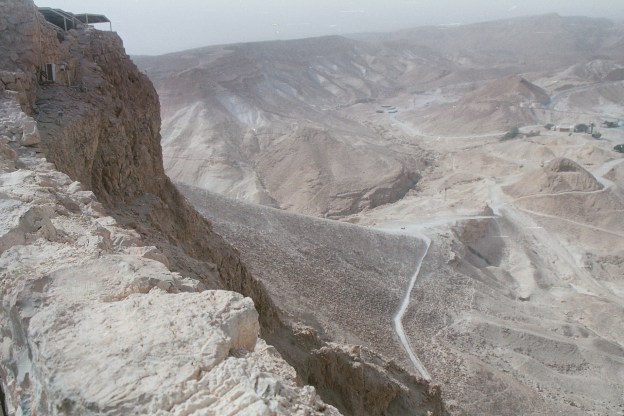
This is a view from Masada. Herod the great had started building this as a fortress. Jews who had been forced out after the fall of Jerusalem made a stand here and they held off the Romans for a few months here. But when it became obvious that the Romans were about to break in five men were chosen to kill the people who were left, about 960 people, then killed each other and the last one left committed suicide. In the middle of the picture you can see an incline, this was a ramp built by the Romans to break in and capture the fortress. From the top of Masada, you can also see big squares at the bottom of the mountain. These were the encampments of the Roman legions who had laid siege to the fortress. The following is a link to Wikipedia for more information on Masada. http://en.wikipedia.org/wiki/Masada

God’s promises

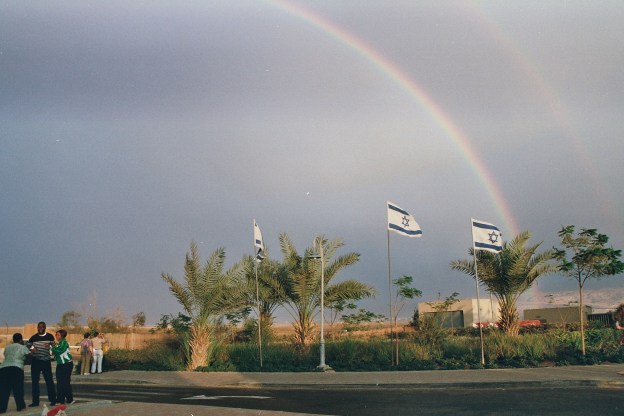
This was on the parking lot for Masada, it was right after a memorable desert storm. It really isn’t an “archaeological” or some notable site (Masada certainly is and I will do more on that) but it just seemed to be so representative of the whole time in Israel. I do believe that God is still focused on Israel, not to the extent that many like to make it, but as Masada represents and Armageddon represent, God will have the day of reckoning here in Israel. This scene just seemed to be a confirmation that yes, despite all the trauma, crisis, everything that has gone on, it will work out. So praise God for this assurance, for all His promises. Instead of trying to predict the future and read too much into things, we trust in Him, He gives us the faith and trust we need to confront what will happen and move on in Him.

Hymns help to learn, to edify, not an excuse to sit back and be amused.

Had readers from Finland and Figi Islands, very cool thanks. And to the reader(s) in Brazil, thanks for your support, any input, especially anything that would resonate in Brazil (except soccer, do not do soccer 😉 ) would be appreciated. Thanks to all readers, ya, I know, compared to a lot of bloggers I’m small potatoes, but it’s still a huge kick to see folks from different countries popping up on my stat list. Thank you and please jump in and comment; “I love you, I hate you, you’re ugly, you dress funny,” whatever, it’s great getting feedback. Believe me I have no doubt I need to improve so your observations are appreciated.
I get feed back about the music at church, a lot, and I’m really sick of it! Nah, just kidding, believe me, I understand, some of it can seem kind of obscure. But first off, we have a crack minister of music, who makes that 3,000 pipe organ really go and he picks the music (so blame him). No, no, kidding again, he does a great job. He knows the right music to go with the lectionary, and the season and we all appreciate all that he does. But still the debate goes on and remember, trying to get the music to be more liturgical. Heck, we have this magnificent instrument and a guy who knows how to get the most out of it, you name the contemporary Christian musician and I probably like him or her, but Rich Mullins doesn’t play well on a huge church organ. So I will quote at length from the “The Study of Liturgy” (editors Cheslyn Jones, Geoffrey Wainwright, Edward Yarnold and Paul Bradshaw)
“…To sing a psalm or the Trisagion, to ring a bell or play the organ – these are every bit as much rites as are reading of a lesson, the saying of a prayer, a procession, or even the breaking of bread. As with any rite, the purpose of singing and music is to awake meaning and induce an attitude…”
“…Augustine goes so far as to say:
‘Apart from those moments when the Scriptures are being read or a sermon is preached, when the bishop is praying aloud or the deacon is specifying the intentions of the litany of community prayer, is there any time when the faithful assembled in the church are not singing? Truly I see nothing better, more useful or more holy that they could do (Ep 55.18-19; PL 33.204).
The liturgy is the shared activity of a people gathered together. No other sign brings out this communal dimension as well as singing… Many individual voices, however can actually be fused together, so that when they blend and follow the same rhythm, only one voice is heard – that of the group. This brings out a very strong feeling of unity and of belonging. It even touches on the essential mystery of the Church as koinonia.… John Chrysostom preached these words to his flock:
‘The psalm which occurred just now in the office blended all voices together and caused one single fully harmonious chant to arise; young and old, rich and poor, women and men, slaves and free, all sang one single melody … All the inequalities of social life are here banished. Together we make a single choir in perfect equality of rights and of expression whereby earth imitates heaven. Such is the noble character of the Church (Hom. 5; PG 63.486-70′”
“…The liturgy is a ‘festal gathering’ (Heb 12:22). A festival implies singing, music and dancing….The canticle of Moses, celebrating the deliverance of Passover, became the ‘new song’ of the Lamb (Rev 5.9; 15. 3-4) and, as such, the symbol of all who have been definitively saved by the One who makes all things new’ (Rev 21.5)…
…Basil can write: ‘…[The Holy Spirit] adds the grace of music to the truth of doctrine. Charmed by what we hear, we pluck the fruit of the words without realizing it (Hom in Ps. I; PG 29.211).”
Yeah, this is going to be my usual kavetch, but let’s get over this lame idea that music in church is “entertainment”. Can it be? Yes. Should it be? No, not necessarily. When you take Chrysostom’s perspective, people can come from all over the world, go back through the centuries, and another common touchstone would be the hymns. Yea, again my beef with the church of the past century, but the cheesey “Jesus loves me”, Tommy Dorsey pop music does not transcend, it infantalizes, but it doesn’t edify. Heck as a guy, I would say one of the big turnoffs for me in the United Methodist Church was this schmaltzy music, it wasn’t serious, it was emotion and sentiment, that’s not what being a Christian is about. Has there been good Christian music? Absolutely, but is it what unites Christians or is it too much one perspective?
One of the members of the congregation pointed out he counts how many personal pronouns (I, me, mine, our), versus lifting up in praise, acknowledging who Jesus is and not what our opinion is. As I’ve said before, I have no problem with contemporary Christian, I get into concerts as much as anyone. It’s not worship, it’s certainly a time of praise, but it is entertainment. We need to come into His presence, in His church and worship and glorify Him and quit expecting it to be for our glory and edification but His. I get it, a lot of times it’s difficult to sing, hmmm, how about this for an idea, learn to read music, it’s not that hard. Push yourself, try to get the meaning and message of the hymn. When you learn it, it stays with you, the hymn should complement the readings, the sermon, pull it all together and you should come away from worship genuinely fed.