Tag Archives: health

Christ’s Lordship, He is with us through our trials.

The last few years have been tough. Six years ago my wife, two years younger than me, had a stroke that left her mostly incapacitated. For five years I provided care to her, run the house and perform my ministry duties. December of 2023 my wife died unexpectedly, which was a complete gut punch to me.

The following months that winter were very gray, I look back and yes, there was some real depression going on. The summer came and things looked brighter. I have only lived here for two years. We moved here because my sons live here and I got some help with my wife’s care. So reality was that I was pretty much alone. Summer came and I started seeing someone. Things were brightening up. Other people were giving me different kinds of care, it was nice that people were being so kind and the loneliness was passing.

Early March I had been having some uncomfortable symptoms for awhile and decided to have it checked out. Ya, I know, nothing good comes from it when someone starts writing this way. The night before the colonoscopy prep, pretty tough. It needs to be done, don’t avoid it, but it’s tough.

Had a colonoscopy and I expected to wake up and hear that I needed some pills, a regular procedure, get back to life. Ya, not so fast. Woke up having five people staring hard at me, you know no good can come from this! Then those words “you have cancer.” I have colon cancer and cancer on my liver, stage 4. So the process begins. Had a procedure to take some tissue out of the rectum to make sure it wasn’t cancer. It wasn’t, praise God. But have had a sore butt since. Had a PET scan, which for me, pretty claustrophobic, but again necessary and was determined that the cancer was limited to the colon and liver. Praise God again. This past week had an MRI. Mercifully I was given a sedative, but it was not easy. Still waiting for the results. Have started treatment with chemo-therapy.

The first Sunday after this all started to break was not good. I’m not sure it was all attributable to the cancer. But I was physically having problems and before worship that morning, I was confronted with five people in the office saying that I had to go home. If I passed out on the altar, it would be traumatizing for those in the congregation, we have a lot of children and others, further I would be taken to the hospital. None of which I wanted to happen. Now I know how Captain Queeg felt, just kidding.

So the last couple of weeks have been being very aware. Last Sunday I completed everything. Yesterday, mid-week Lenten service went according to script. Then this morning, regular Thursday morning Matins, went well. I got through this morning Praise be to God with none of the physical symptoms that I’ve been having for awhile, I won’t go into detail, but it’s been tough. I think I’ve scraped off the ocean bottom, at the bottom of the trough (to use more sea metaphors) and I’m starting to climb up the next wave. People have been very supportive here in getting me through this issue. I’m having some bad days, I’m also having good days. No question it is in God’s dominion and all of these are for a reason. At some point I will realize what God is doing and see how that is supposed to work in me. For right now, I have some wins under my belt going into Holy Week. No I’m not going to push it, but I will be there. I will be crossing that finish line. I am so grateful for the loving, caring attention of people in the congregation and those people in my personal life who have listened to my whining and given me comfort and encouragement. I have to trust God, it’s going to be His will. But He seems to have set this up that He will guide me to overcome this and I will move on in my life. All praise to God; Father, Son and Holy Spirit amen.

There is more to come. I’m still kind of holding my breath for the MRI results. But everyone seems to feel that should not be a problem. A few weeks of treatment, trying to work to get my strength back, maybe some radiation and operation, then fight my way back up physically. So much thanks to those who have supported and encouraged me. Don’t tell my God doesn’t provide, that’s just dopey. Yes, He allowed the trials to come into my life. With my wife and now with cancer. But He’s also provided the support in so many ways to get me through and I am so grateful. It will surely make me a better more empathetic pastor. It also make you stronger.

There is obviously more to come. So this blog is a TBC, and trusting in God this will be a testament to Him and how He works in our life.
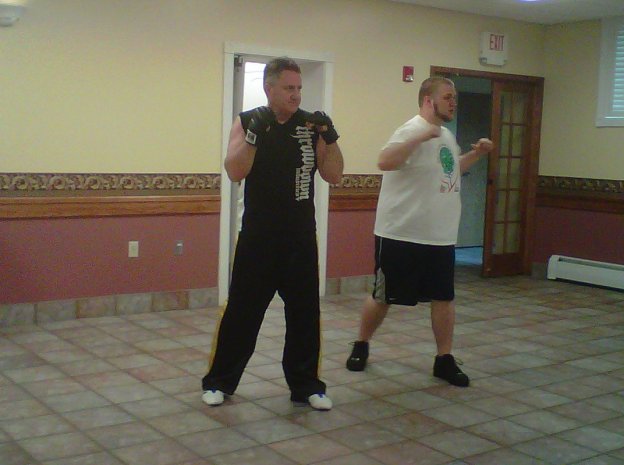
More is better, push a little more when you exercise

Now, remember, this does not mean be stupid. Make sure you have a doctor give you a good exam, make sure the doctor knows what you’re planning on and work up. Track what you do and as your body guides you and you see by the statistics you keep then push up a little more. But the cut to the chase is this, when you are smart about it and build your exercise you will be healthier.

Exercise can create some physical issues, especially in terms of joint life, but the benefits far outweigh and there are smart ways to deal with joint issues. So no excuses, go by the numbers and get going, seriously.

The Right Dose of Exercise for a Longer Life

Photo

CreditGetty Images
Phys Ed
PHYS ED

Gretchen Reynolds on the science of fitness.

Exercise has had a Goldilocks problem, with experts debating just how much exercise is too little, too much or just the right amount to improve health and longevity. Two new, impressively large-scale studies provide some clarity, suggesting that the ideal dose of exercise for a long life is a bit more than many of us currently believe we should get, but less than many of us might expect. The studies also found that prolonged or intense exercise is unlikely to be harmful and could add years to people’s lives.

No one doubts, of course, that any amount of exercise is better than none. Like medicine, exercise is known to reduce risks for many diseases and premature death.

But unlike medicine, exercise does not come with dosing instructions. The current broad guidelines from governmental and health organizations call for 150 minutes of moderate exercise per week to build and maintain health and fitness.

But whether that amount of exercise represents the least amount that someone should do — the minimum recommended dose — or the ideal amount has not been certain.

Scientists also have not known whether there is a safe upper limit on exercise, beyond which its effects become potentially dangerous; and whether some intensities of exercise are more effective than others at prolonging lives.

So the new studies, both of which were published last week in JAMA Internal Medicine, helpfully tackle those questions.

In the broader of the two studies, researchers with the National Cancer Institute, Harvard University and other institutions gathered and pooled data about people’s exercise habits from six large, ongoing health surveys, winding up with information about more than 661,000 adults, most of them middle-aged.

Using this data, the researchers stratified the adults by their weekly exercise time, from those who did not exercise at all to those who worked out for 10 times the current recommendations or more (meaning that they exercised moderately for 25 hours per week or more).

Then they compared 14 years’ worth of death records for the group.

They found that, unsurprisingly, the people who did not exercise at all were at the highest risk of early death.

But those who exercised a little, not meeting the recommendations but doing something, lowered their risk of premature death by 20 percent.

Those who met the guidelines precisely, completing 150 minutes per week of moderate exercise, enjoyed greater longevity benefits and 31 percent less risk of dying during the 14-year period compared with those who never exercised.

The sweet spot for exercise benefits, however, came among those who tripled the recommended level of exercise, working out moderately, mostly by walking, for 450 minutes per week, or a little more than an hour per day. Those people were 39 percent less likely to die prematurely than people who never exercised.

At that point, the benefits plateaued, the researchers found, but they never significantly declined. Those few individuals engaging in 10 times or more the recommended exercise dose gained about the same reduction in mortality risk as people who simply met the guidelines. They did not gain significantly more health bang for all of those additional hours spent sweating. But they also did not increase their risk of dying young.

The other new study of exercise and mortality reached a somewhat similar conclusion about intensity. While a few recent studies have intimated that frequent, strenuous exercise might contribute to early mortality, the new study found the reverse.

For this study, Australian researchers closely examined health survey data for more than 200,000 Australian adults, determining how much time each person spent exercising and how much of that exercise qualified as vigorous, such as running instead of walking, or playing competitive singles tennis versus a sociable doubles game.

Then, as with the other study, they checked death statistics. And as in the other study, they found that meeting the exercise guidelines substantially reduced the risk of early death, even if someone’s exercise was moderate, such as walking.

But if someone engaged in even occasional vigorous exercise, he or she gained a small but not unimportant additional reduction in mortality. Those who spent up to 30 percent of their weekly exercise time in vigorous activities were 9 percent less likely to die prematurely than people who exercised for the same amount of time but always moderately, while those who spent more than 30 percent of their exercise time in strenuous activities gained an extra 13 percent reduction in early mortality, compared with people who never broke much of a sweat. The researchers did not note any increase in mortality, even among those few people completing the largest amounts of intense exercise.

“Of course, these studies relied on people’s shaky recall of exercise habits and were not randomized experiments, so can’t prove that any exercise dose caused changes in mortality risk, only that exercise and death risks were associated.

Still, the associations were strong and consistent and the takeaway message seems straightforward, according to the researchers.

Anyone who is physically capable of activity should try to “reach at least 150 minutes of physical activity per week and have around 20 to 30 minutes of that be vigorous activity,” says Klaus Gebel, a senior research fellow at James Cook University in Cairns, Australia, who led the second study. And a larger dose, for those who are so inclined, does not seem to be unsafe, he said.

For more fitness, food and wellness news, “like” ourFacebook page.