Infant Baptism
Leave a reply


…”We can never be tired of hearing about the crowning of our Lord, and least of all in this most holy Golgotha … Let none be weary. Take your armor against the adversaries in the cause of the cross itself; set up the faith of the cross as a trophy against our opponents. For when you are going to dispute with unbelievers concerning the cross of Christ, first make with your hand the sign of Christ’s cross, and the gainsayer will be silenced. Don’t be ashamed to confess the coss, for angels glory in it, saying, ‘I know that you seek Jesus who was crucified (Matt 28:5)
Cyril of Jerusalem “Catechetical Lectures”, 13: 22-23 quoted in “A Year with the Church Fathers” Scott Murrray p 124
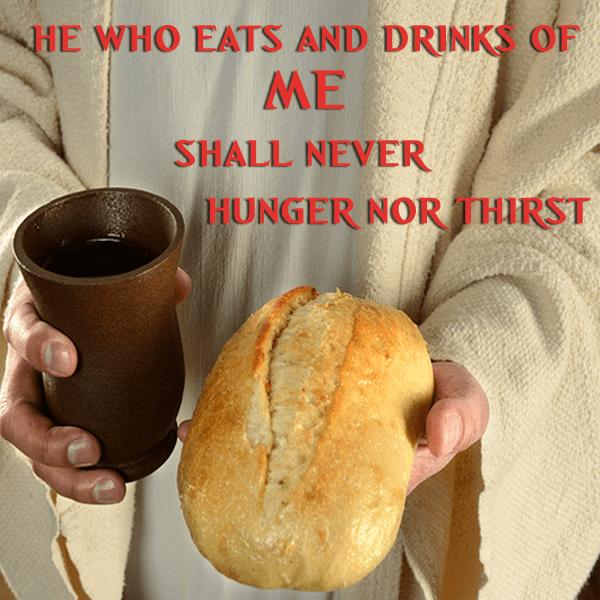
Maundy Thursday, the Doy of Commandment (Dies Mandate), most properly refers to the example of service given us by our Lord and the directive to love as we have been loved (John 13:34) Yet we must not forget the command given in the Words of Our Lord to “do this in remembrance of Me.” This day, with its commemoration of the institution of the Lord’s Supper, is set off from the rest of Holy Week as a day of festive joy.
The door posts and lintels of our hearts are smeared with the blood of the Passover Lamb, who was offered for us. The Passover in Egypt foreshadowed the complete salvation that was accomplished by the death of Jesus, the perfect Passover Lamb, who was able to be both victim and priest in one person (Heb 5: 1-10). Today we stand on the verge of the commemoration of the passing over of death, all wrapped up in the Triduum, the Three Days, which concludes with the Paschal Feast. The Passover’s sacrifice needs never again to be repeated (1 Pet 3:18). The sacrifice of Christ fulfilled what was promised in those old slaughters.
Our hearts have been set free from the fear of death because the blood of the Passover Lamb has been smeared upon the doorposts and lintels of our hearts. The blood that once was offered will be received this night when we drink of the cup of the testament. Our lips will by hyssop-spattered with the sign of His mercy toward us ( Ex 12:22). Death no longer appalls us. Its slavery no longer enthralls us. The Lamb who is “the firstborn of all creation” (Colo 1:15) offers Himself for every other so that His body might be received in the feast of His Supper. These signs are for our comfort God has no need of them. He knows those who are His. He gives them to us in the Supper so that we might know who we are, sprinkled and marked by the blood of the Lamb. The blood sets us free. ‘The blood of the Passover, sprinkled on each man’s doorposts and lintel, delivered those who were saved as Egypt, when the firstborn of the Egyptians were destroyed. For the Passover was Christ, who was afterwards sacrificed, as also Isaiah said, ‘Like a lamb that is led to the slaughter’ (Is 53:7). It is written that on the the day of the Passover you seized Him, and that also during the Passover you crucified Him (Jn 18:39). As the blood of the Passover saved those who were in Egypt, so also the blood of Christ will deliver from death those who have believed. Would God have been deceived if this sign had not been above the doors? Of course not, but I affirm that He announced in advance the future salvation for the human race through the blood of Christ.” (Justin Martyr, Dialogue, III )
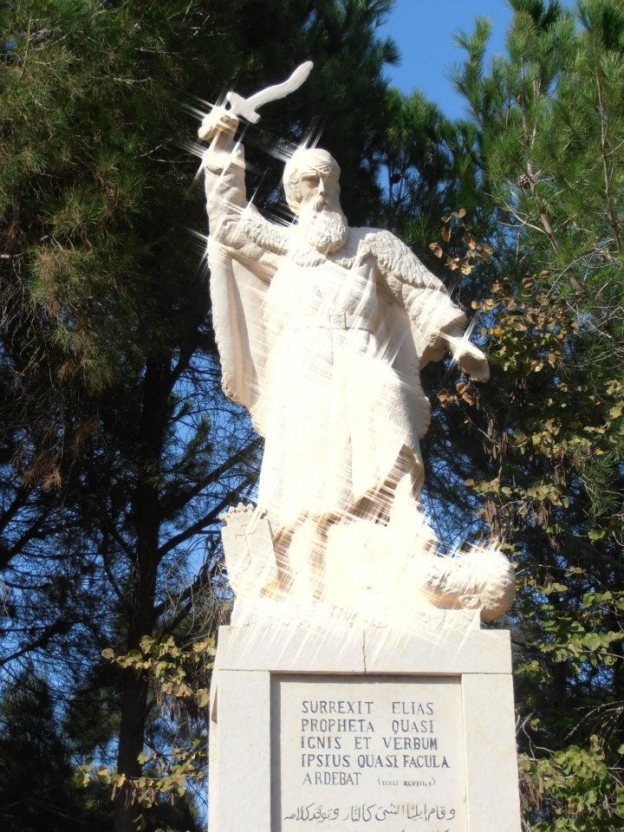
“…It is upon the platform of pressure that our Lord does His best work … those times when tragedy joins hands with calamity… when satan and a host of demons prompt us to doubt God’s goodness and deny His justice. At such times Christ unsheathes His sword of truth, silencing the doubts and offering grace to accept, hope to continue.
Hear Him well:
For whatever is born of God ovecomes the world; and this is the victory that has overcome the world – our faith.
Not a reluctant hunch. Not some fairy-tale dream… but an accomplished fact as solid as granite and twice as sure – overcoming vicgtory claimed by faith!
Is it for everyone? No. The majority? No. Read it again. It’s only for those who are ‘born of God’ … only God’s born-ones are the overcomers.
Does it mean, then, that we won’t have sorrow? No. It means we’ll be able to overcome it…. live in His victory in spite of it. How? By Faith, just as He promised. By staking my hope on the absolute assurance that He is aware of my situation, He is in charge of it … and He will give all the grace I need to sail through it, rough seas and all, one stormy day at a time.
Sorrow and her grim family of sighs may drop by for a visit, but they wont stay long when they realize faith got there first … and doesn’t plan to leave.”
-Chuck Swindoll Come Before Winter p 338

My wife, Marge, went to be in the presence of the Lord, it’s been five weeks now. It was not expected, it was a shock, I am nowhere near adjusting to this. She had serious physical problems. She had a stroke four years ago. Really couldn’t walk, no use of her left arm, a small amount of cognitive impairment. For four and a half years I was her care-giver. It was arduous, caring for Marge, which often required getting up in the middle of the night to help her, giving her meals, cleaning, toilietry, appointments, while trying to do effective ministry etc. All of a sudden I find myself in a solitude I don’t think I’ve ever experienced in my life. I’m not very happy with this.
Bonhoeffer’s “Farewell Maria”, which was a separation from his afianced who he would never see again, he talks about solitude:
…It is as though in solitude the soul develops senses which we hardly know in everyday life. Therefore I have not felt lonely or abandoned for one moment. You, the parents, all of you, the friends and students of mine at the front, all are constantly present to me. Your prayers and good thoughts, words from the Bible, discussions long past, pieces of music, and books – [all these] gain life and reality as never before.” – “A Testament to Freedom” p 490
God has put me here, the circumstances certainly show His hand. He put me here for a reason, do I ignore this, or attempt to figure out, follow, pray over, etc how God intends for me to use this time? I’m sure at least that I need to journal what has transpired. How do I work with this, understand this?
Barnhill, Carla “A Year with Dietrich Bonhoeffer p 20

This is from a passage from Dietrich Bonhoeffer from a devotional “A Year with Dietrich Bonhoeffer” p 351
The human being, accepted, judged and awakened to new life by God – this is Jesus Christ, this is the whole of humanity in Christ, this is us. The form of Jesus Christ alone victoriously encounters the world. From this form proceeds all the formation of a world reconciled with God. The word ‘formation’ arouses our suspicion. We are tired of Christian agendas. We are tired of the thoughtless, superficial slogan of a so-called practical Christianity to replace a so-called dogmatic Christianity. We have seen that the forces which form the world come from entirely other sources than Christianity, and that so-called practical Christianity has failed in the world just aThis s much as so-called dogmatic Christianity. Hence we must understand by ‘formation’ something quite different from what we are accustomed to mean, and in fact the Holy Scripture speaks of formation in a sense that at first sounds quite strange. It is not primarily concerned with formation of the world by planning and programs, but in all formation it is concerned only with the one form that has overcome the world, the form of Jesus Christ … Formation occurs only by being drawn into the form of Jesus Christ, by being conformed to the unique form of the one who became human, was crucified, and is risen. This does not happen as we strive ‘to become like Jesus’, as we customarily say, but as the form of Jesus Christ himself so works on us that it molds us, conforming our form to Christ’s own (Gal 4:9). – from Ethics 92-63
This is from page 357
The issue is the process by which Christ takes form among us. Therefore the issue is the real, judged, and renewed human being. The real, the judged, and the renewed human being exists only in the form of Jesus Christ and therefore in being conformed to Christ. Only the person taken on in Christ is the real human being; only the person confronted by the cross of Christ is the judged human being; only the person who participates in the resurrection of Christ is the renewed human being. Since God became a human being in Christ, all thinking about human beings without Christ is unfruitful abstraction. The counter-image to the human being taken up into the form of Christ is the human being as self-creator, self-judge and self-renewer; these people bypass their true humanity and therefore, sooner or later, destroy themselves. Falling away from Christ is at the same time falling away from one’s own true nature. – From “Ethics” p 134

I thought this was a really good perspective. No one wants to be subject to demonic attack. But if you are worthy of that kind of attention, you must be doing something right to serve Christ’s Kingdom.
Scott Murray writes: “When Satan attacks us, we should be flattered that we are worth attacking. Those who are already in his camp do not need to feel his claws. But when he attempts to defeat us, he often finds himself facing a serious counterattack from the Word of God… [Remember Paul’s words in Roman8:35 “Who shall separate us from the love of Christ? Shall tribulation, or distress, or persecution…? In other words nothing can, Satan has no chance with us when we turn to Christ in the Holy Spirit.]
Jesus said I am the Way the Truth, the Life, no one comes to the Father except through me. I think that also means, no one comes to His child, except through Him, He is the infinite linebacker.
…When we suffer such humiliations as Satan and his minions can throw at us, we should glory in them, for they are signs of the strength of our Lord’s cross, even as they were for Paul…
Certainly St Paul was continually under Satanic attack. John Chrysostom writes: “…He was imprisoned at Jerusalem, and preaching in his bonds he struck the king with amazement and made the governor tremble. For being afraid, it is related, he let him go. He that had bond him was not ashamed to receive instruction concerning the things to come at the hands of him whom he had bound. In bonds he sailed, and retrieved the wreck, bound fast the tempest. It was when he was in bonds that the viper fastened on him and fell off from his hand, having done him no hurt. He was bound at Rome, and preaching in bonds drew thousands to his cause, holding forward, in the place of very other, this very argument, by which I mean his chain.” (Homilies on Ephesians, 8).
(Scott Murray, A Year with the Church Fathers, pp 246-247
graphic Pinterest Bible Characters
“And everyone who was in distress, and everyone who was in debt, and everyone who was discontented, gathered … there were about four hundred men … (1 Sam 22:2)
…there were 400 of these hard-luck holligans. Shortly thereafter, their numbers swelled to 600. And David was the den mother for these desperados. He was general, master sergeant, and chaplain all rolled into done. David, ‘the sweet psalmist of Israel’ became David the drill instructor…
…In a brief period of time he had the troops in shape – combat ready. Incredible as it seems, he was doing battle against the enemy forces using strategic maneuvers before the year was up. These were the very men who fought loyally by his side and gave him strong support when he became the king of Israel. They were called ‘the mighty men’, and many of their names are listed in the Bible for heroism and dedication…
Come Before Winter Swindoll pp 147-148

By
–
April 24, 2023

Some megachurches have been hiring rock star worship leaders (RSWLs) and are finding out they’re not all they’re cracked up to be. A megachurch is a unique breeding ground for a RSWL—he probably couldn’t survive in a smaller ministry. A typical church music director is a busy guy or girl who schedules volunteers, conducts rehearsals, writes charts, arranges music, and plans Christmas and Easter events. Some megachurch rock star worship leaders surprisingly can’t even read music, let alone create a chord chart.
So why are they hired?
hey often don’t have musical training or organization skills, but they look and sound good on stage. This will blow some of your minds — I know of one rock star worship leader who makes about 100K a year by going to a weekly staff meeting and picking out six songs for the praise set. That’s it. He has a full staff who does his work for him—making charts and tracks, scheduling volunteers, and even leading rehearsals. This type of RSWL could only exist at a megachurch—he’d be helpless if he had to do everything himself in a smaller ministry.
The RSWL unfortunately tends to inherit bad habits from his secular counterparts.
STRENGTHEN YOUR CHURCH$116.91$49.99
A famous rock star making millions from his music can afford to be self-absorbed and narcissistic—it even enhances his mystique. Narcissism doesn’t go over so well in a church, and people start resenting the guy. A Google search on the subject showed me it’s a growing topic among fed-up churchgoers.
Here are some thoughts I found on a blog by a disgusted person about their RSWL that sum up what congregations are thinking:
Worship leaders are like reality TV stars: They’re regular people with a disproportionate sense of self because people are looking at them. They’re rock stars without the fame or talent … or money (all things that redeem rock star behavior). But ultimately, it’s the disparity that kills me. So many of them are spiritually/emotionally/socially immature, but just because they can sing, they’re placed on this ridiculous pedestal.
One megachurch claims their narcissistic RSWL is to blame for an attendance drop of almost one-third (at least until they fired the guy—attendance is on the way up again).
One RSWL candidly told me he approaches ministry much like a CEO runs a company—you never fraternize with your employees (i.e., hang out with your praise band members after rehearsal when they all go out for pizza).
I could go on and on with rock star worship leader horror stories (I know a lot of churches), so it was no surprise that over the past few months I’ve started noticing a rash of RSWL firings in the megachurch world. (In polite company, this is referred to as, “We’ve decided to part ways due to philosophical differences.”)
In most cases, it looks like the RSWL’s shenanigans have come to a head and the church has said “enough.”
My suspicions of this firing trend were recently confirmed.
STRENGTHEN YOUR CHURCH$116.91$49.99
A friend of mine is using a church job-placement agency to find a worship leader position for himself. The representative mentioned they’ve never had so many worship leader job openings. When asked why, the representative explained that churches are finding the performance worship leader thing isn’t working out so well. It seems congregations are tired of being performed to instead of led in worship.
The job my friend found is with a megachurch who just fired their own RSWL. This guy hopped around stage during worship, trying to drum up enthusiasm like any good rock star would in concert. As my friend looked at the rock star worship leaders set list from the past six weeks, he noticed not a single song was repeated. Typical RSWL behavior—they’re performing worship songs, not leading them.
One big reason my friend’s church fired their rock star worship leader was that they were concerned their congregation wasn’t worshipping during the music. Of course they weren’t—they didn’t know any of the songs!
Bottom Line: If you’re interested in a full-time worship leading job at a megachurch, now may be a great time to start looking. If a church was willing to pay 100K a year for someone who simply smiled, sang and strummed on Sundays, just think of what they’d pay a down-to-earth and skilled worship leader who knows how to work for a living.
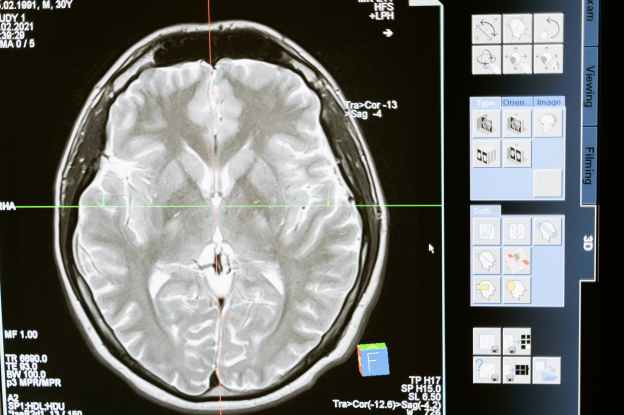
The following is from Gorgy Buzsaki Scientific American, June 2022 pp 38-42a neuro scientists about aspects of the brain. One part struck me, that its often thought that the brain grows and expands as it learns. Buzsaki seems to be saying that instead, the brain is already pre-programmed. Through our own actions we can mess it up, but instead of the brain being tabula rasa, it looks like God pre-programs how our brain functions, and still leaving it so we can mess it up.
“…Most students were happy with my textbook explanations of the brain’s input-output mechanisms. Yet a minority – the clever ones – always asked a series of awkward questions. ‘Where in the brain does perception?’ ‘What initiates a finger movement before cells in the motor cortex fire?’ I would always dispatch their queries with a simple answer: ‘hat all happens in the neocortex.’ Then I would skillfully change the subject or use a few obscure Latin terms that my students did not really understand but that seemed scientific enough o that my authoritative sounding accounts temporarily satisfied them.
Like other researchers, I began my investigation of the brain without worrying much whether this perception-action theoretical framework was right or wrong I was happy for many years with my own progress and the spectacular discoveries that gradually evolved into what became known in the 1960s as the field of ‘neuroscience.’ Yet my inability to give satisfactory answers to the legitimate questions of my smartest students has haunted me ever since. I had to wrestle with he difficulty of trying to explain something that I didn’t really understand.
Over the years I realized that this frustration was not uniquely my own. Many of my colleagues, whether they admitted it or not, felt the same way. There was a bright side, though, because these frustrations energized my career. They nudged me over the years to develop a perspective tha provides an alternative description of how the brain interacts with the outside world…
…The contrast between outside-in and inside-out approaches becomes most striking when used to explain the mechanisms of learning. A tacit assumption of the blank slate model is that the complexity of the brain grows with the amount of experience. As we learn, the interactions of brain circuits should become increasingly more elaborate. In the inside-out framework, however, experience is not the main source of the brain’s complexity.
Instead the brain organizes itself into a vast repertoire of preformed patterns of firing known as neutonal trajectories. This self-organized brain model [??? -mine, self-organized, how does that happen?] can be likened to a dictionary filled initially with nonsensical words. New experience does not change the way these networks function – their overall activity level, for instance. Learning takes place, rather, through a process of matching the preexisting neuronal trajectories to events in the world.
To understand the matching process, we need to examine the advantages and constraints brain dynamics impose on experience. In its basic version, models of blank slate neuronal networks assume a collection of largely similar randomly connected neurons. The presumption is that brain circuits are highly plastic and that any arbitrary input can alter the activity of neuronal circuits. We can see the fallacy of this approach by considering an example from the field of artificial intelligence. Classical AI research – particularly the branch known as connectionism, the basis for artificial neural networks – adheres to the outside-in, tabula rosa model. This prevailing view was perhaps most explicitly promoted in the 20th century by Alan Turing, the great pioneer of mind modeling: ‘Presumably the child brain is something like a notebook as one buys it from the stationer’s, ‘ he wrote.
Artificial neural networks built to ‘write’ inputs onto a neural circuit often fail because each new input inevitably modifies the circuits connections and dynamics. The circuit is said to exhibit plasticity. But there is a pitfall. While constantly adjusting the connections in its networks when learning, the AI system, at an unpredictable point, can erase all stored memories – a bug known as catastrophic interference, an even a real brain never experiences.
The inside-out model in contrast, suggests that self-organized brain networks should resist such perturbations. Yet they should also exhibit plasticity selectively when needed. The way the brain strikes this balance relates to vast differences in the connection strength of different groups of neurons. Connections among neurons exit on a continuum. Most neurons are only weakly connected to others whereas a smaller subset retains robust links. The strongly connected minority is always on the alert. It fires rapidly, shares information readily within its own group, and stubbornly resists any modifications to the neurons’ circuitry. Because of the multitude of connections and their high communication speeds, these elite subnetworks, sometimes described as a ‘rich club,’ remain well informed about neuronal events throughout the brain.
The hard-working rich club makes up roughly 20 percent of the overall population of neurons, but it is in charge of nearly half of the brain’s activity. In contrast to the rich club, most of the brain’s neurons – the neural ‘poor club’ – tend to fire slowly and are weakly connected to other neurons. But they are also highly plastic and able to physically alter the connections points between neurons, known as synapses.
Both rich and poor clubs are important for maintaining brain dynamics. Members of the ver ready rich club fire similarly in response to diverse experiences. They offer fast, good-enough solutions under most conditions. We can make good guesses about he unknown not because we remember it but because our brains always make a surmise about a new, unfamiliar event. Nothing is completely novel to the brain because it always relates the new to the old. It generalizes. Even an inexperienced brain has a vast reservoir of neuronal trajectories at the ready. Offering opportunities to match events in the world to preexisting brain patterns without requiring substantial reconfiguring of connections. A brain that remakes itself constantly would be unable to adapt quickly to fast changing events in the outside world.
But there also is a critical role for the plastic, slow-firing-rate neurons. These neurons come into play when something of importance to the organism is detected and needs to be recorded for future reference. They then go on to mobilize their vast reserve to capture subtle differences between one thing and another by changing the strength of some connections to other neurons. Children learn the meaning of the word ‘dog’ after seeing various kinds of canines. When a youngster sees a sheep for the first time, they may say ‘dog’. Only when the distinction matters – understanding the difference between a pet and livestock – will they learn to differentiate….
…neurons devote most of their activity to sustaining the brain’s perpetually varying internal states rather than being controlled by stimuli impinging on our senses…”
 Pastor Jim Driskell